
Tempranillo wine: why does it taste of vanilla?
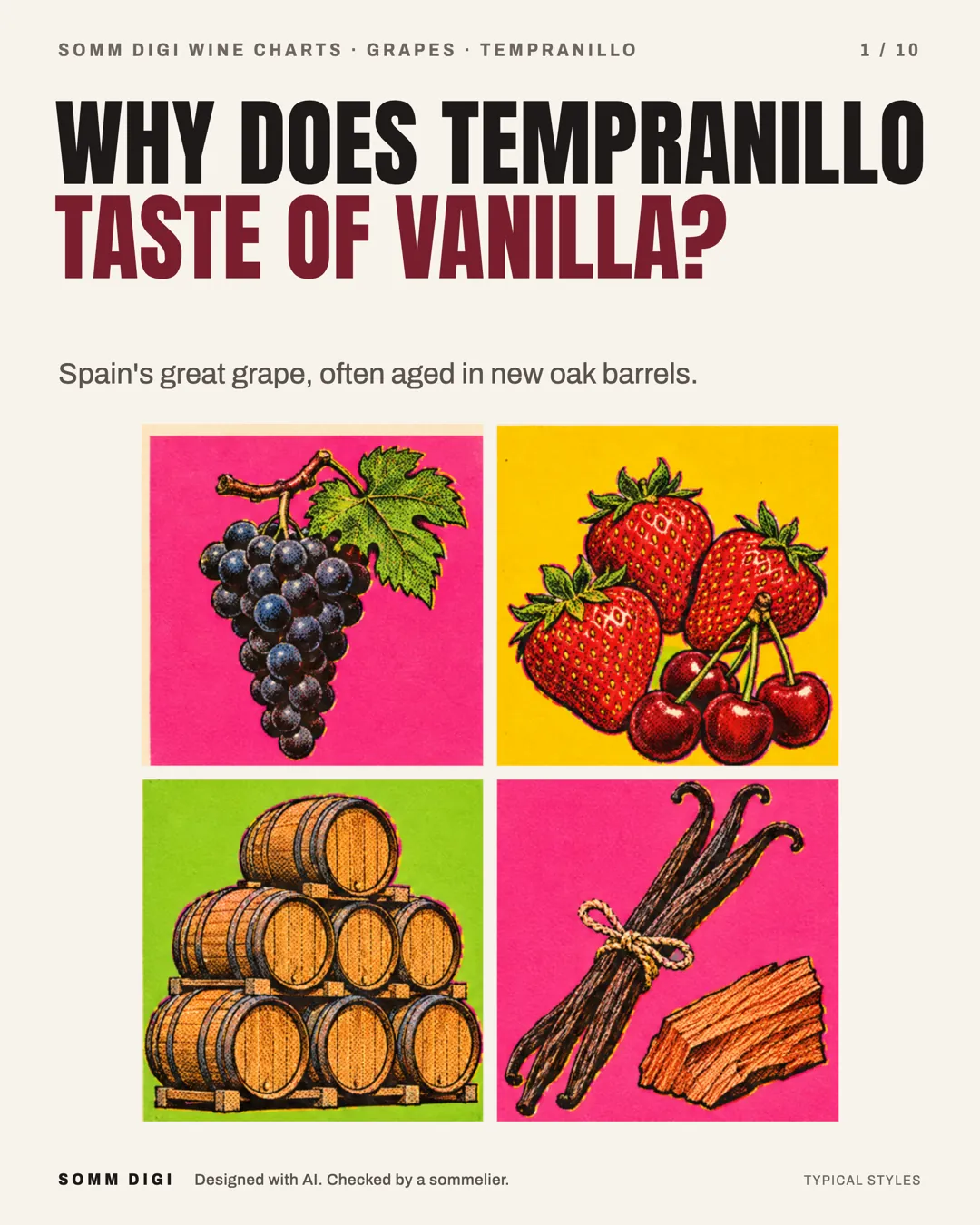
Open a Rioja and you are drinking Tempranillo: strawberry and black plum from the grape, vanilla from the barrel, leather from time. Three words on the label tell you how long it waited.
Quick answer
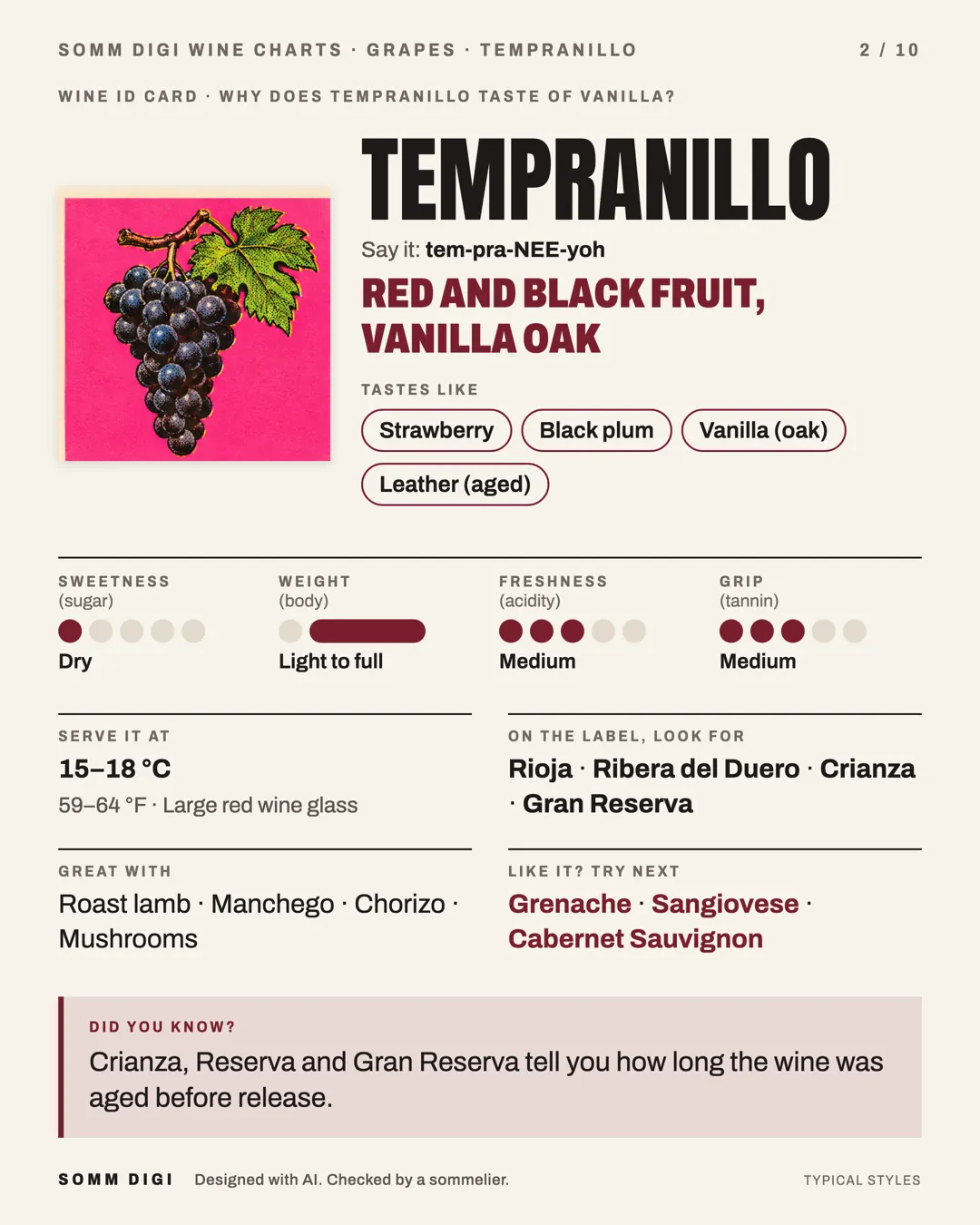
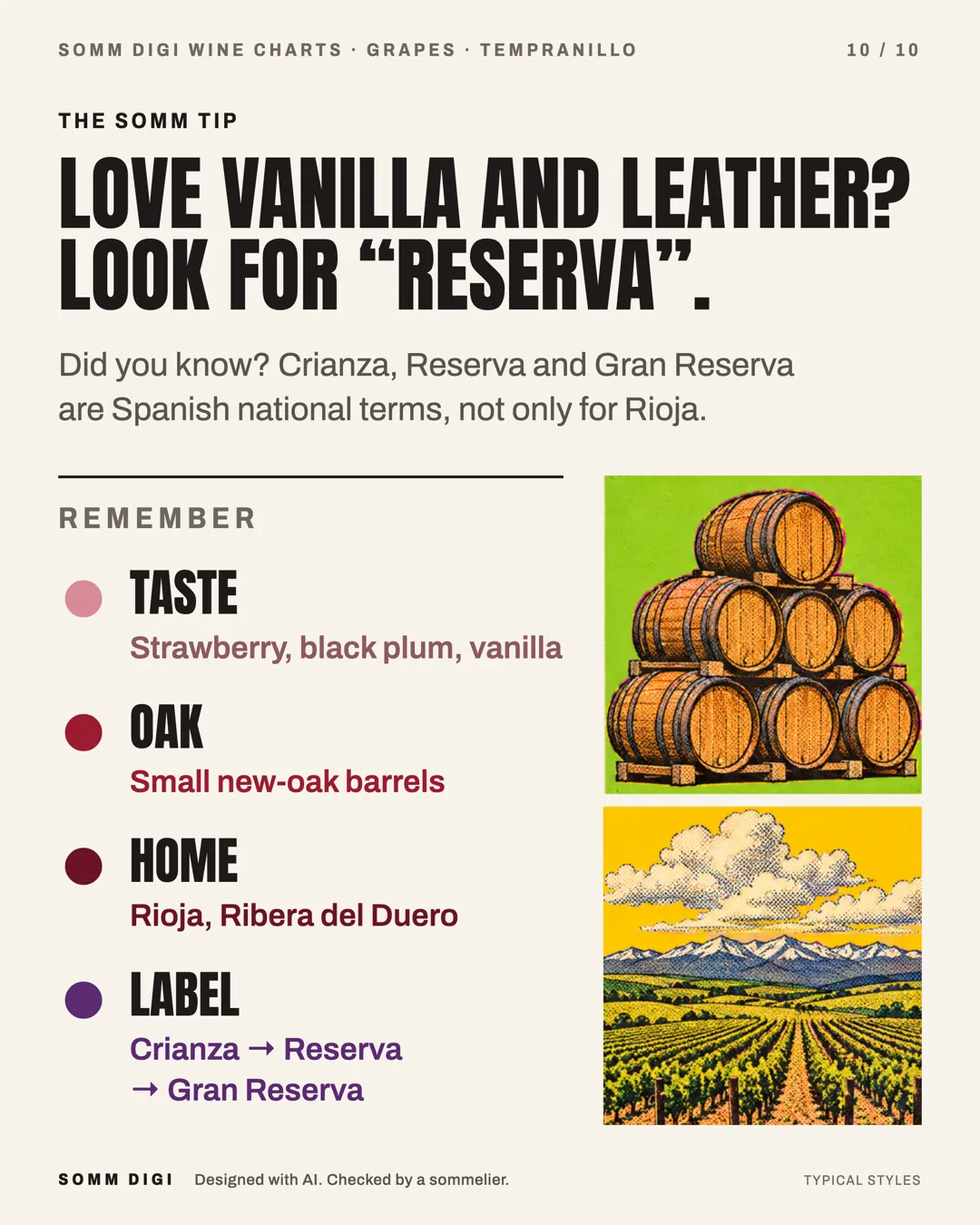
Tempranillo (say it tem-pra-NEE-yoh) is Spain's great red grape, at home in Rioja and Ribera del Duero. Its wines are dry, with medium acidity and medium tannin, and taste of strawberry and black plum. Aged in new oak barrels, it picks up vanilla; with age, leather. Serve it at 15–18 °C (59–64 °F). Love vanilla and leather? Look for “Reserva”.

Alper Billik · Advanced Sommelier
Updated November 2026 · Edited with AI
This article may contain affiliate links.
On this page
- What is Tempranillo wine?
- Rioja vs Tempranillo: place or grape?
- What does Tempranillo taste like?
- Is Tempranillo dry?
- Why does Tempranillo taste of vanilla?
- Crianza, Reserva, Gran Reserva: the label
- Where does Tempranillo grow?
- Which Tempranillo is for you?
- Tempranillo vs Cabernet Sauvignon
- How to serve Tempranillo
- Tempranillo food pairing
- Tempranillo questions, answered
What is Tempranillo wine?
Tempranillo (say it tem-pra-NEE-yoh) is Spain's great red grape, and the grape of Rioja. It is often aged in new oak barrels, which is where its vanilla note comes from. The double “ll” sounds like a “y”.
It grows mostly in Spain, and the region is the name you will see on the label: Rioja, Ribera del Duero, Navarra, Toro and Catalunya all grow Tempranillo.
The wine itself sits in the middle: medium acidity, medium tannin, dry, with red fruit and black fruit together. Body runs from light to full, from simple young wines to rich ones built to age. The profile card has the essentials on one page.
Rioja vs Tempranillo: place or grape?
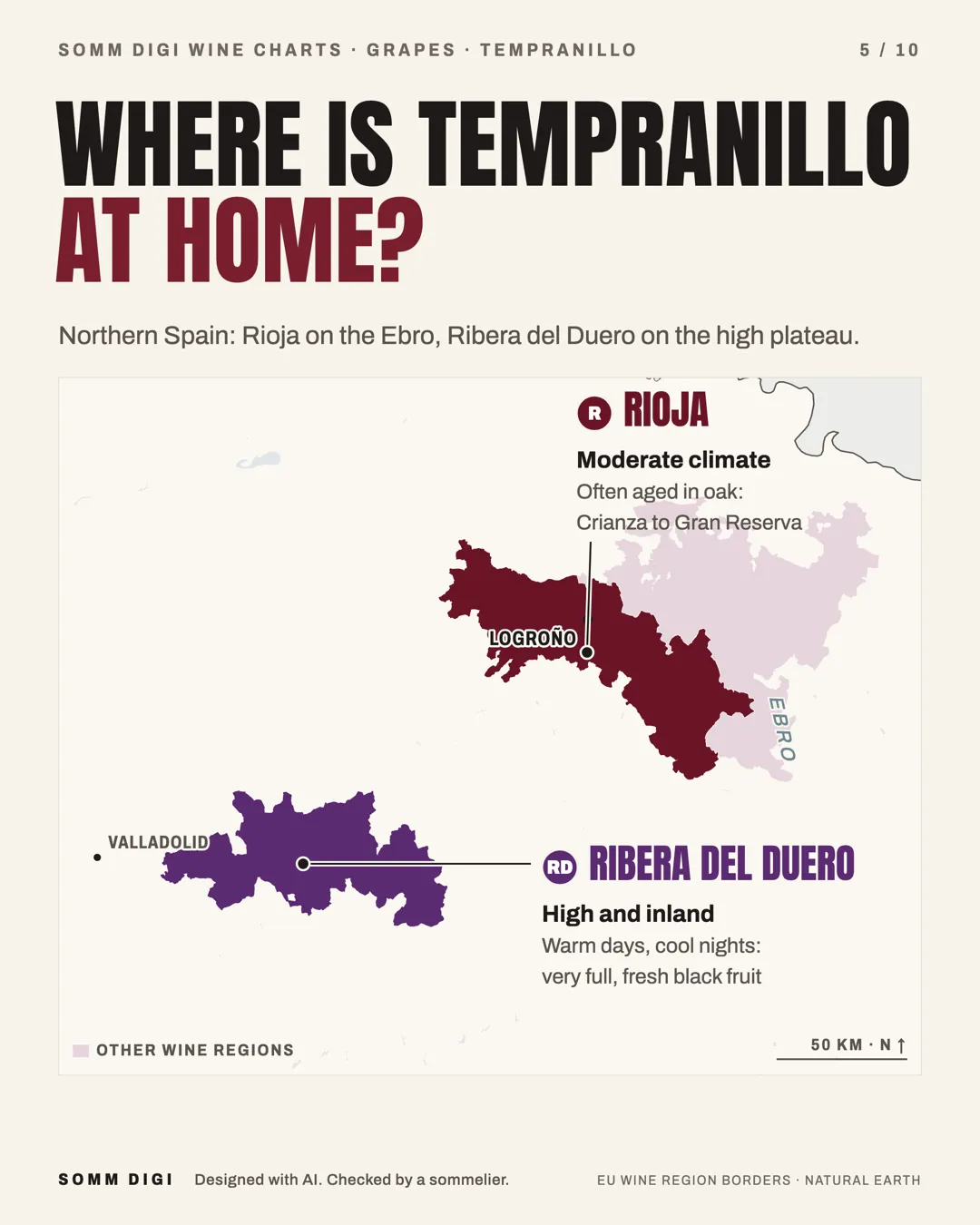
Rioja is a place; Tempranillo is the grape. Rioja is a region in northern Spain, on the Ebro, with a moderate climate. Its reds are often aged in oak, from Crianza to Gran Reserva, and Tempranillo is often blended there with Garnacha and local grapes.
Tempranillo has a second home in Ribera del Duero, high and inland on Spain's plateau. Warm days and cool nights give very full wines with fresh black fruit. Navarra and Toro grow it too. The map shows both regions.
What does Tempranillo taste like?
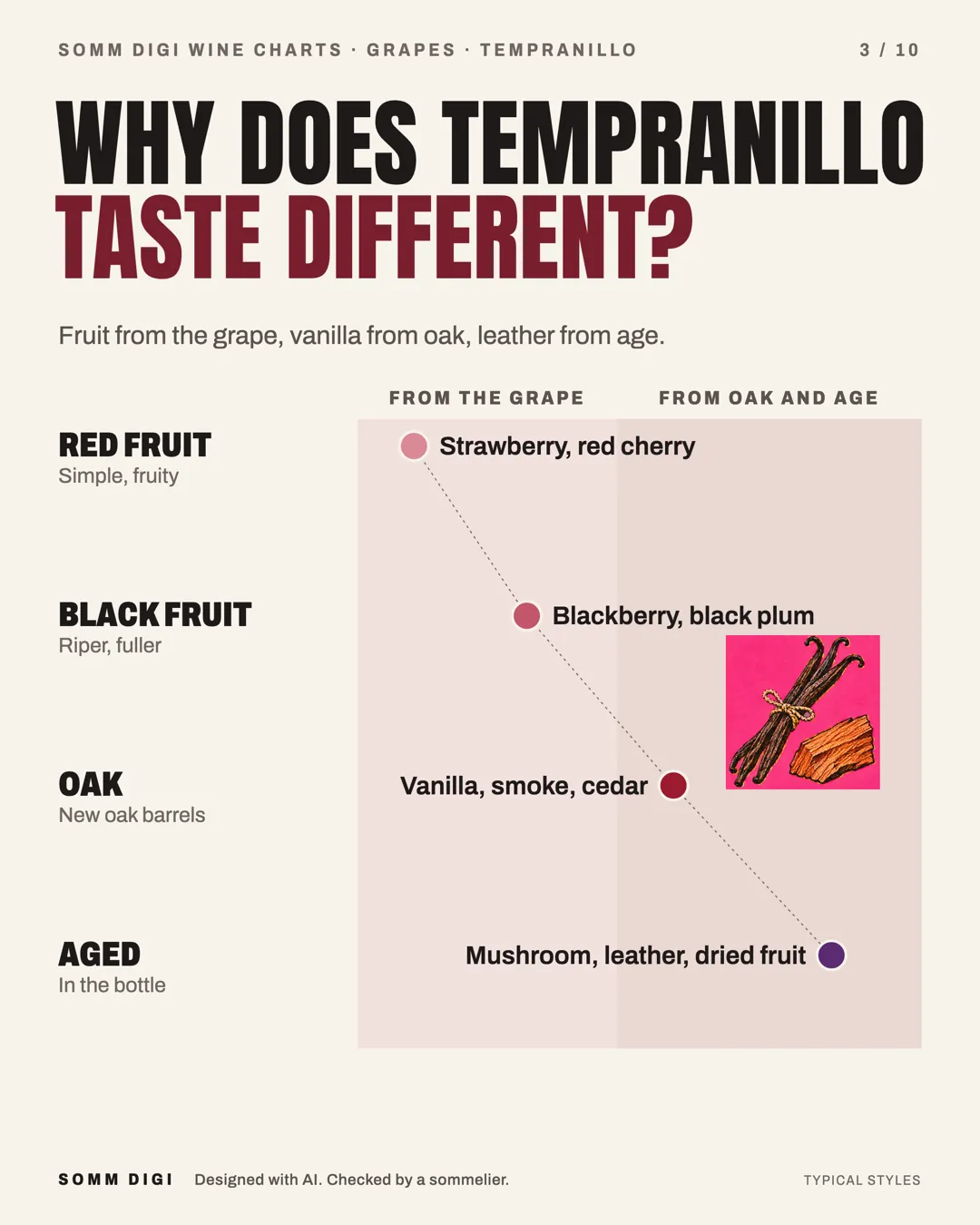
Tempranillo's taste comes in layers. From the grape, red fruit: strawberry and red cherry, simple and fruity. Riper grapes give black fruit, blackberry and black plum, and a fuller wine.
From oak and age, the second layer. New oak barrels add vanilla, smoke and cedar. Time in the bottle adds mushroom, leather and dried fruit. Read the taste chart from top to bottom and you read the life of a Rioja.
Is Tempranillo dry?
Yes. Tempranillo is a dry red. Vanilla can read as sweet, but the profile is dry, with medium acidity and medium tannin.
What changes from bottle to bottle is fruit, oak and age. A young Tempranillo is simple and fruity, with strawberry and red cherry. A Gran Reserva has been aged the longest of all before release, and tastes of leather and dried fruit.
Why does Tempranillo taste of vanilla?
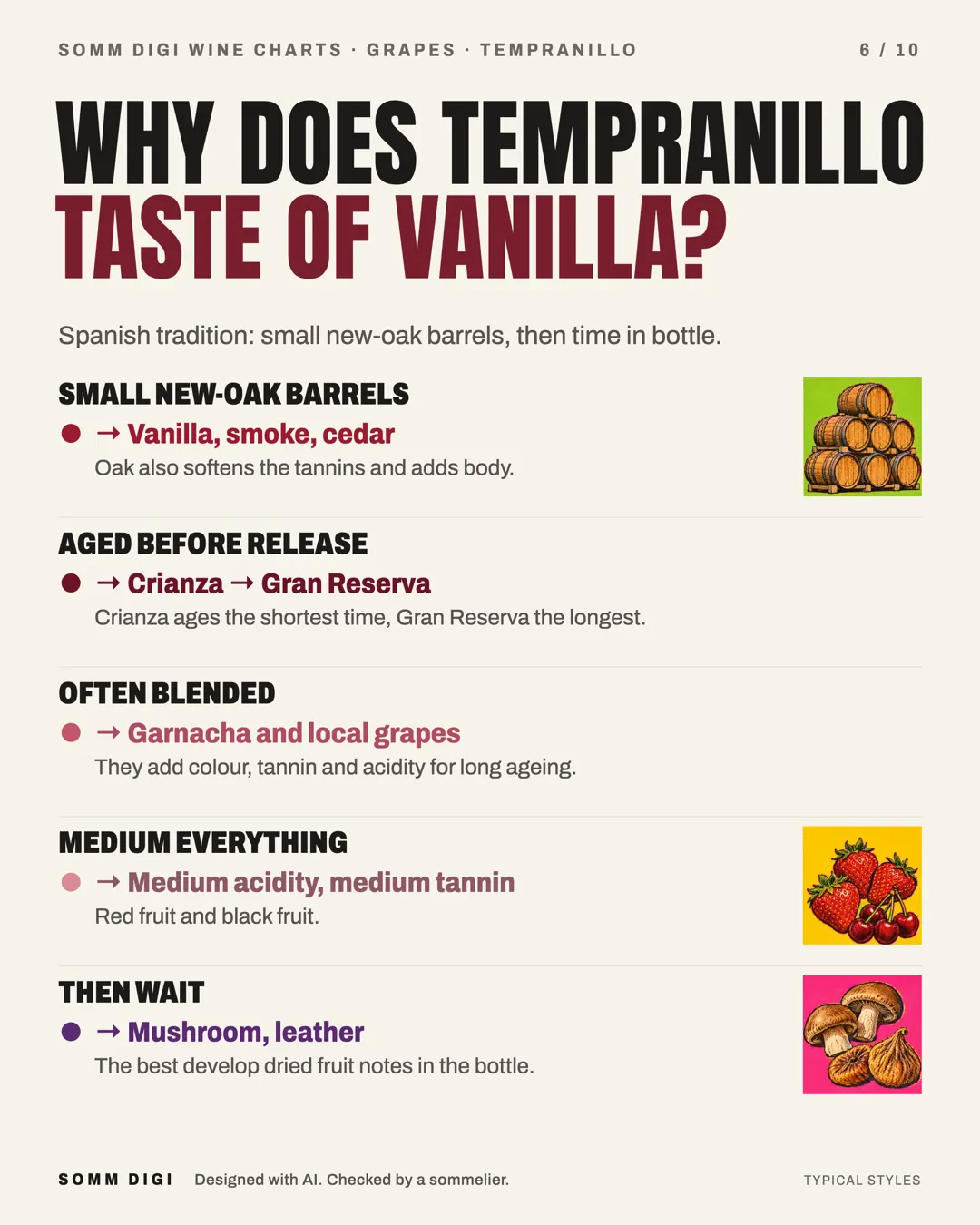
Because of a Spanish tradition: small new-oak barrels, then time in bottle. The new oak gives vanilla, smoke and cedar. It also softens the tannins and adds body.
Many wines are then aged before release, from Crianza, the shortest, to Gran Reserva, the longest. Tempranillo is often blended with Garnacha and local grapes, which add colour, tannin and acidity for long ageing.
The grape itself is medium in everything: medium acidity, medium tannin, red fruit and black fruit. Then comes the wait. In the bottle, the wine gains mushroom and leather, and the top wines develop dried fruit. The vanilla chart shows all five steps.
Crianza, Reserva, Gran Reserva: the label
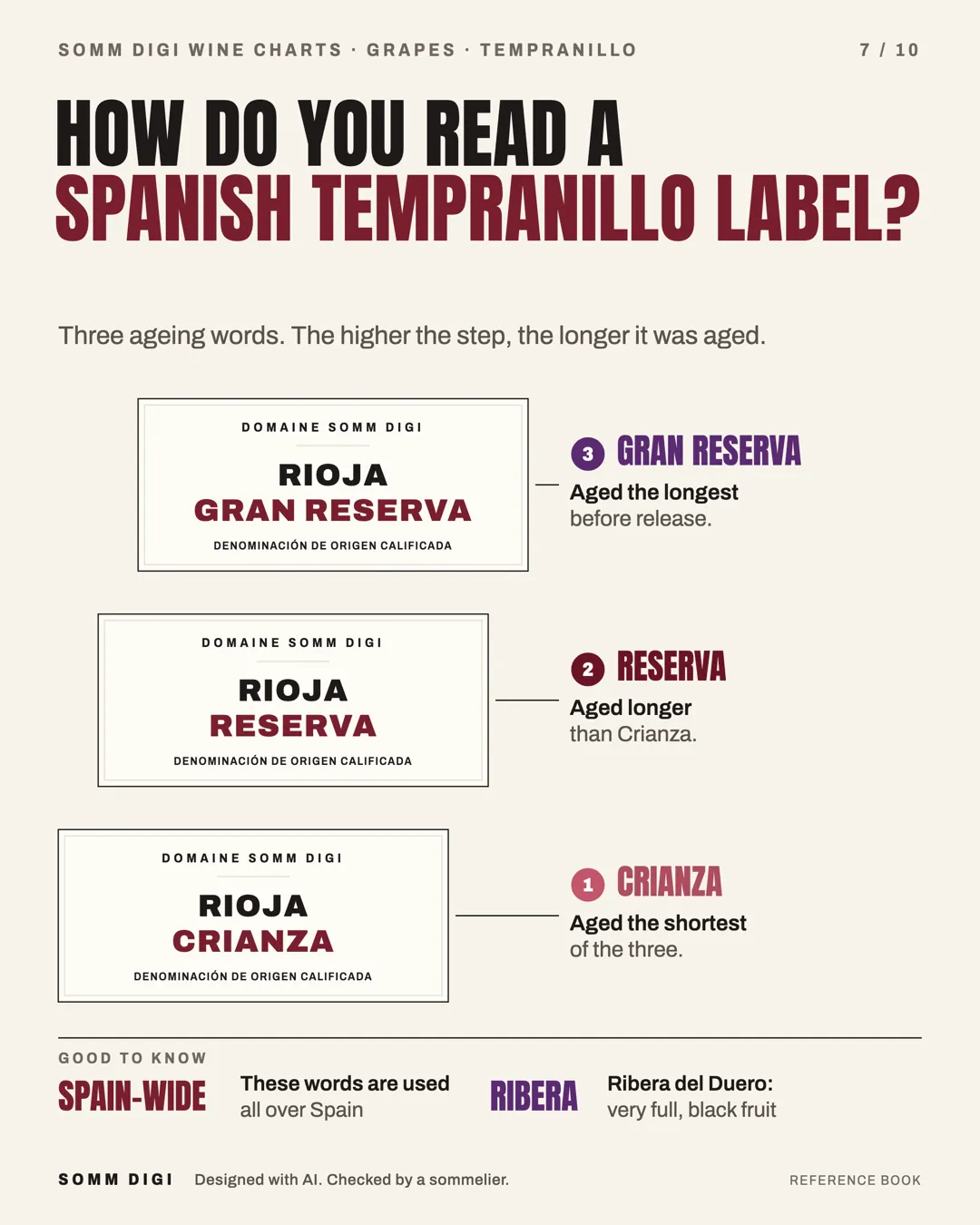
On a Spanish bottle, three ageing words tell you how long the wine was aged before release. The higher the step, the longer it waited. Crianza is aged the shortest of the three. Reserva is aged longer than Crianza. Gran Reserva is aged the longest.
These words are used all over Spain, not only in Rioja. Want fruit and oak? Choose a Crianza. Vanilla and cedar? A Reserva. Leather and dried fruit? A Gran Reserva. And when the label says Ribera del Duero, expect a very full wine with black fruit. The label chart shows the three steps.
If you like the taste of oak and time, the somm tip is simple: love vanilla and leather? Look for “Reserva”.
Where does Tempranillo grow?
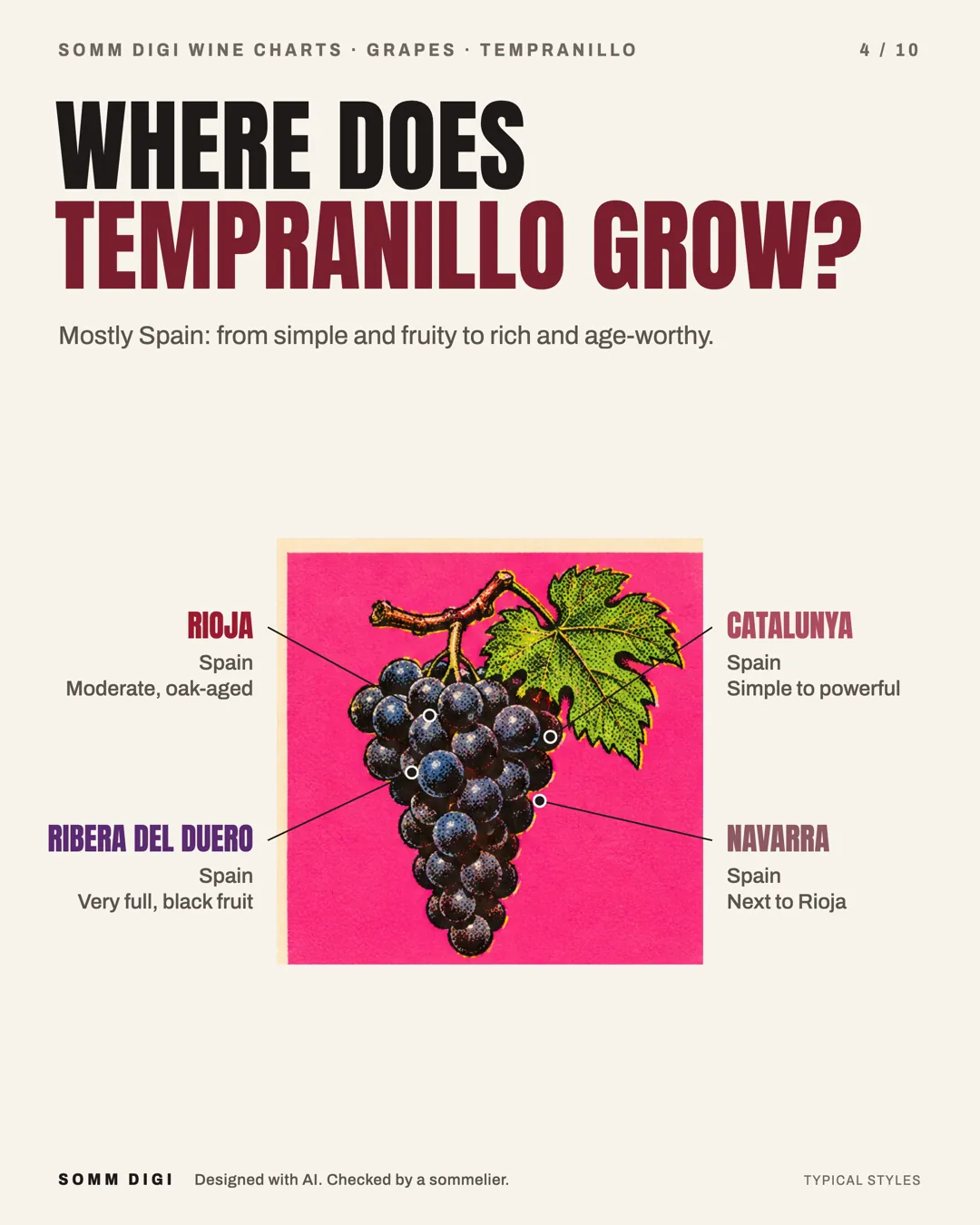
Mostly in Spain, and the style moves from simple and fruity to rich and age-worthy. Rioja is moderate and oak-aged. Ribera del Duero is very full, with black fruit.
Navarra sits next to Rioja. In Catalunya, Tempranillo runs from simple to powerful. The regions chart shows all four around the grape.
Which Tempranillo is for you?
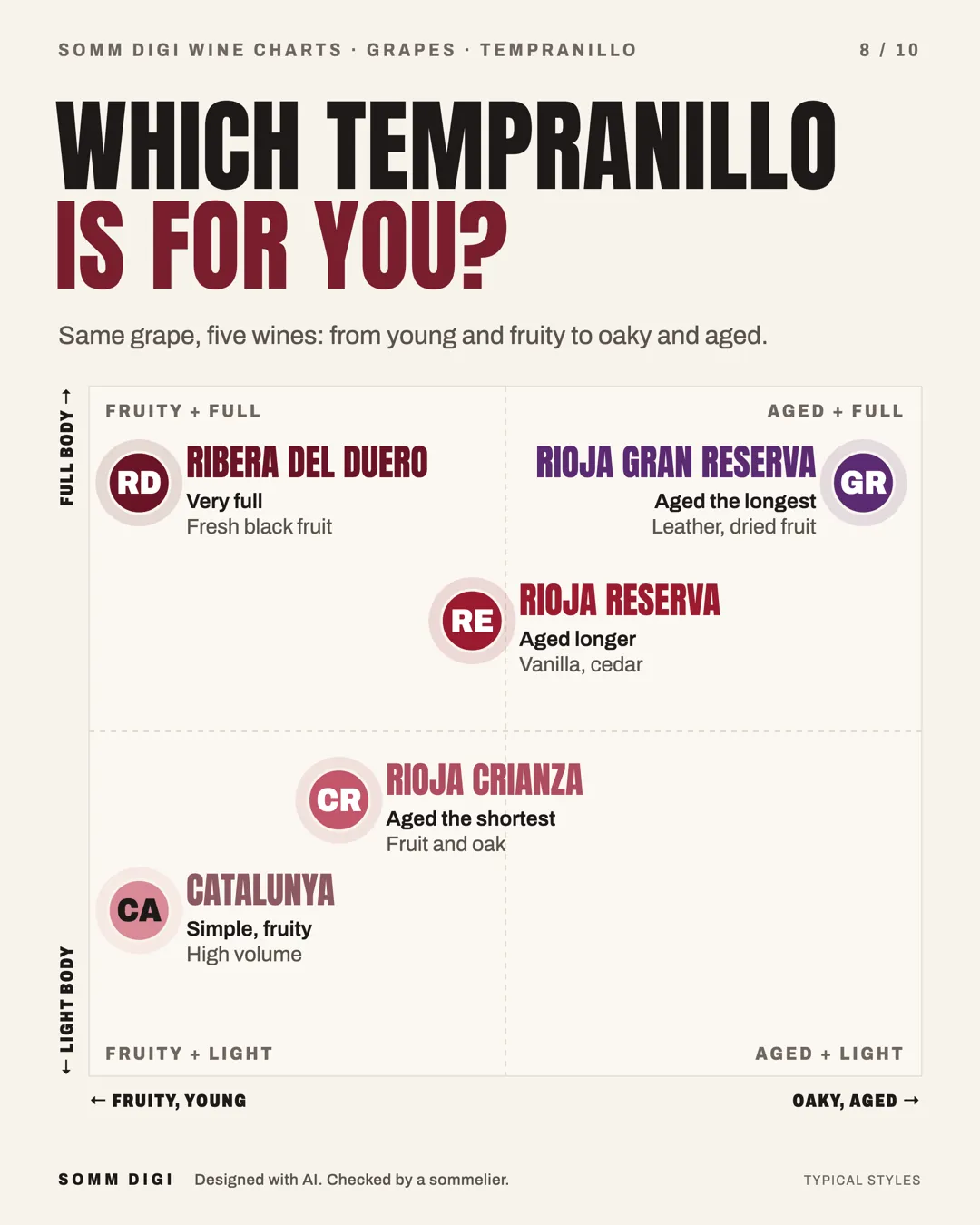
Same grape, five wines, from young and fruity to oaky and aged. For simple and fruity, Catalunya, made in high volume. For fruit and oak together, a Rioja Crianza, aged the shortest. For vanilla and cedar, a Rioja Reserva, aged longer.
For leather and dried fruit, a Rioja Gran Reserva, aged the longest. And for the fullest wine, with fresh black fruit, Ribera del Duero. The styles chart maps all five.
Tempranillo vs Cabernet Sauvignon
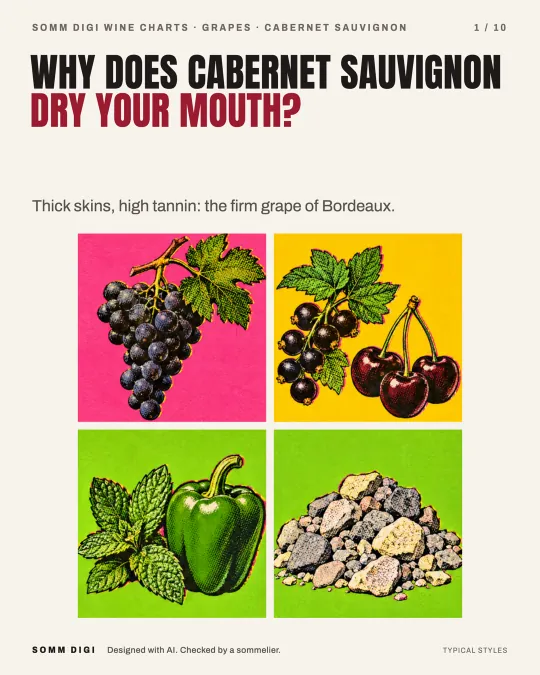
Both are dry reds with black fruit, but they feel different. Cabernet Sauvignon is deep and firm, with high acidity and high tannin, and tastes of blackcurrant, black cherry and mint. Tempranillo is medium in acidity and tannin, with strawberry, black plum and vanilla.
Next to Grenache, its blending partner, Tempranillo brings what Grenache lacks: colour, acidity and tannin. Grenache is softer and warmer, with red fruit and white pepper. And Sangiovese, from Tuscany, is firmer: high acidity and high tannin, with red cherry and dried herbs.
How to serve Tempranillo
Serve Tempranillo at 15–18 °C (59–64 °F), in a large red wine glass. The same goes for a Crianza and a Gran Reserva alike.
Which glass?
For the large glass, browse these glasses for red wine on universalwineglasses.com, SOMM DIGI's glass site.
Tempranillo food pairing
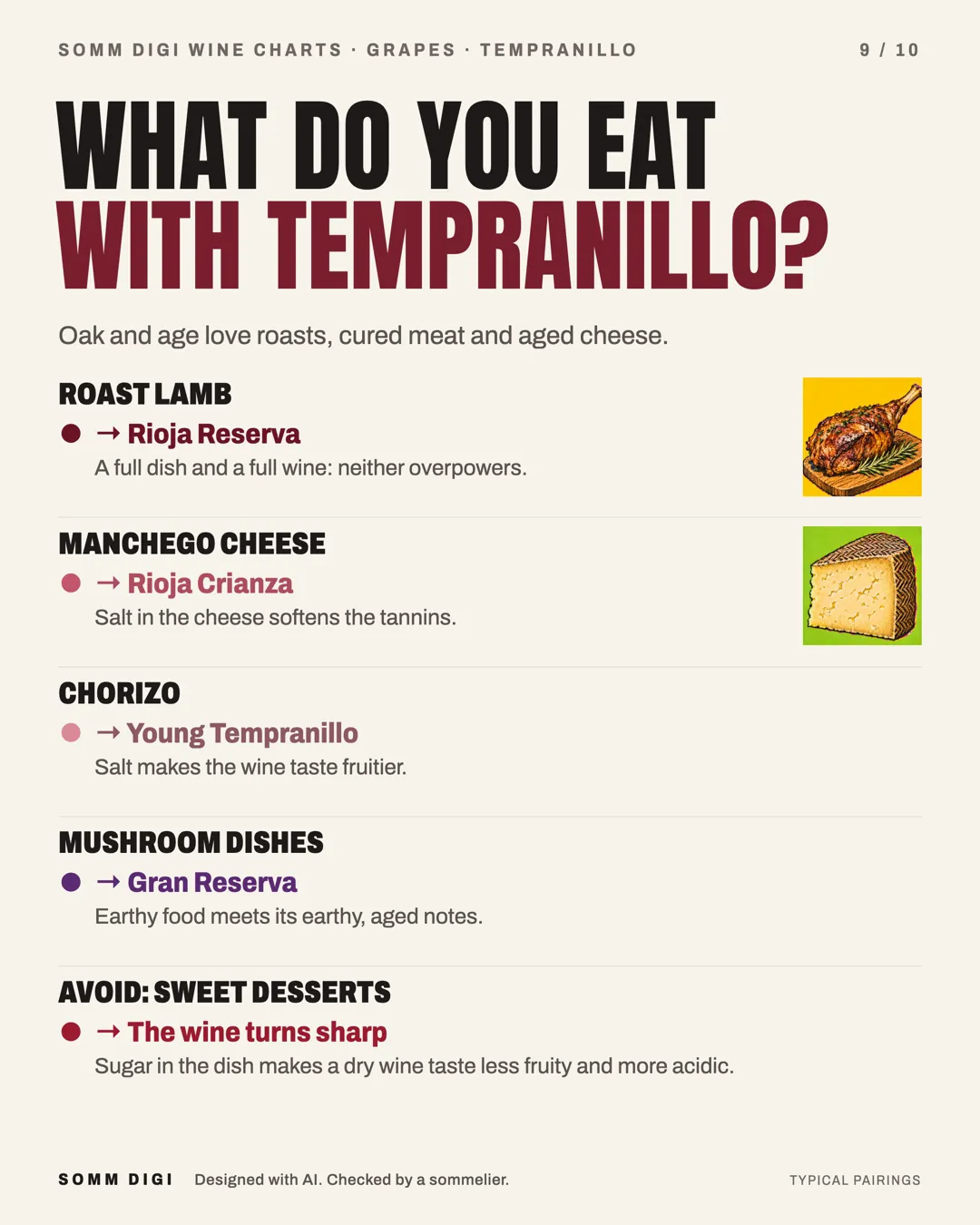
Oak and age love roasts, cured meat and aged cheese. With roast lamb, pour a Rioja Reserva: a full dish and a full wine, so neither overpowers. With Manchego cheese, a Rioja Crianza: salt in the cheese softens the tannins.
Chorizo calls for a young Tempranillo, because salt makes the wine taste fruitier. Mushroom dishes meet a Gran Reserva: earthy food meets its earthy, aged notes.
Skip one match: sweet desserts. Sugar in the dish makes a dry wine taste less fruity and more acidic, so the wine turns sharp. The pairing chart has all five.
Learn wine the easy way
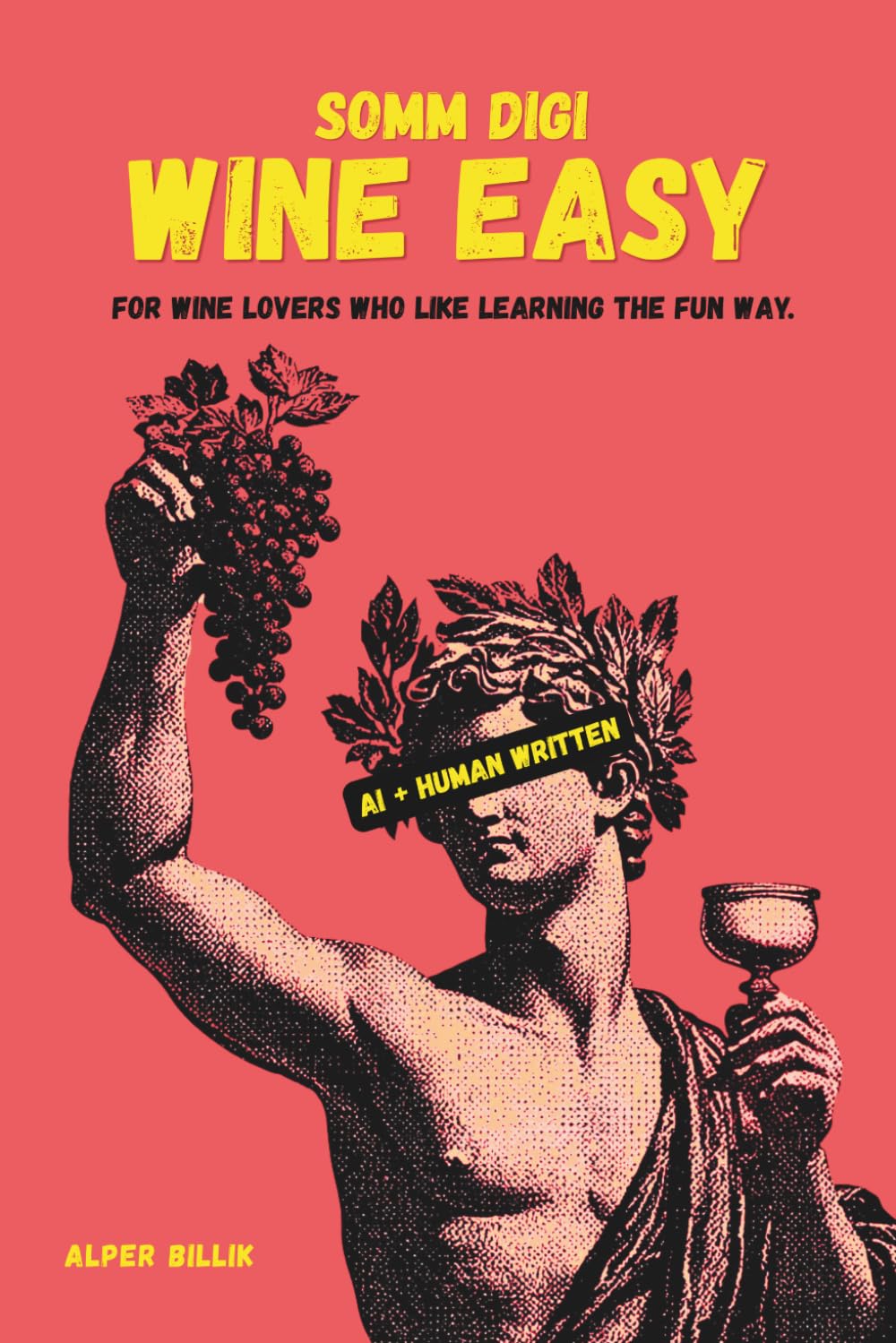
Wine Easy
The wine book that talks to you like a human: grapes, tasting, pairing and countries A–Z, in 388 full-colour pages.
Tempranillo questions, answered
How do you pronounce Tempranillo?
tem-pra-NEE-yoh.
Is Rioja the same as Tempranillo?
No. Rioja is a region in northern Spain; Tempranillo is the grape at home there, often blended with Garnacha and local grapes.
What is the difference between Crianza, Reserva and Gran Reserva?
How long the wine was aged before release: Crianza the shortest, Reserva longer, Gran Reserva the longest.
Is Tempranillo dry?
Yes. It is a dry red with medium acidity and medium tannin.
Why does Tempranillo taste of vanilla?
Small new-oak barrels. They add vanilla, smoke and cedar, soften the tannins and add body.
What temperature should Tempranillo be served at?
15–18 °C (59–64 °F), in a large red wine glass.
Try next
If you like Tempranillo
How this page was made. Charts designed with AI and checked by Alper Billik, Advanced Sommelier. Text written from the same chart facts and edited with AI.