
Sangiovese wine: what does Chianti's grape taste like?
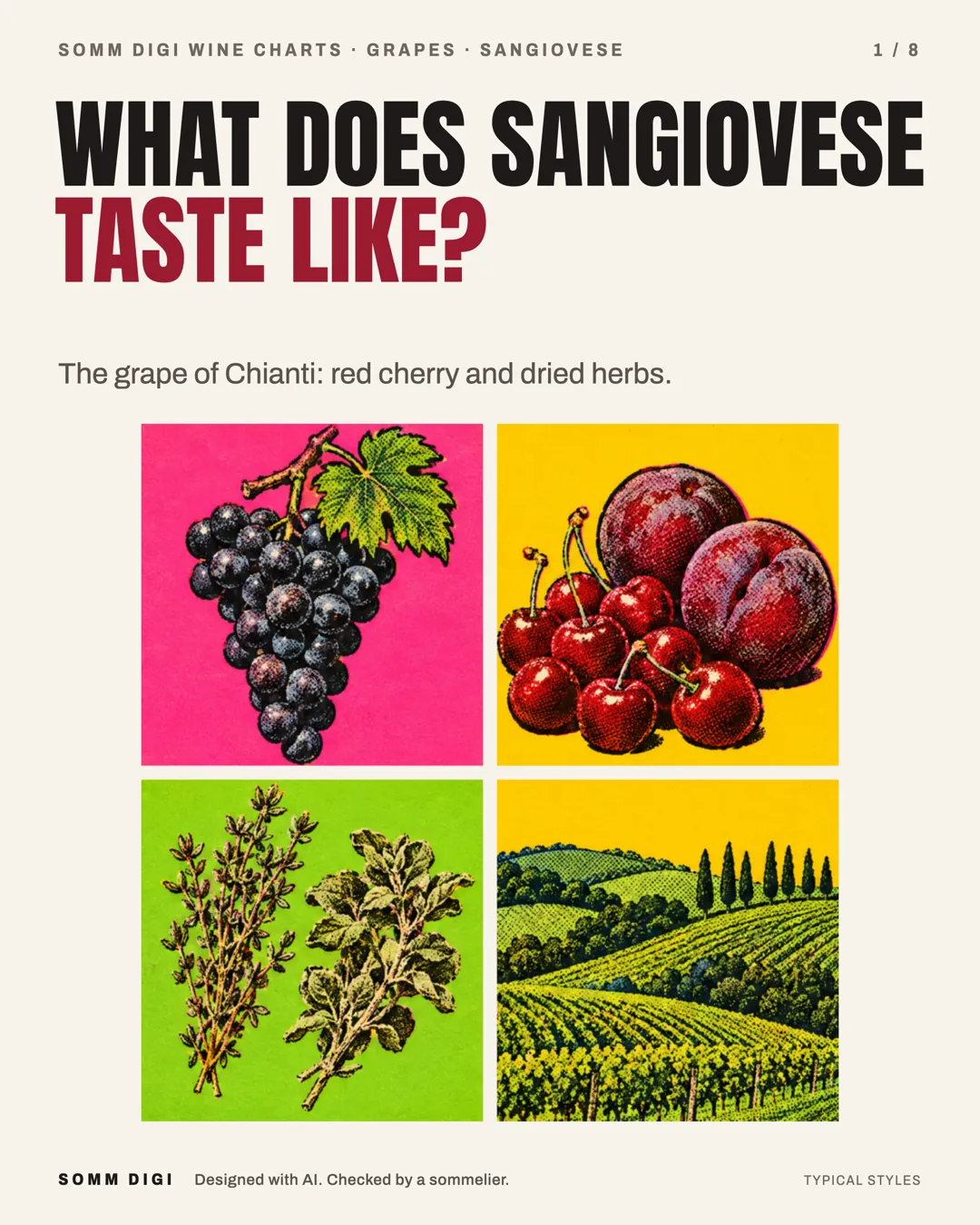
Open a Chianti and you are drinking Sangiovese: red cherry, dried herbs and a firm, dry grip. Learn four words on a Tuscan label and you can pick the style before you pour.
Quick answer
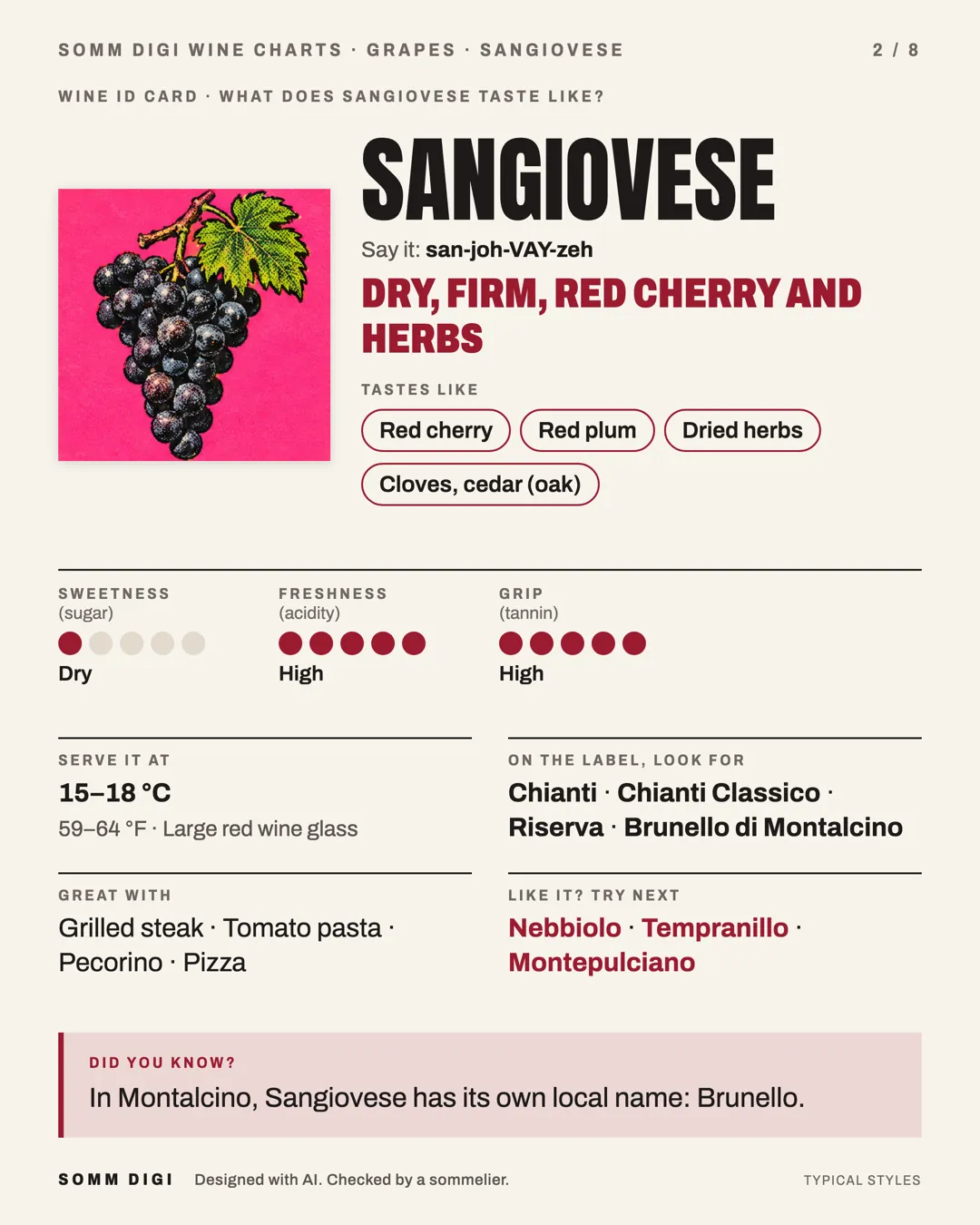
Sangiovese (say it san-joh-VAY-zeh) is the red grape of Chianti, in Tuscany. Its wines are dry, with high tannin and high acidity, and taste of red cherry, red plum and dried herbs; oak adds cloves and cedar. Serve it at 15–18 °C (59–64 °F). Want more than simple Chianti? Look for “Classico”. In Montalcino, it is called Brunello.

Alper Billik · Advanced Sommelier
Updated November 2026 · Edited with AI
This article may contain affiliate links.
On this page
What is Sangiovese, and how do you say it?
Say it san-joh-VAY-zeh. Sangiovese is the red grape of Chianti, in Tuscany, Italy. Its wines are dry and firm, with red cherry, red plum and the grape's signature, dried herbs.
Two things stand out: high tannin and high acidity. That gives Sangiovese its grip and its freshness. In Montalcino, it even has its own local name: Brunello. The profile card has the essentials on one page.
Sangiovese vs Chianti: grape and place
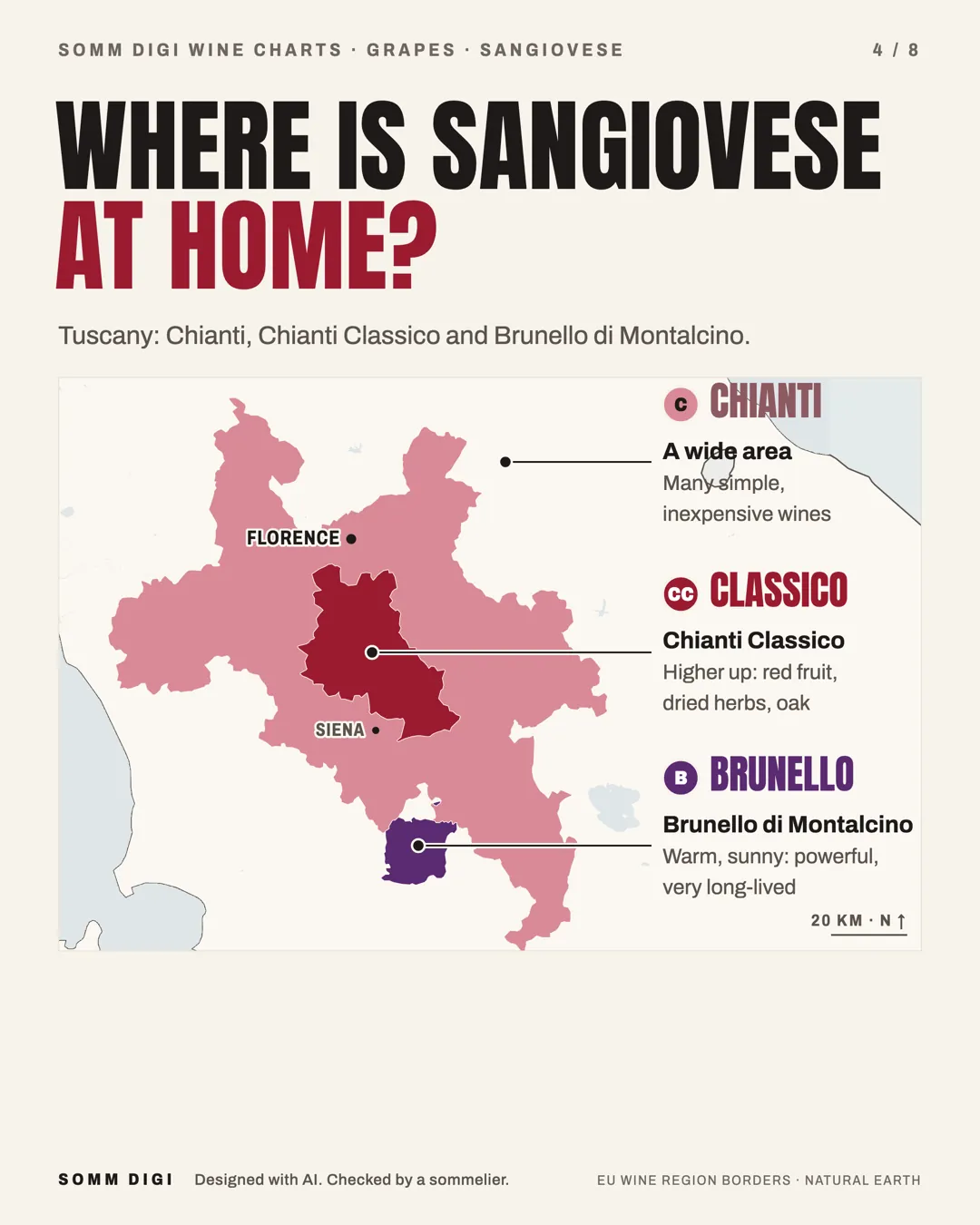
Chianti is a place; Sangiovese is the grape. Sangiovese dominates Chianti, with small amounts of other grapes blended in. So when you open a Chianti, you are drinking Sangiovese.
Tuscany has three names to know. Chianti is a wide area, with many simple, inexpensive wines. Chianti Classico sits higher up: red fruit, dried herbs and oak. Brunello di Montalcino is warm and sunny, and makes powerful, very long-lived wines. The map shows all three.
Is Sangiovese dry? Why it feels so firm
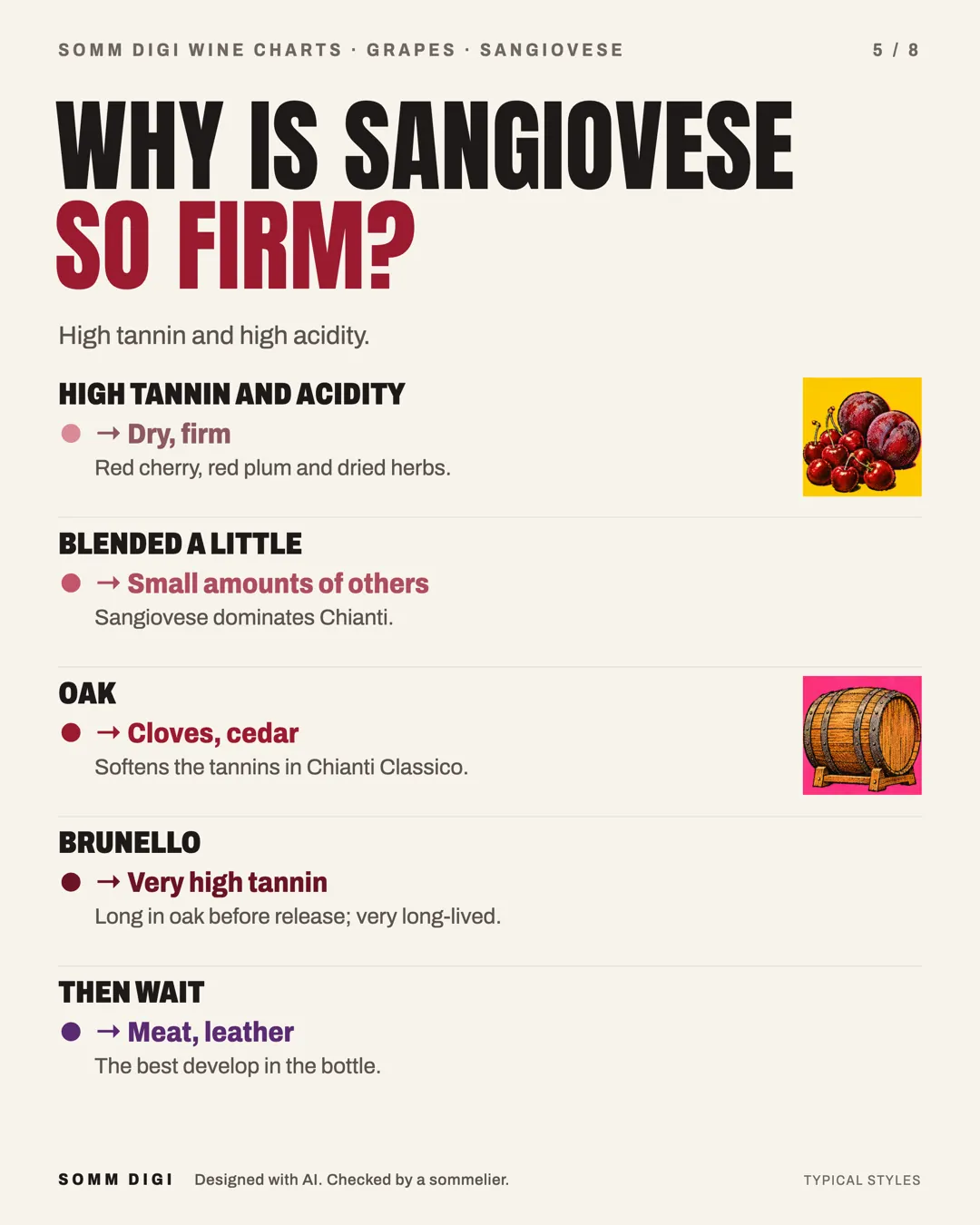
Yes. Sangiovese is dry, and firm with it, because both its tannin and its acidity are high. The fruit is red cherry and red plum, with dried herbs.
Oak plays its part. In Chianti Classico, it adds cloves and cedar and softens the tannins. Brunello goes further: very high tannin, a long time in oak before release, and a very long life. Then comes the wait: in the bottle, the top wines develop meat and leather. The chart explains all five.
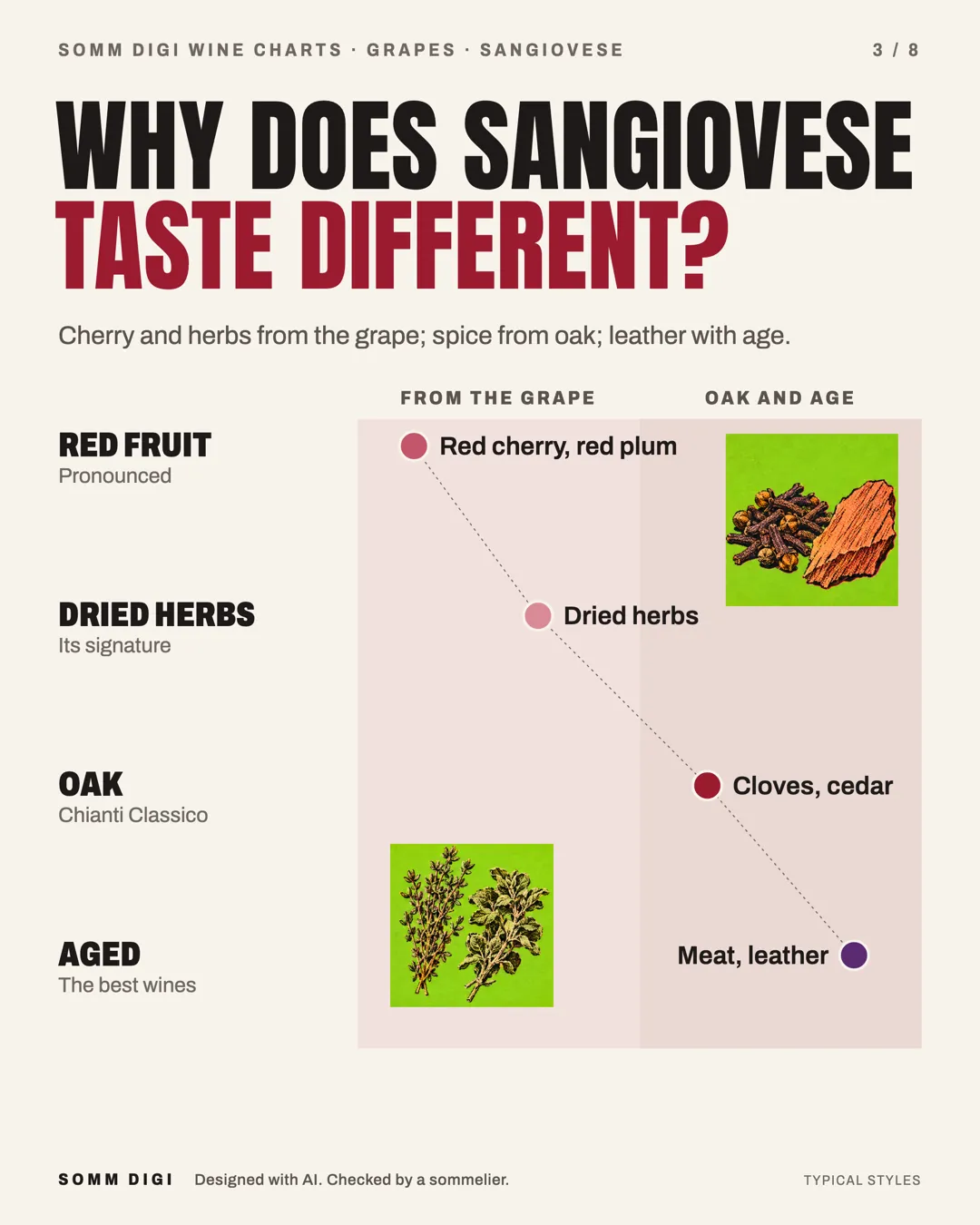
What does Sangiovese taste like?
From the grape: pronounced red fruit, red cherry and red plum, and dried herbs, its signature. From oak and age: cloves and cedar, as in Chianti Classico, then meat and leather in the top aged wines.
So a young, simple Chianti tastes of cherry and herbs, while an aged Brunello moves towards leather. The taste chart lines up the four notes.
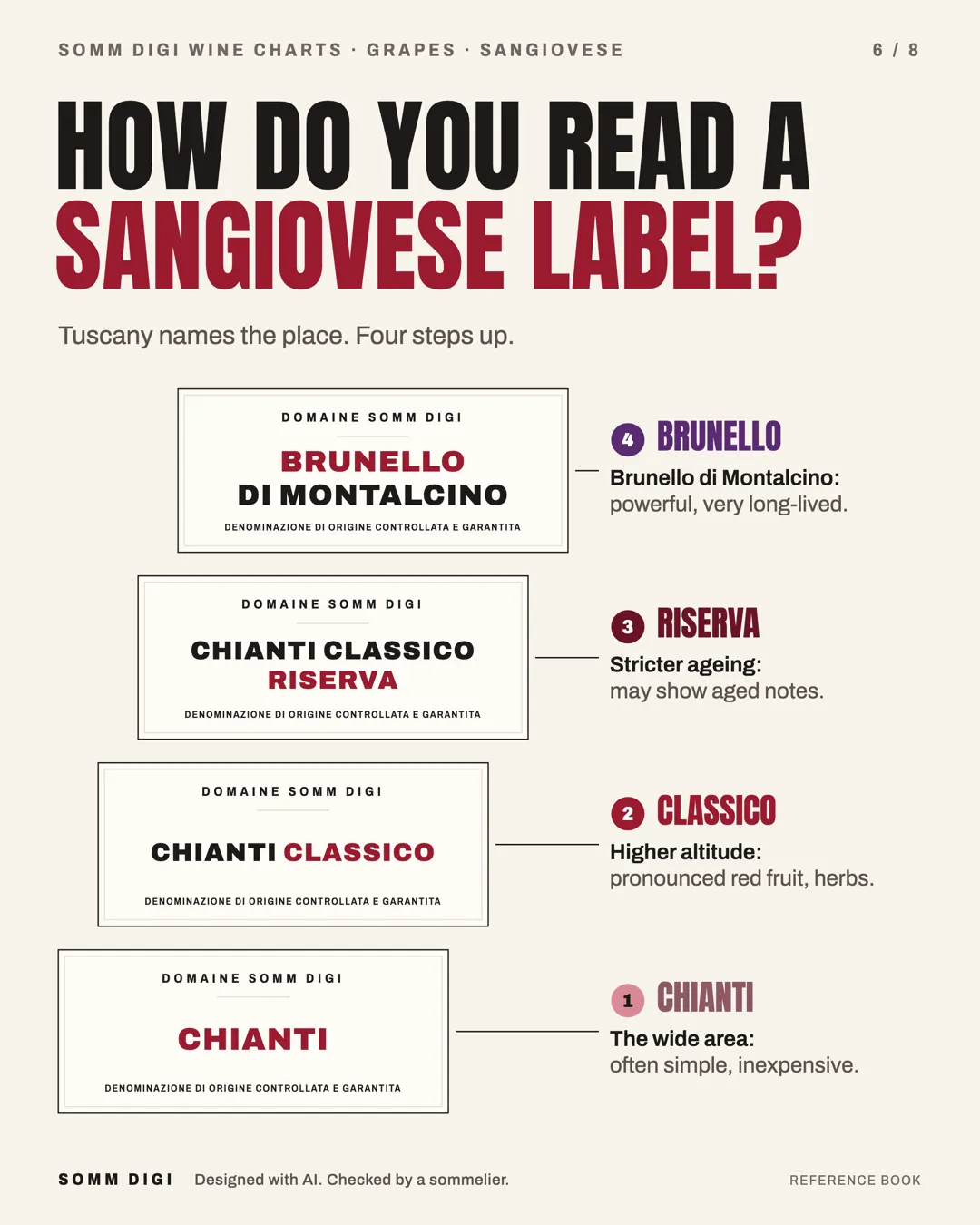
How to read a Chianti label
Tuscany names the place, in four steps up. Chianti is the wide area: often simple and inexpensive. Classico comes from higher altitude: pronounced red fruit and herbs.
Riserva means stricter ageing rules, so the wine may show aged notes. Brunello di Montalcino is powerful and very long-lived. The label chart shows all four.
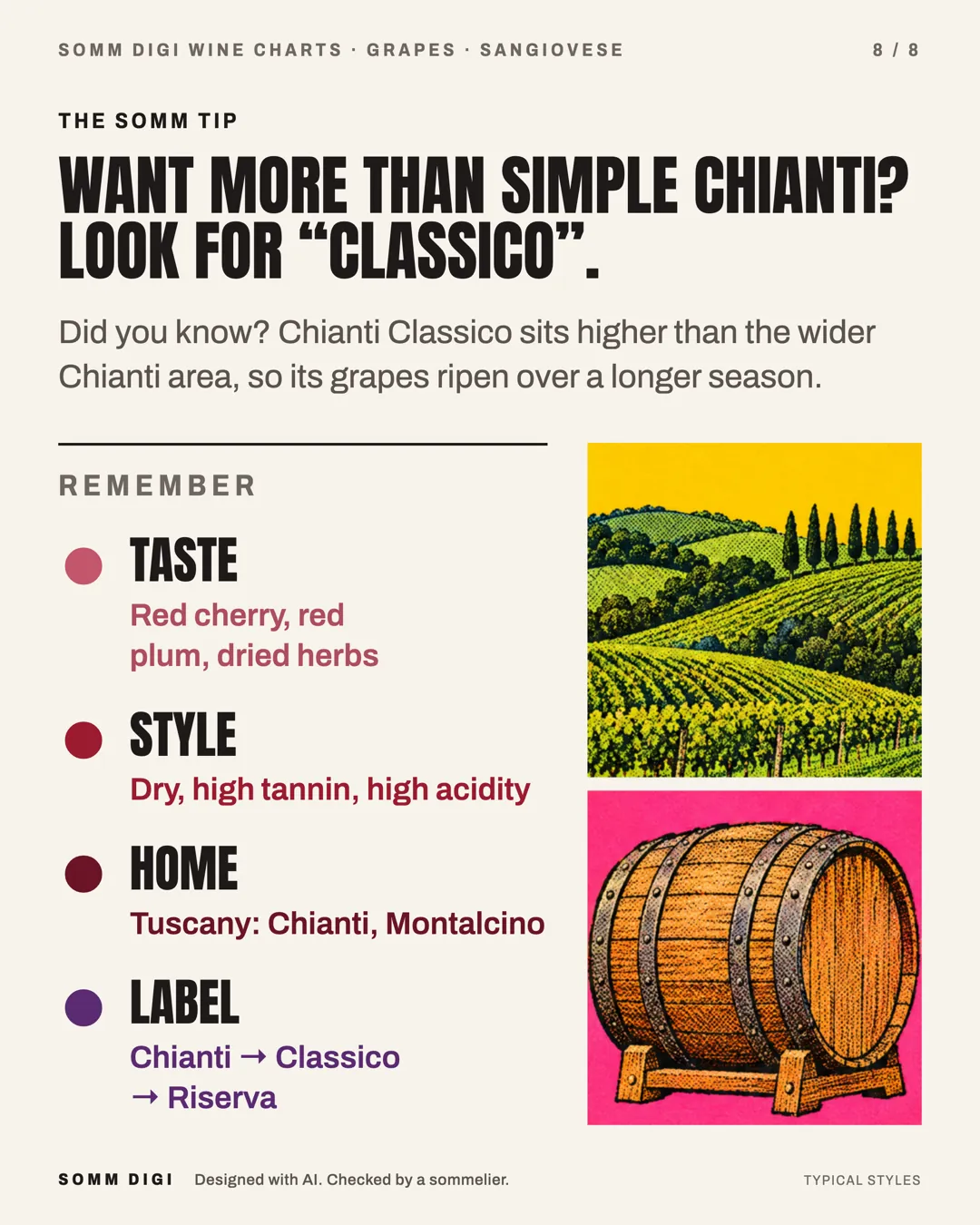
Chianti Classico sits higher than the wider Chianti area, so its grapes ripen over a longer season. Hence the somm tip: want more than simple Chianti? Look for “Classico”.
Sangiovese vs Montepulciano and Nebbiolo
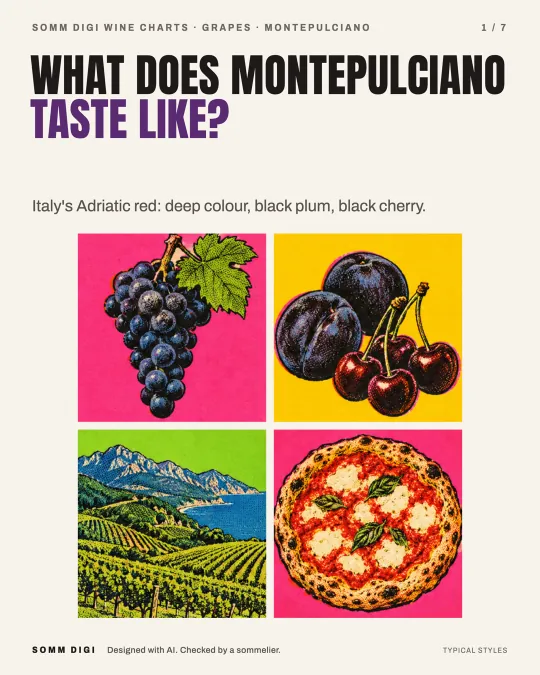
Montepulciano grows on the other side of the Apennine Mountains, in Abruzzo. It is deeper in colour, with black fruit, black plum and black cherry, high tannin and medium acidity. Sangiovese is red fruit and dried herbs, with high acidity.
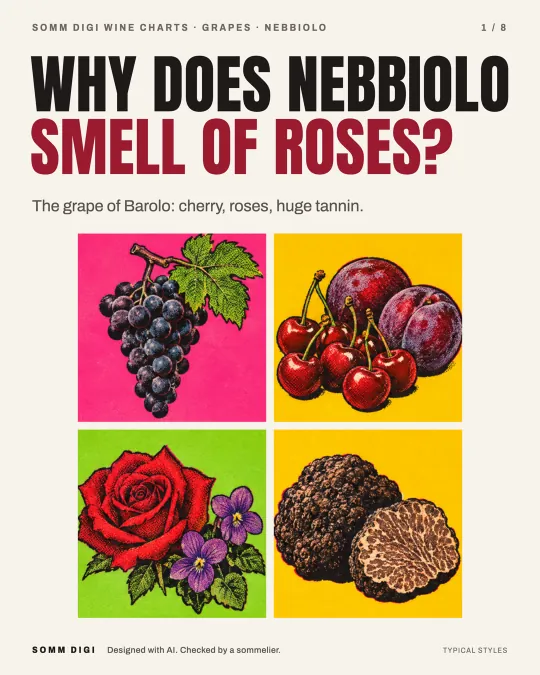
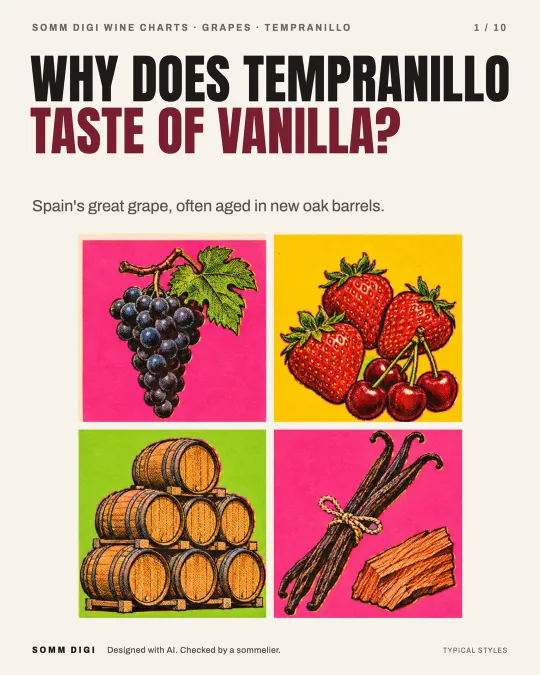
Nebbiolo, from Piemonte, is built the same way: high tannin, high acidity, red cherry and dried herbs. Tempranillo, from Spain, is softer, with medium acidity and medium tannin.
How to serve Sangiovese
Serve Sangiovese at 15–18 °C (59–64 °F), in a large red wine glass.
Which glass?
For the large glass, browse the red wine glass picks for Sangiovese and more on universalwineglasses.com, SOMM DIGI's glass site.
Sangiovese food pairing
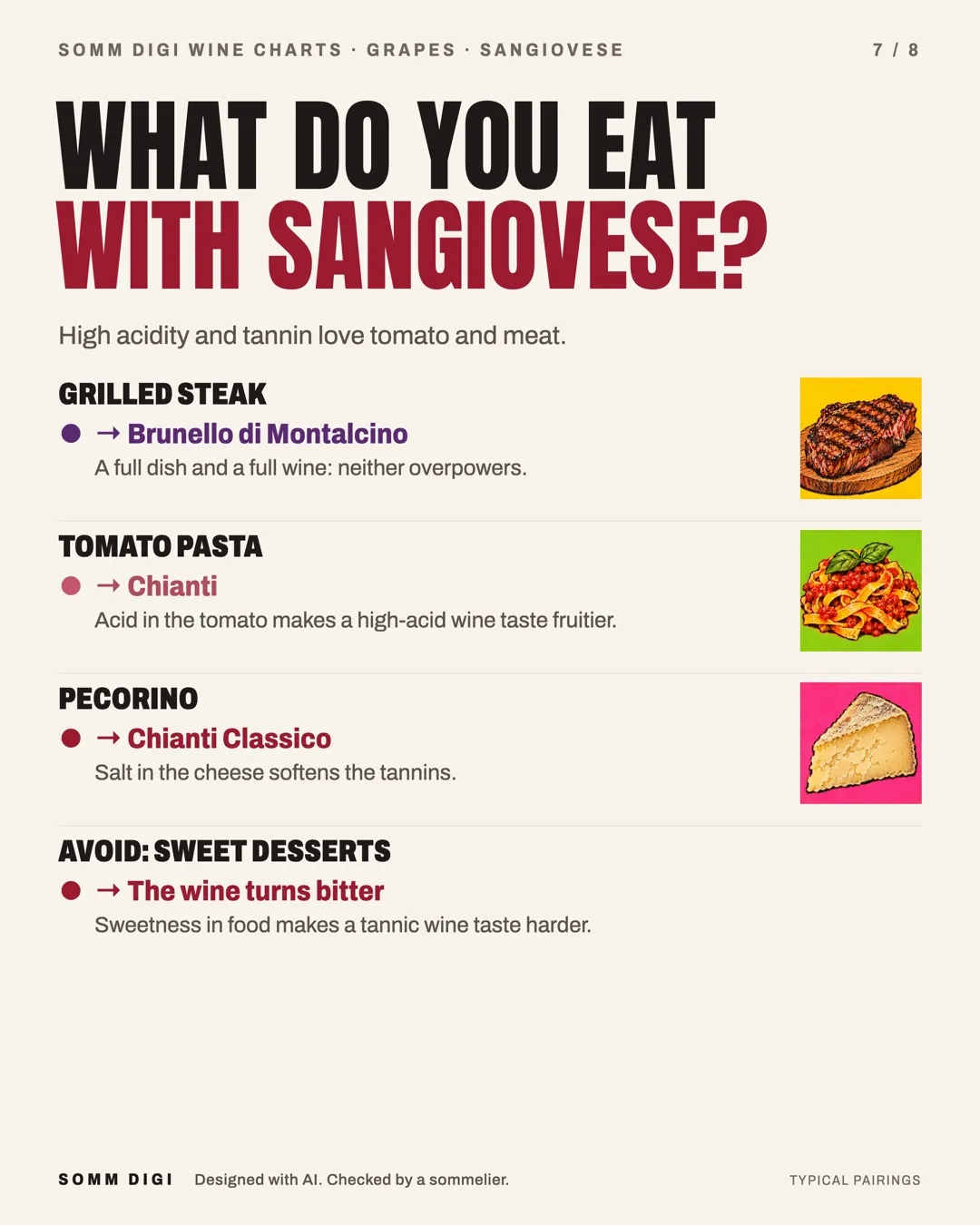
High acidity and tannin love tomato and meat. With grilled steak, pour a Brunello di Montalcino: a full dish and a full wine, so neither overpowers. With tomato pasta, a Chianti: acid in the tomato makes a high-acid wine taste fruitier.
With pecorino, a Chianti Classico: salt in the cheese softens the tannins. Pizza is a good match too. Skip sweet desserts: sweetness in food makes a tannic wine taste harder, so the wine turns bitter. The pairing chart has all four.
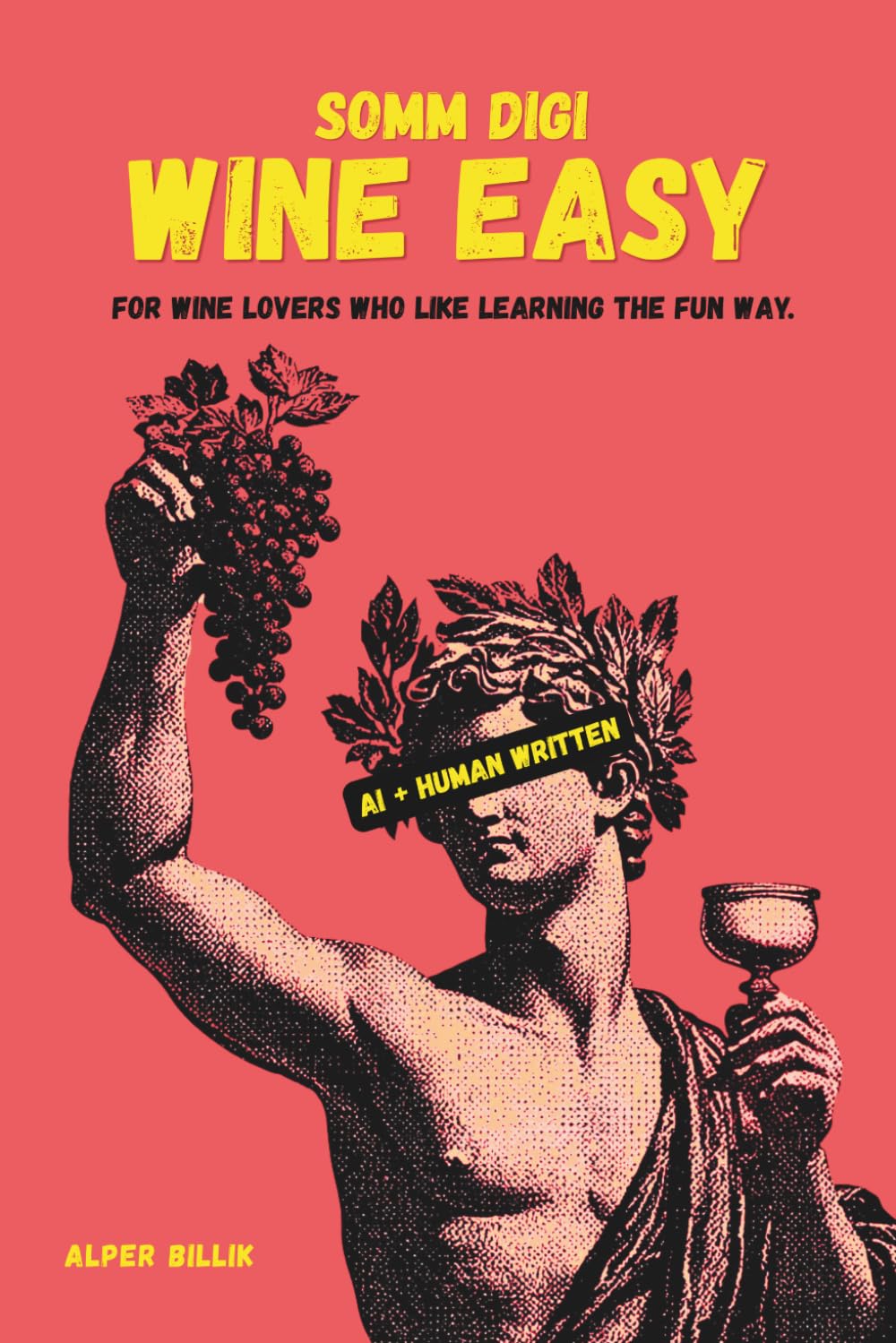
Learn wine the easy way
Wine Easy
The wine book that talks to you like a human: grapes, tasting, pairing and countries A–Z, in 388 full-colour pages.
Sangiovese questions, answered
How do you pronounce Sangiovese?
san-joh-VAY-zeh.
Is Chianti made from Sangiovese?
Yes. Sangiovese dominates Chianti, with small amounts of other grapes.
Is Sangiovese sweet or dry?
Dry, with high tannin and high acidity.
What is Brunello?
Sangiovese's local name in Montalcino. Brunello di Montalcino is powerful and very long-lived.
What does Chianti Classico mean?
Chianti from the higher area: pronounced red fruit and herbs, often with oak.
Try next
If you like Sangiovese
How this page was made. Charts designed with AI and checked by Alper Billik, Advanced Sommelier. Text written from the same chart facts and edited with AI.