
Gamay wine: why does it taste like banana?
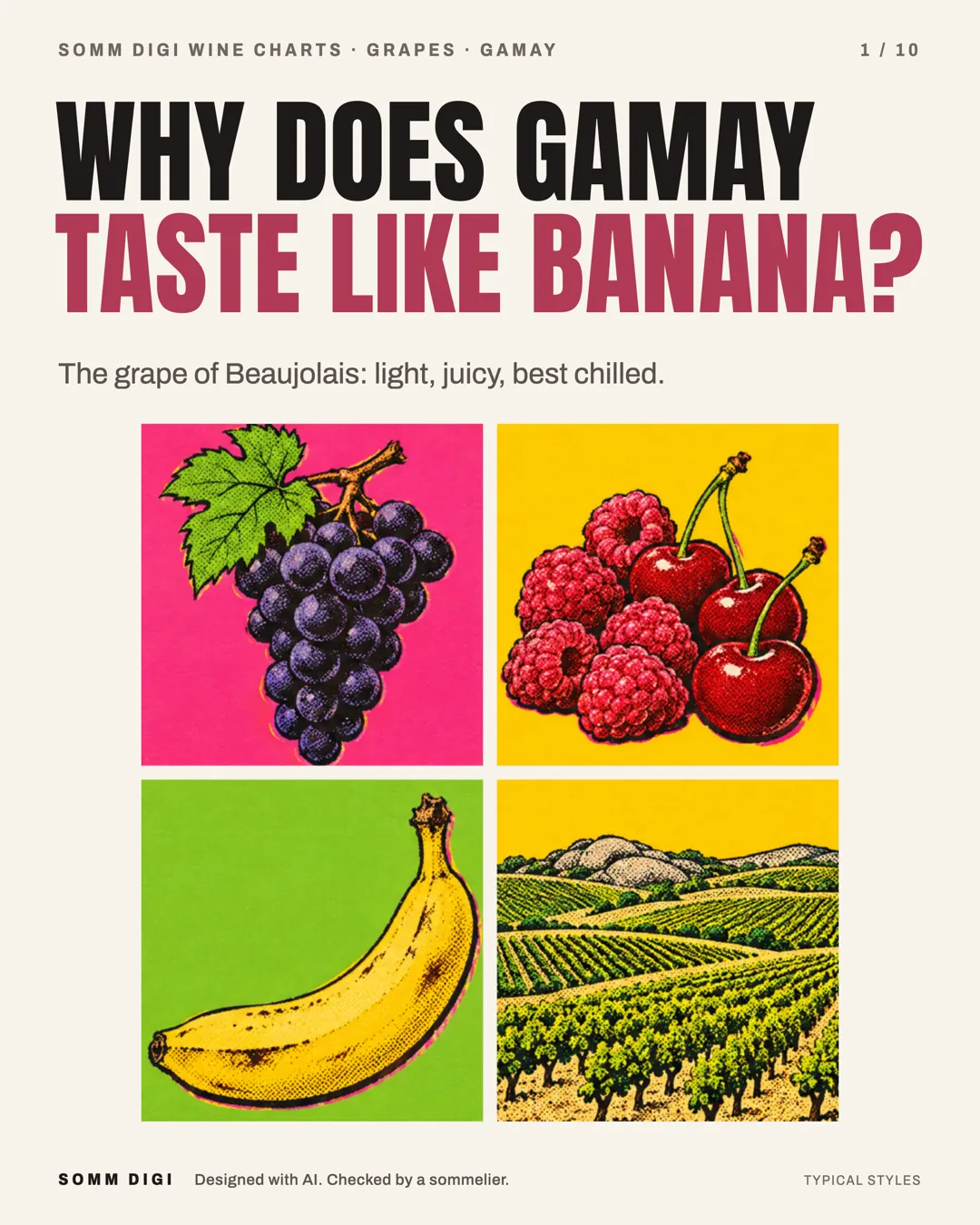
A red wine that smells of raspberry and banana, and tastes better with a chill: that is Gamay. Almost all of it comes from one place, Beaujolais.
Quick answer
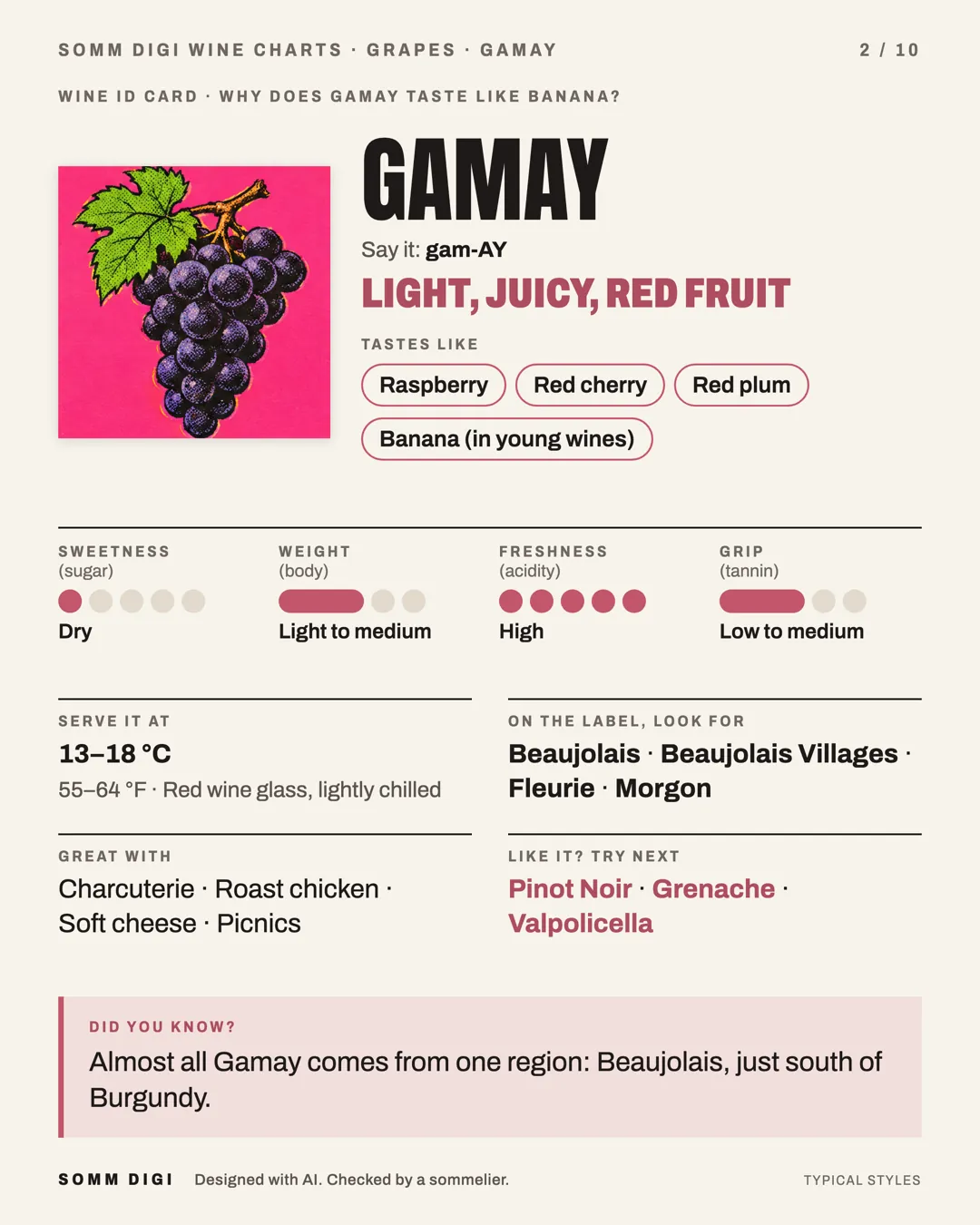
Gamay (say it gam-AY) is the red grape of Beaujolais, just south of Burgundy. Its wines are dry, light to medium in body, high in acidity and low in tannin, with raspberry, red cherry and red plum; young ones smell of banana. Serve it lightly chilled, at 13–18 °C (55–64 °F). For more depth, look for a cru such as Fleurie or Morgon.

Alper Billik · Advanced Sommelier
Updated November 2026 · Edited with AI
This article may contain affiliate links.
On this page
What is Gamay wine?
Gamay (say it gam-AY) is a red grape, and almost all Gamay comes from one region: Beaujolais, just south of Burgundy in France. So when you drink a Beaujolais, you are drinking Gamay.
Its wine is light, juicy and full of red fruit: raspberry, red cherry, red plum. It is dry, with high acidity and low to medium tannin, and young wines often smell of banana. It is one of the few reds that tastes better lightly chilled. The profile card has the essentials on one page.
Gamay vs Pinot Noir
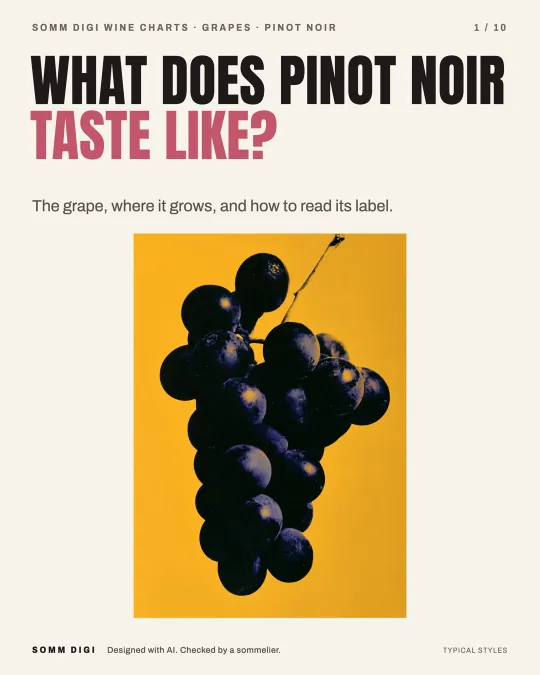
Pinot Noir is Gamay's neighbour: Burgundy is just north of Beaujolais. The two share a lot. Both are dry reds with high acidity and low to medium tannin, both taste of raspberry and red cherry, and both are served at 13–18 °C (55–64 °F).
The differences are in the details. Young Gamay can smell of banana and candy, is made without oak, and is mostly drunk young. Pinot Noir runs from light to full in body, and with age it picks up mushroom notes. If you like one, try the other.
Gamay has a cousin in style in Italy, too: Valpolicella, led by the Corvina grape. It is light and fruity, with red cherry and red plum, high acidity and low tannin.
What does Gamay taste like?
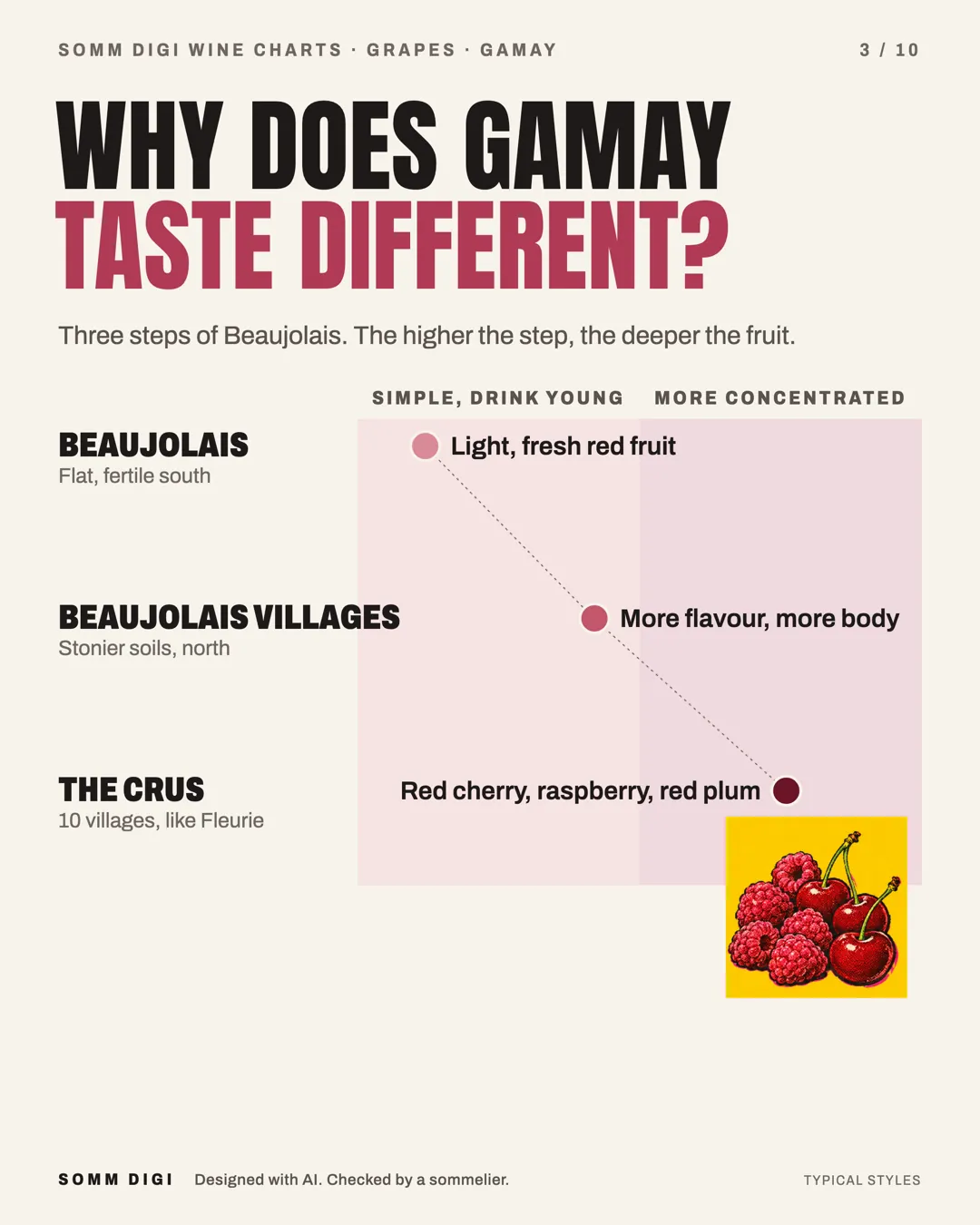
Gamay tastes of fresh red fruit: raspberry, red cherry and red plum. How deep that fruit goes depends on where in Beaujolais it grows, and the label tells you in three steps.
Plain Beaujolais, mostly from the flat, fertile south, is light, with fresh red fruit: simple wine to drink young. Beaujolais Villages, from stonier soils in the north, has more flavour and more body.
At the top are the crus: 10 villages, like Fleurie, with red cherry, raspberry and red plum, and more concentration. The body stays light to medium and the tannin low to medium, so every step feels soft and juicy, not grippy. The taste chart climbs all three steps.
Why does Gamay taste like banana?
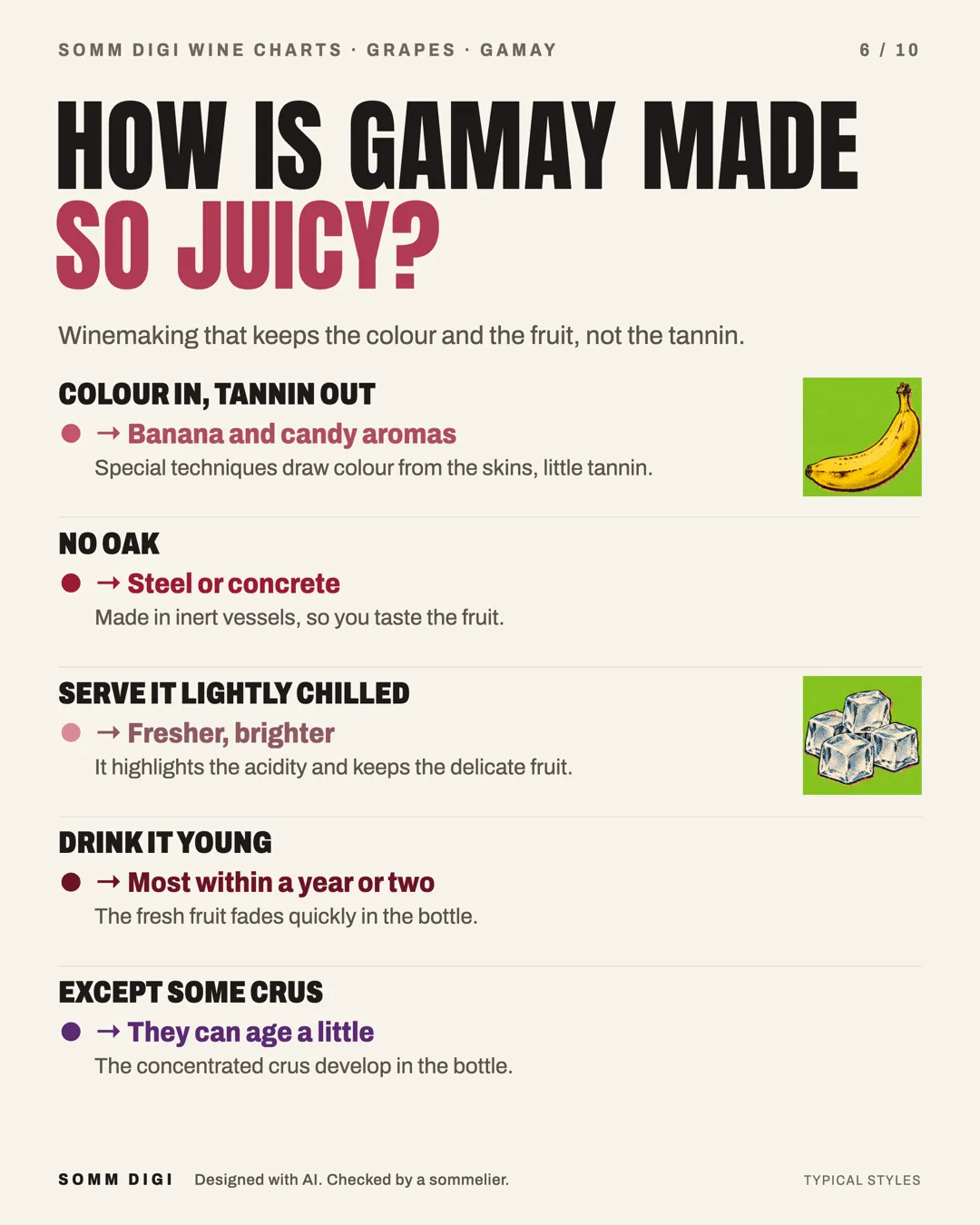
Because of the way it is made. Special winemaking techniques draw colour from the skins but little tannin. Those same techniques give young Gamay its banana and candy aromas. Colour in, tannin out: the wine looks red but feels soft.
There is no oak. The wine is made in steel or concrete, inert vessels, so what you taste is the fruit. That fruit is delicate, so most Gamay is drunk young, within a year or two: the fresh fruit fades quickly in the bottle.
The exception is some crus. The more concentrated ones can age a little and develop in the bottle. The winemaking chart shows how Gamay stays so juicy.
Where is Gamay from? Beaujolais
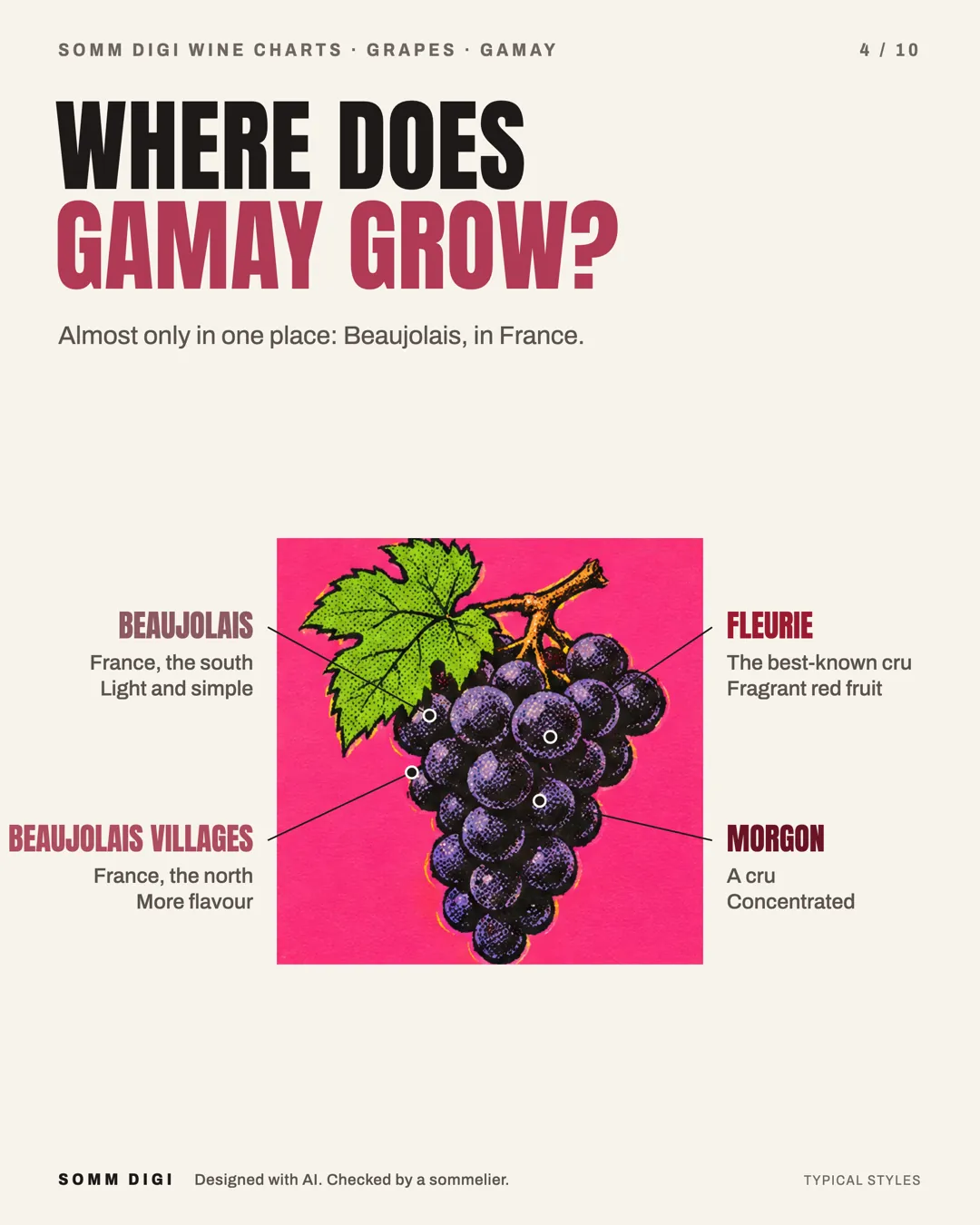
Gamay grows almost only in one place: Beaujolais, in France. Plain Beaujolais comes mostly from the south, light and simple. Beaujolais Villages comes from the north, with more flavour.
Two crus are worth knowing by name. Fleurie is the best-known cru, with fragrant red fruit. Morgon is a cru with concentrated wines. The regions chart puts all four side by side.
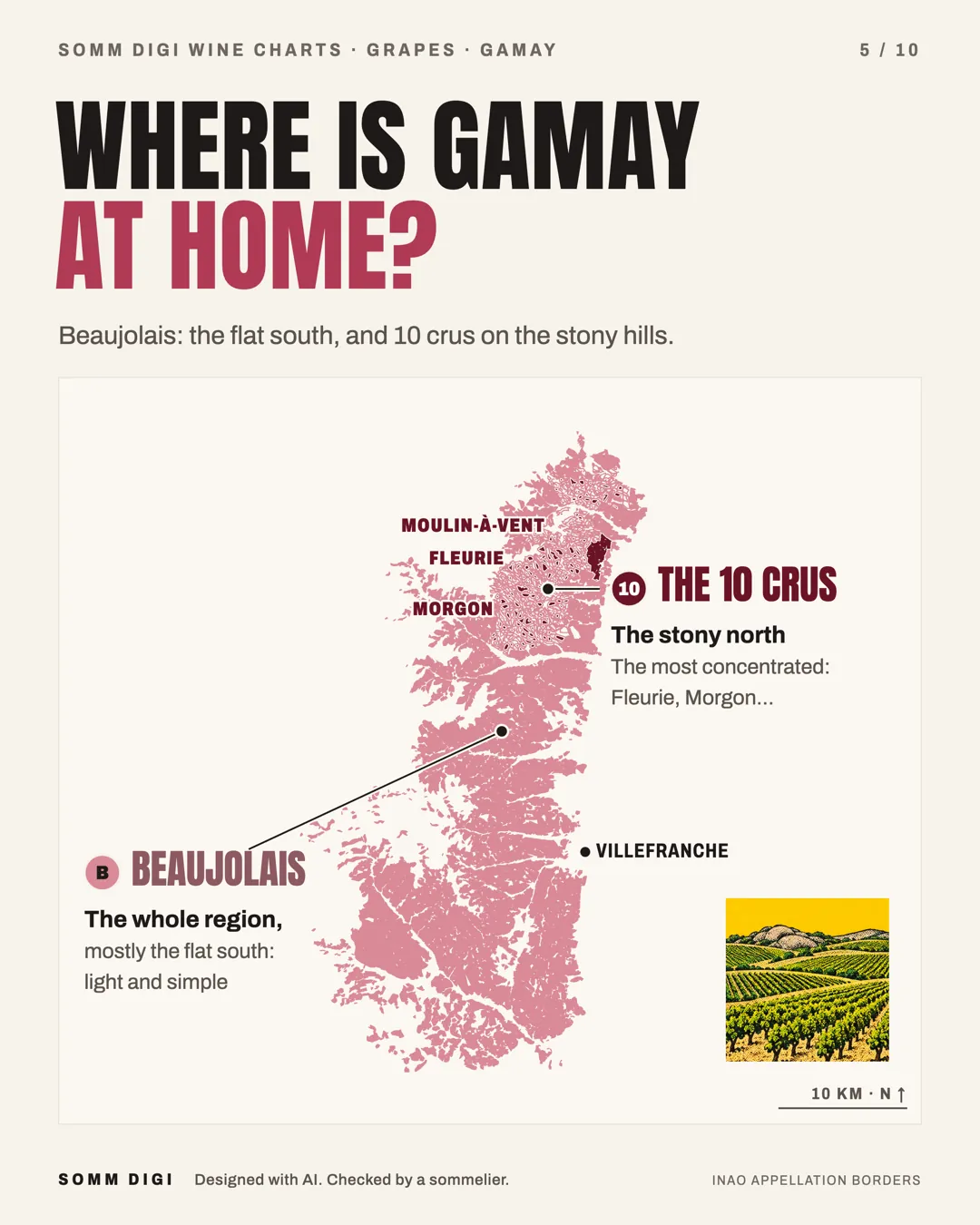
On the map, Beaujolais splits in two. The flat south makes most of the Beaujolais AOC wine: light and simple. The stony hills of the north hold the 10 cru villages, the most concentrated wines, Fleurie and Morgon among them.
How to read a Beaujolais label
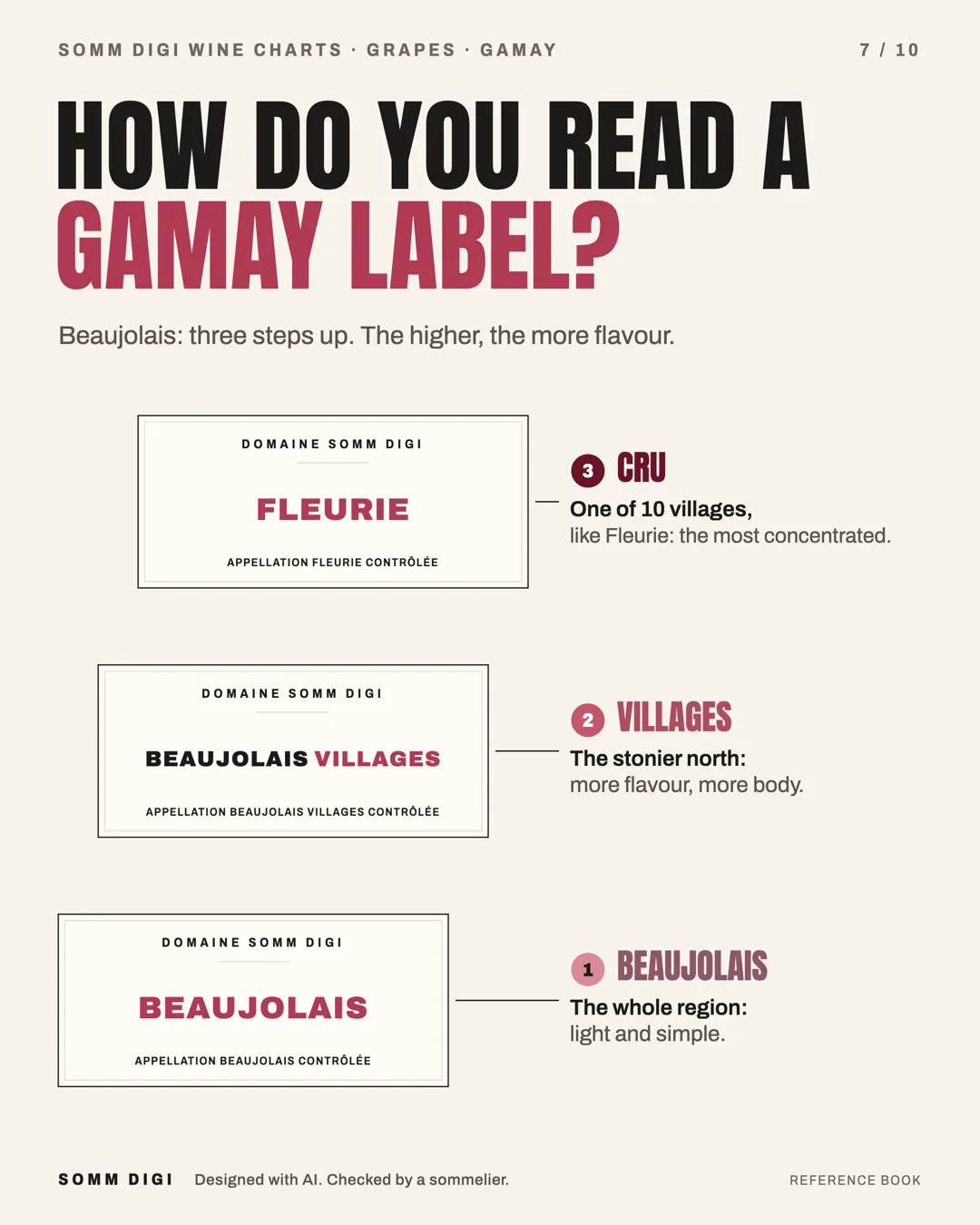
A Beaujolais label climbs three steps up. The higher the step, the more flavour.
Beaujolais covers the whole region: light and simple. Beaujolais Villages comes from the stonier north: more flavour, more body. A cru label names one of the 10 villages, like Fleurie or Morgon: the most concentrated. The label chart shows all three.
So the shortcut is easy. Want light and simple? Plain Beaujolais. Want more flavour? Villages. Want the most concentrated Gamay? A cru.
Which Gamay is for you?
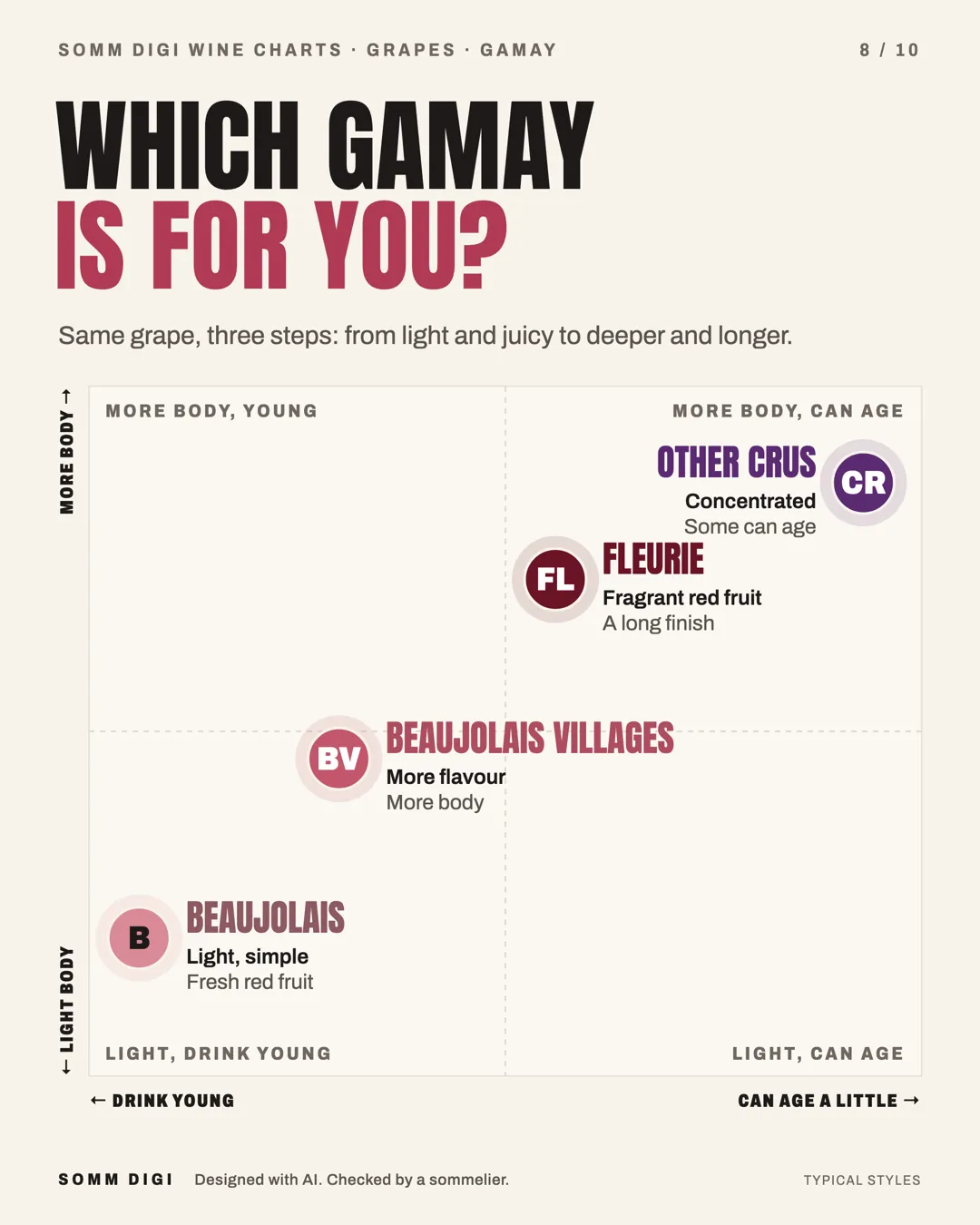
Same grape, three steps, from light and juicy to deeper and longer. For light and simple, with fresh red fruit, plain Beaujolais. For more flavour and more body, Beaujolais Villages.
For fragrant red fruit and a long finish, Fleurie. For concentration, the other crus; some of them can age. Not sure where to start? A Beaujolais Villages sits in the middle: more flavour than plain Beaujolais, still light and juicy. The styles chart maps them from light to deep.
Should Gamay be chilled?
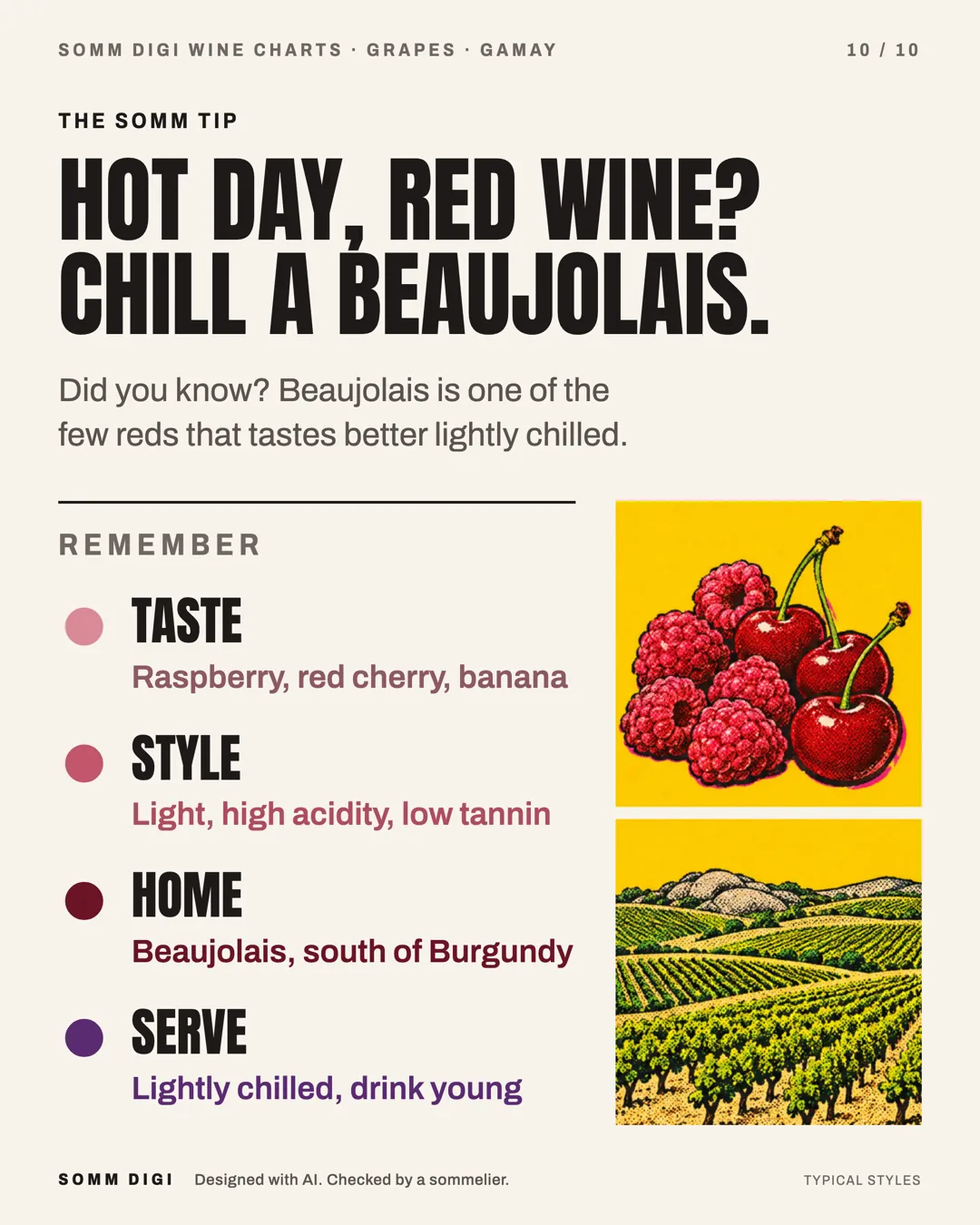
Yes, lightly. Serve Gamay at 13–18 °C (55–64 °F). A light chill makes it fresher and brighter: it highlights the acidity and keeps the delicate fruit.
Why chill a red? Because Gamay's charm is its fresh fruit and its acidity, and a light chill shows off both. Pour it at a picnic, or on any day a heavier red feels like too much.
Which glass?
Any red wine glass works. For a shape picked for Gamay, see the Zalto Burgundy glass review on universalwineglasses.com, SOMM DIGI's glass site.
Remember it with the somm tip: hot day, red wine? Chill a Beaujolais.
Gamay food pairing
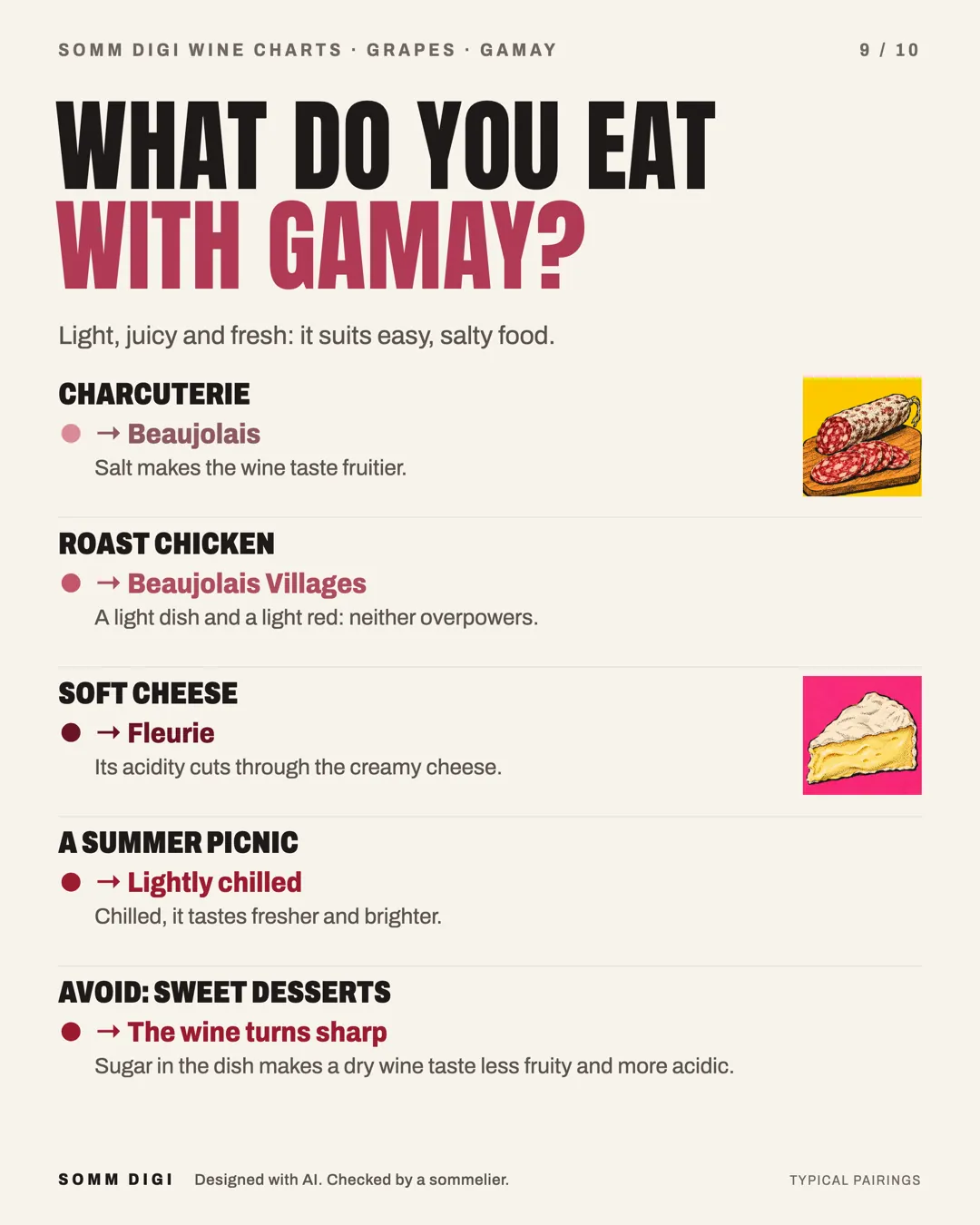
Light, juicy and fresh, Gamay suits easy, salty food. With charcuterie, pour a Beaujolais: salt makes the wine taste fruitier. With roast chicken, a Beaujolais Villages: a light dish and a light red, so neither overpowers.
With soft cheese, a Fleurie: its acidity cuts through the creamy cheese. And for a summer picnic, any Gamay, lightly chilled: it tastes fresher and brighter. Charcuterie, soft cheese and roast chicken all fit in the same basket.
Skip one match: sweet desserts. Sugar in the dish makes a dry wine taste less fruity and more acidic, so the wine turns sharp. The pairing chart has all five.
Learn wine the easy way
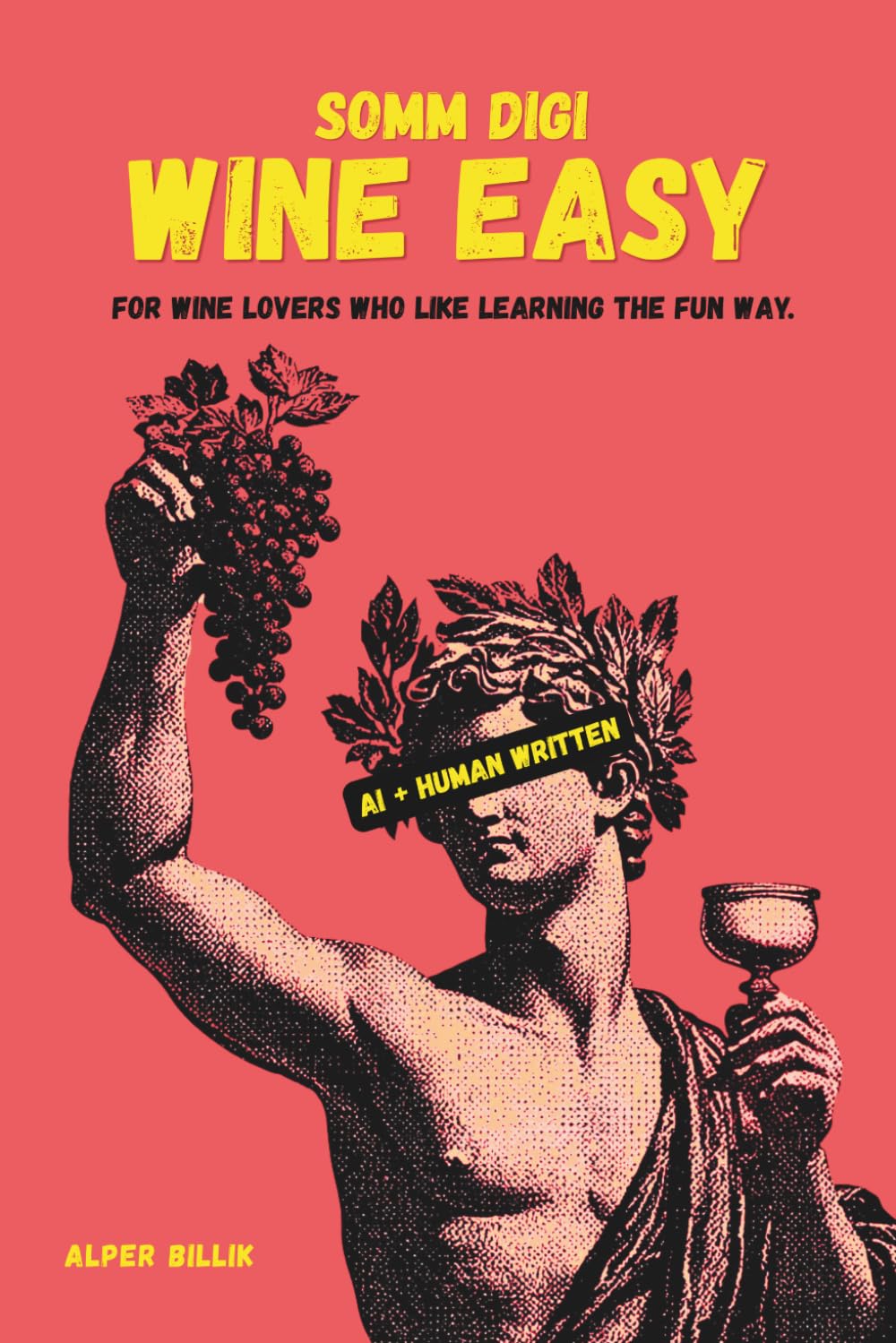
Wine Easy
The wine book that talks to you like a human: grapes, tasting, pairing and countries A–Z, in 388 full-colour pages.
Gamay questions, answered
How do you pronounce Gamay?
gam-AY.
Is Beaujolais the same as Gamay?
Beaujolais is the place, Gamay the grape. Almost all Gamay comes from Beaujolais, just south of Burgundy.
Should Gamay be served chilled?
Lightly, at 13–18 °C (55–64 °F). A chill makes it fresher and brighter.
Why does Gamay smell of banana?
The winemaking. Special techniques draw colour but little tannin from the skins, and they give young Gamay banana and candy aromas.
Does Gamay age?
Most is drunk young, within a year or two. Some concentrated crus can age a little.
What is a Beaujolais cru?
One of 10 villages on the stony hills of northern Beaujolais, like Fleurie and Morgon: the most concentrated Gamay.
Try next
If you like Gamay
How this page was made. Charts designed with AI and checked by Alper Billik, Advanced Sommelier. Text written from the same chart facts and edited with AI.