
Amarone wine: what does Corvina taste like?
Corvina makes a light, cherry-fresh red to drink young. Dry its grapes indoors first, and the same grape becomes Amarone: full, rich and about 15% alcohol.
Quick answer
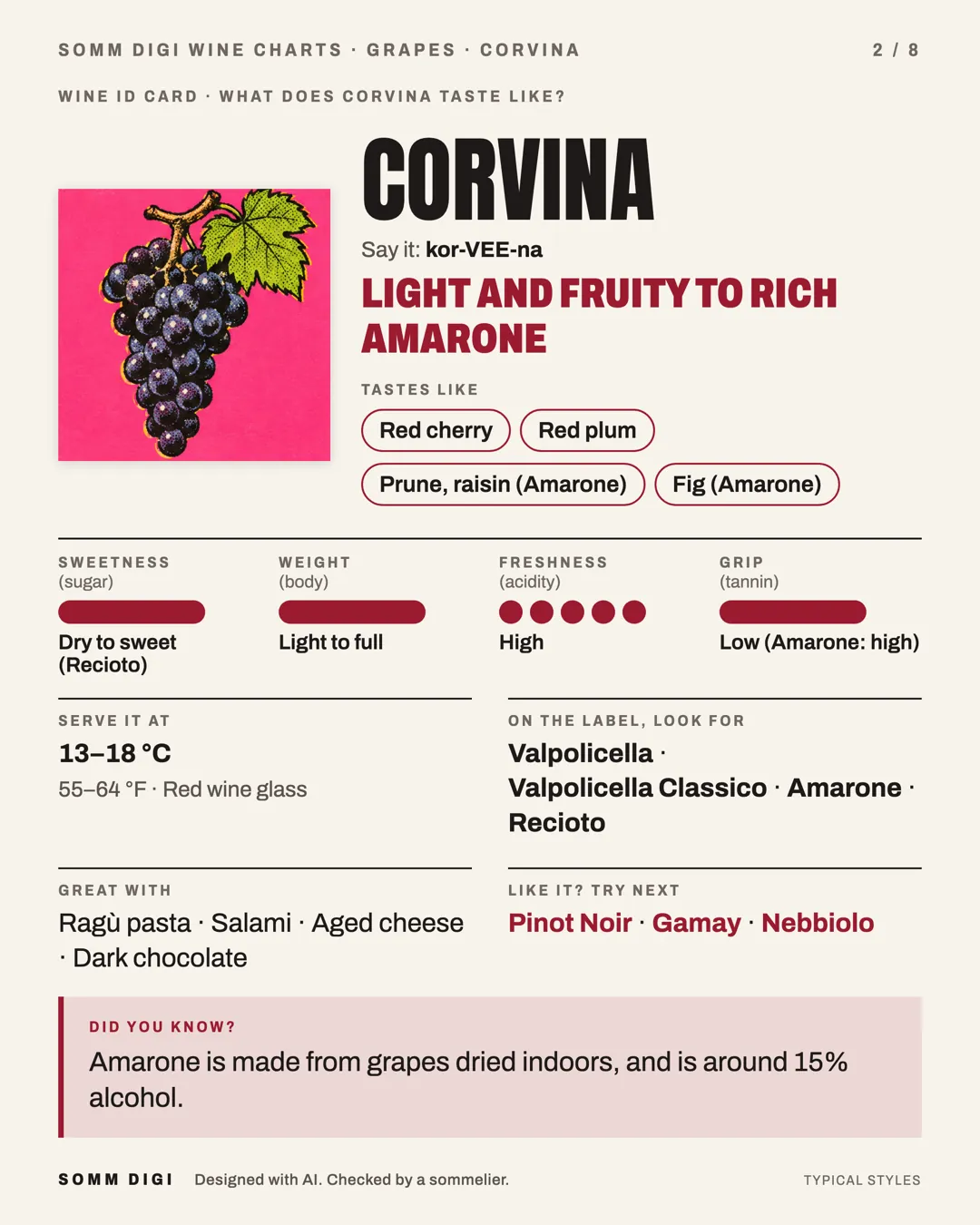
Corvina (say it kor-VEE-na) is the red grape that leads the blend in Valpolicella, north of Verona in Italy. Fresh, it makes light, fruity Valpolicella with red cherry and red plum. From grapes dried indoors, it makes Amarone: full, dry to off-dry, about 15% alcohol, with prune, raisin and fig. Serve it at 13–18 °C (55–64 °F). Want rich and bold? Look for Amarone.

Alper Billik · Advanced Sommelier
Updated November 2026 · Edited with AI
This article may contain affiliate links.
On this page
What is Amarone?
Amarone is a red wine made from grapes dried indoors, and it is around 15% alcohol. It comes from Valpolicella, in the Veneto, north of Verona, and its main grape is Corvina (say it kor-VEE-na).
Corvina leads the blend in every Valpolicella wine, from light and fruity to rich Amarone. Fresh, it tastes of red cherry and red plum, with high acidity. The profile card has the essentials on one page.
How is Amarone made?
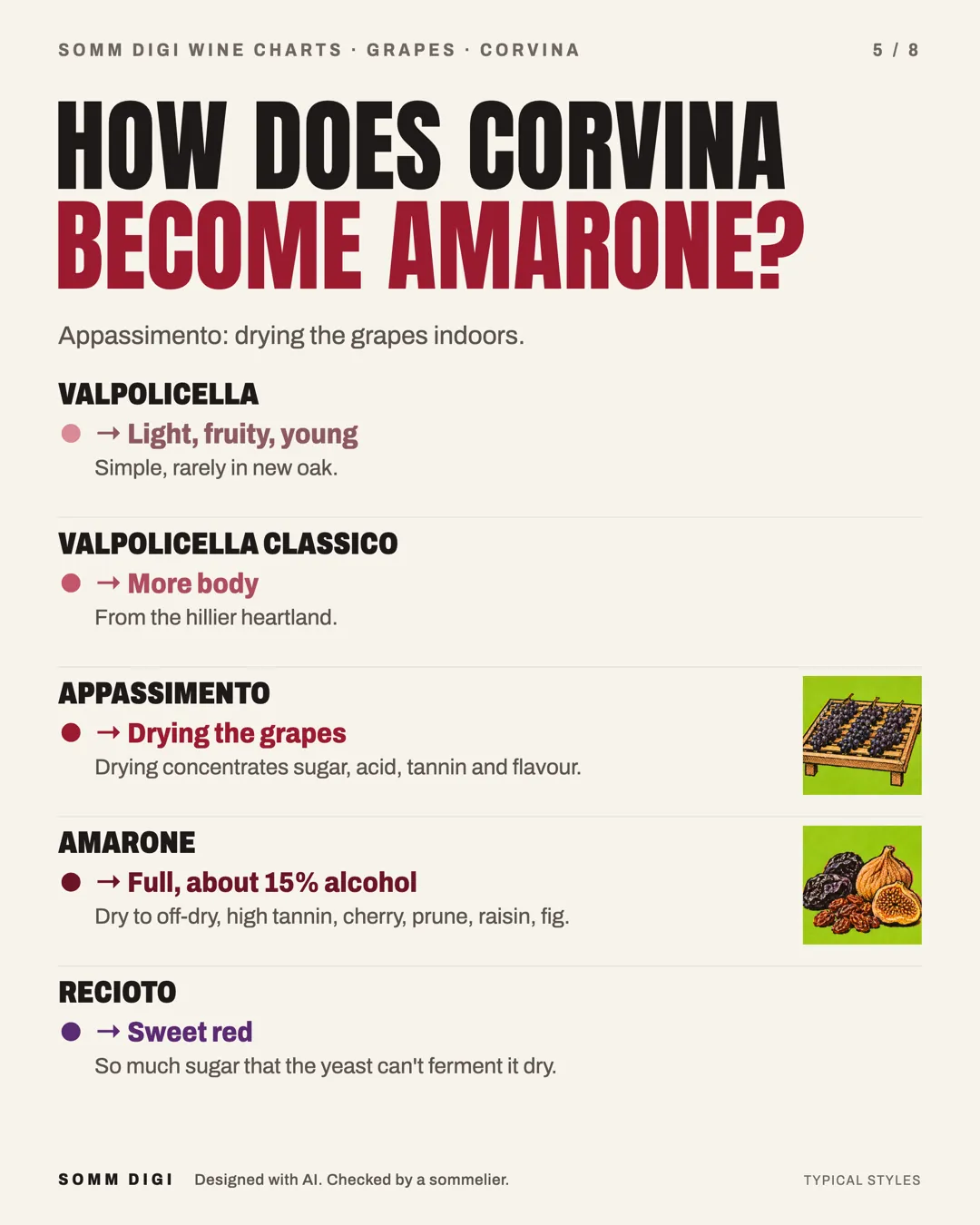
The secret is appassimento: drying the grapes indoors. As they dry, the grapes concentrate their sugar, acid, tannin and flavour. That is how a light, fruity grape makes a full wine.
Amarone is the dry result: full, about 15% alcohol, dry to off-dry, with high tannin and notes of cherry, prune, raisin and fig. Recioto is the sweet one. Its dried grapes hold so much sugar that the yeast can't ferment it dry, so it stays a sweet red.
Without drying, Corvina makes Valpolicella: light, fruity and young, simple, and rarely in new oak. Valpolicella Classico, from the hillier heartland, has more body. The appassimento chart shows all five steps.
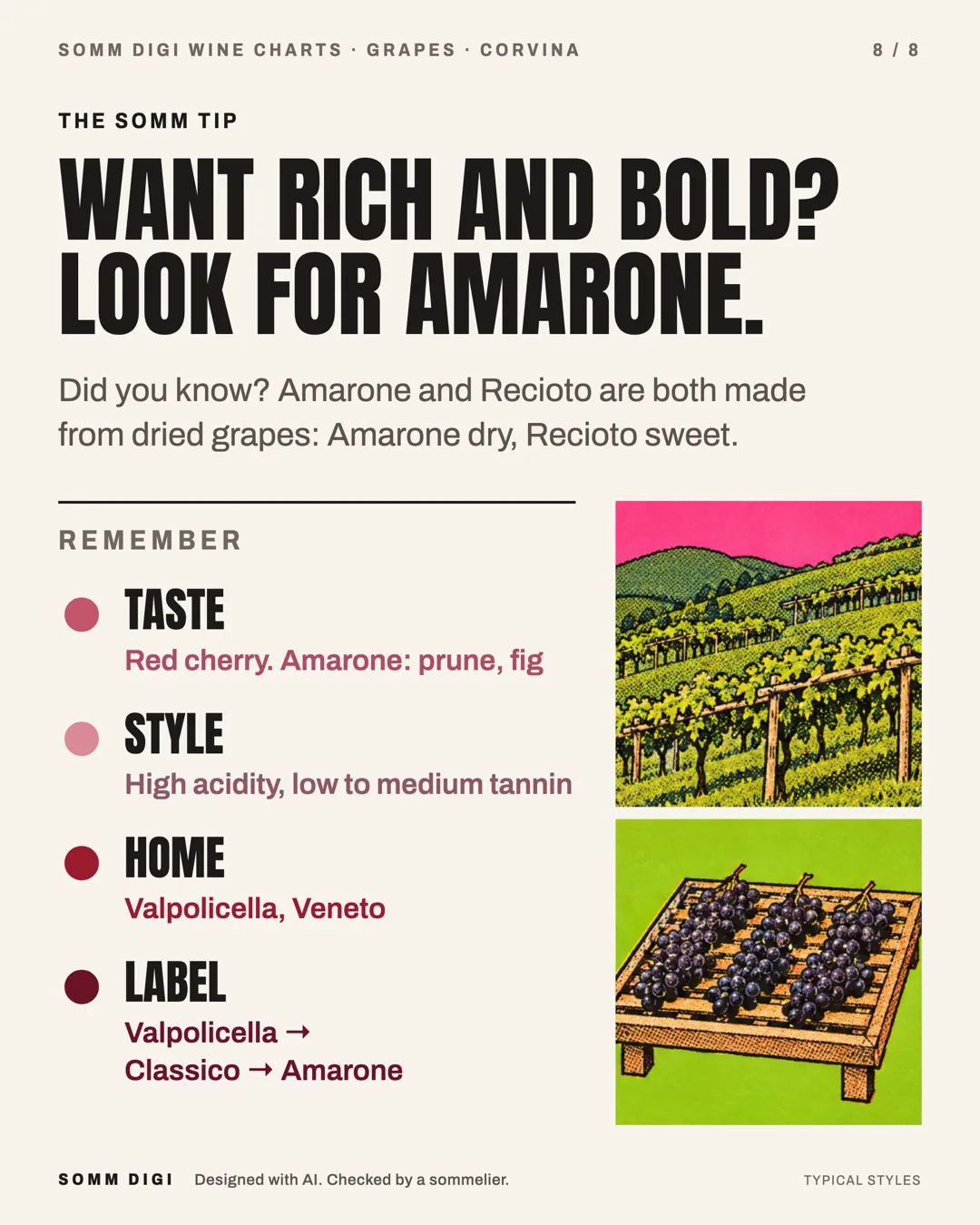
The somm tip keeps it simple: want rich and bold? Look for Amarone.
Is Amarone sweet?
No. Amarone is dry to off-dry, even though its grapes are dried. The sweet one is Recioto della Valpolicella: both are made from dried grapes, Amarone dry, Recioto sweet.
What does Corvina taste like?
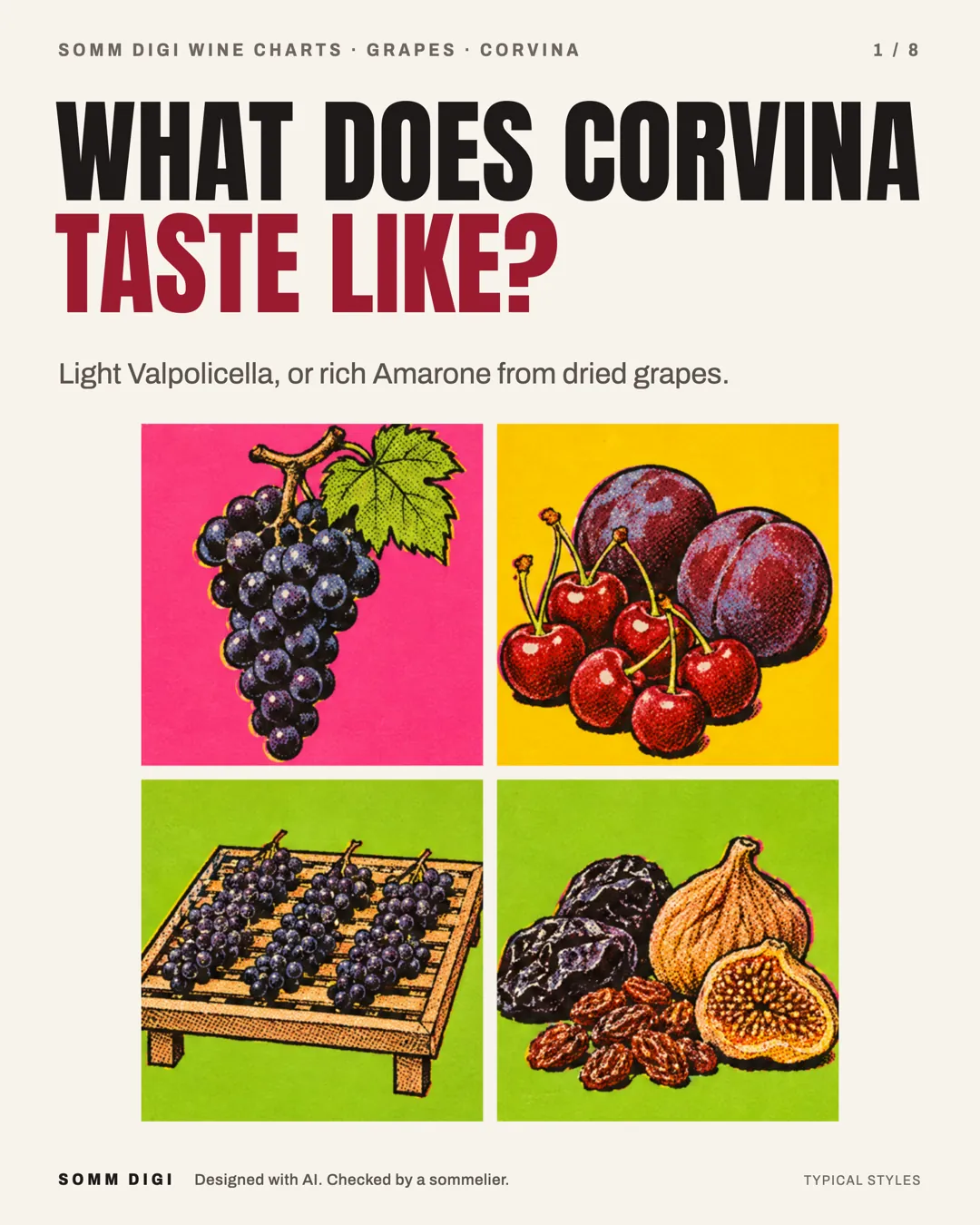
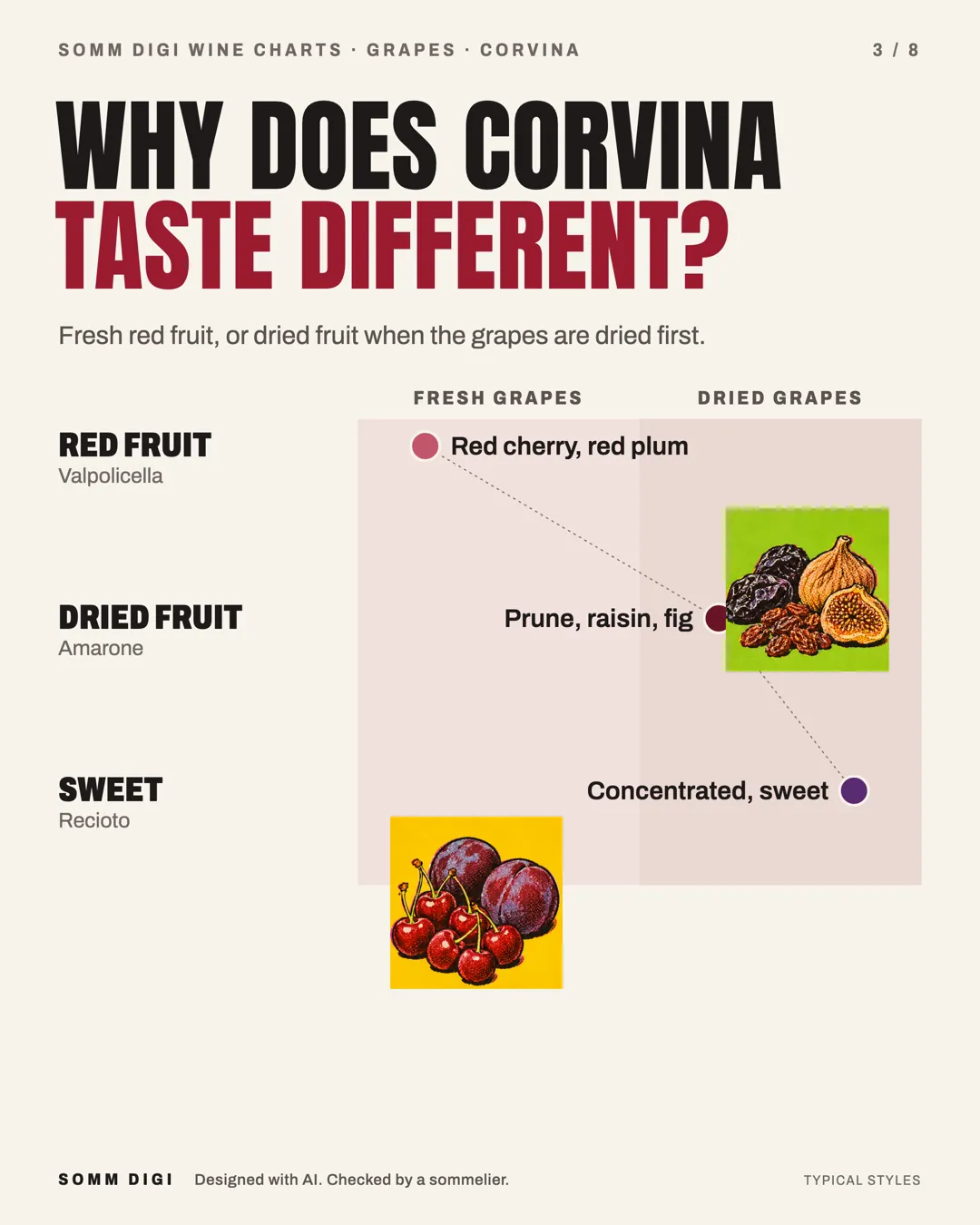
It depends on the grapes. Fresh grapes give red fruit: red cherry and red plum, the taste of Valpolicella. Dried grapes give dried fruit: prune, raisin and fig, the taste of Amarone.
Dry them until there is more sugar than the yeast can ferment, and you get Recioto: concentrated and sweet. The taste chart follows the grape from fresh to dried.
Valpolicella vs Amarone: read the label
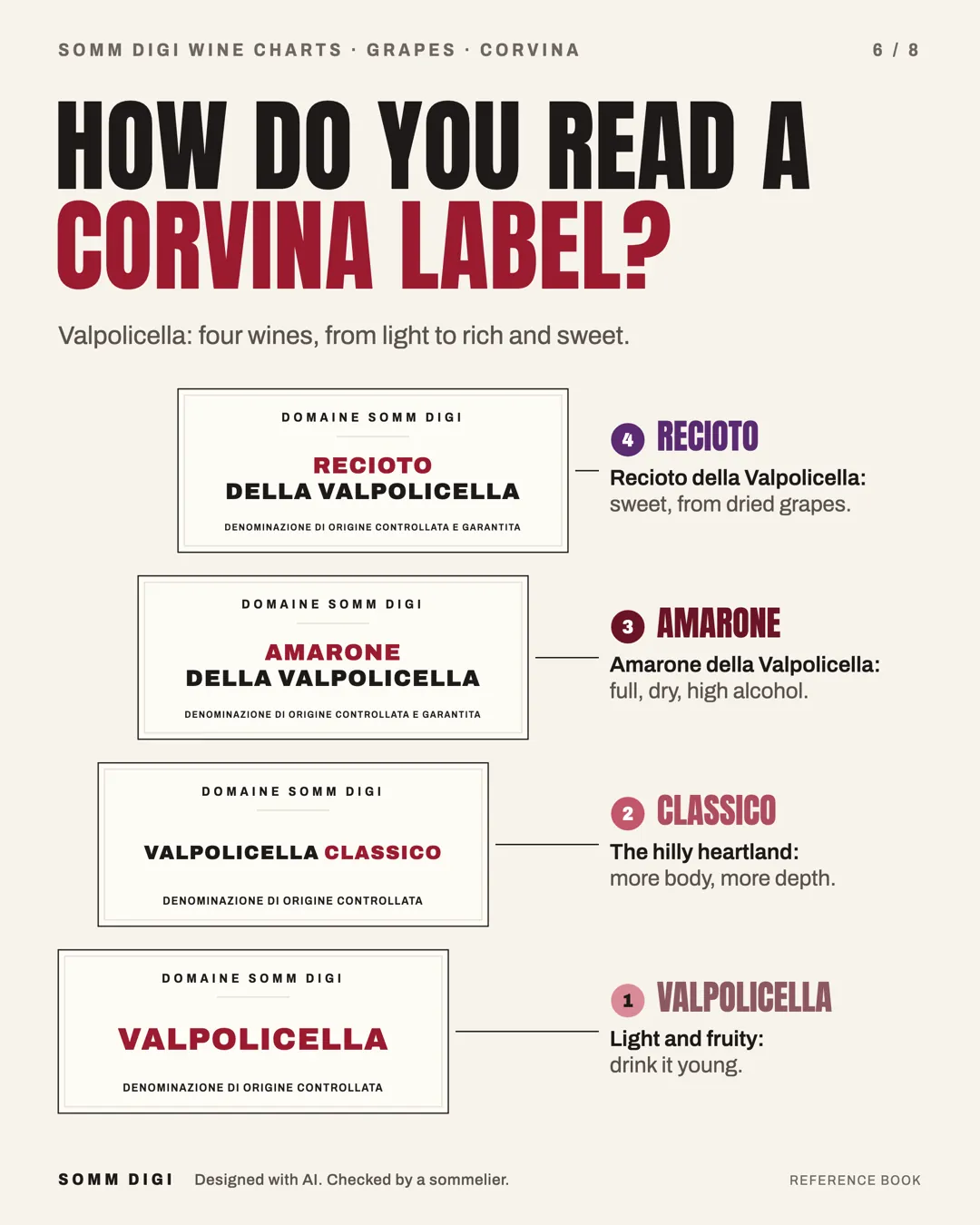
Valpolicella labels climb four steps, from light to rich and sweet. Valpolicella is light and fruity: drink it young. Classico comes from the hilly heartland: more body, more depth.
Amarone della Valpolicella is full, dry and high in alcohol. Recioto della Valpolicella is sweet, made from dried grapes. The label chart puts the four side by side.
Where is Valpolicella?
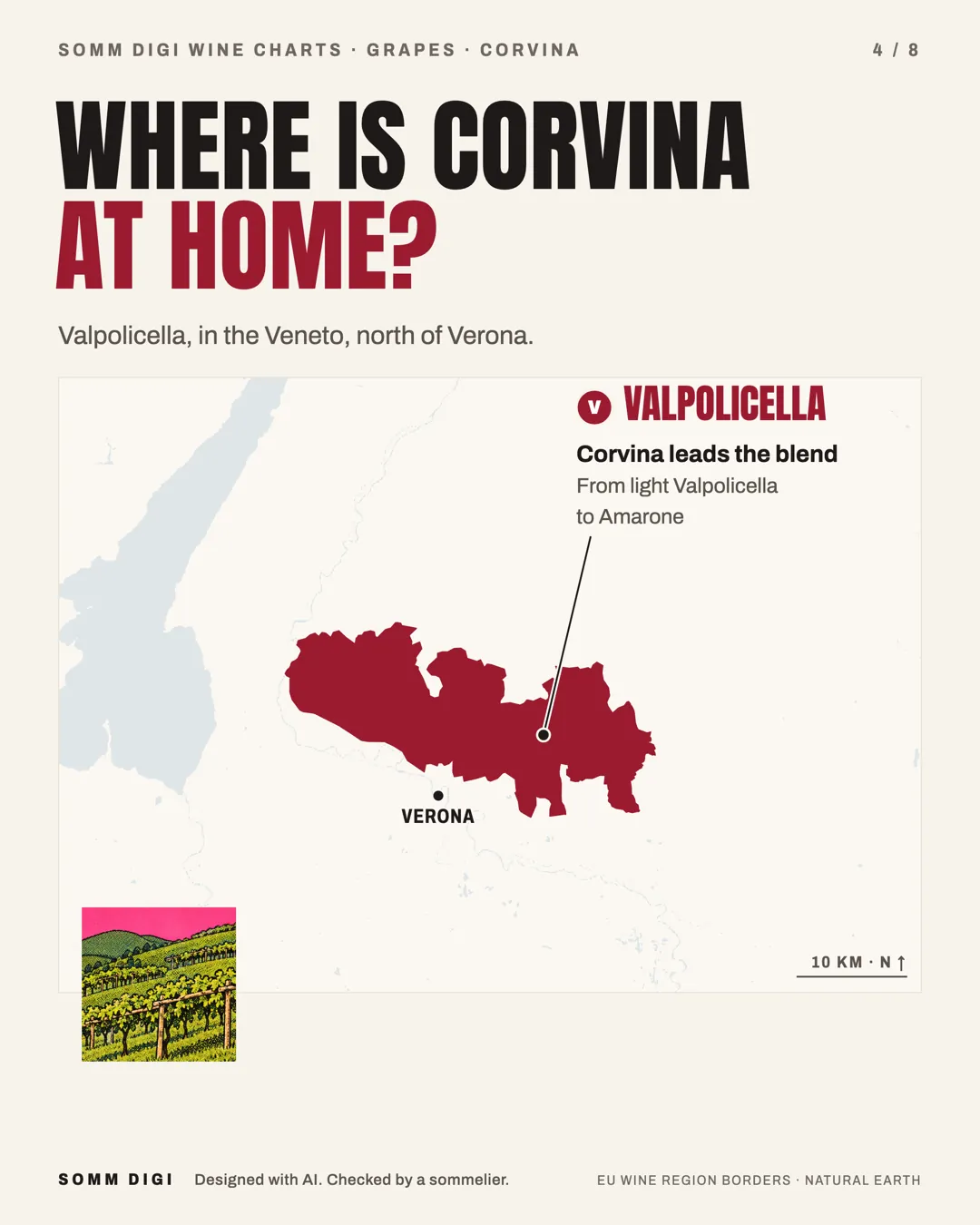
Corvina is at home in Valpolicella, in the Veneto, north of Verona. It leads the blend there, in every style from light Valpolicella to Amarone. The map shows the area.
How to serve Corvina wines
Serve Valpolicella and Amarone at 13–18 °C (55–64 °F), in a red wine glass.
Which glass?
Any red wine glass works; to choose one, read the guide to red wine glasses on universalwineglasses.com, SOMM DIGI's glass site.
Amarone food pairing
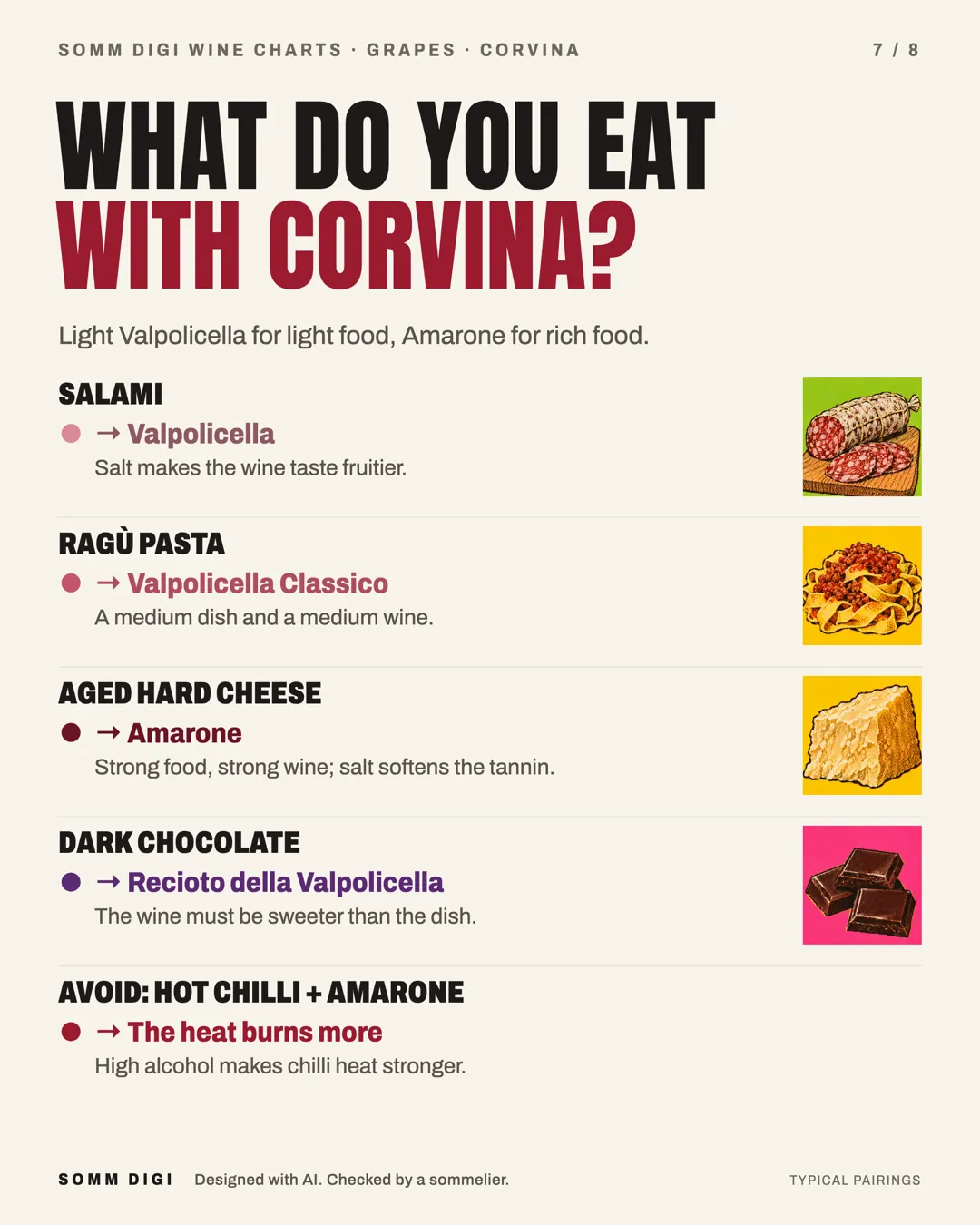
Light Valpolicella for light food, Amarone for rich food. With salami, a Valpolicella: salt makes the wine taste fruitier. With ragù pasta, a Valpolicella Classico: a medium dish and a medium wine.
With aged hard cheese, an Amarone: strong food, strong wine, and the salt softens the tannin. With dark chocolate, a Recioto della Valpolicella: the wine must be sweeter than the dish.
Skip hot chilli with Amarone: high alcohol makes chilli heat stronger, so the heat burns more. The pairing chart has all five.
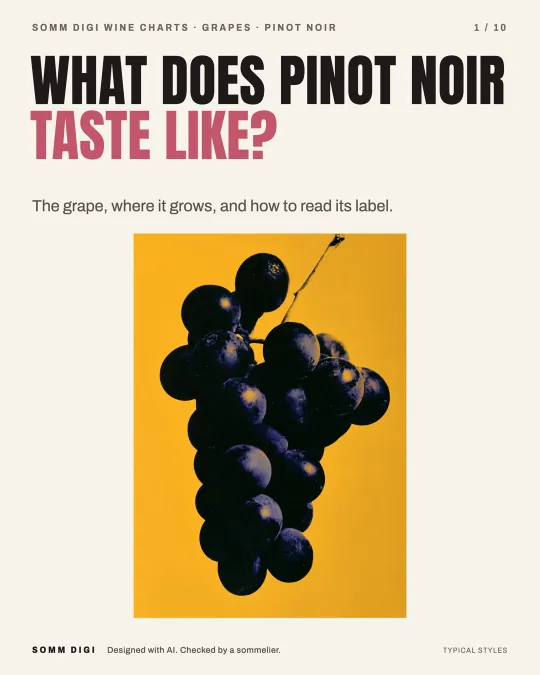
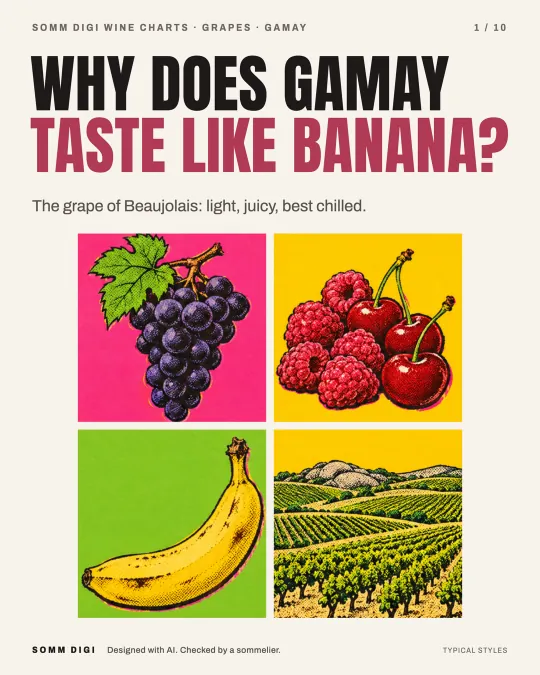
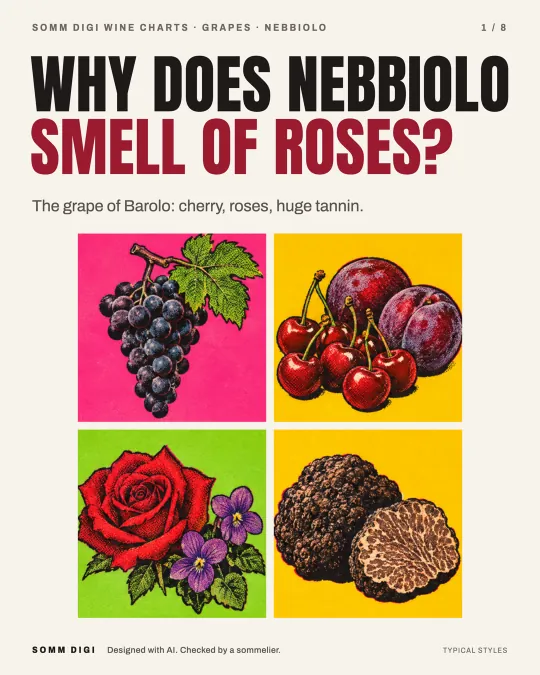
Like light Valpolicella? Try Pinot Noir or Gamay, two more fresh, red-fruited reds with high acidity. Like Amarone's grip? Try Nebbiolo.

Learn wine the easy way
Wine Easy
The wine book that talks to you like a human: grapes, tasting, pairing and countries A–Z, in 388 full-colour pages.
Corvina and Amarone questions, answered
How do you pronounce Corvina?
kor-VEE-na.
What grape is Amarone made from?
Corvina leads the blend. The grapes are dried indoors before winemaking.
Is Amarone sweet?
No. Amarone is dry to off-dry. Recioto della Valpolicella, also from dried grapes, is the sweet one.
How strong is Amarone?
About 15% alcohol: full, with high tannin.
What is the difference between Valpolicella and Amarone?
Valpolicella is light and fruity, from fresh grapes. Amarone is full and high in alcohol, from dried grapes.
What do you eat with Amarone?
Aged hard cheese: strong food, strong wine. Avoid hot chilli.
Try next
If you like Corvina
How this page was made. Charts designed with AI and checked by Alper Billik, Advanced Sommelier. Text written from the same chart facts and edited with AI.