
Study and careerItaly
Italy for the Level 1 sommelier exam
A one-page Italy study sheet for the Level 1 exam, following the Court's syllabus: climate, DOCG to IGT, regions, grapes, Amarone and Vin Santo, Prosecco, label terms, then an eight-question quiz.

Alper Billik · Advanced Sommelier
Updated October 2026 · 6 min read · Edited with AI
This article may contain affiliate links.
On this page
The short answer: for Level 1, know Italy's quality ladder (DOCG, DOC, IGT, Vino), where Piedmont, Tuscany and Veneto are, the grape behind each famous wine, the dried-grape methods of Valpolicella and Tuscany, the label terms, and the Prosecco quality levels. This cheat sheet follows the Court of Master Sommeliers' Introductory syllabus for Italy, heading by heading.
At the Court of Master Sommeliers Europe, the Introductory exam is a multiple-choice theory paper plus a short service test, with 60% needed in each. Italy rewards matching: grape to wine, wine to region, term to meaning.
Climatic influences
- North: the Alps shelter the vineyards and bring cool nights; the Po Valley is continental, with hot summers and cold winters. Crisp whites, sparkling wines and structured reds.
- Centre: Mediterranean, softened by the hills of the Apennines. Altitude keeps Sangiovese fresh.
- South and islands: hot and dry, cooled by sea breezes and altitude (the slopes of Etna). Ripe, full reds and rich whites.
Quality structure
| Level | Meaning | Example |
|---|---|---|
| DOCG | The strictest rules and an official tasting check | Barolo, Chianti Classico, Brunello di Montalcino |
| DOC | A defined area with rules on grapes, yields and ageing | Valpolicella, Prosecco |
| IGT | Regional wine with looser rules (EU name IGP) | Toscana IGT: many Super Tuscans |
| Vino | No geographical indication (once vino da tavola) | Basic wine |
- DOCG
- MeaningThe strictest rules and an official tasting check
- ExampleBarolo, Chianti Classico, Brunello di Montalcino
- DOC
- MeaningA defined area with rules on grapes, yields and ageing
- ExampleValpolicella, Prosecco
- IGT
- MeaningRegional wine with looser rules (EU name IGP)
- ExampleToscana IGT: many Super Tuscans
- Vino
- MeaningNo geographical indication (once vino da tavola)
- ExampleBasic wine
DOC and DOCG both sit under the EU's DOP category. A Super Tuscan is a Tuscan red made outside the traditional rules, often with Cabernet Sauvignon or Merlot, and often labelled Toscana IGT.
Regions, grapes and principal wines
| Region | Principal wines | Grapes |
|---|---|---|
| Piedmont (north-west) | Barolo DOCG, Barbaresco DOCG | Nebbiolo, 100% |
| Piedmont | Barbera d'Asti, Dolcetto d'Alba, Gavi DOCG | Barbera; Dolcetto; Cortese (white) |
| Piedmont | Moscato d'Asti DOCG, Asti DOCG | Moscato Bianco: sweet, lightly or fully sparkling |
| Lombardy | Franciacorta DOCG (traditional method) | Chardonnay, Pinot Nero, Pinot Bianco |
| Veneto (north-east) | Amarone della Valpolicella DOCG, Valpolicella | Corvina, Corvinone, Rondinella |
| Veneto | Soave | Garganega (white) |
| Veneto and Friuli Venezia Giulia | Prosecco | Glera (white) |
| Trentino-Alto Adige | Pinot Grigio, Gewürztraminer, Trento DOC sparkling | International and local grapes |
| Tuscany (centre) | Chianti DOCG, Chianti Classico DOCG | Sangiovese: at least 70% in Chianti, at least 80% in Chianti Classico |
| Tuscany | Brunello di Montalcino DOCG | Sangiovese, 100% |
| Tuscany | Vino Nobile di Montepulciano DOCG | Sangiovese (called Prugnolo Gentile) |
| Marche | Verdicchio dei Castelli di Jesi | Verdicchio (white) |
| Abruzzo | Montepulciano d'Abruzzo | Montepulciano (red) |
| Campania | Taurasi DOCG, Fiano di Avellino, Greco di Tufo | Aglianico; Fiano; Greco |
| Puglia | Primitivo di Manduria, Salice Salentino | Primitivo (Zinfandel); Negroamaro |
| Sicily | Etna, Cerasuolo di Vittoria DOCG, Marsala | Nerello Mascalese; Nero d'Avola and Frappato; Grillo and others for Marsala |
| Sardinia | Cannonau di Sardegna, Vermentino di Gallura DOCG | Cannonau (Grenache); Vermentino |
- Piedmont (north-west)
- Principal winesBarolo DOCG, Barbaresco DOCG
- GrapesNebbiolo, 100%
- Piedmont
- Principal winesBarbera d'Asti, Dolcetto d'Alba, Gavi DOCG
- GrapesBarbera; Dolcetto; Cortese (white)
- Piedmont
- Principal winesMoscato d'Asti DOCG, Asti DOCG
- GrapesMoscato Bianco: sweet, lightly or fully sparkling
- Lombardy
- Principal winesFranciacorta DOCG (traditional method)
- GrapesChardonnay, Pinot Nero, Pinot Bianco
- Veneto (north-east)
- Principal winesAmarone della Valpolicella DOCG, Valpolicella
- GrapesCorvina, Corvinone, Rondinella
- Veneto
- Principal winesSoave
- GrapesGarganega (white)
- Veneto and Friuli Venezia Giulia
- Principal winesProsecco
- GrapesGlera (white)
- Trentino-Alto Adige
- Principal winesPinot Grigio, Gewürztraminer, Trento DOC sparkling
- GrapesInternational and local grapes
- Tuscany (centre)
- Principal winesChianti DOCG, Chianti Classico DOCG
- GrapesSangiovese: at least 70% in Chianti, at least 80% in Chianti Classico
- Tuscany
- Principal winesBrunello di Montalcino DOCG
- GrapesSangiovese, 100%
- Tuscany
- Principal winesVino Nobile di Montepulciano DOCG
- GrapesSangiovese (called Prugnolo Gentile)
- Marche
- Principal winesVerdicchio dei Castelli di Jesi
- GrapesVerdicchio (white)
- Abruzzo
- Principal winesMontepulciano d'Abruzzo
- GrapesMontepulciano (red)
- Campania
- Principal winesTaurasi DOCG, Fiano di Avellino, Greco di Tufo
- GrapesAglianico; Fiano; Greco
- Puglia
- Principal winesPrimitivo di Manduria, Salice Salentino
- GrapesPrimitivo (Zinfandel); Negroamaro
- Sicily
- Principal winesEtna, Cerasuolo di Vittoria DOCG, Marsala
- GrapesNerello Mascalese; Nero d'Avola and Frappato; Grillo and others for Marsala
- Sardinia
- Principal winesCannonau di Sardegna, Vermentino di Gallura DOCG
- GrapesCannonau (Grenache); Vermentino
Watch the trap: Montepulciano d'Abruzzo is a grape (Montepulciano) from Abruzzo; Vino Nobile di Montepulciano is Sangiovese from the Tuscan town of Montepulciano.
Production methods
- Appassimento: grapes are dried for months after picking, losing water and concentrating sugar and flavour.
- Amarone: a dry, powerful red fermented from dried Valpolicella grapes.
- Recioto: a sweet wine from the same dried grapes, fermentation stopped before all the sugar is gone. Recioto della Valpolicella is red; Recioto di Soave is white.
- Ripasso: Valpolicella refermented on the leftover skins (pomace) of Amarone or Recioto, for more body and flavour.
- Vin Santo: Tuscany's sweet wine from dried grapes, mostly Trebbiano and Malvasia, aged for years in small barrels.
For more on Recioto, Vin Santo and Italy's other sweet wines, read my guide to Italian dessert wines.
Prosecco: quality levels and production
- Prosecco DOC: the wide area across Veneto and Friuli Venezia Giulia. At least 85% Glera.
- Conegliano Valdobbiadene Prosecco Superiore DOCG: the historic hills of Treviso. Rive marks wine from the steep slopes of a single village or hamlet; Superiore di Cartizze is a small, famous hillside sub-zone near Valdobbiadene.
- Asolo Prosecco DOCG: the second hillside DOCG.
- Method: most Prosecco gets its bubbles from the Martinotti (Charmat) tank method: the second fermentation happens in a sealed tank, which keeps the fruit fresh.
- Styles: spumante (fully sparkling) and frizzante (lightly sparkling). Sweetness: Brut is drier than Extra Dry, which is drier than Dry.
- Prosecco DOC Rosé: Glera with 10–15% Pinot Nero, at least 60 days in tank, always vintage-dated (Millesimato).
Labelling terms
- Classico: the historic heart of a zone (Chianti Classico, Soave Classico).
- Riserva: aged longer before release than the base wine.
- Superiore: stricter rules, usually higher minimum alcohol.
- Passito: from dried grapes. Spumante: sparkling. Frizzante: lightly sparkling.
- Secco, abboccato, amabile, dolce: dry, off-dry, medium sweet, sweet.
Every other word on an Italian label is in my glossary of Italian wine terms.
How to study Italy
- Draw the boot from memory and place Piedmont, Lombardy, Veneto, Tuscany, Campania, Puglia, Sicily and Sardinia.
- One grape per famous wine, out loud, until it is automatic: Barolo, Nebbiolo; Brunello, Sangiovese; Amarone, Corvina; Soave, Garganega; Prosecco, Glera; Taurasi, Aglianico.
- Learn the Valpolicella family as one story: Valpolicella, Ripasso, Amarone, Recioto.
- Then test yourself with the quiz below and my Level 1 practice test. For the full tour, read Italy's wine regions, north to south.
Quick quiz: Italy for Level 1
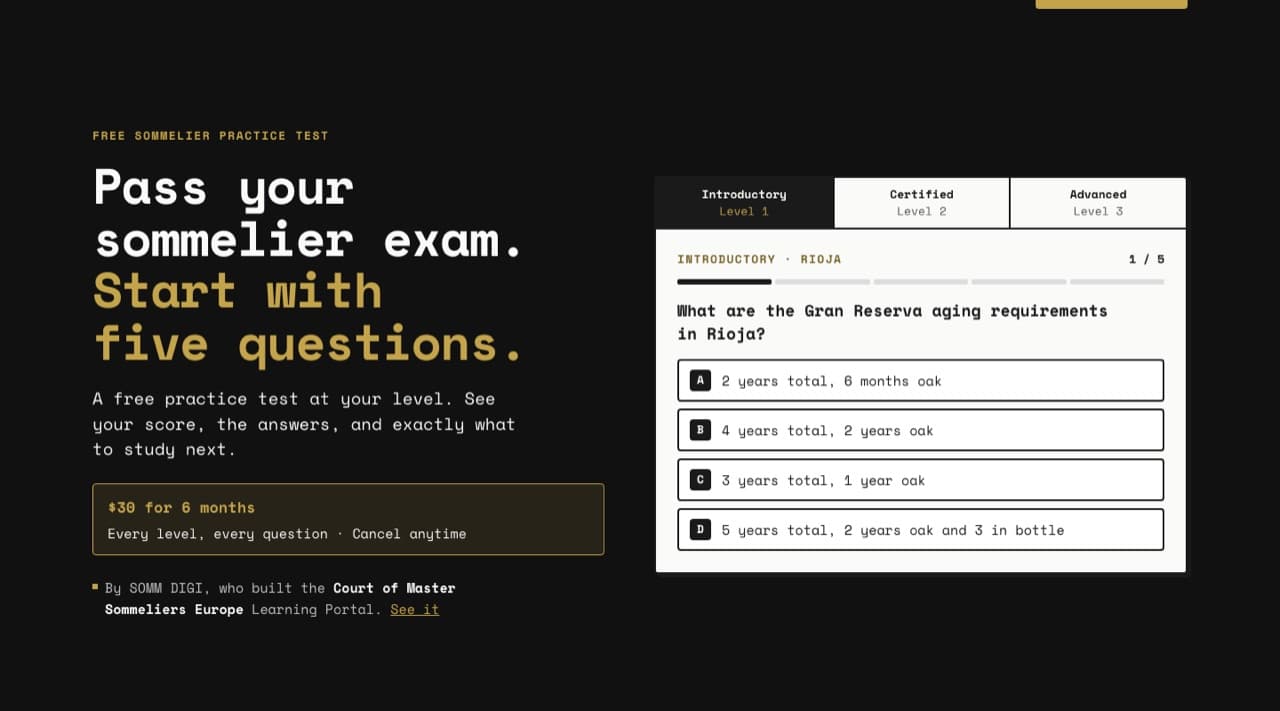
Level 1 practice test
Take it as a real test
8 questions, one at a time. The answer and why after each one, then your score and your weakest topics.
Question 1
Which is the highest quality category on an Italian label?
- a)IGT
- b)DOC
- c)DOCG
- d)Vino
Show answerAnswer
c) DOCG. DOCG sits above DOC, with stricter rules and an official tasting check.
Question 2
Barolo and Barbaresco are made from which grape?
- a)Barbera
- b)Nebbiolo
- c)Dolcetto
- d)Sangiovese
Show answerAnswer
b) Nebbiolo. Both are 100% Nebbiolo, from Piedmont.
Question 3
Which grape is NOT a main grape of Amarone?
- a)Corvina
- b)Rondinella
- c)Corvinone
- d)Glera
Show answerAnswer
d) Glera. Glera is the white grape of Prosecco.
Question 4
Amarone della Valpolicella is…
- a)A sweet red from fresh grapes
- b)A dry red from dried grapes
- c)A sparkling red
- d)A fortified wine
Show answerAnswer
b) A dry red from dried grapes. Amarone is fermented dry from grapes dried by appassimento. The sweet version is Recioto.
Question 5
What is a Ripasso?
- a)Valpolicella refermented on Amarone or Recioto skins
- b)A Tuscan sweet wine
- c)A rosé from Lake Garda
- d)A Prosecco aged in bottle
Show answerAnswer
a) Valpolicella refermented on Amarone or Recioto skins. Ripasso gains body and flavour from the leftover pomace of Amarone or Recioto.
Question 6
Brunello di Montalcino is made from…
- a)Sangiovese
- b)Montepulciano
- c)Nebbiolo
- d)Aglianico
Show answerAnswer
a) Sangiovese. Brunello is 100% Sangiovese from Montalcino in Tuscany.
Question 7
Most Prosecco gets its bubbles from…
- a)The traditional method in bottle
- b)The tank (Martinotti or Charmat) method
- c)Carbonation
- d)The ancestral method only
Show answerAnswer
b) The tank (Martinotti or Charmat) method. The second fermentation takes place in a sealed tank.
Question 8
Soave is made mainly from which grape?
- a)Garganega
- b)Cortese
- c)Verdicchio
- d)Trebbiano Toscano
Show answerAnswer
a) Garganega. Soave, in Veneto, is mainly Garganega. Cortese is the grape of Gavi.
For quick daily questions on Italy and every other region, SOMM DIGI AI has 3,000+ exam-prep questions. For one Italian white to taste with your notes, read my guide to Gavi.
Questions people ask
What do I need to know about Italy for the Level 1 sommelier exam?
The quality levels (DOCG, DOC, IGT, Vino), where the main regions are, the grape of each famous wine, Amarone, Recioto, Ripasso and Vin Santo, the main label terms, and the Prosecco quality levels.
Are the Chianti sub-zones on the Level 1 exam?
The Court's syllabus lists the sub-districts of Chianti and the ageing rules for Riserva and Superiore at the Certified level.
What is the difference between Chianti and Chianti Classico?
Chianti Classico is the historic heart of the zone, between Florence and Siena, with its own DOCG and at least 80% Sangiovese. Chianti DOCG covers a wider area and asks for at least 70%.
Is Prosecco DOC or DOCG?
Both. Prosecco DOC is the wide area; Conegliano Valdobbiadene Prosecco Superiore and Asolo Prosecco are the two hillside DOCGs.
Your exam kit
Where to study for your exam

 My book · AmazonSommelier Level 1 Prep BookLevel 1's key topics in one small book you can carry anywhere.Order on Amazon
 My book · AmazonSommelier Prep BookQuick questions and answers for a break at work.Order on Amazon
SOMM DIGI built the Court of Master Sommeliers Europe’s Learning Portal, and SOMM DIGI AI. Who is behind this
For sommeliers · next steps