
Study and careerItaly
Italy's wine regions, north to south
A sommelier's tour of Italy's main wine regions, from Piedmont to Sicily: the grapes, the wines worth knowing, and what each region eats with them.

Alper Billik · Advanced Sommelier
Updated October 2026 · 5 min read · Edited with AI
This article may contain affiliate links.
On this page
The short answer: every one of Italy's twenty regions makes wine, but four names carry most wine lists: Piedmont (Nebbiolo: Barolo and Barbaresco), Veneto (Prosecco, Amarone, Soave), Tuscany (Sangiovese: Chianti and Brunello) and Sicily (Nero d'Avola and Etna). Italy's gift is its native grapes, hundreds of them, each tied to a place and a table. Here is the tour, north to south.
Piedmont
In the north-west, at the foot of the Alps. The great grape is Nebbiolo: pale in colour, high in acidity and tannin, with roses, cherries and tar. It makes Barolo and Barbaresco, both DOCG and both 100% Nebbiolo. For everyday drinking, Piedmont pours juicy Barbera and soft Dolcetto; for whites, Gavi from Cortese and Arneis from Roero; for sweetness, the gently sparkling Moscato d'Asti. At the table: white truffles from Alba, egg pasta (tajarin) and braised beef.
Lombardy
Home of Franciacorta, Italy's traditional-method sparkling wine from Chardonnay, Pinot Nero and Pinot Bianco, made with a second fermentation in bottle like Champagne. In the Alpine valley of Valtellina, Nebbiolo goes by the name Chiavennasca. Lugana, on the southern shore of Lake Garda, makes fresh whites from Turbiana. At the table: risotto alla milanese and bresaola.
Trentino-Alto Adige
Italy's mountain north, German-speaking in Alto Adige (Südtirol). Crisp, aromatic whites: Pinot Grigio, Pinot Bianco, Gewürztraminer (named after the village of Tramin), and the local reds Schiava and Lagrein. Trentino makes the traditional-method sparkling Trento DOC. At the table: speck, dumplings and alpine cheese.
Veneto
Prosecco comes from the Glera grape, made sparkling in tank; its hillside heart is the Conegliano Valdobbiadene DOCG. Soave is a dry white from Garganega. Near Verona, Valpolicella makes a whole family of reds from Corvina, Corvinone and Rondinella: fresh Valpolicella, fuller Ripasso, and Amarone, dry and powerful, from grapes dried for months. Its sweet sister is Recioto. At the table: risotto, polenta and, in Venice, seafood.
Friuli Venezia Giulia
In the far north-east, on the border with Slovenia. Famous for whites: Friulano, Ribolla Gialla, Sauvignon, Pinot Grigio. Around Collio and Oslavia, some producers ferment white grapes on their skins for days or months, making amber orange wines. At the table: prosciutto di San Daniele and Montasio cheese.
Tuscany
The land of Sangiovese: cherry, tea leaf and herbs, with firm acidity. Chianti needs at least 70% Sangiovese and Chianti Classico, the historic heart between Florence and Siena, at least 80%. Brunello di Montalcino is 100% Sangiovese; Vino Nobile di Montepulciano is Sangiovese from the town of Montepulciano. On the coast, Bolgheri and the Super Tuscans use Cabernet Sauvignon and Merlot. The white to know is Vernaccia di San Gimignano, and the sweet one Vin Santo. At the table: bistecca alla fiorentina, beans and pecorino.
Marche, Umbria and Abruzzo
- Marche: Verdicchio, a crisp white with an almond finish, from Castelli di Jesi and Matelica.
- Umbria: Sagrantino di Montefalco, a powerful, deeply tannic red, and the white Orvieto from Grechetto and Trebbiano.
- Abruzzo: Montepulciano d'Abruzzo, the grape not the Tuscan town, as a red and as the cherry-pink Cerasuolo d'Abruzzo; and Pecorino, a white grape.
Campania
Around Naples and Avellino, ancient grapes on volcanic soils. Aglianico makes the dark, tannic Taurasi DOCG. The whites are serious too: Fiano di Avellino, Greco di Tufo and Falanghina. At the table: pizza, buffalo mozzarella and seafood.
Puglia and Basilicata
The heel of the boot is warm and generous. Primitivo, the same grape as California's Zinfandel, makes ripe reds around Manduria; Negroamaro makes Salice Salentino and rosé. Next door in Basilicata, Aglianico del Vulture grows on the slopes of an extinct volcano.
Sicily
Nero d'Avola is the island's signature red; with Frappato it makes Cerasuolo di Vittoria DOCG. On the slopes of Etna, Nerello Mascalese gives elegant, Pinot-like reds and Carricante bright whites. Marsala is the island's historic fortified wine, and Passito di Pantelleria a sweet wine from dried Zibibbo (Muscat of Alexandria).
Sardinia
Cannonau, the local name for Grenache, makes the island's best-known red, and Vermentino its whites, with Vermentino di Gallura as a DOCG. At the table: grilled fish, roast suckling pig and pecorino sardo.
Italy at a glance
| Region | Key grapes | Wines to know |
|---|---|---|
| Piedmont | Nebbiolo, Barbera, Dolcetto, Cortese, Moscato | Barolo, Barbaresco, Gavi, Moscato d'Asti |
| Lombardy | Chardonnay, Pinot Nero, Nebbiolo | Franciacorta, Valtellina |
| Trentino-Alto Adige | Pinot Grigio, Gewürztraminer, Lagrein | Alto Adige whites, Trento DOC |
| Veneto | Glera, Garganega, Corvina | Prosecco, Soave, Amarone, Ripasso |
| Friuli Venezia Giulia | Friulano, Ribolla Gialla | Collio whites, orange wine |
| Tuscany | Sangiovese, Cabernet Sauvignon | Chianti Classico, Brunello, Bolgheri |
| Campania | Aglianico, Fiano, Greco | Taurasi, Fiano di Avellino |
| Puglia | Primitivo, Negroamaro | Primitivo di Manduria, Salice Salentino |
| Sicily | Nero d'Avola, Nerello Mascalese | Etna, Cerasuolo di Vittoria, Marsala |
| Sardinia | Cannonau, Vermentino | Cannonau di Sardegna, Vermentino di Gallura |
- Piedmont
- Key grapesNebbiolo, Barbera, Dolcetto, Cortese, Moscato
- Wines to knowBarolo, Barbaresco, Gavi, Moscato d'Asti
- Lombardy
- Key grapesChardonnay, Pinot Nero, Nebbiolo
- Wines to knowFranciacorta, Valtellina
- Trentino-Alto Adige
- Key grapesPinot Grigio, Gewürztraminer, Lagrein
- Wines to knowAlto Adige whites, Trento DOC
- Veneto
- Key grapesGlera, Garganega, Corvina
- Wines to knowProsecco, Soave, Amarone, Ripasso
- Friuli Venezia Giulia
- Key grapesFriulano, Ribolla Gialla
- Wines to knowCollio whites, orange wine
- Tuscany
- Key grapesSangiovese, Cabernet Sauvignon
- Wines to knowChianti Classico, Brunello, Bolgheri
- Campania
- Key grapesAglianico, Fiano, Greco
- Wines to knowTaurasi, Fiano di Avellino
- Puglia
- Key grapesPrimitivo, Negroamaro
- Wines to knowPrimitivo di Manduria, Salice Salentino
- Sicily
- Key grapesNero d'Avola, Nerello Mascalese
- Wines to knowEtna, Cerasuolo di Vittoria, Marsala
- Sardinia
- Key grapesCannonau, Vermentino
- Wines to knowCannonau di Sardegna, Vermentino di Gallura
Studying for the exam? Start with my Italy for Level 1 cheat sheet and the glossary of Italian wine terms. For deeper dives: Gavi and Italian dessert wines.
Questions people ask
What are the main wine regions of Italy?
Piedmont, Veneto, Tuscany and Sicily are the best known, followed by Lombardy, Trentino-Alto Adige, Friuli Venezia Giulia, Campania, Puglia, Abruzzo and Sardinia. All twenty regions make wine.
What is the most important red grape in Italy?
Sangiovese (Chianti, Brunello) and Nebbiolo (Barolo, Barbaresco) are the two great names. Montepulciano, Aglianico and Nero d'Avola matter in the centre and south.
What is a Super Tuscan?
A Tuscan red made outside the traditional rules, often with Cabernet Sauvignon or Merlot, many from the Bolgheri coast and often labelled Toscana IGT.
Is Amarone sweet?
No. Amarone is dry, made from dried grapes. The sweet wine from the same grapes is Recioto della Valpolicella.
Your exam kit
Where to study for your exam

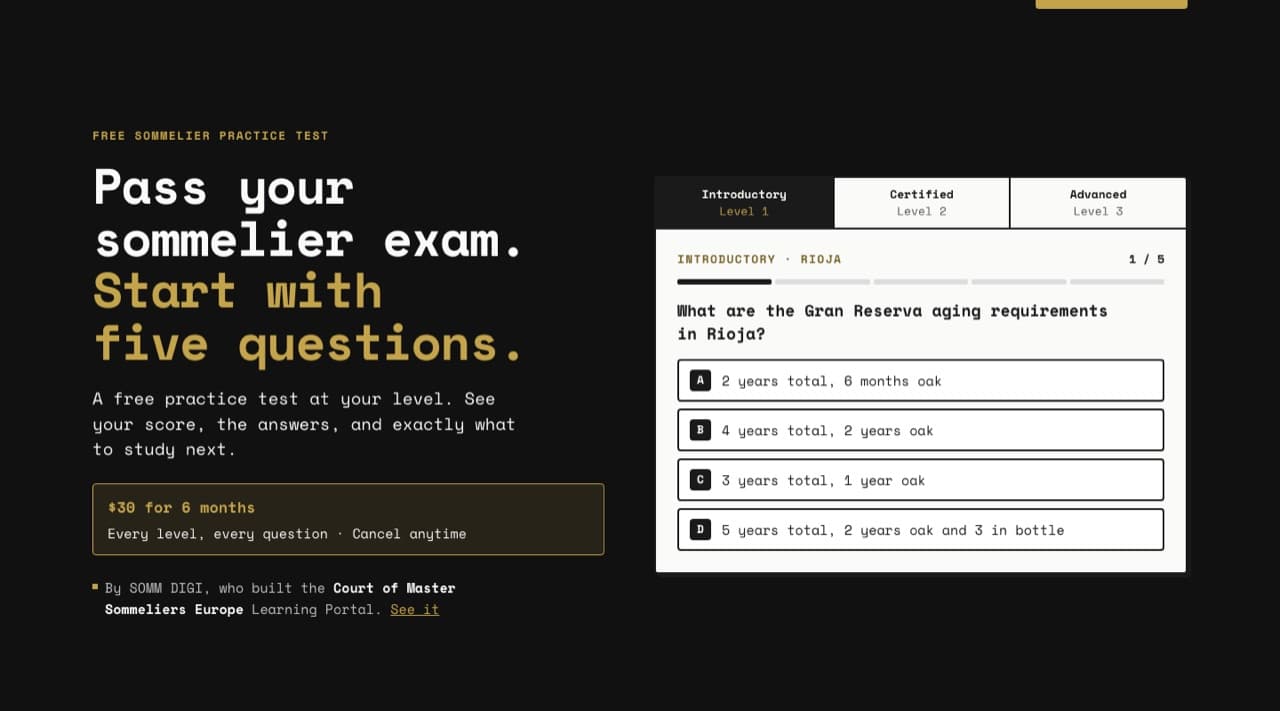
 My book · AmazonSommelier Prep BookQuick questions and answers for a break at work.Order on Amazon
 My book · AmazonSommelier Level 1 Prep BookLevel 1's key topics in one small book you can carry anywhere.Order on Amazon
SOMM DIGI built the Court of Master Sommeliers Europe’s Learning Portal, and SOMM DIGI AI. Who is behind this
For sommeliers · next steps