
What is Pinotage? South Africa's own grape
Pinotage was developed in South Africa, for its warm, dry climate. Here is how it tastes, how it differs from Pinot Noir, and why it loves a barbecue.
Quick answer
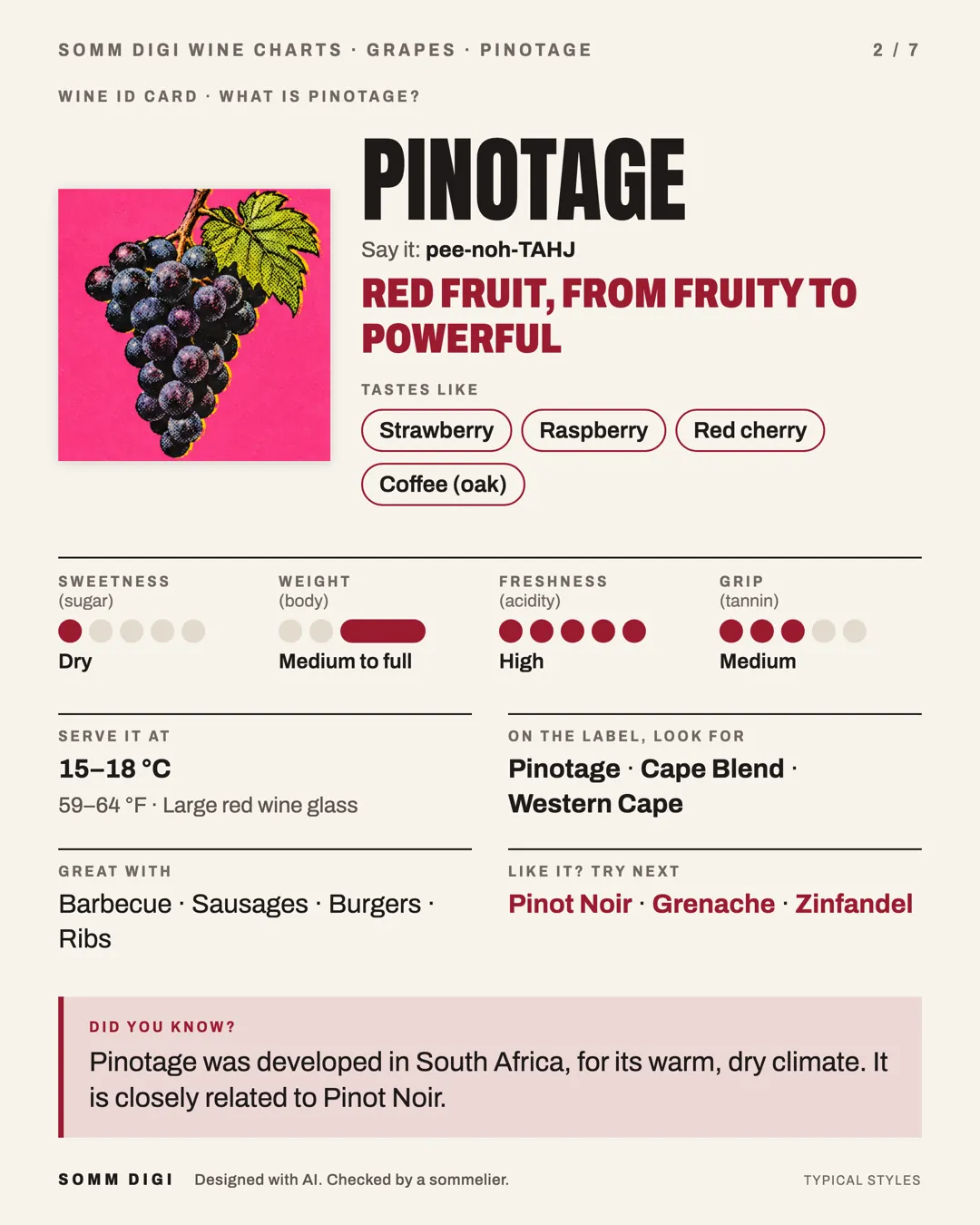
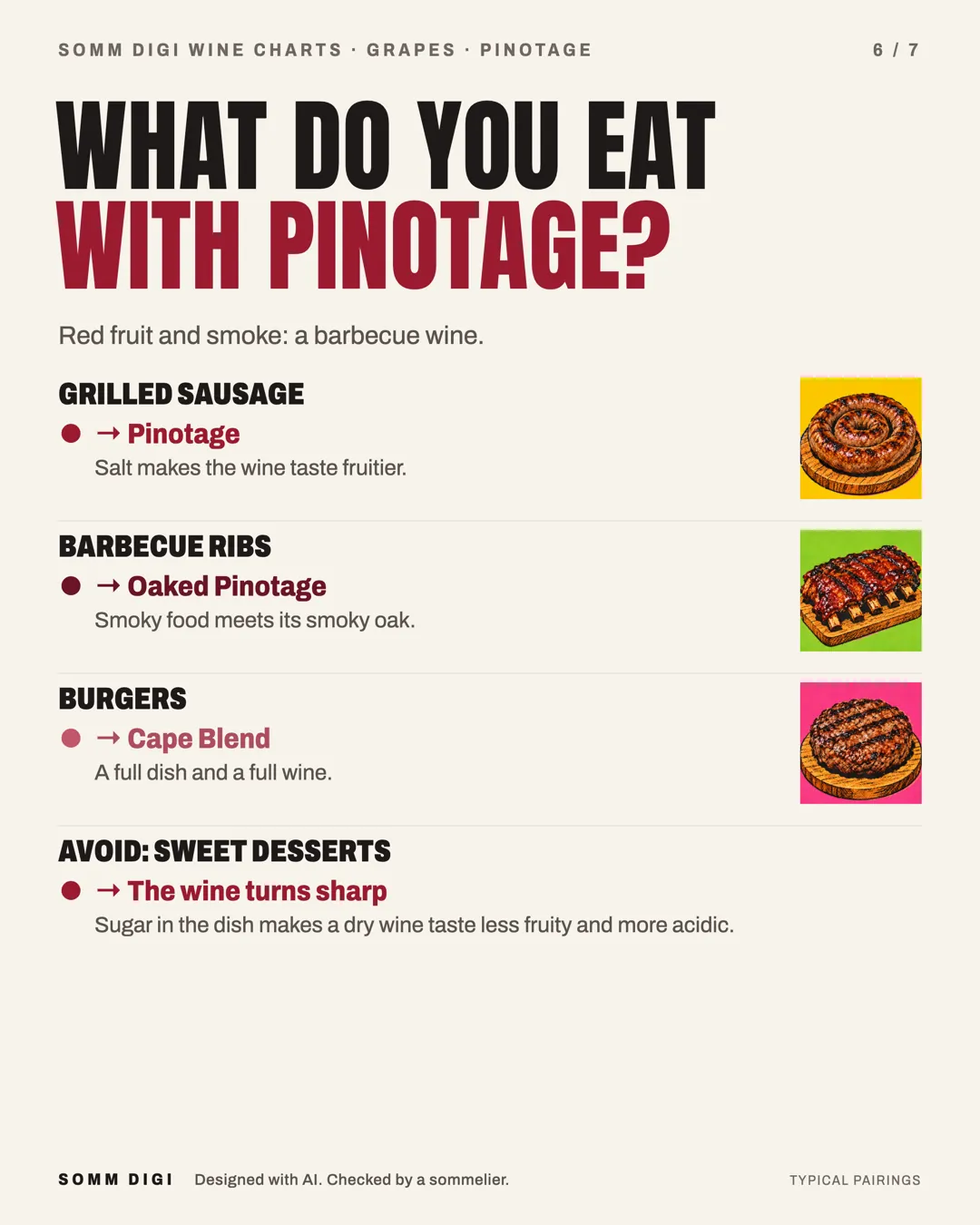
Pinotage (say it pee-noh-TAHJ) is South Africa's own red grape, closely related to Pinot Noir. It makes dry wine with high acidity and medium tannin, from fruity to powerful. It tastes of strawberry, raspberry and red cherry, with coffee, chocolate and smoke from oak. Serve it at 15–18 °C (59–64 °F) in a large red wine glass. Barbecue tonight? Try a Pinotage.

Alper Billik · Advanced Sommelier
Updated November 2026 · Edited with AI
This article may contain affiliate links.
On this page
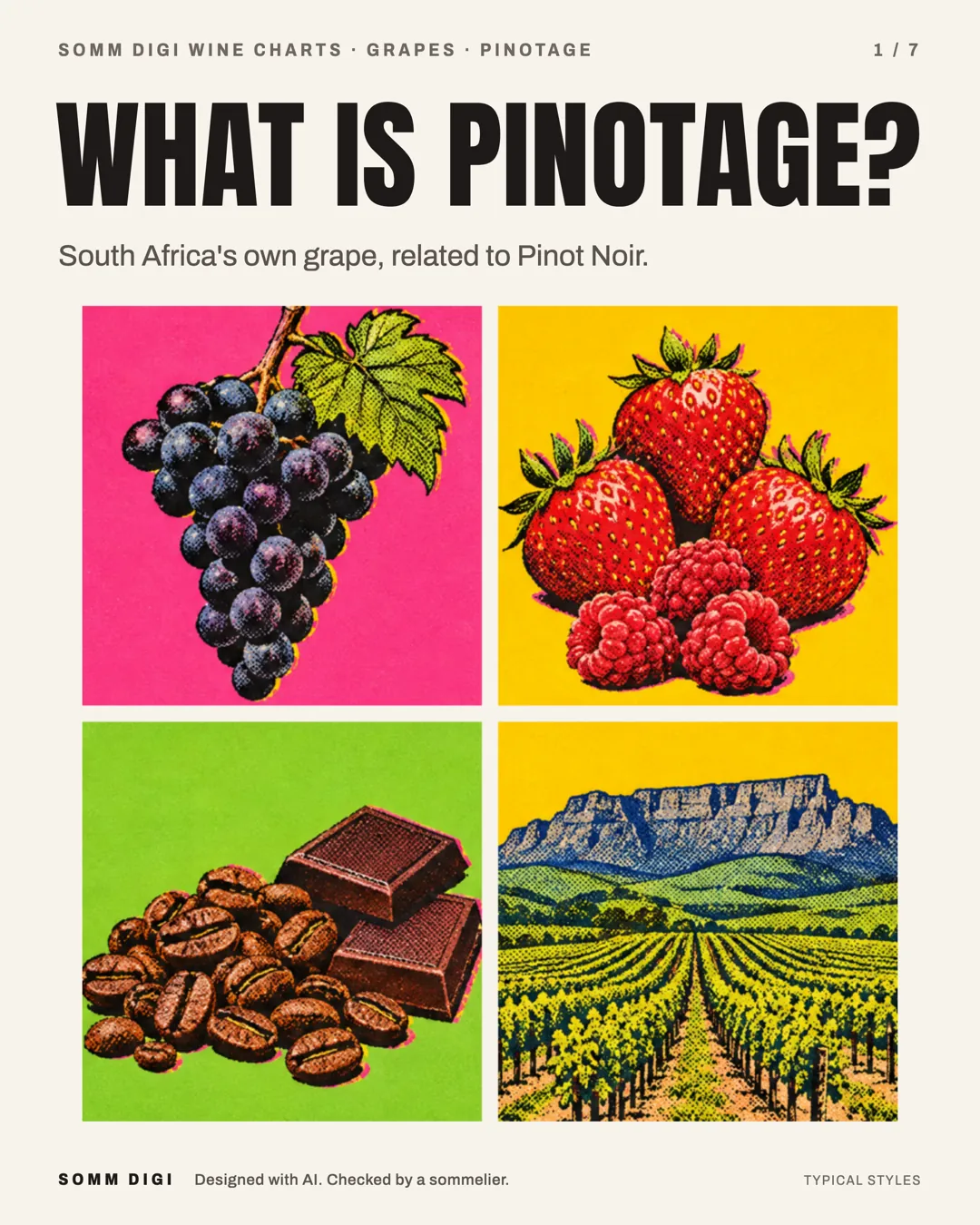
What is Pinotage?
Pinotage (say it pee-noh-TAHJ) is South Africa's own grape, related to Pinot Noir. It makes dry red wine with high acidity and medium tannin, and its body runs from medium to full.
Its style runs from fruity to powerful. In the glass, expect strawberry, raspberry and red cherry, with coffee from oak. The profile card has the essentials on one page.
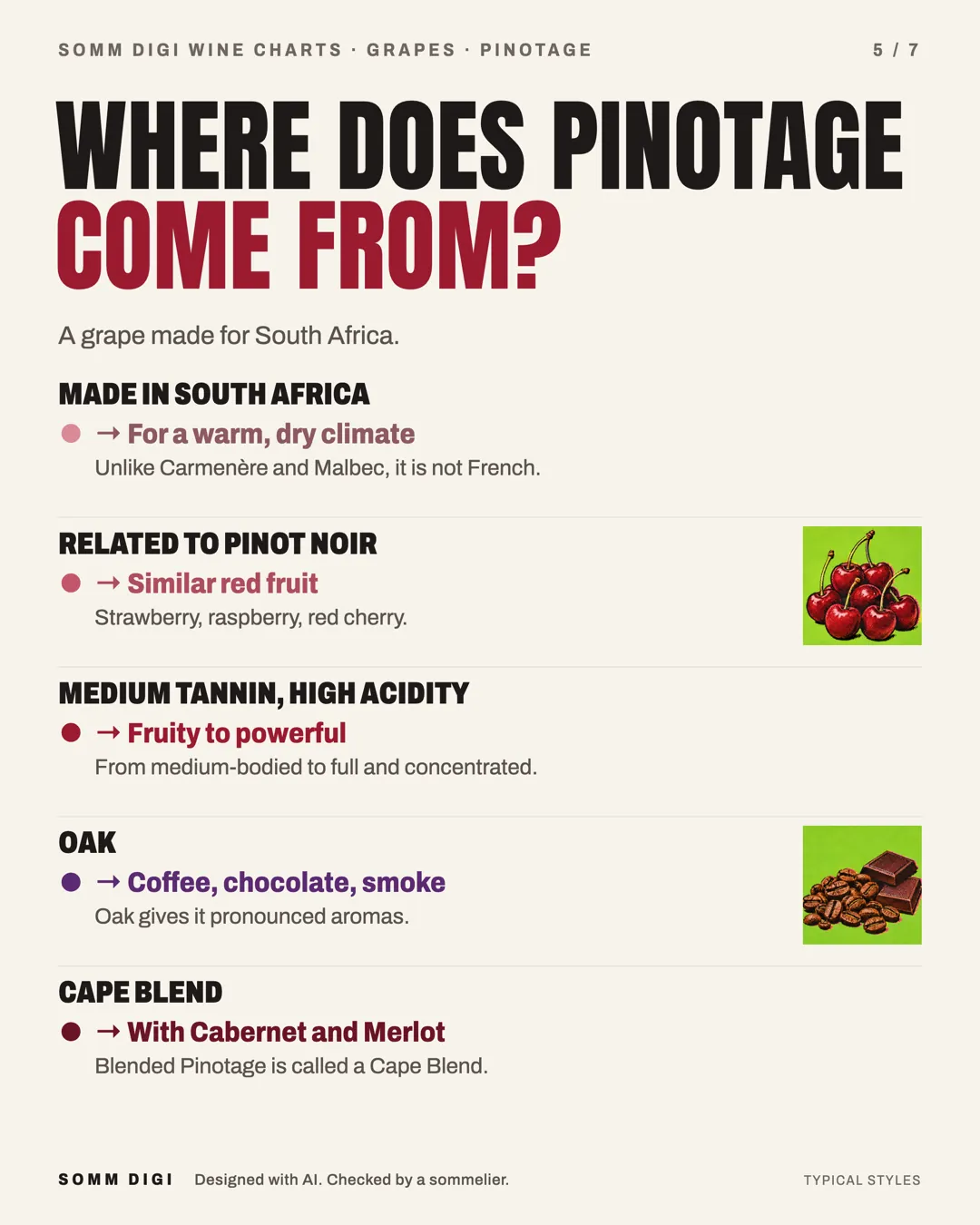
Pinotage was made in South Africa, for a warm, dry climate. Unlike Carmenère and Malbec, it is not French. Oak gives it pronounced aromas of coffee, chocolate and smoke.
It is also blended. Pinotage with Cabernet Sauvignon and Merlot is called a Cape Blend. The chart tells the whole story in five steps.
Pinotage vs Pinot Noir
The two are closely related, and they share similar red fruit: strawberry, raspberry, red cherry. Both are dry, with high acidity.
Pinot Noir is light, fresh and silky, with low to medium tannins, and it grows only in cool places. Pinotage was developed for a warm, dry climate. It has medium tannin, medium to full body, and often coffee, chocolate and smoke from oak.
Pinot Noir also has a thin skin, which makes it one of the hardest grapes to grow, and it serves a little cooler, from 13 °C. Like Pinotage, it suits savoury food rather than sweet desserts.
What does Pinotage taste like?
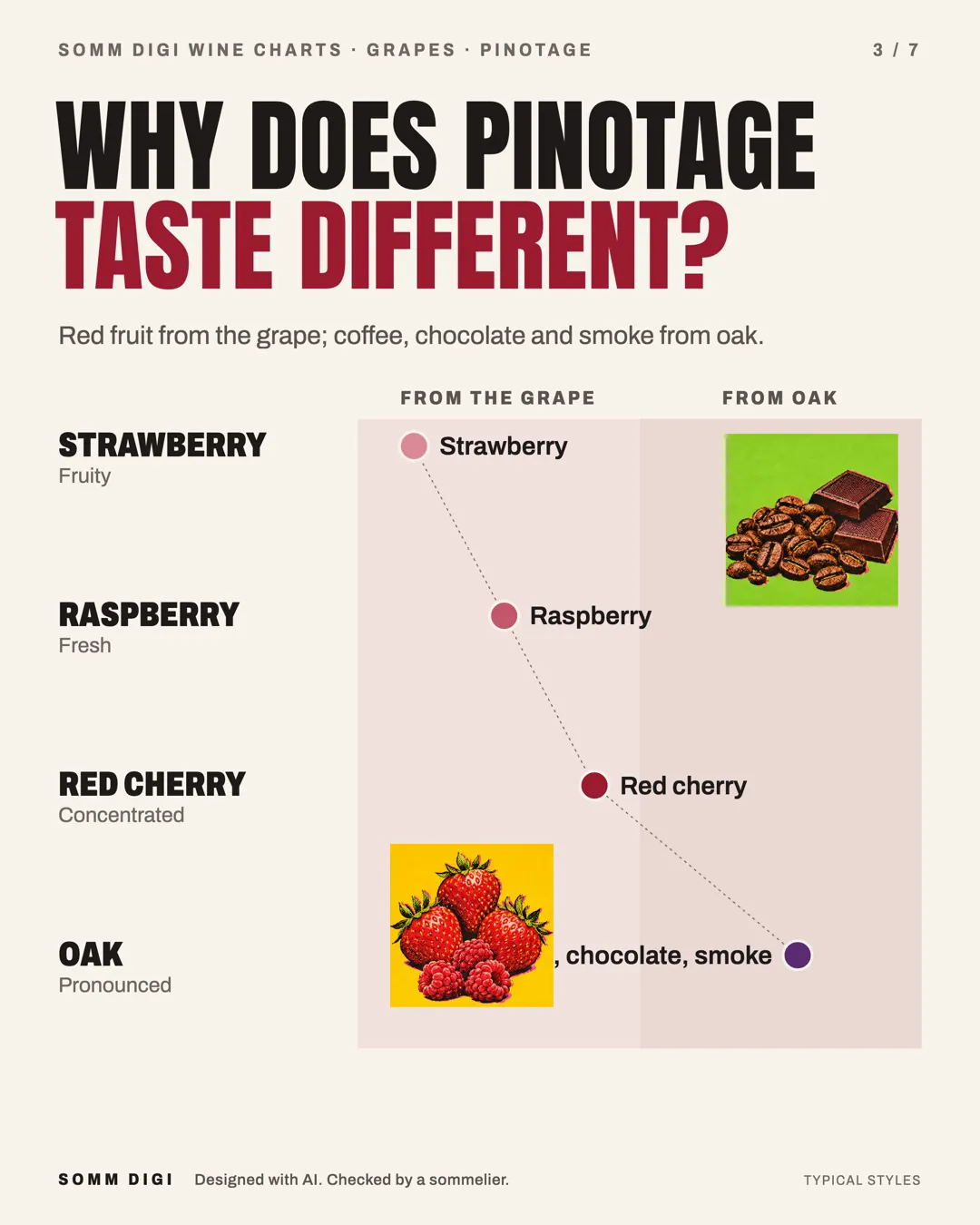
Pinotage tastes in two layers. Red fruit comes from the grape; coffee, chocolate and smoke come from oak.
The grape gives fruity strawberry, fresh raspberry and concentrated red cherry. Oak adds pronounced coffee, chocolate and smoke. The taste chart shows both layers.
Its high acidity and medium tannin stay with every style. Pinotage runs from medium-bodied and fruity to full and concentrated.
South African Pinotage: the Western Cape
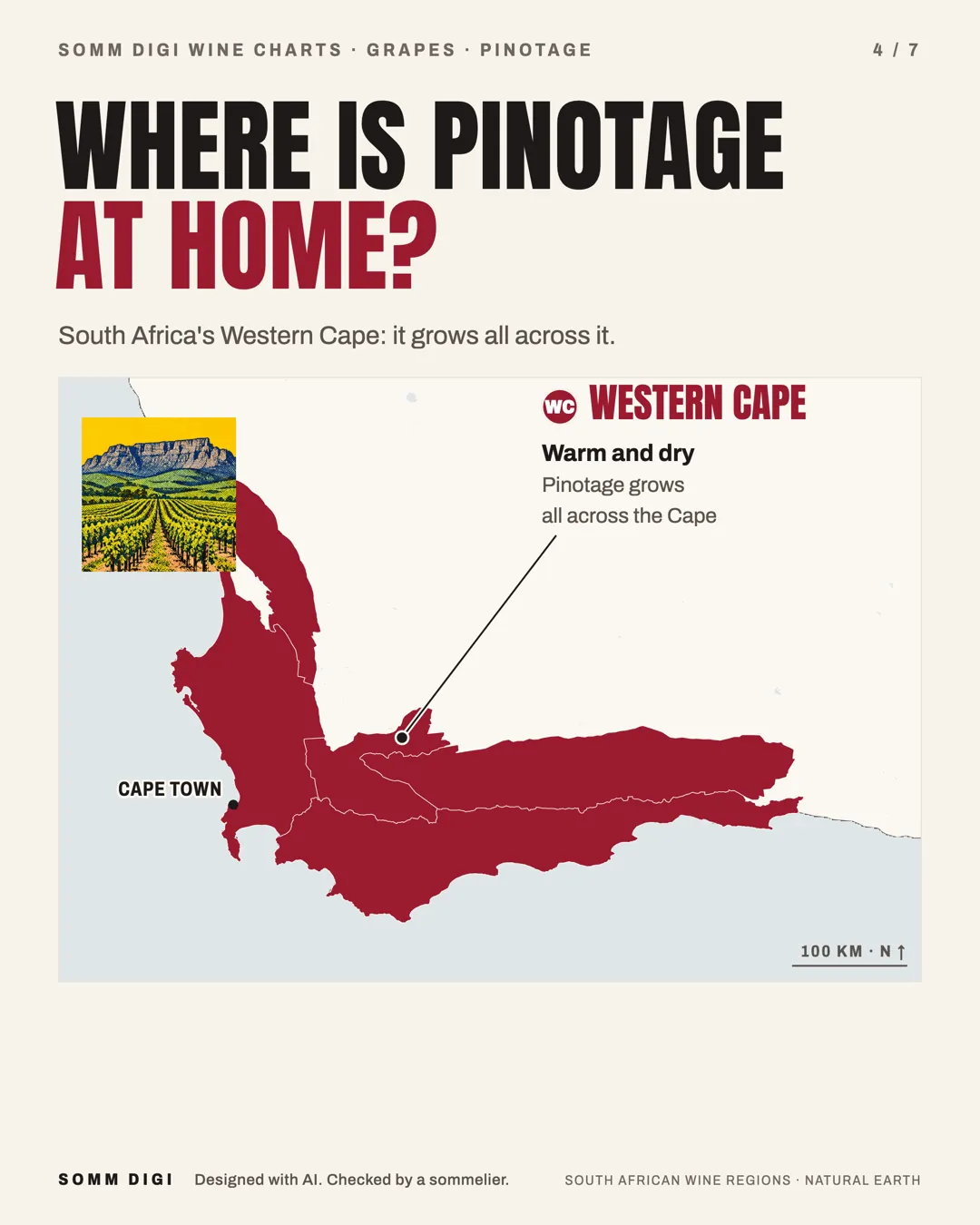
Pinotage's home is South Africa's Western Cape, warm and dry. It grows all across the Cape, the warm, dry climate it was developed for.
On a label, look for three names: Pinotage for the grape alone, Cape Blend for Pinotage with Cabernet Sauvignon and Merlot, and Western Cape for the place. The map shows the Western Cape.
Is Pinotage dry? How to serve it
Yes, Pinotage is a dry red. Serve it at 15–18 °C (59–64 °F), much warmer than the 7–10 °C (45–50 °F) for a white like Pinot Grigio.
Which glass?
A large red wine glass suits it. For more shapes, see red wine glasses compared on universalwineglasses.com, SOMM DIGI's glass site.
Pinotage food pairing
Red fruit and smoke make Pinotage a barbecue wine. Barbecue, sausages, burgers and ribs are all on its list, and each one has a reason. The somm tip keeps it short.
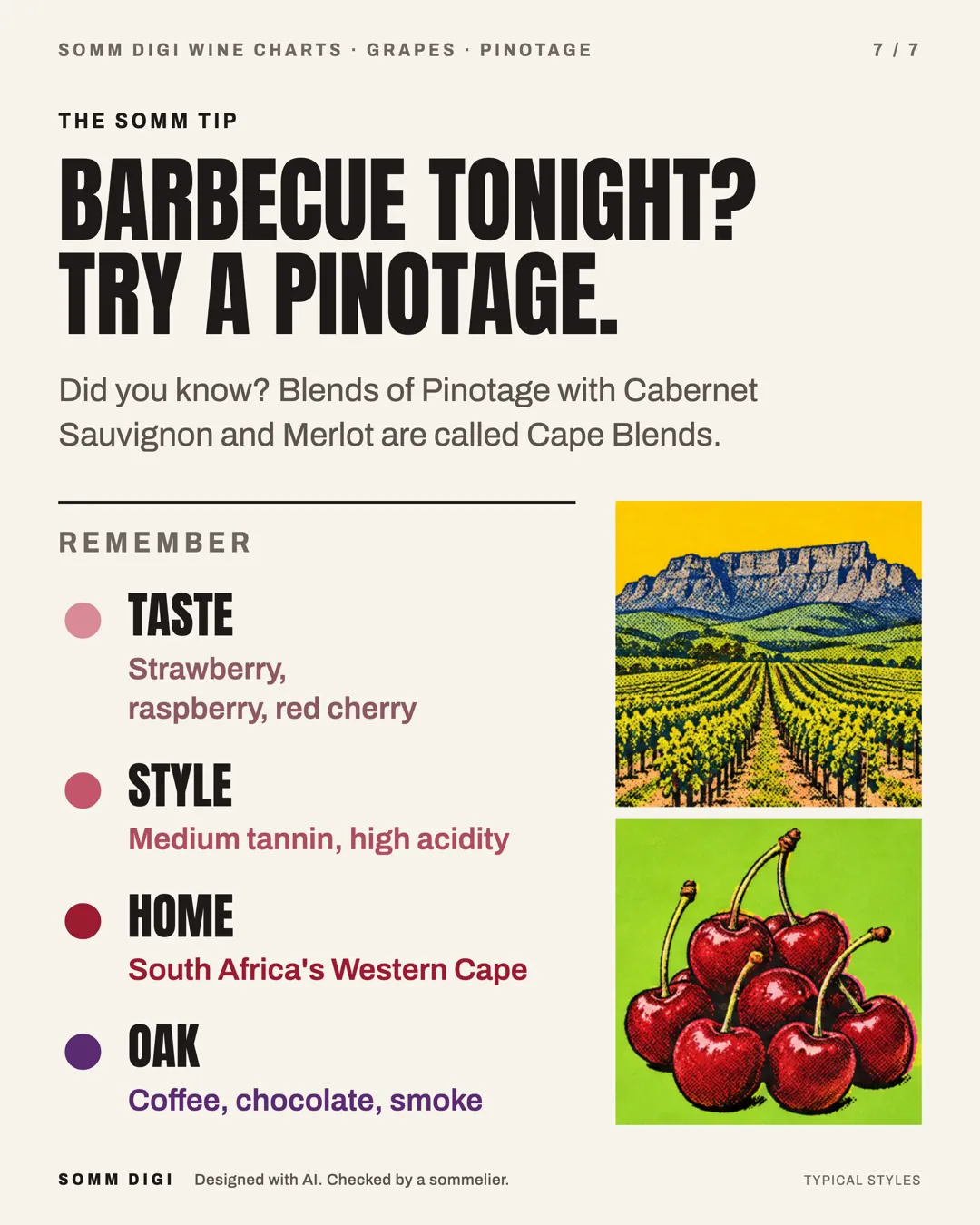
With grilled sausage, pour a Pinotage: salt makes the wine taste fruitier. With barbecue ribs, choose an oaked Pinotage, as smoky food meets its smoky oak. With burgers, a Cape Blend: a full dish and a full wine.
Skip sweet desserts. Sugar in the dish makes a dry wine taste less fruity and more acidic, so the wine turns sharp. The pairing chart has all four.

Learn wine the easy way
Wine Easy
The wine book that talks to you like a human: grapes, tasting, pairing and countries A–Z, in 388 full-colour pages.
Pinotage questions, answered
How do you pronounce Pinotage?
pee-noh-TAHJ.
Where does Pinotage come from?
South Africa. It was developed there for a warm, dry climate, and grows all across the Western Cape.
Is Pinotage related to Pinot Noir?
Yes, closely. Both share similar red fruit: strawberry, raspberry and red cherry.
Is Pinotage sweet?
No. It is a dry red with high acidity and medium tannin.
What is a Cape Blend?
A blend of Pinotage with Cabernet Sauvignon and Merlot.
What do you eat with Pinotage?
Barbecue, sausages, burgers or ribs. Avoid sweet desserts.
Try next
If you like Pinotage
How this page was made. Charts designed with AI and checked by Alper Billik, Advanced Sommelier. Text written from the same chart facts and edited with AI.