
Tokaji wine: what makes Furmint so sweet?
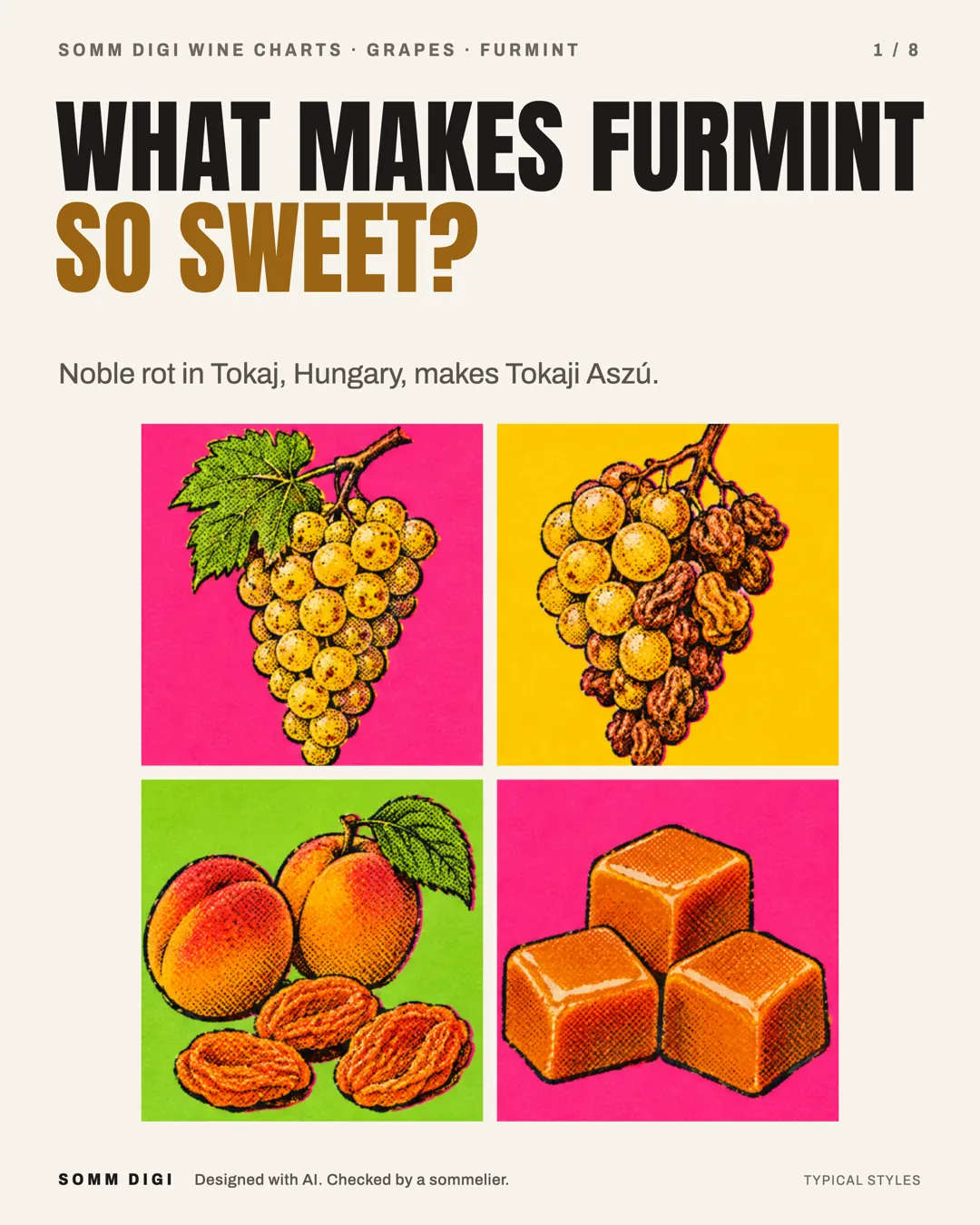
Tokaji Aszú pours amber, tastes of apricot and caramel, and stays fresh for years. Behind it is one grape, Furmint, and a little help from noble rot.
Quick answer
Tokaji Aszú is the sweet wine of Tokaj, in north-east Hungary, made from Furmint (say it FOOR-mint). Noble rot concentrates the berries, and high acidity keeps the wine fresh. It tastes of apricot, citrus and caramel, with vanilla from long ageing in oak. The number of puttonyos tells you the sweetness: 6 is sweeter than 5. Serve it at 6–8 °C (43–46 °F).

Alper Billik · Advanced Sommelier
Updated November 2026 · Edited with AI
This article may contain affiliate links.
On this page
What is Tokaji?
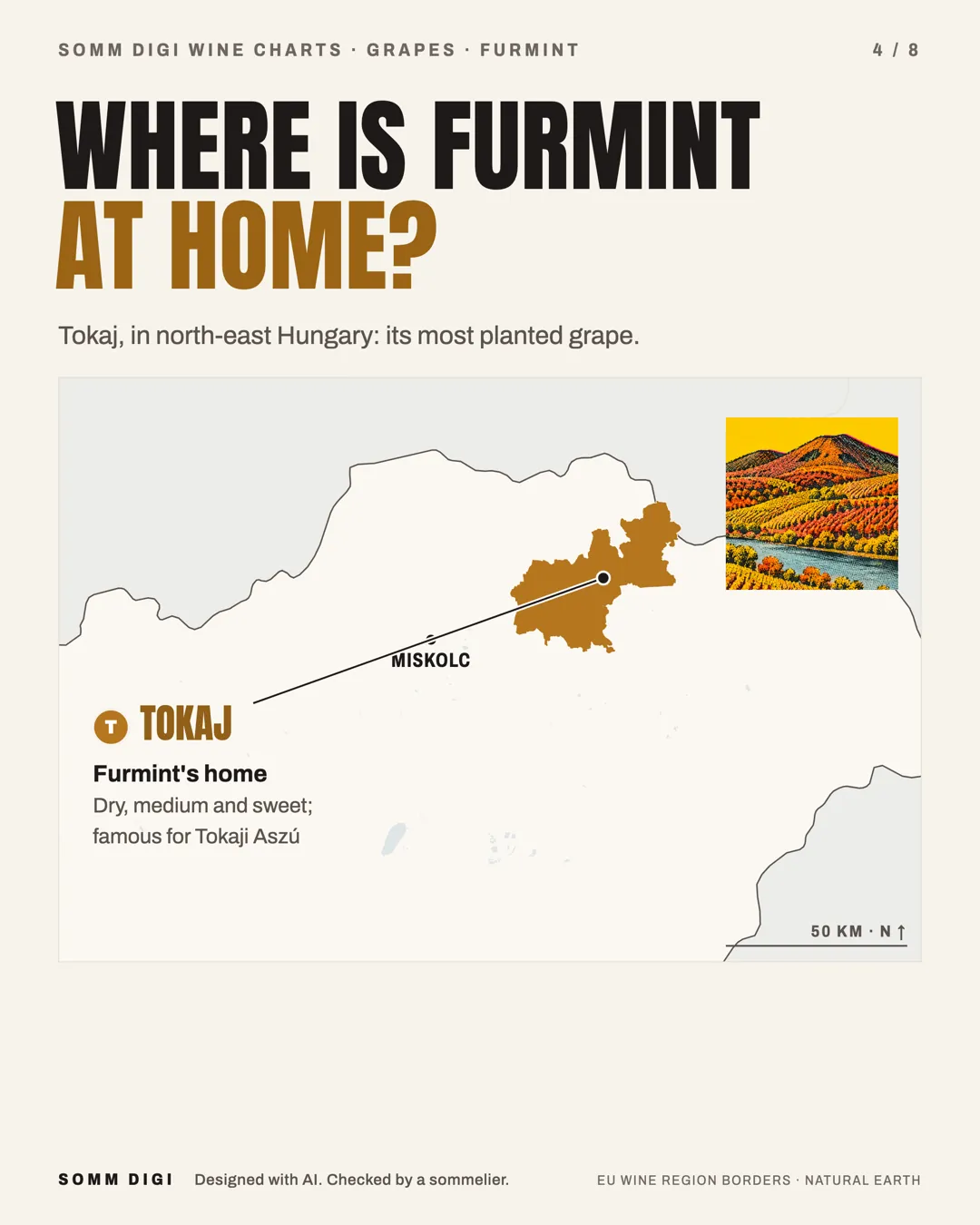
Tokaji is the wine of Tokaj, in north-east Hungary. Its most planted grape is Furmint, and the region makes it dry, medium and sweet. Whatever the style, Furmint brings high acidity, the thread that runs through every Tokaji.
The sweet one made it famous: Tokaji Aszú. It is amber, full and pronounced, and counted among the most complex sweet wines in the world. The map shows where Tokaj sits.
Furmint: the grape behind Tokaji
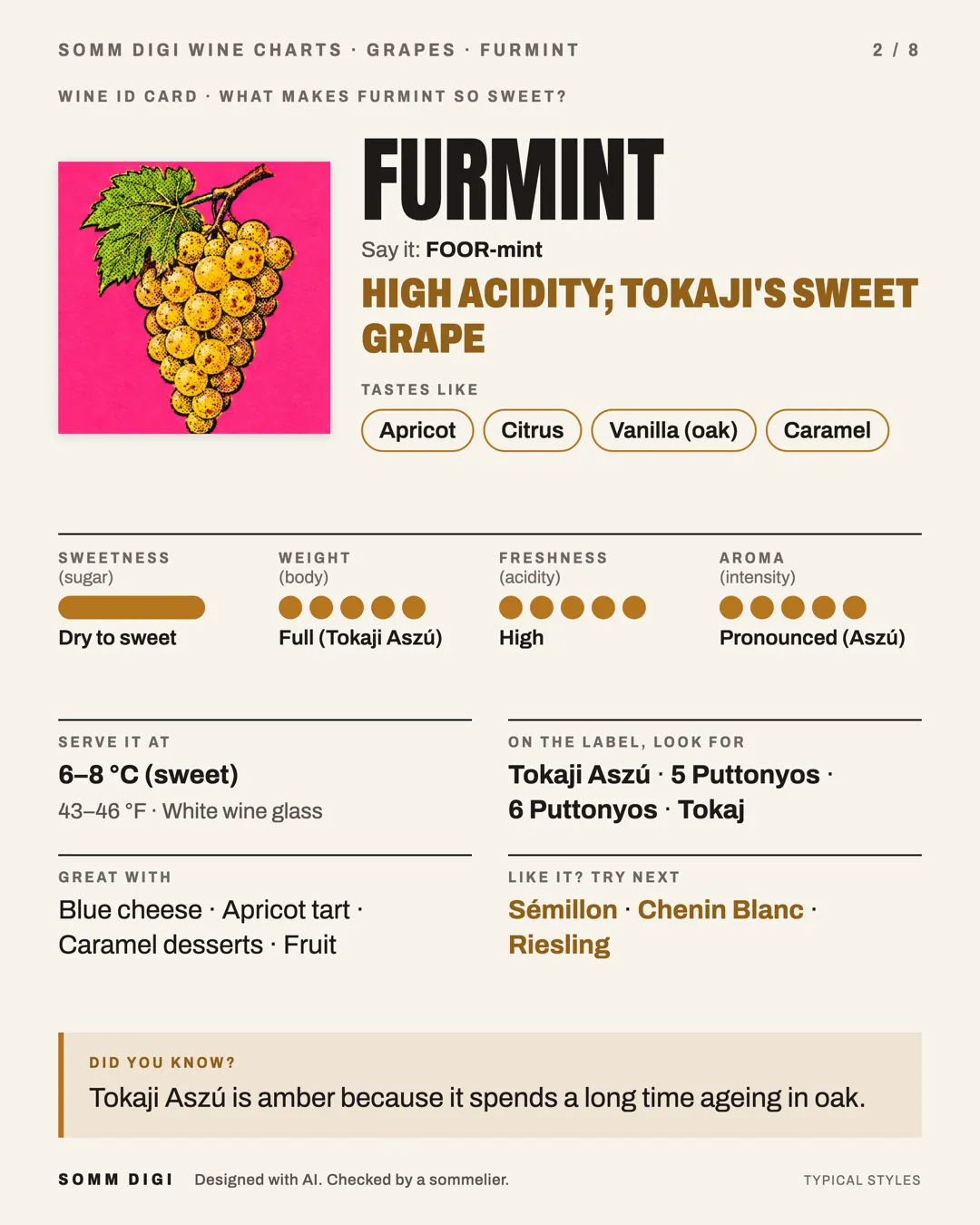
Furmint (say it FOOR-mint) is a white grape with high acidity. It makes wine from dry to sweet, and in Tokaji Aszú it gives a full body and pronounced aromas.
It tastes of apricot and citrus, with vanilla from oak and caramel from air. On a label, look for Tokaji Aszú, Tokaj, and the words 5 or 6 Puttonyos. The profile card puts the essentials on one page.
How is Tokaji Aszú made?
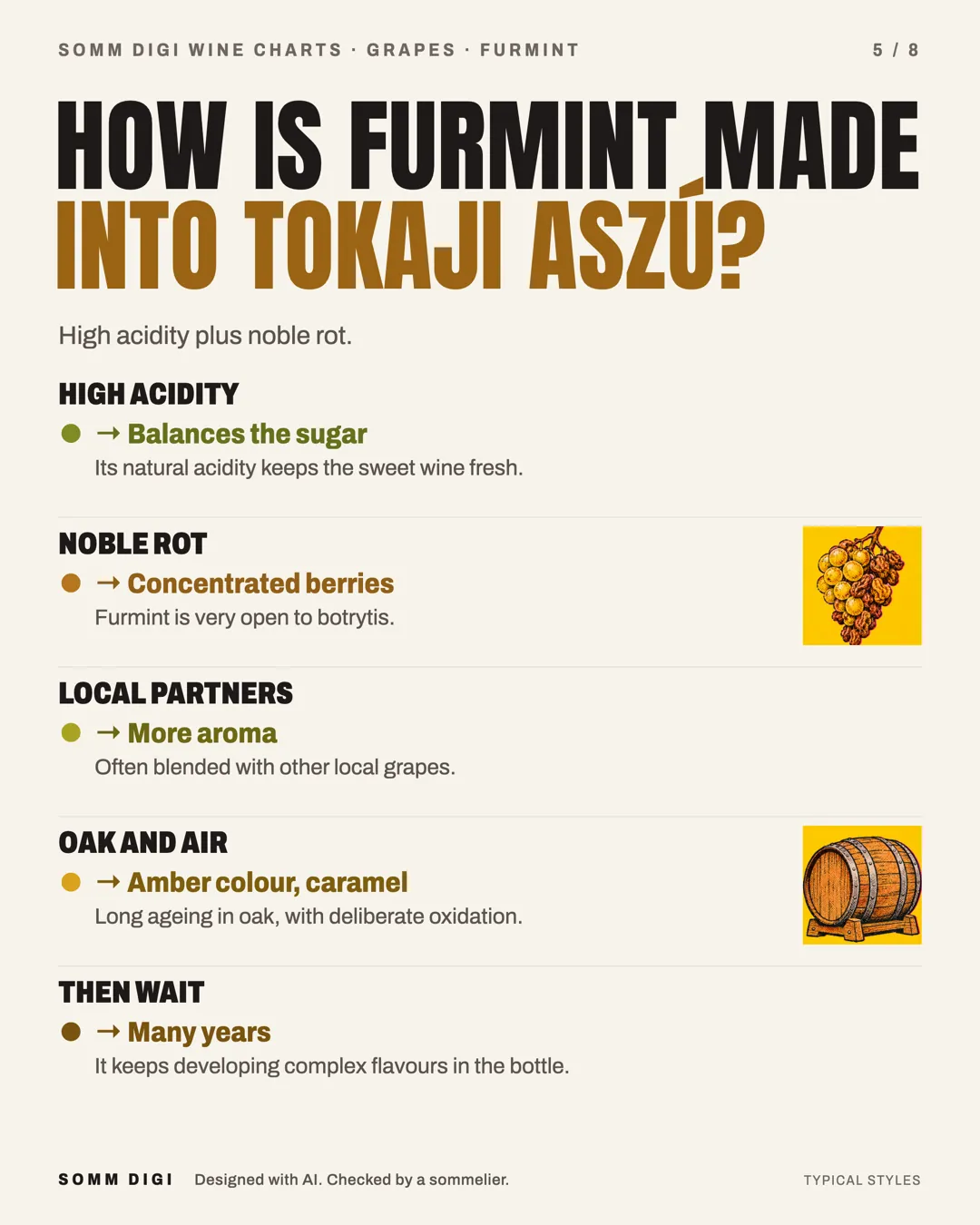
Tokaji Aszú is high acidity plus noble rot. Furmint's natural acidity balances the sugar, so the sweet wine stays fresh.
Noble rot, botrytis, concentrates the berries, and Furmint is very open to it. Furmint is often blended with other local grapes, which bring more aroma.
Then comes oak and air. The wine ages a long time in oak, with deliberate oxidation, and that gives its amber colour and its caramel. In the bottle it keeps developing complex flavours for many years. The chart shows all five steps.
How sweet is Tokaji? Count the puttonyos
On a Tokaji Aszú label, the number of puttonyos tells you the sweetness.
5 Puttonyos is sweet, a little less than 6. 6 Puttonyos is the sweeter of the two: rich, long and intense. The label chart shows both.
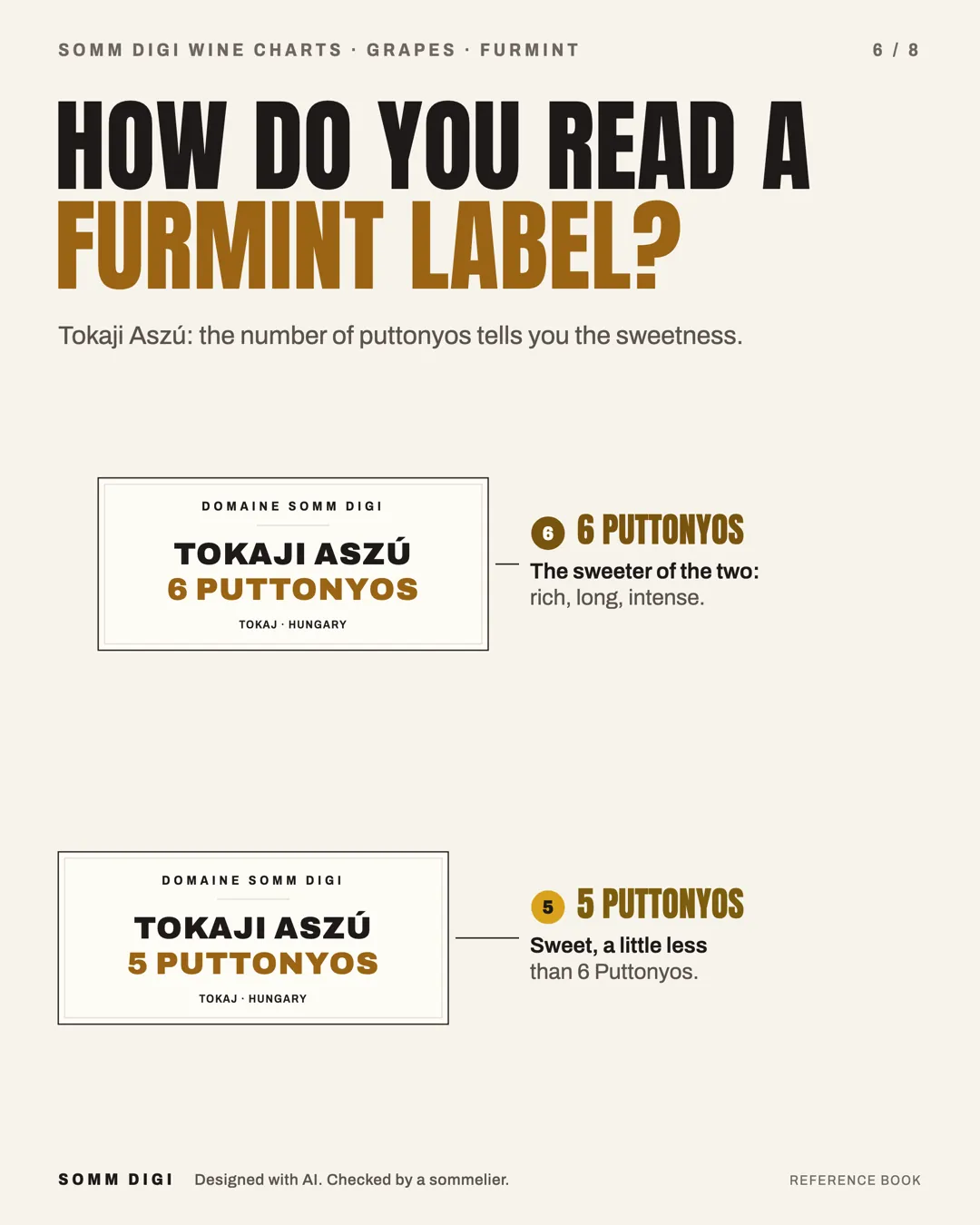
So the somm tip is easy to remember: want it sweeter? Count the puttonyos. The higher number is the sweeter wine.
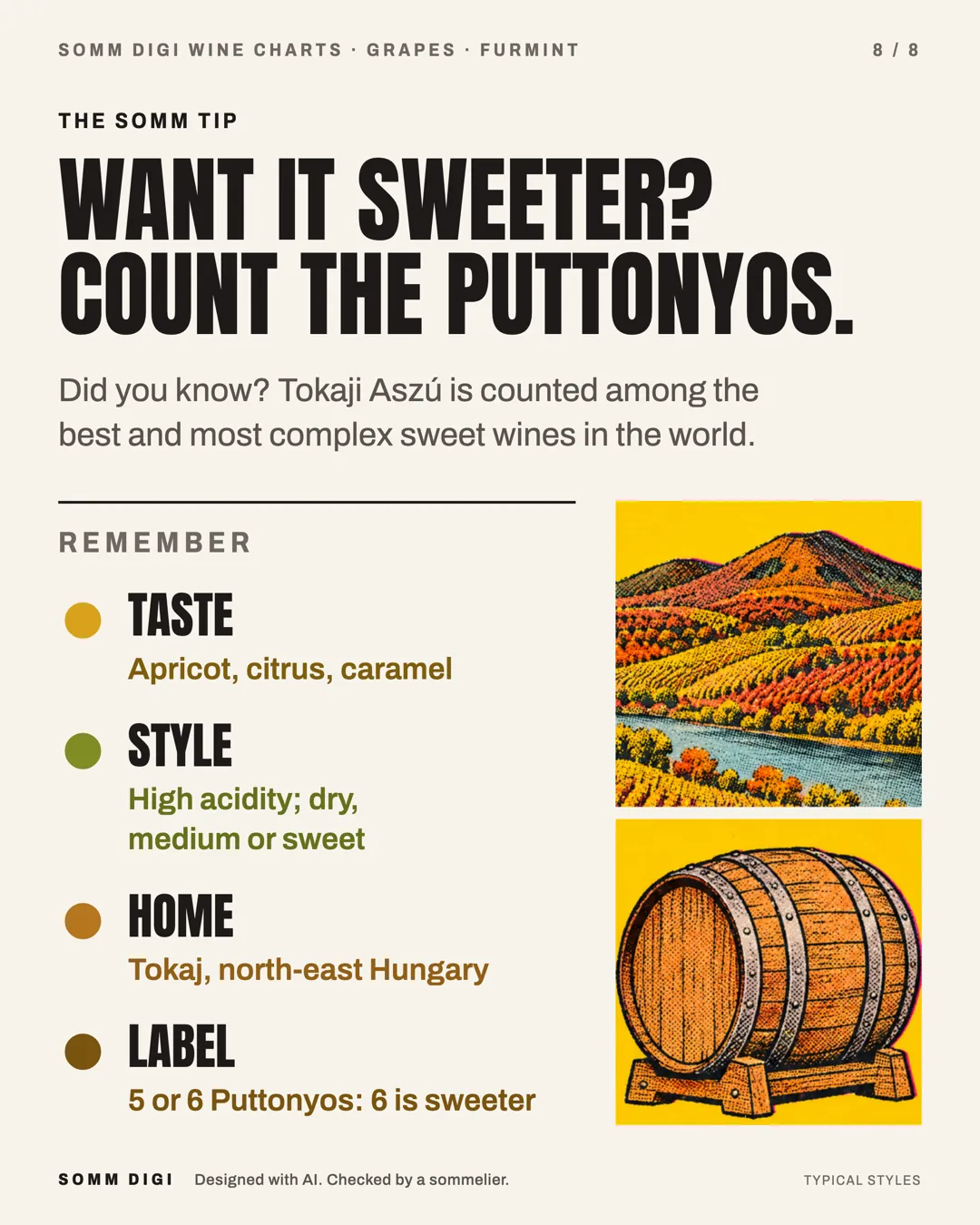
What does Tokaji taste like?
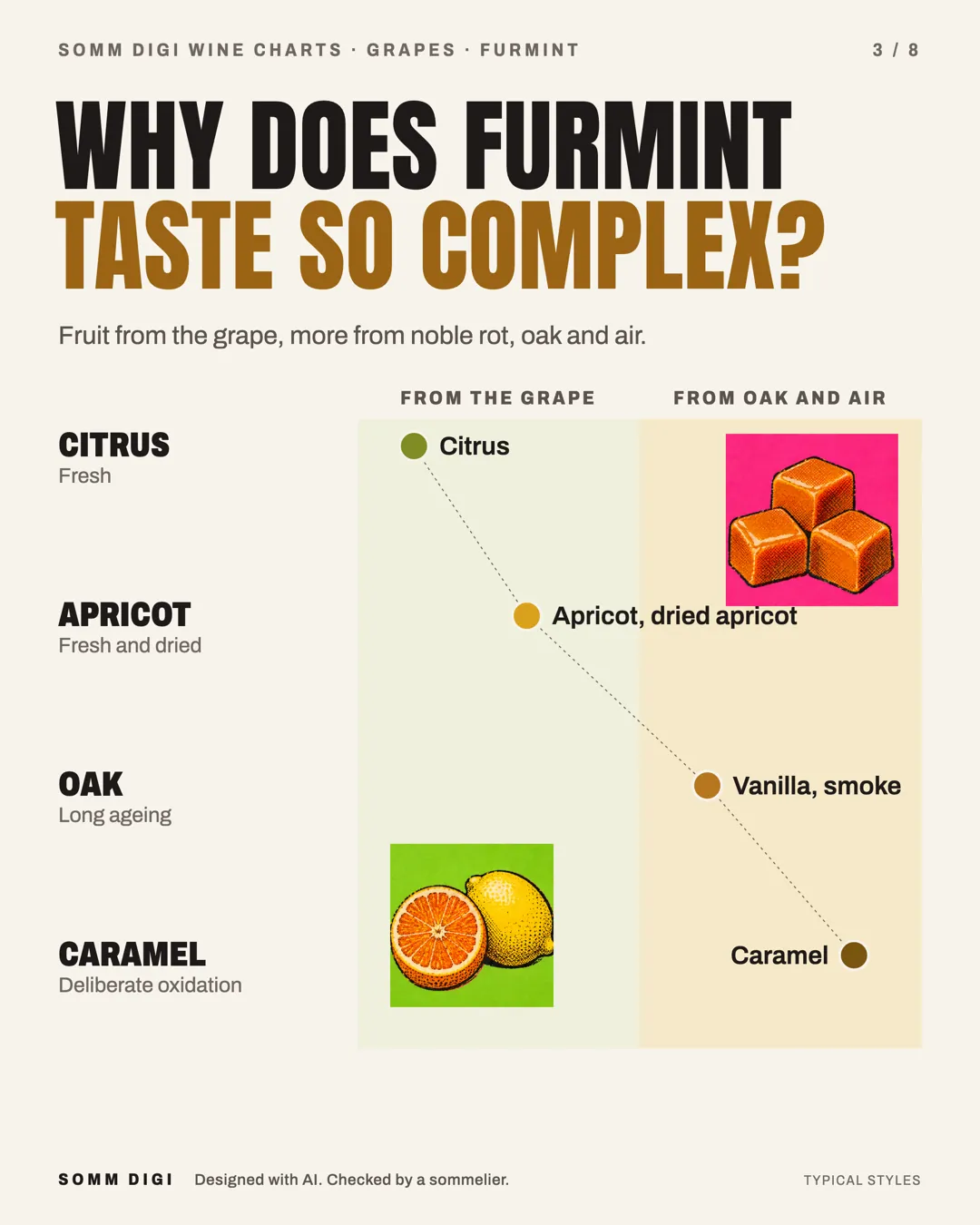
Tokaji's taste comes from two places: the grape, and the oak and air. That is why it tastes so complex.
From the grape come fresh citrus and apricot, both fresh and dried. From the oak and air come vanilla and smoke, from long ageing, and caramel, from deliberate oxidation. Tokaji Aszú is amber because it spends a long time ageing in oak. The taste chart shows the four layers.
How to serve Tokaji
Serve sweet Tokaji cold, at 6–8 °C (43–46 °F). A white wine glass does the job.
Which glass?
For a glass made for sweet wine, see the dessert wine glasses on universalwineglasses.com, SOMM DIGI's glass site.
Tokaji food pairing
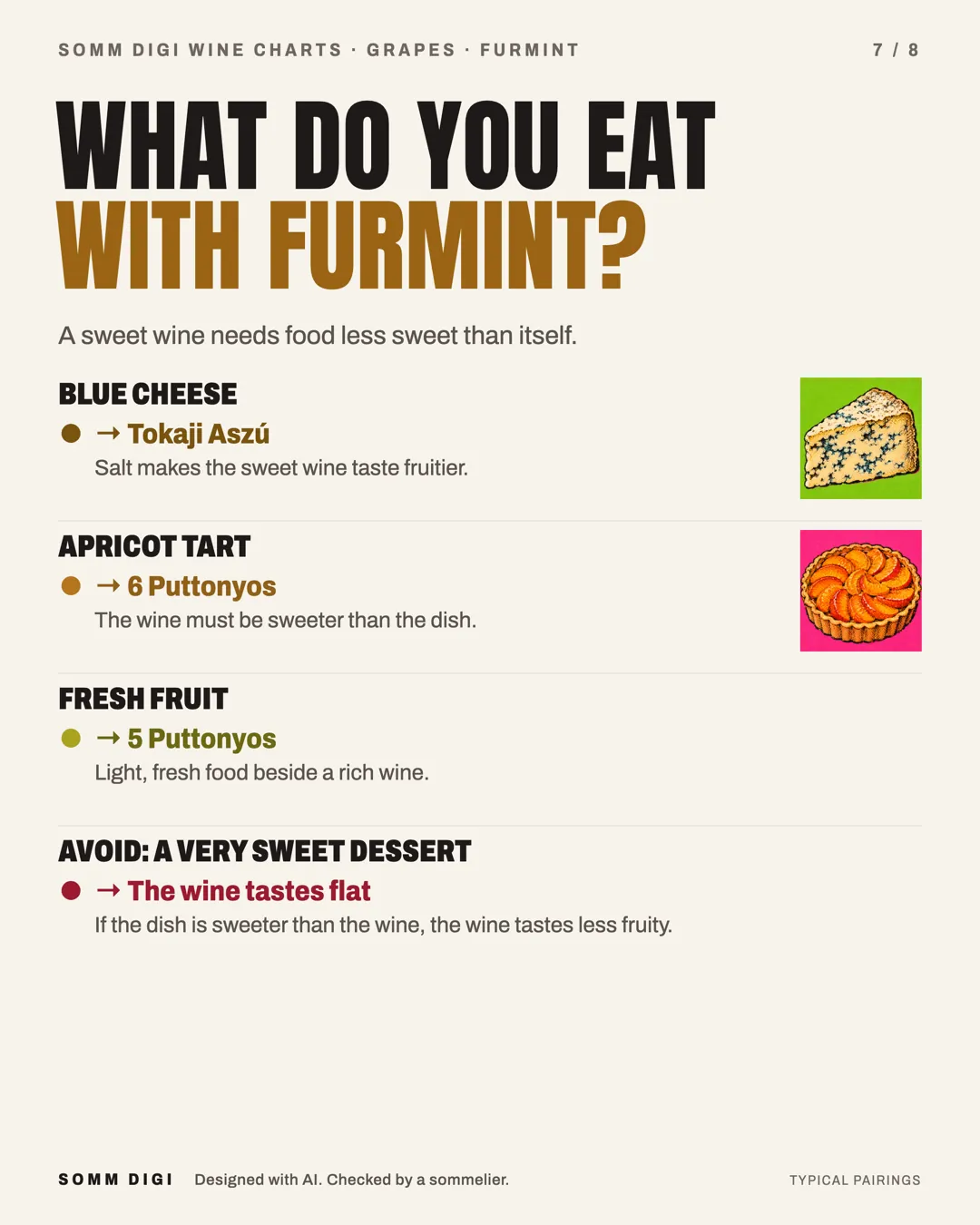
A sweet wine needs food less sweet than itself. Keep that in mind and Tokaji is easy to match.
Blue cheese and Tokaji Aszú work together because salt makes the sweet wine taste fruitier. For an apricot tart, choose a 6 Puttonyos: the wine must be sweeter than the dish. Fresh fruit suits a 5 Puttonyos, light, fresh food beside a rich wine.
Caramel desserts are a match too, as long as the dish is less sweet than the wine. Skip a very sweet dessert: if the dish is sweeter than the wine, the wine tastes less fruity and flat. The pairing chart has all four.
Learn wine the easy way
Wine Easy
The wine book that talks to you like a human: grapes, tasting, pairing and countries A–Z, in 388 full-colour pages.
Tokaji questions, answered
What grape is Tokaji made from?
Furmint, Tokaj's most planted grape, often blended with other local grapes for more aroma.
How do you pronounce Furmint?
FOOR-mint.
Is there dry Tokaji?
Yes. Tokaj makes Furmint dry, medium and sweet. Tokaji Aszú is the famous sweet one.
What does puttonyos mean on a Tokaji label?
The number of puttonyos tells you the sweetness of a Tokaji Aszú: 6 Puttonyos is sweeter than 5.
Why is Tokaji Aszú amber?
It spends a long time ageing in oak, with deliberate oxidation.
Does Tokaji Aszú age?
Yes, for many years. It keeps developing complex flavours in the bottle, and its high acidity keeps it fresh.
Try next
If you like Furmint
How this page was made. Charts designed with AI and checked by Alper Billik, Advanced Sommelier. Text written from the same chart facts and edited with AI.