
Riesling wine: sweet or dry?
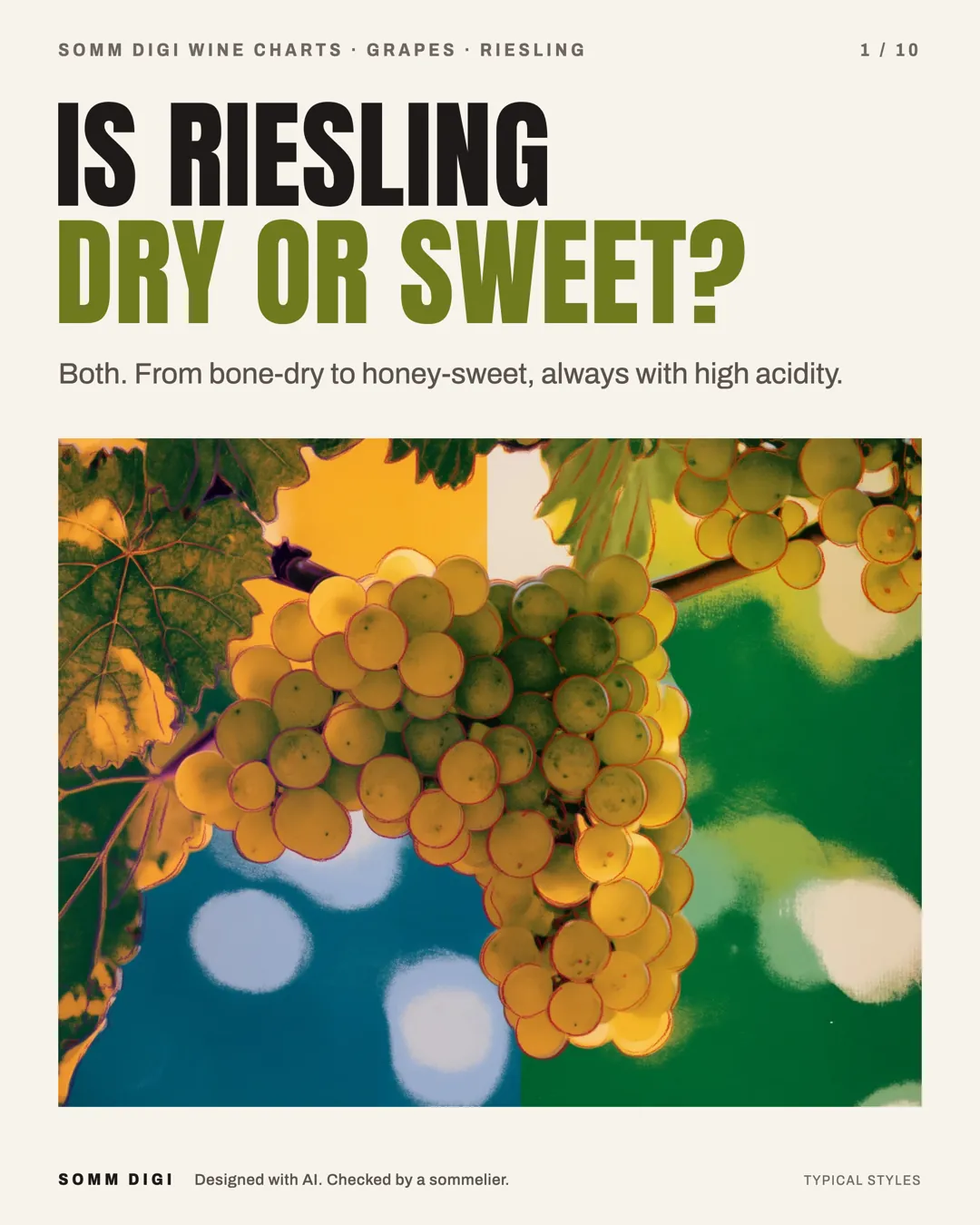
Pick up two bottles of Riesling: one can be bone-dry, the other honey-sweet. Same grape. Here is how to tell before you open it.
Quick answer
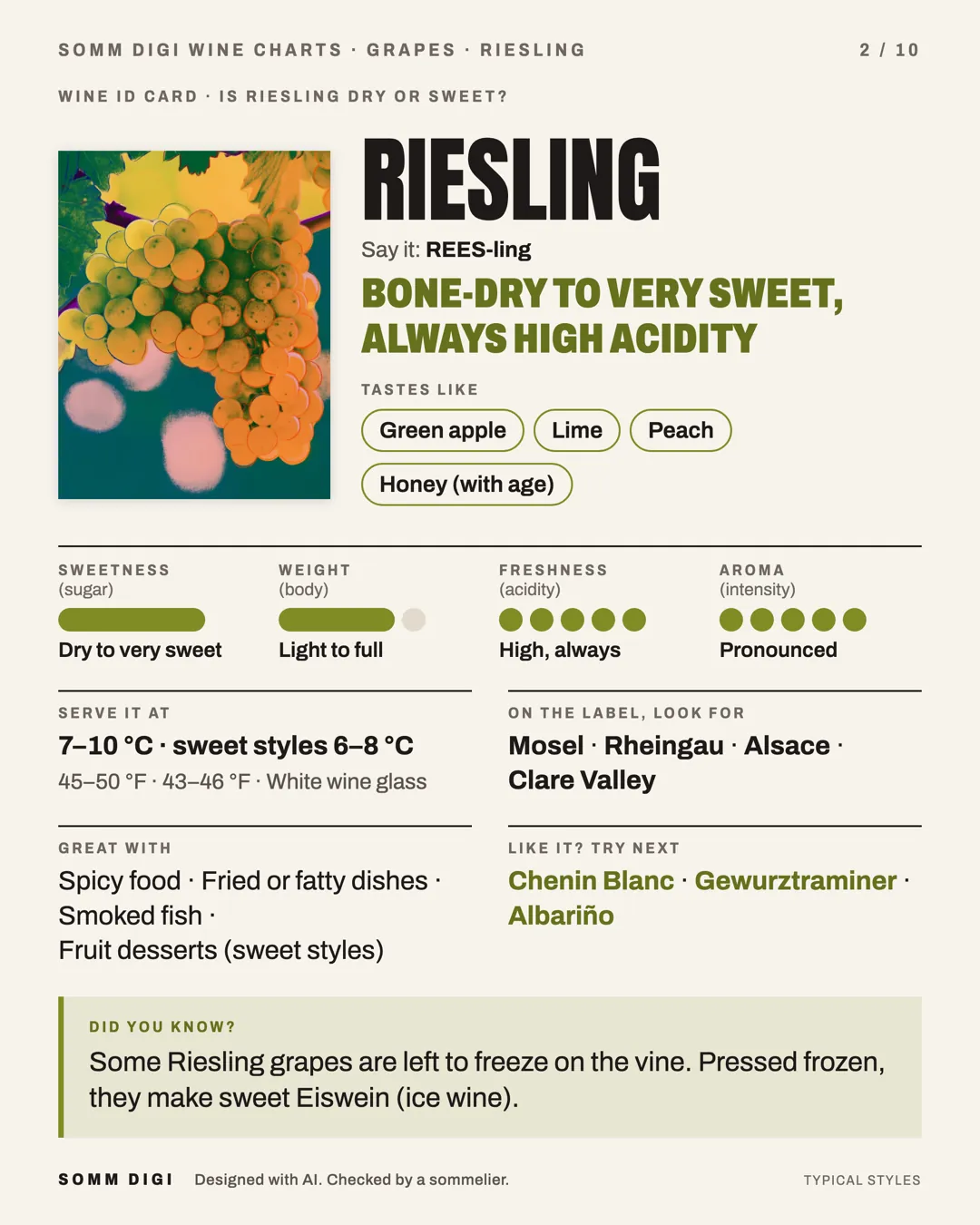
Riesling (say it REES-ling) is a white grape that makes wine from bone-dry to very sweet, always with high acidity, so even sweet styles taste fresh. Young, it tastes of green apple and lime; riper, of peach; with age, of honey. Want it dry? Look for “Trocken” on a German label. Serve it at 7–10 °C (45–50 °F).

Alper Billik · Advanced Sommelier
Updated November 2026 · Edited with AI
This article may contain affiliate links.
On this page
- What is Riesling?
- Is Riesling sweet? Four ways it gets sweet
- How to tell if a Riesling is dry: reading a German label
- Dry, off-dry or sweet: which Riesling is for you?
- What does Riesling taste like?
- Where does Riesling grow?
- German Riesling: Mosel, Rheingau and Pfalz
- Should Riesling be chilled? Temperature and glass
- Riesling food pairing
- Riesling questions, answered
What is Riesling?
Riesling (say it REES-ling) is a white grape with two things you can always count on: pronounced aromas and high acidity. Everything else moves. The same grape makes wines from bone-dry to very sweet, and from light to full in body.
That range is why people get lost in the wine shop. One bottle tastes of green apple and lime, another of ripe peach, an older one of honey. Once you know where those differences come from, Riesling becomes one of the easiest wines to choose. The profile card puts the essentials on one page.
Is Riesling sweet? Four ways it gets sweet
Some Riesling is sweet and some is not. A Riesling tastes sweet when sugar from the grapes stays in the wine, and there are four ways to keep it there.
Stop the fermentation early and some grape sugar is left behind: the wine is off-dry to medium, and lower in alcohol. Pick late, in a dry, sunny autumn, and the grapes hang on the vine until they are riper and sweeter.
The last two make the sweetest wines. Noble rot, a fungus called botrytis, shrivels the berries and concentrates their sugar; that is how a very sweet Beerenauslese or TBA is made.
Other grapes are left to freeze on the vine. Pressed frozen, the ice stays behind and only the sweet juice runs out. That wine is Eiswein, or ice wine. The sweetness chart puts all four side by side.
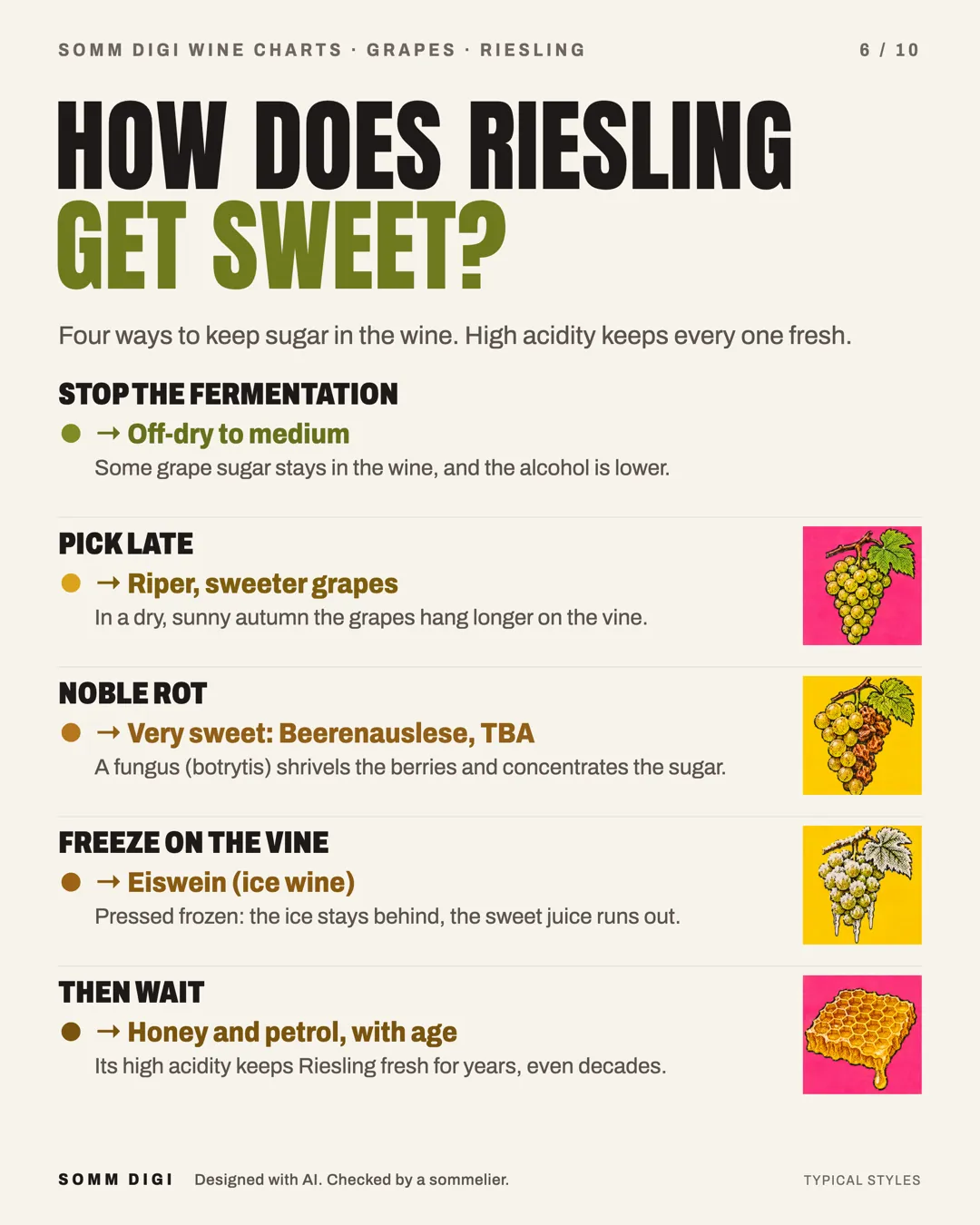
Whatever the method, high acidity balances the sugar, so even a sweet Riesling tastes fresh, never heavy. The same acidity keeps it fresh for years, even decades, as it slowly picks up notes of honey and petrol.
How to tell if a Riesling is dry: reading a German label
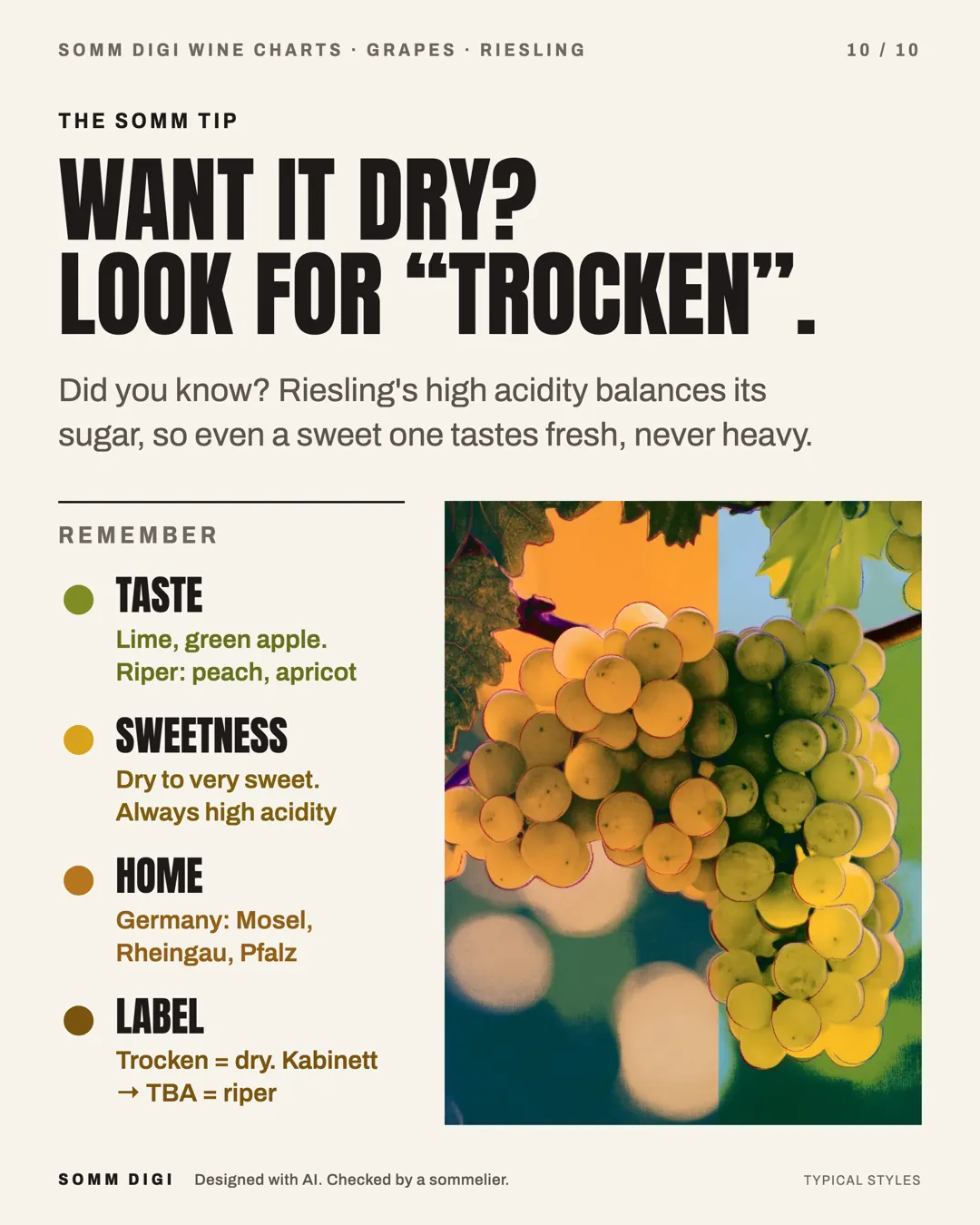
On a German bottle, look for one word first. Trocken means dry. Halbtrocken means some sweetness.
Many German Rieslings also carry a ripeness word, and each step up means riper grapes at harvest. Kabinett is the lightest and most delicate: green apple, lime, blossom. Spätlese, late harvest, brings riper fruit and a fuller body. Auslese is made from selected extra-ripe bunches, and most have some sweetness.
The top two steps are always sweet. Beerenauslese comes from berries with noble rot and tastes of apricot and honey. Trockenbeerenauslese, TBA for short, is made from berries dried by noble rot, and it is rare. Eiswein stands apart: grapes frozen on the vine. The label chart shows the steps from the lightest to the rarest.
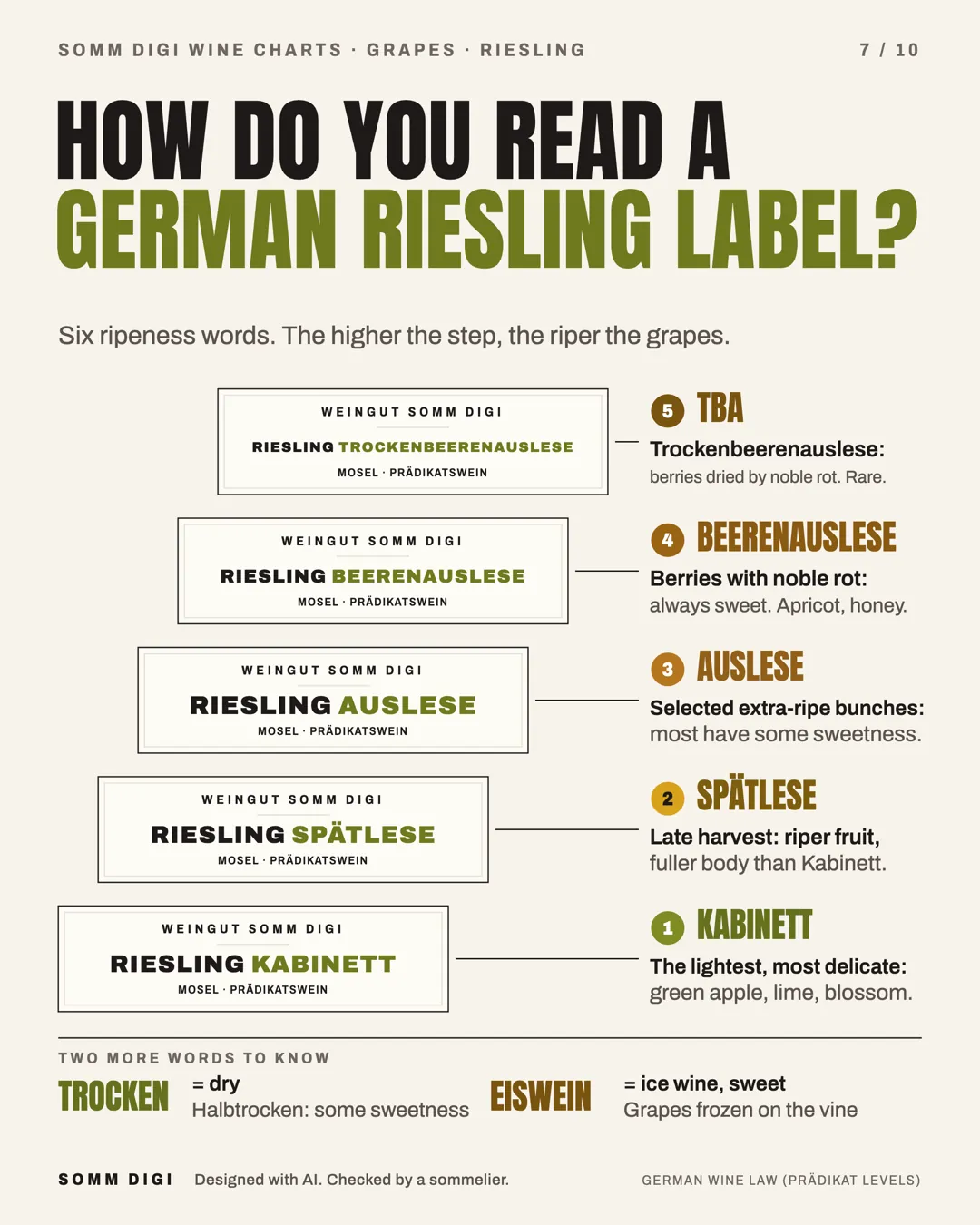
If you remember one thing from the label, make it the somm tip: want it dry? Look for “Trocken”. And whatever the label says, high acidity keeps every style fresh.
Dry, off-dry or sweet: which Riesling is for you?
The place and the harvest decide the style. Pick a Riesling by the taste you want, not by the name on the label.
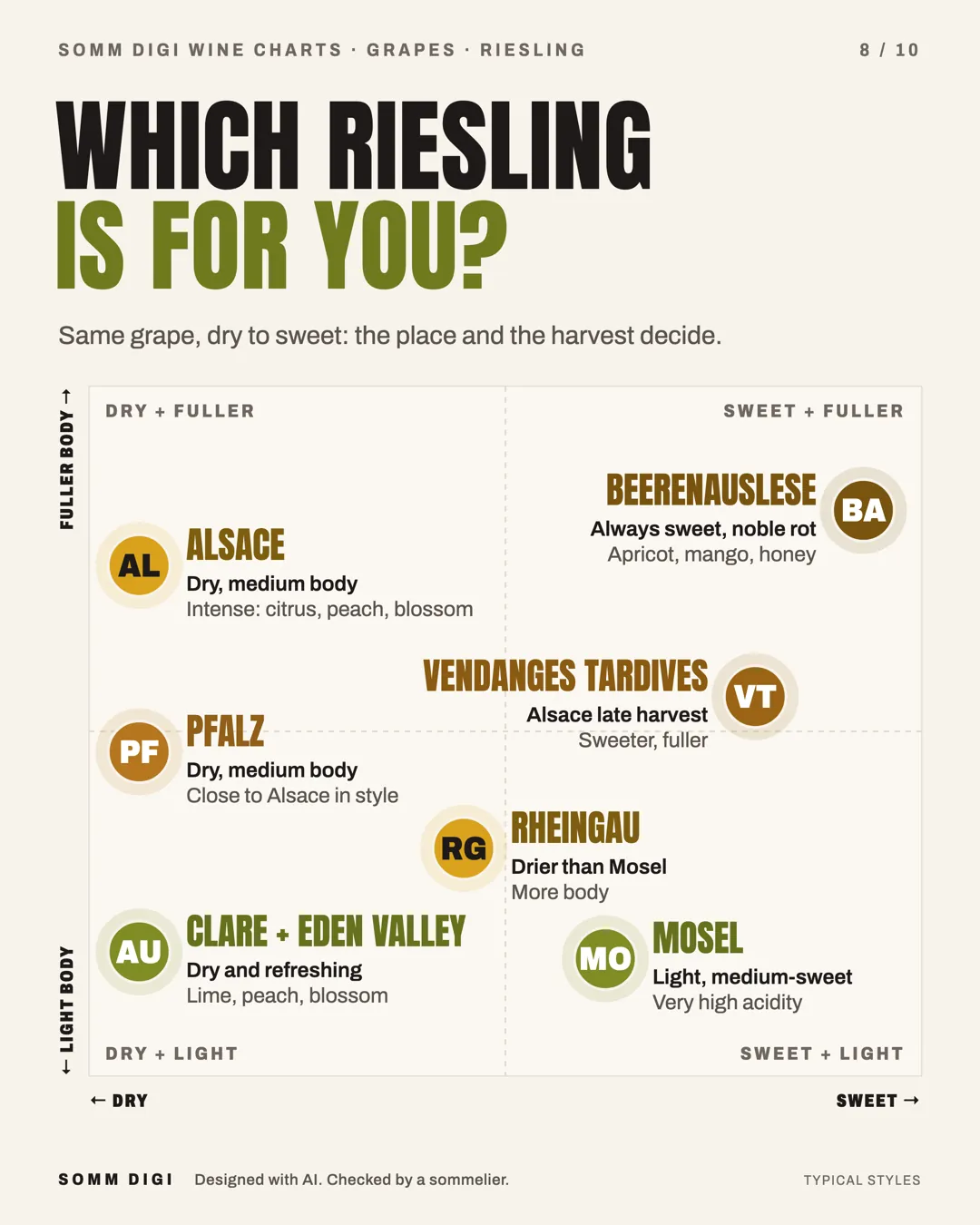
For dry and refreshing, choose the Clare or Eden Valley in Australia: lime, peach and blossom. For dry with medium body, choose the Pfalz in Germany or Alsace in France, where the aromas are intense: citrus, peach, blossom. The Rheingau sits in between: drier than the Mosel, with more body.
For light and medium-sweet, the Mosel, with very high acidity. For sweeter and fuller, Vendanges Tardives, Alsace's late-harvest wine. And for always sweet, a Beerenauslese: apricot, mango and honey. The styles chart maps all seven from dry to sweet and from light to full.
What does Riesling taste like?
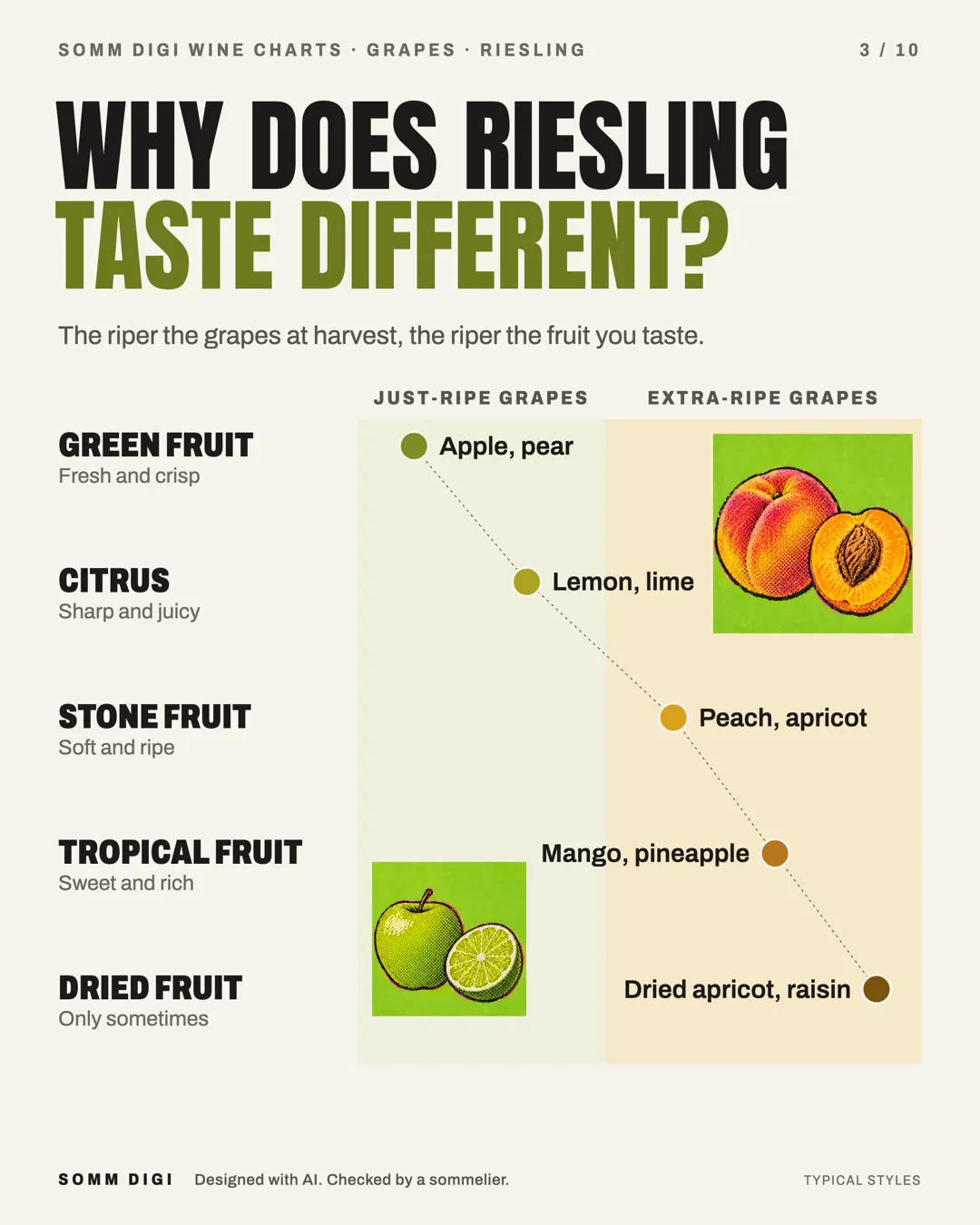
Riesling's taste follows the grapes' ripeness at harvest. The riper the grapes, the riper the fruit you taste.
Just-ripe grapes give green fruit and citrus: apple and pear, fresh and crisp; lemon and lime, sharp and juicy.
Extra-ripe grapes move on to stone fruit, peach and apricot, soft and ripe, then to tropical fruit, mango and pineapple, sweet and rich. Sometimes there is even dried fruit, like dried apricot or raisin. Follow the line on the taste chart and you follow the harvest.
Where does Riesling grow?
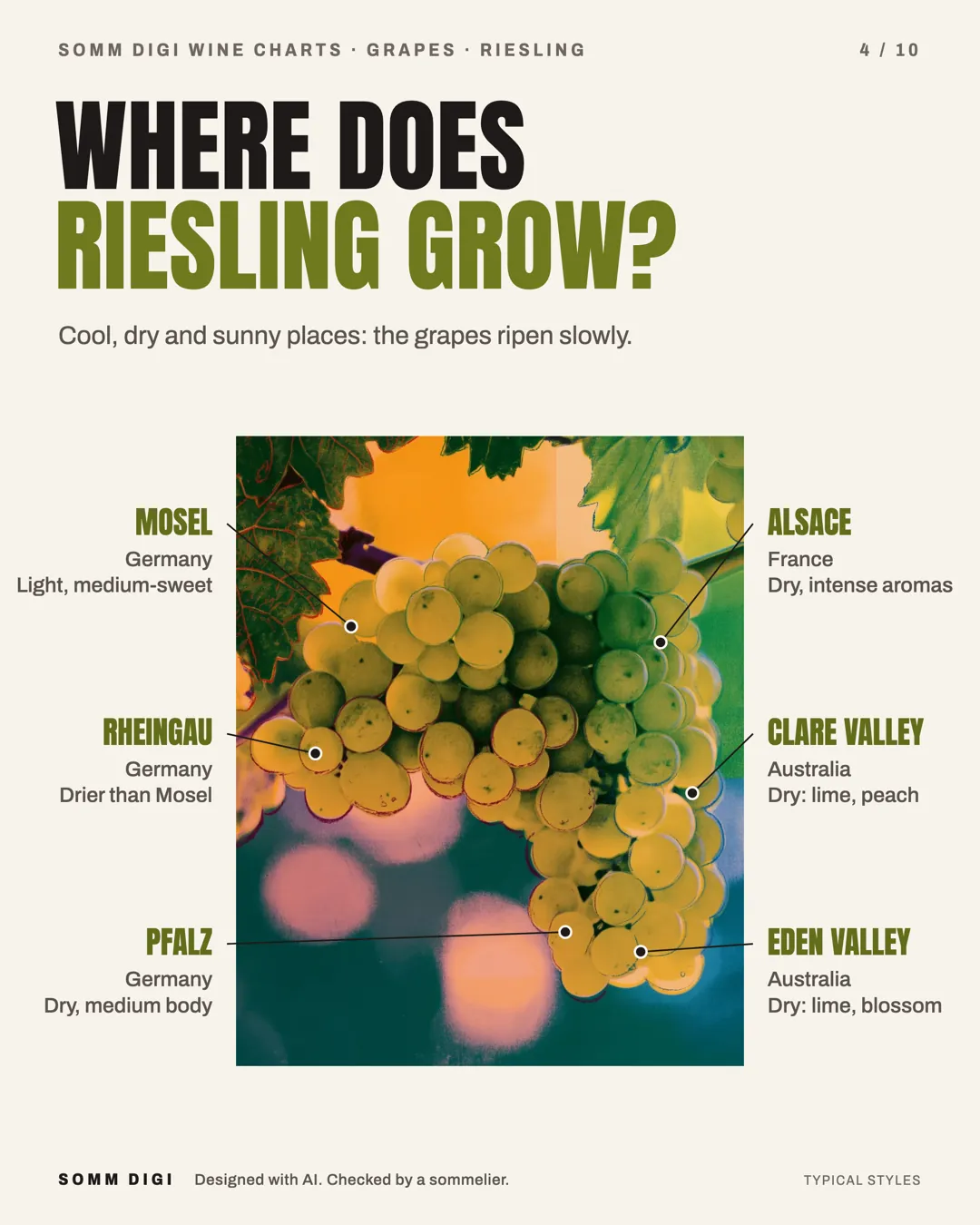
Riesling likes cool, dry and sunny places, where the grapes ripen slowly. Its best-known homes are in Germany: the Mosel, light and medium-sweet; the Rheingau, drier than the Mosel; and the Pfalz, dry with medium body.
Across the border, Alsace in France makes dry Riesling with intense aromas. On the other side of the world, Australia's Clare Valley and Eden Valley make dry Riesling that tastes of lime, with peach or blossom. The regions chart shows all six around the grape.
German Riesling: Mosel, Rheingau and Pfalz
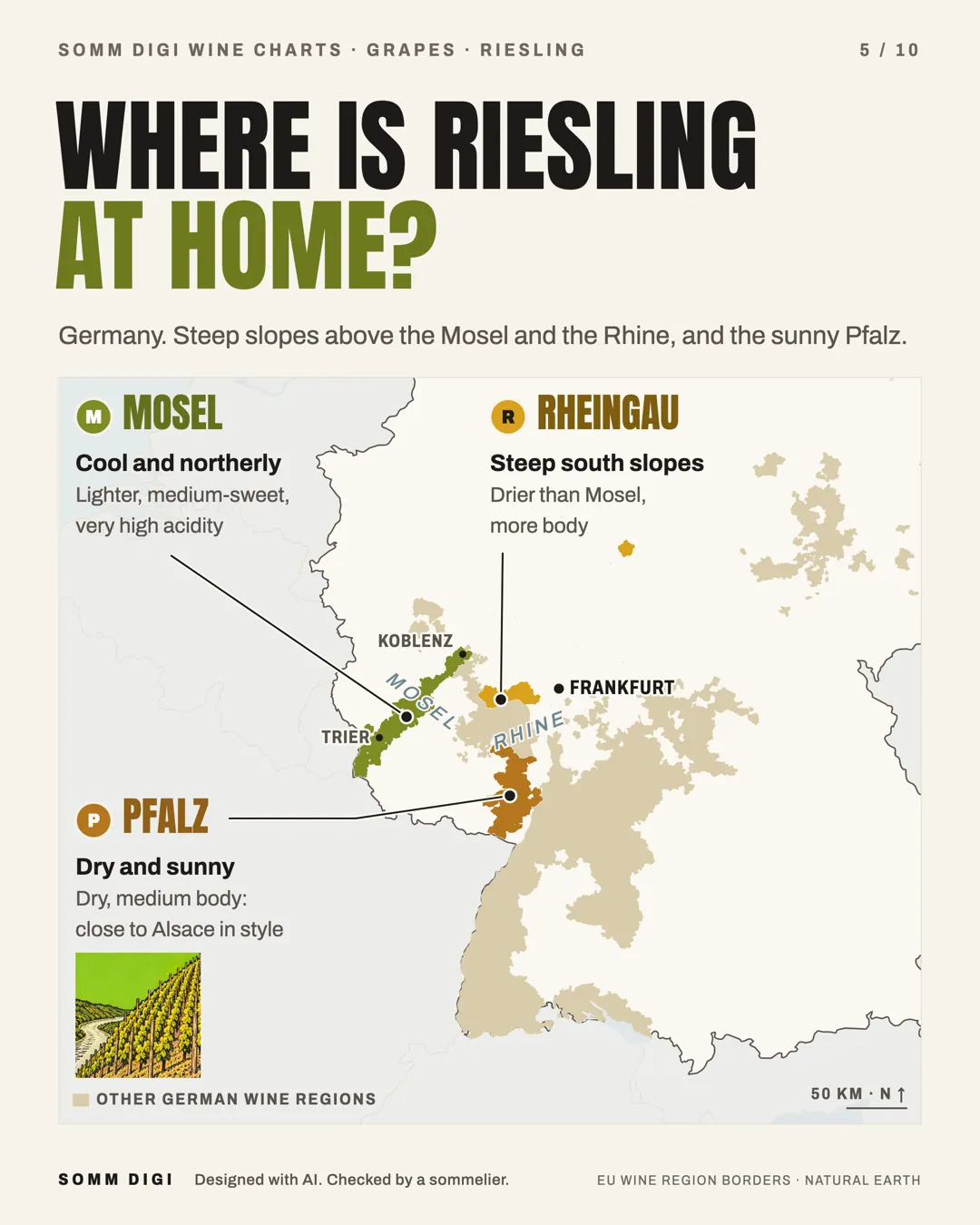
Germany is Riesling's home, and each of its three great Riesling regions makes a different wine.
The Mosel is cool and northerly, with steep slopes above the river: its Rieslings are lighter, medium-sweet, with very high acidity. The Rheingau has steep south-facing slopes, and its wines are drier than the Mosel's, with more body. The Pfalz is dry and sunny: dry, medium-bodied Riesling, close to Alsace in style.
Germany has other wine regions too, from the Ahr and the Nahe to Franken, Baden and Sachsen. The map shows them all, with the three Riesling regions in colour.
Should Riesling be chilled? Temperature and glass
Yes. Serve Riesling cold, at 7–10 °C (45–50 °F). Sweet styles go a little colder, at 6–8 °C (43–46 °F).
Which glass?
Any white wine glass works. For shapes picked for Riesling, see the Riesling glass guide on universalwineglasses.com, SOMM DIGI's glass site.
Riesling food pairing
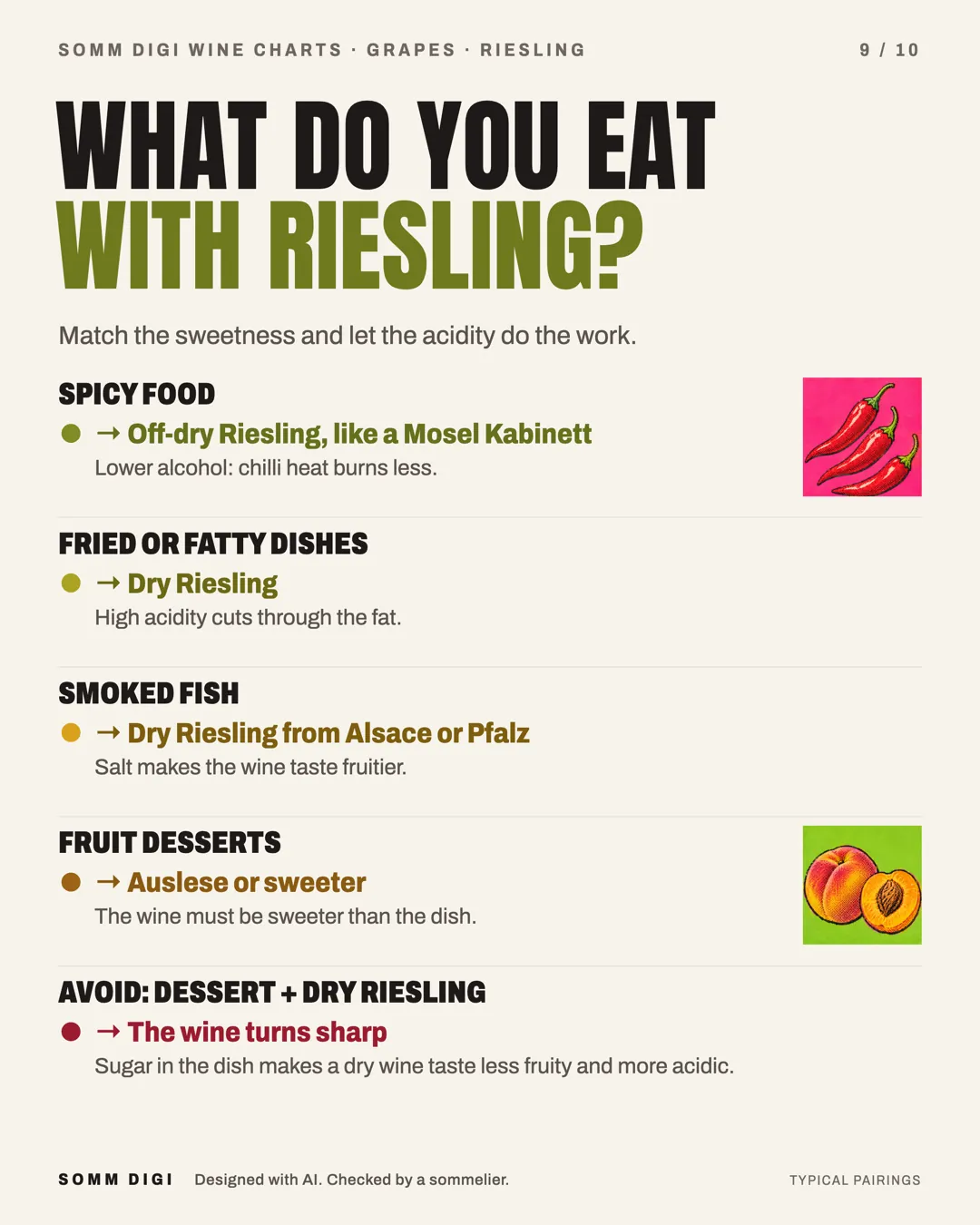
With Riesling, match the sweetness of the wine to the dish and let the acidity do the work.
Spicy food loves an off-dry Riesling, like a Mosel Kabinett: with lower alcohol, the chilli heat burns less. Fried or fatty dishes call for a dry Riesling, because high acidity cuts through the fat. With smoked fish, pour a dry Riesling from Alsace or the Pfalz; the salt makes the wine taste fruitier.
For fruit desserts, choose an Auslese or sweeter: the wine must be sweeter than the dish. And skip one match, a dry Riesling with dessert. Sugar in the dish makes a dry wine taste less fruity and more acidic, so the wine turns sharp. The pairing chart has all five.
Learn wine the easy way
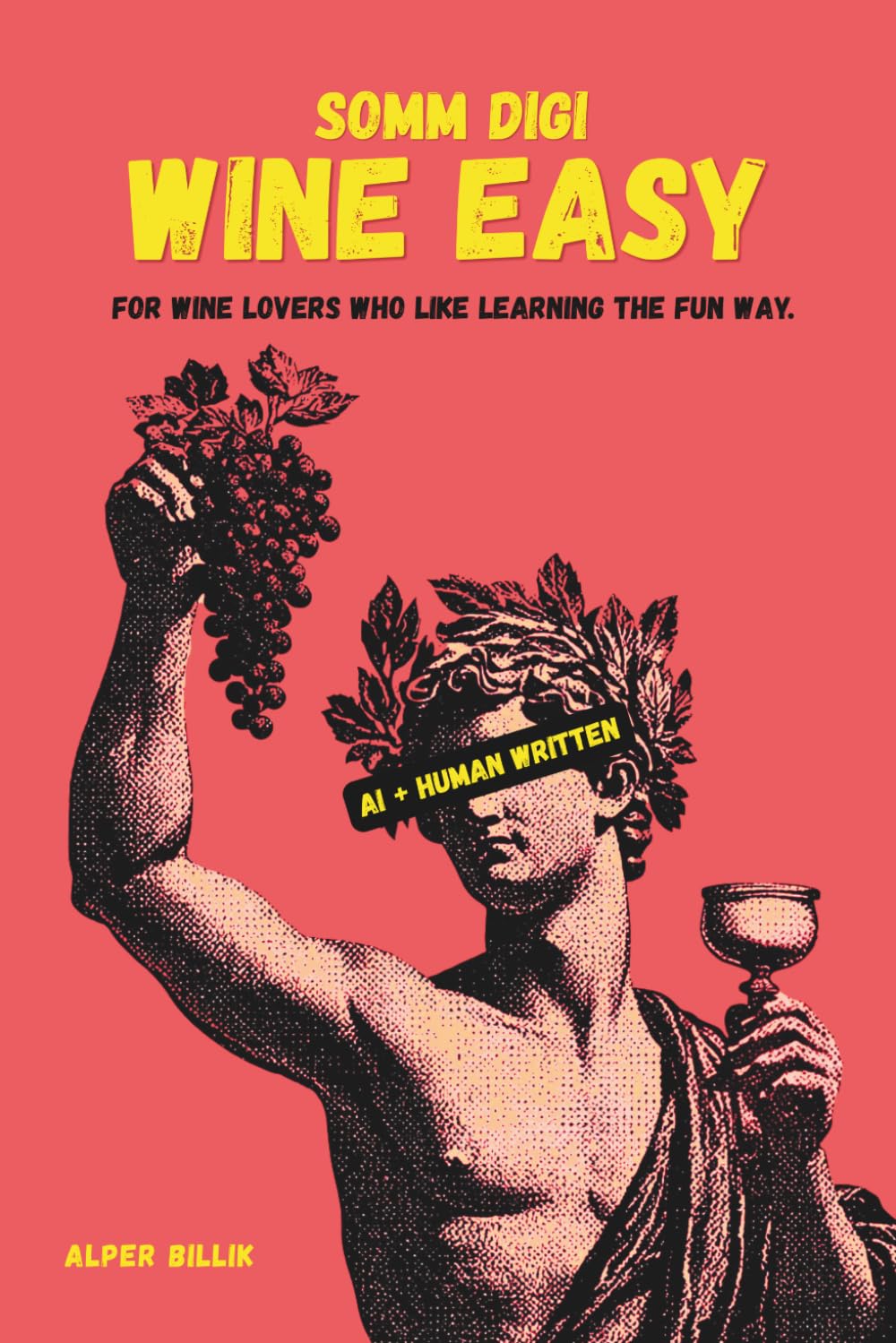
Wine Easy
The wine book that talks to you like a human: grapes, tasting, pairing and countries A–Z, in 388 full-colour pages.
Riesling questions, answered
How do you pronounce Riesling?
REES-ling.
What does “Trocken” mean on a Riesling label?
Dry. Halbtrocken means some sweetness.
What is Kabinett Riesling?
The lightest, most delicate step of the German ripeness words: green apple, lime and blossom.
What is Eiswein?
Ice wine: a sweet wine made from grapes frozen on the vine. Pressed frozen, the ice stays behind and only the sweet juice runs out.
Does Riesling age well?
Yes. Its high acidity keeps it fresh for years, even decades, and with age it picks up notes of honey and petrol.
Which glass for Riesling?
A white wine glass, served at 7–10 °C (45–50 °F).
Try next
If you like Riesling
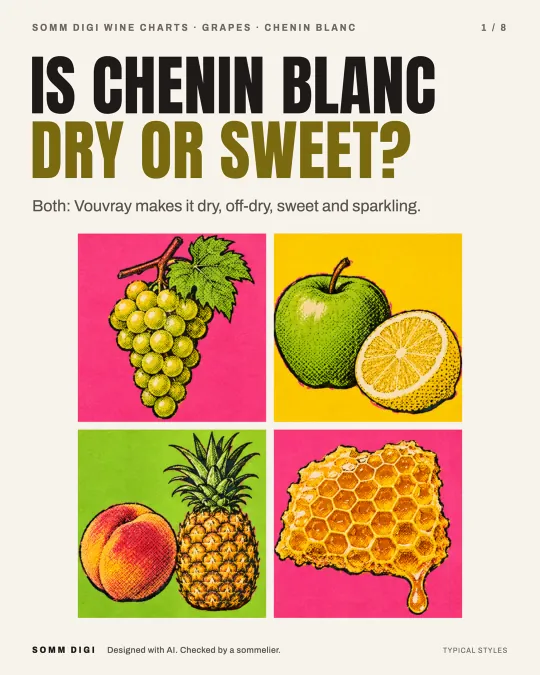
How this page was made. Charts designed with AI and checked by Alper Billik, Advanced Sommelier. Text written from the same chart facts and edited with AI.