
Sémillon and Sauternes: why does it taste of honey?
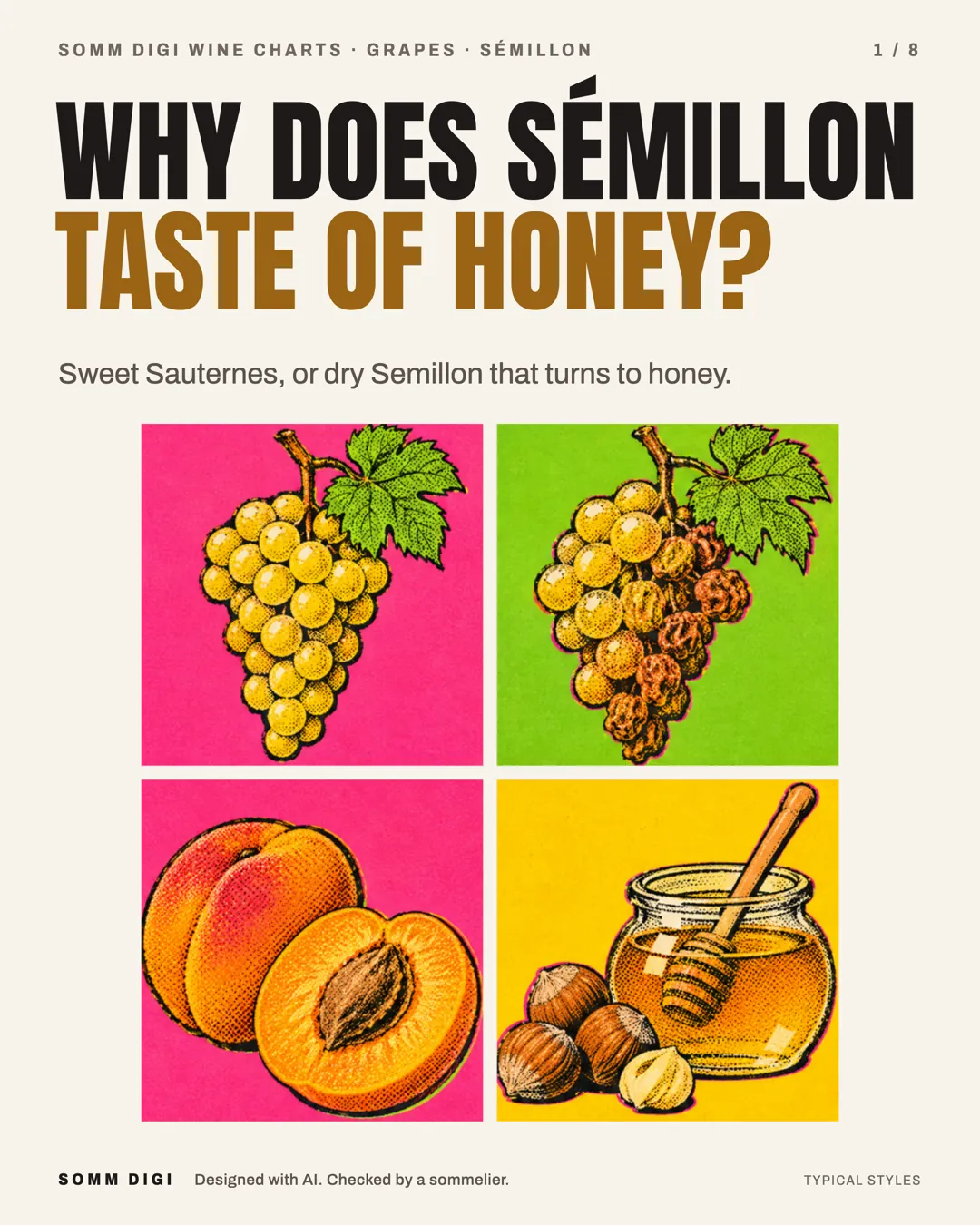
Sémillon makes sweet Sauternes in Bordeaux and dry, low-alcohol wine in Australia. Both end up tasting of honey: here is how.
Quick answer
Sémillon (say it SEM-ee-yon) is a white grape that makes both sweet and dry wine. In Bordeaux, noble rot turns it into Sauternes: sweet and full, with pronounced apricot, honey and high acidity. In Australia's Hunter Valley it is dry, neutral when young, then honey and nuts with age. Serve Sauternes at 6–8 °C (43–46 °F). Want it sweet? Look for Sauternes.

Alper Billik · Advanced Sommelier
Updated November 2026 · Edited with AI
This article may contain affiliate links.
On this page
What is Sémillon?
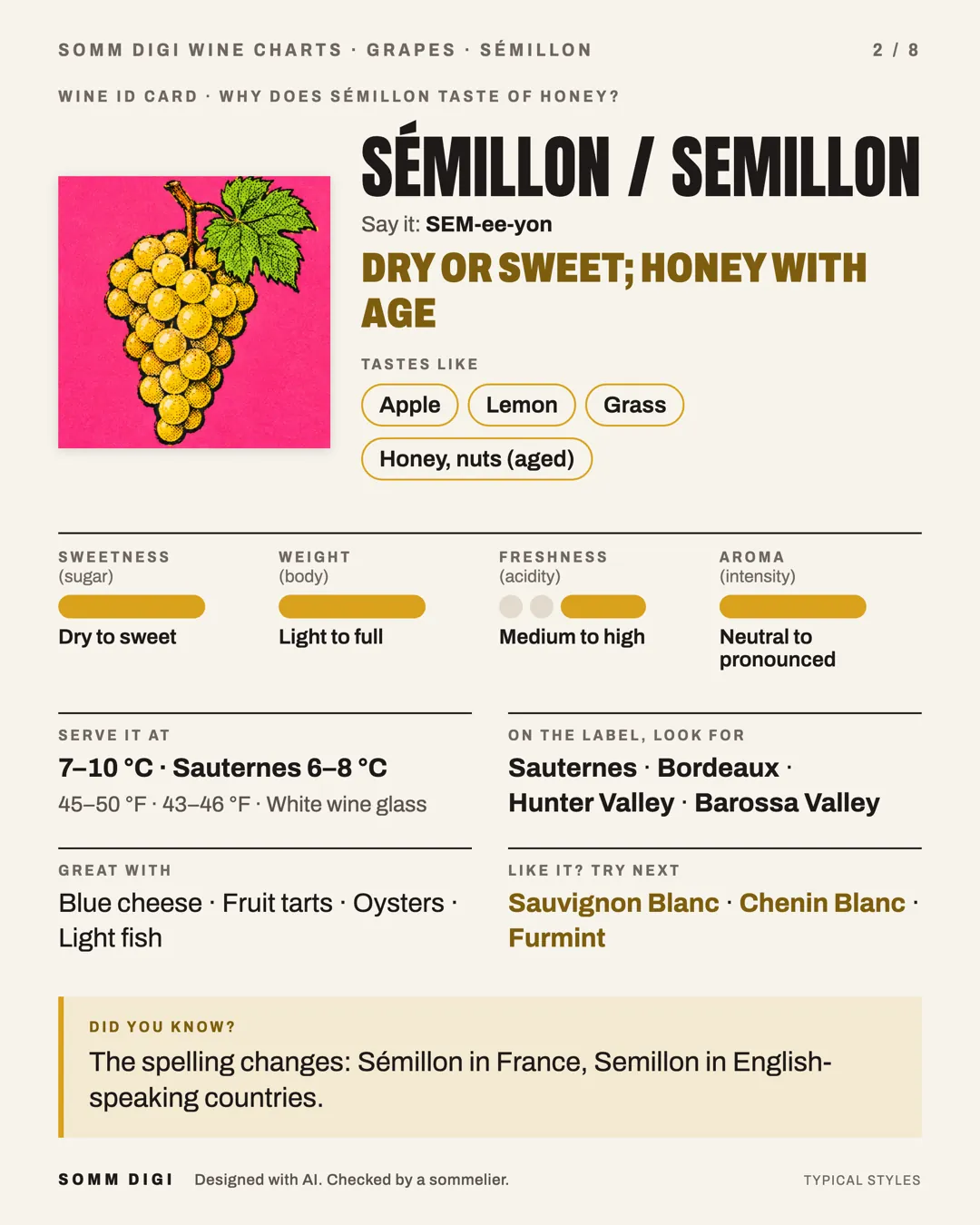
Sémillon (say it SEM-ee-yon) is a white grape that runs from dry to sweet and from light to full. Its signature is honey, which arrives with age. The spelling changes: Sémillon in France, Semillon in English-speaking countries.
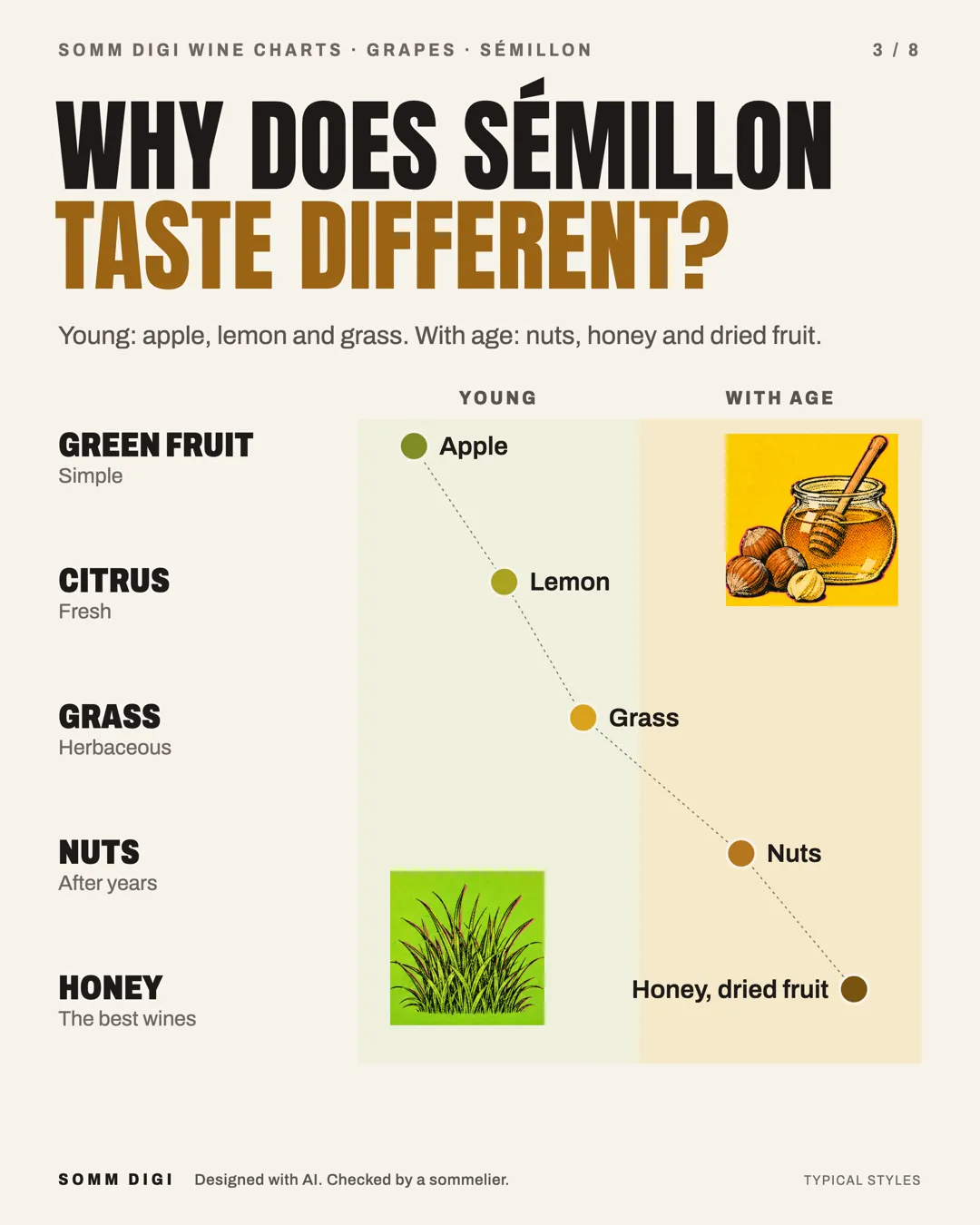
Young, it tastes of apple, lemon and grass, and its aromas can be quite neutral. Two places show what it can become: Sauternes in Bordeaux, sweet, and the Hunter Valley in Australia, dry. The profile card puts the essentials on one page.
What is Sauternes?
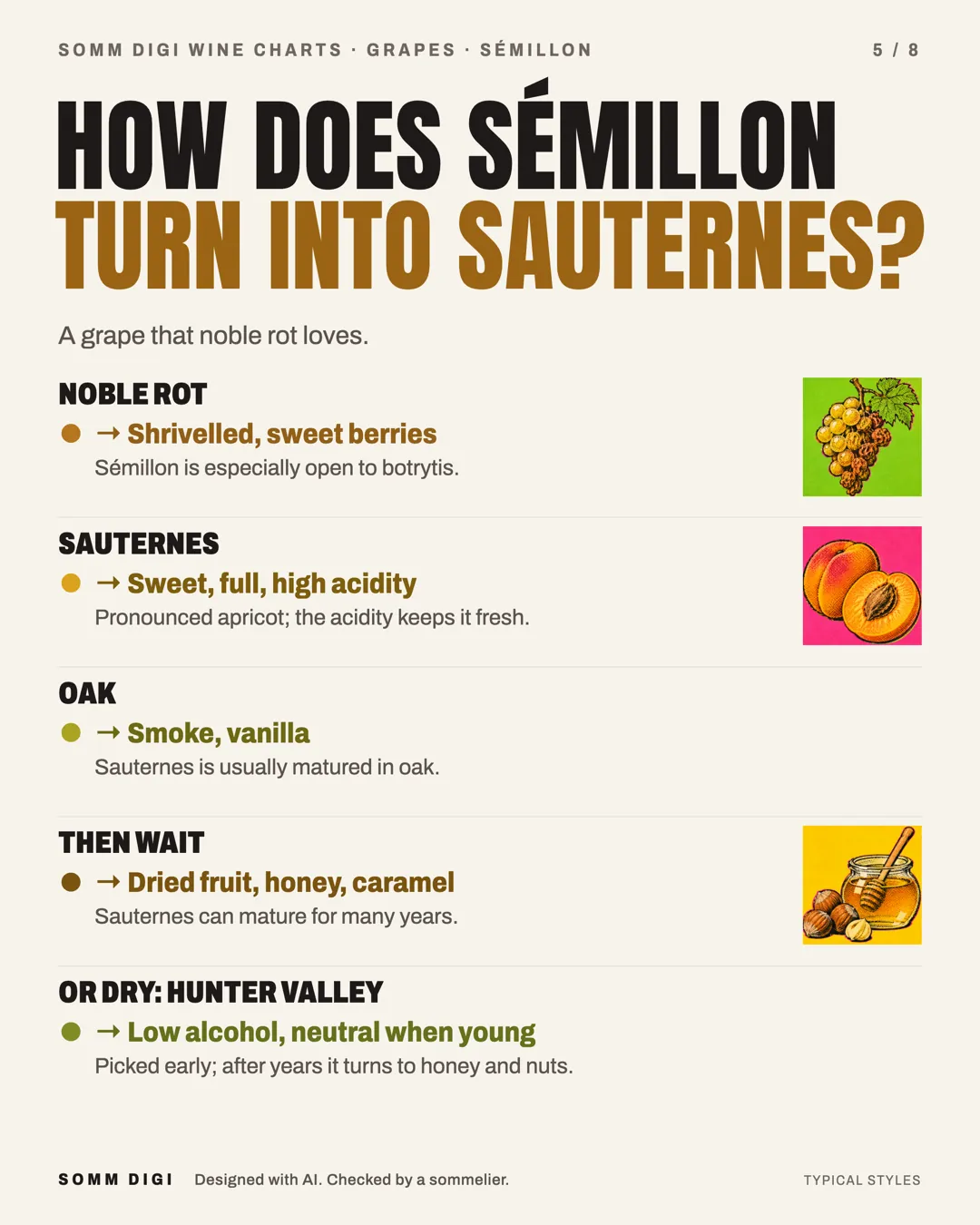
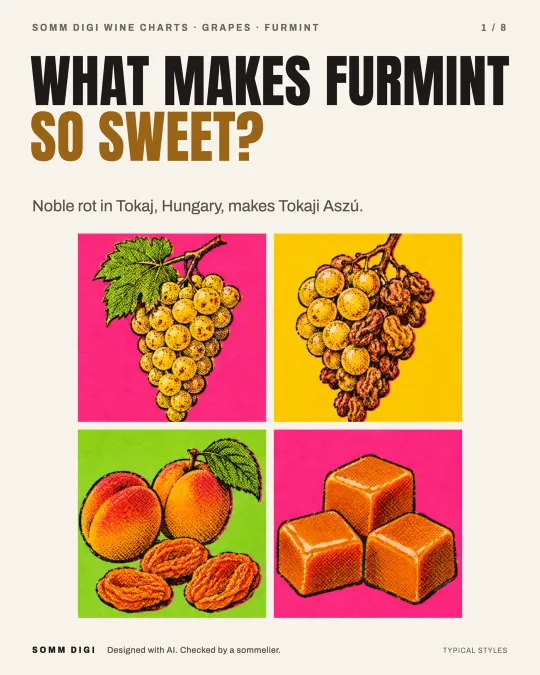
Sauternes is a sweet wine from Bordeaux, and it is where Sémillon turns sweet. Sémillon is a grape that noble rot loves. Noble rot (botrytis) shrivels the berries and leaves them sweet, and Sémillon is especially open to it.
The result is sweet and full, with pronounced apricot and high acidity; the acidity keeps it fresh. Sauternes is usually matured in oak, which adds smoke and vanilla. Then it can mature for many years, gaining dried fruit, honey and caramel.
There is a dry path too. In the Hunter Valley, the grapes are picked early for a dry wine with low alcohol, neutral when young. After years it turns to honey and nuts. The chart shows all five steps.
Where is Sémillon at home?
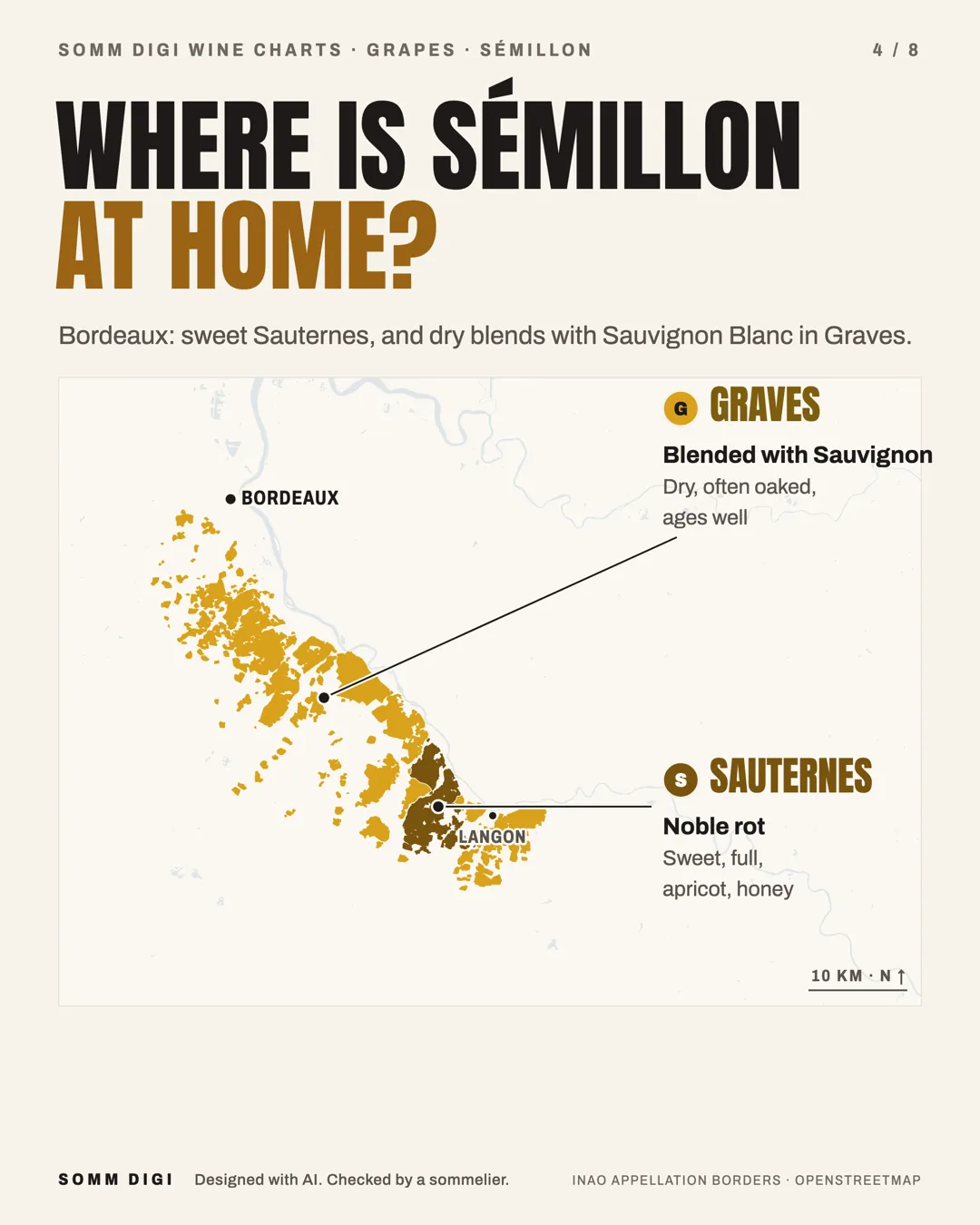
Sémillon's home is Bordeaux, where it makes two very different wines. In Sauternes, noble rot gives a sweet, full wine of apricot and honey.
In Graves, it is blended with Sauvignon Blanc for a dry white, often oaked, that ages well. The map shows both.
What does Sémillon taste like?
Young, Sémillon is fresh and simple. With age, it turns rich.
A young wine tastes of green fruit, simple apple, and of fresh lemon, with a herbaceous note of grass. After years, nuts appear. The top wines go on to honey and dried fruit. The taste chart follows that line, from young to old.
Sémillon and Sauvignon Blanc
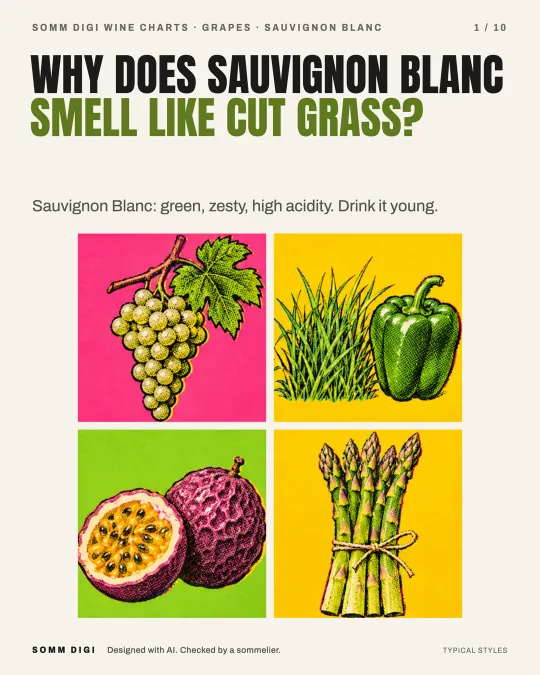
In Bordeaux, the two grapes often share a bottle. Sauvignon Blanc brings green, zesty freshness: grass and green apple, with high acidity. Sémillon adds body and helps the wine age.
On their own, they go separate ways. Sauvignon Blanc is for drinking young, within a couple of years. Sémillon, dry or sweet, keeps going and turns to honey. Blended and oaked, as in Pessac-Léognan, the pair ages to honey and nuts.
How to read a Sémillon label
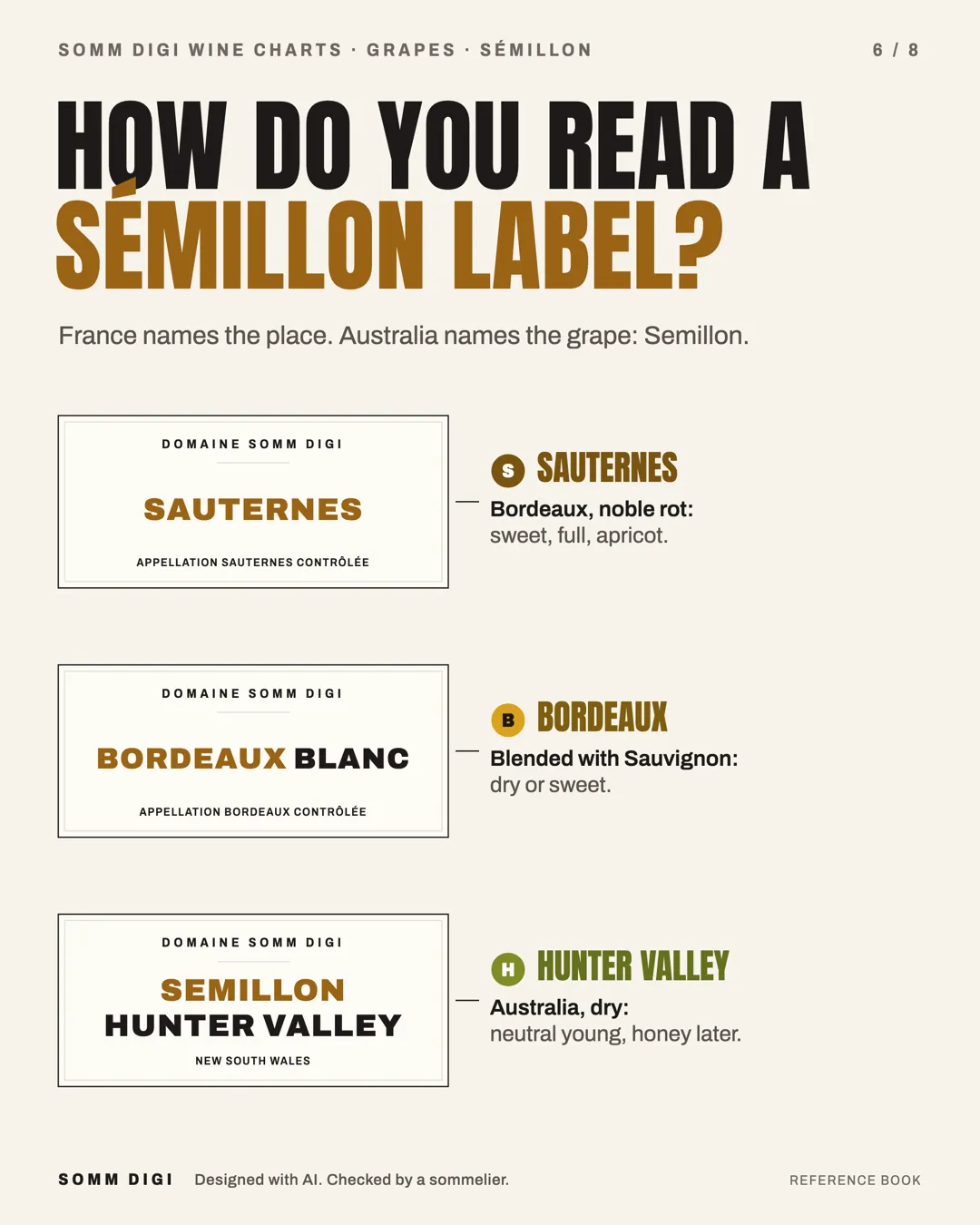
France names the place. Australia names the grape: Semillon. A Bordeaux white is blended with Sauvignon Blanc, and it can be dry or sweet. Sauternes, also in Bordeaux, is the noble-rot wine: sweet, full, apricot.
From Australia, a Hunter Valley Semillon is dry: neutral when young, honey later. The label chart shows all three.
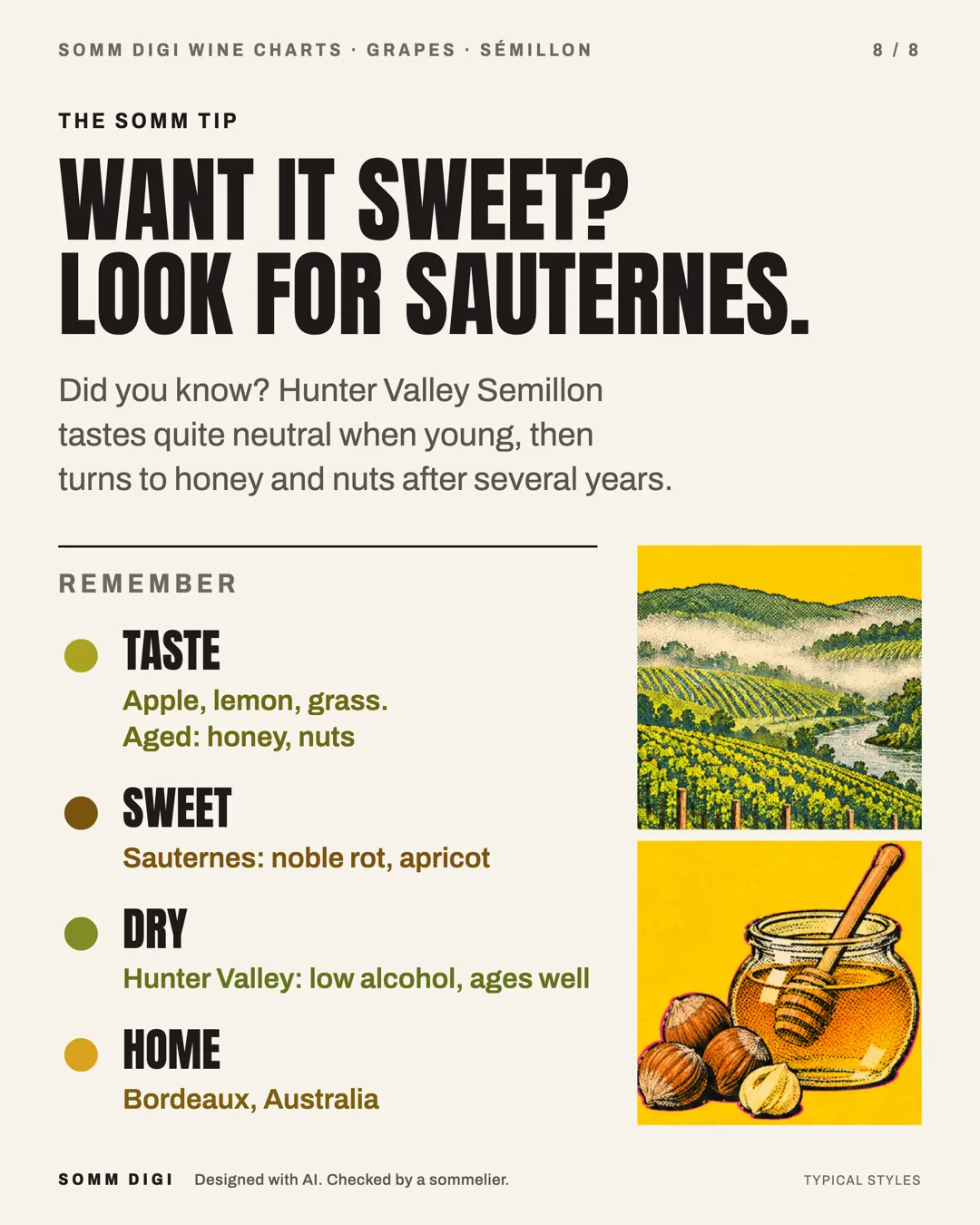
The somm tip keeps it simple: want it sweet? Look for Sauternes. Want it dry? Try a Hunter Valley Semillon, and give it time. It tastes quite neutral when young, then turns to honey and nuts after several years.
How to serve Sauternes and Sémillon
Serve Sauternes cold, at 6–8 °C (43–46 °F). Other styles go a little warmer, at 7–10 °C (45–50 °F).
Which glass?
A white wine glass works for both. For the sweet wine, see the glasses for Sauternes on universalwineglasses.com, SOMM DIGI's glass site.
Sauternes and Sémillon food pairing
Sweet Sauternes or dry Semillon: match the food to the style.
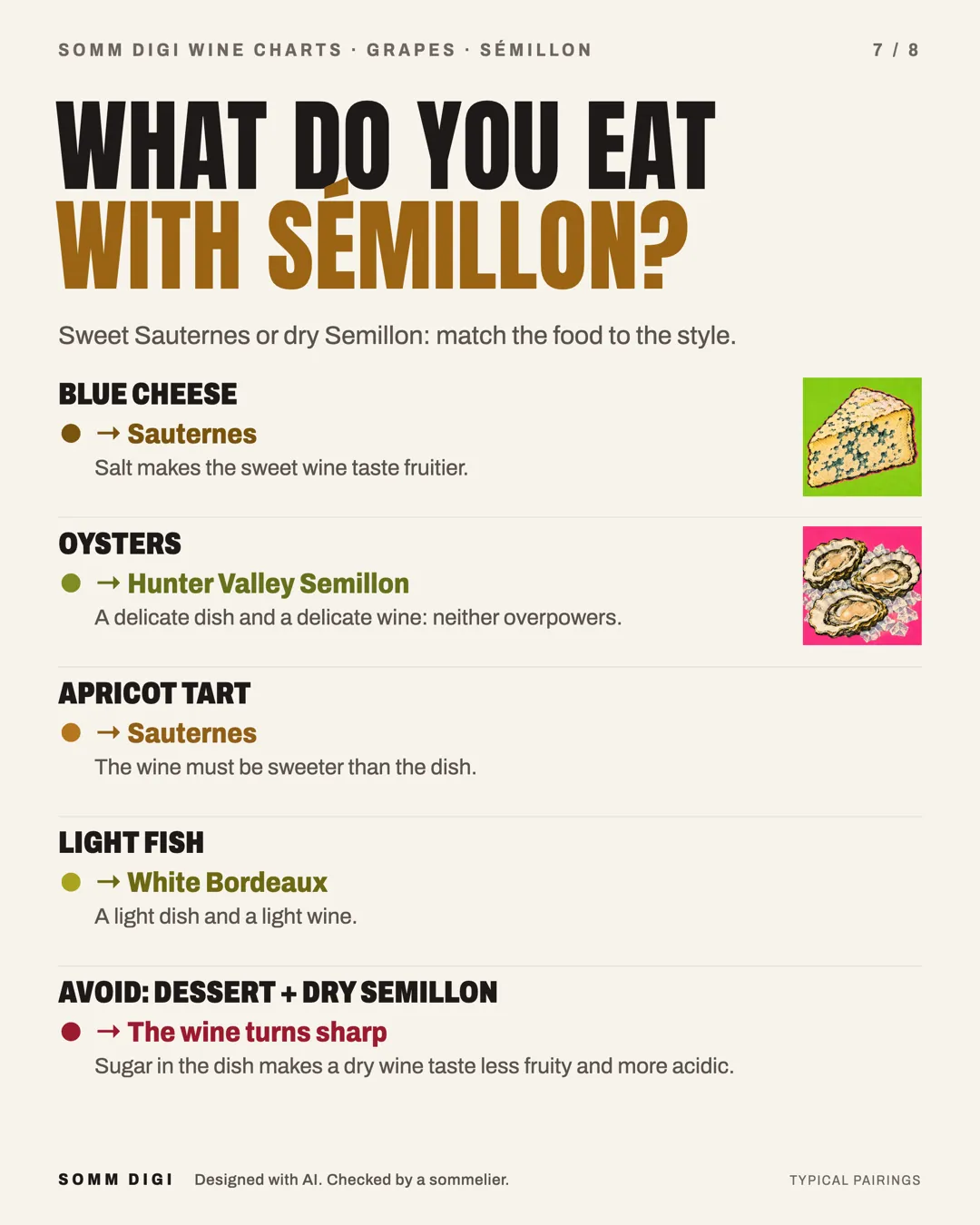
Blue cheese and Sauternes is the pair to remember: salt makes the sweet wine taste fruitier. With an apricot tart, Sauternes works because the wine must be sweeter than the dish.
For the dry side, oysters suit a Hunter Valley Semillon: a delicate dish and a delicate wine, so neither overpowers. Light fish goes with a white Bordeaux, a light dish with a light wine. Skip dessert with a dry Semillon, where the wine turns sharp. The pairing chart has all five.
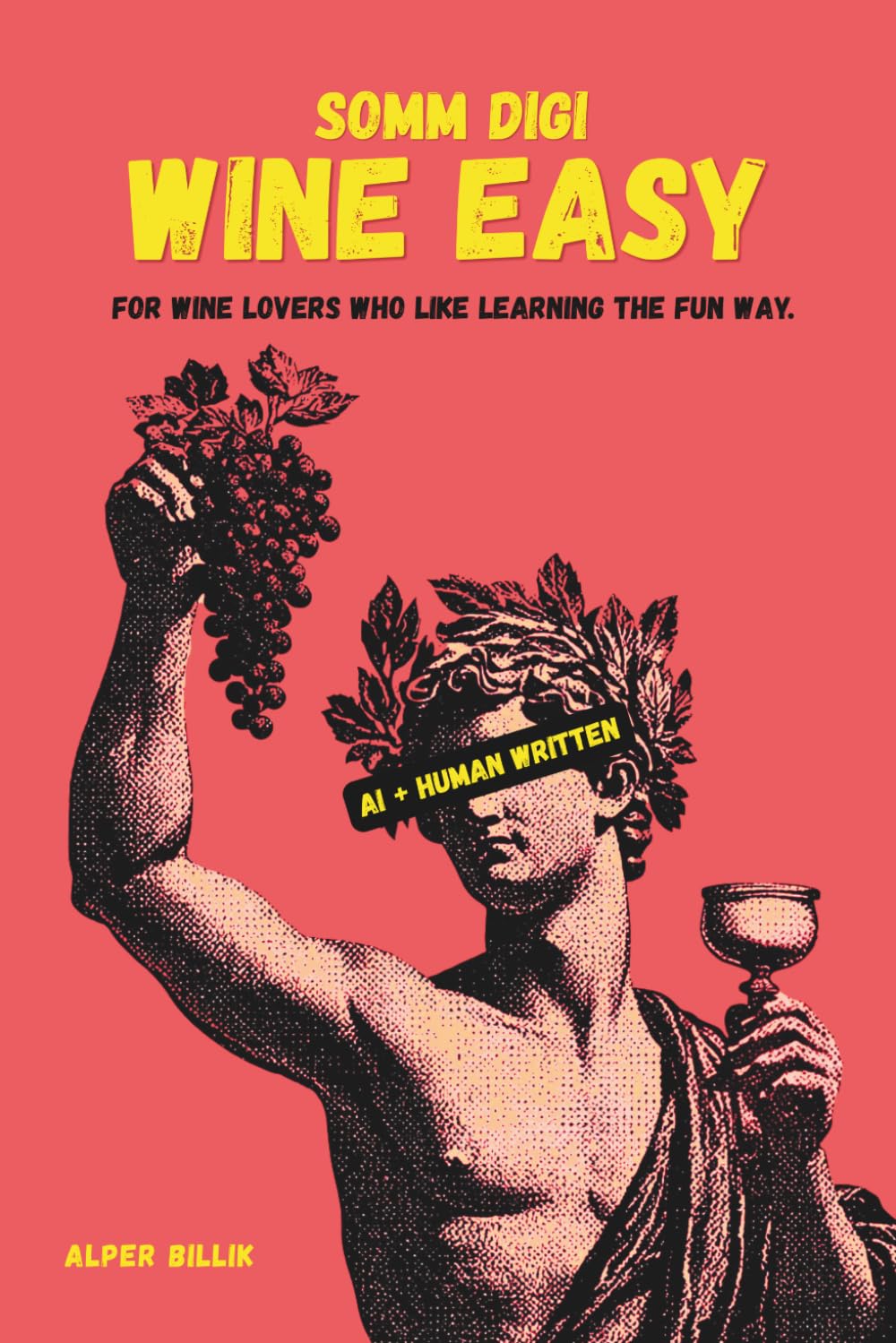
Learn wine the easy way
Wine Easy
The wine book that talks to you like a human: grapes, tasting, pairing and countries A–Z, in 388 full-colour pages.
Sémillon questions, answered
How do you pronounce Sémillon?
SEM-ee-yon.
Is Sauternes sweet?
Yes. Noble rot makes Sauternes sweet and full, with pronounced apricot and high acidity that keeps it fresh.
Is Sémillon sweet or dry?
Both. Sauternes is sweet; Hunter Valley Semillon and white Graves are dry.
Sémillon or Semillon?
Both are right. Sémillon in France, Semillon in English-speaking countries.
Does Sauternes age?
Yes. Sauternes can mature for many years, gaining dried fruit, honey and caramel.
Try next
If you like Sémillon
How this page was made. Charts designed with AI and checked by Alper Billik, Advanced Sommelier. Text written from the same chart facts and edited with AI.