
Gavi wine: what does Cortese taste like?
Gavi is the Italian white for when you want something light, dry and crisp. Its grape, Cortese, keeps it simple on purpose: blossom, apple and lemon, made to drink young.
Quick answer
Gavi is a dry white wine from Piemonte, in north-west Italy, made from the Cortese grape (say it kor-TAY-zeh). It is light, dry and crisp, with high acidity and light floral aromas: blossom, apple, pear and lemon. Most Gavi is ready to drink on release. Serve it at 7–10 °C (45–50 °F). Want light and crisp? Look for Gavi.

Alper Billik · Advanced Sommelier
Updated November 2026 · Edited with AI
This article may contain affiliate links.
On this page
What is Gavi wine?
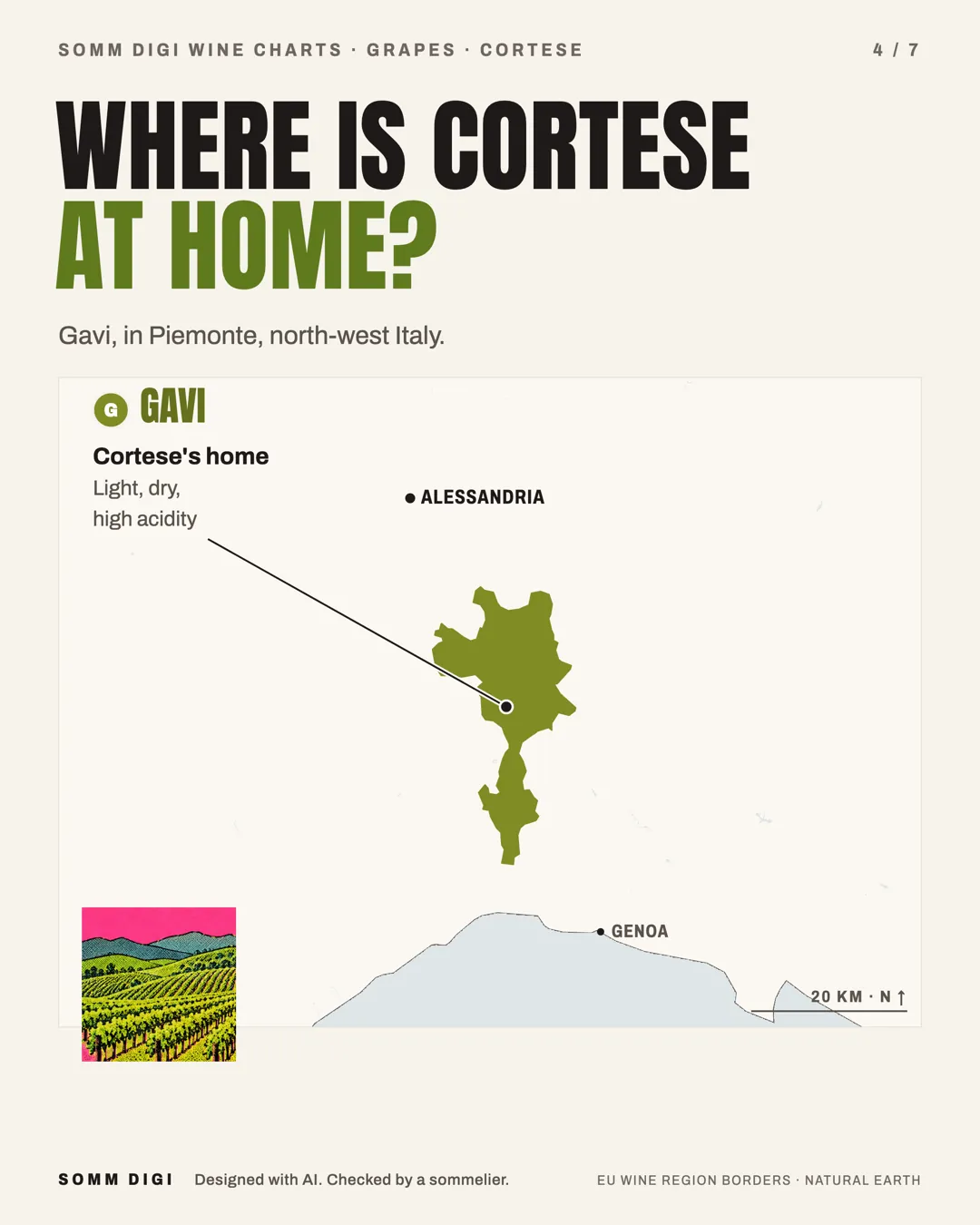
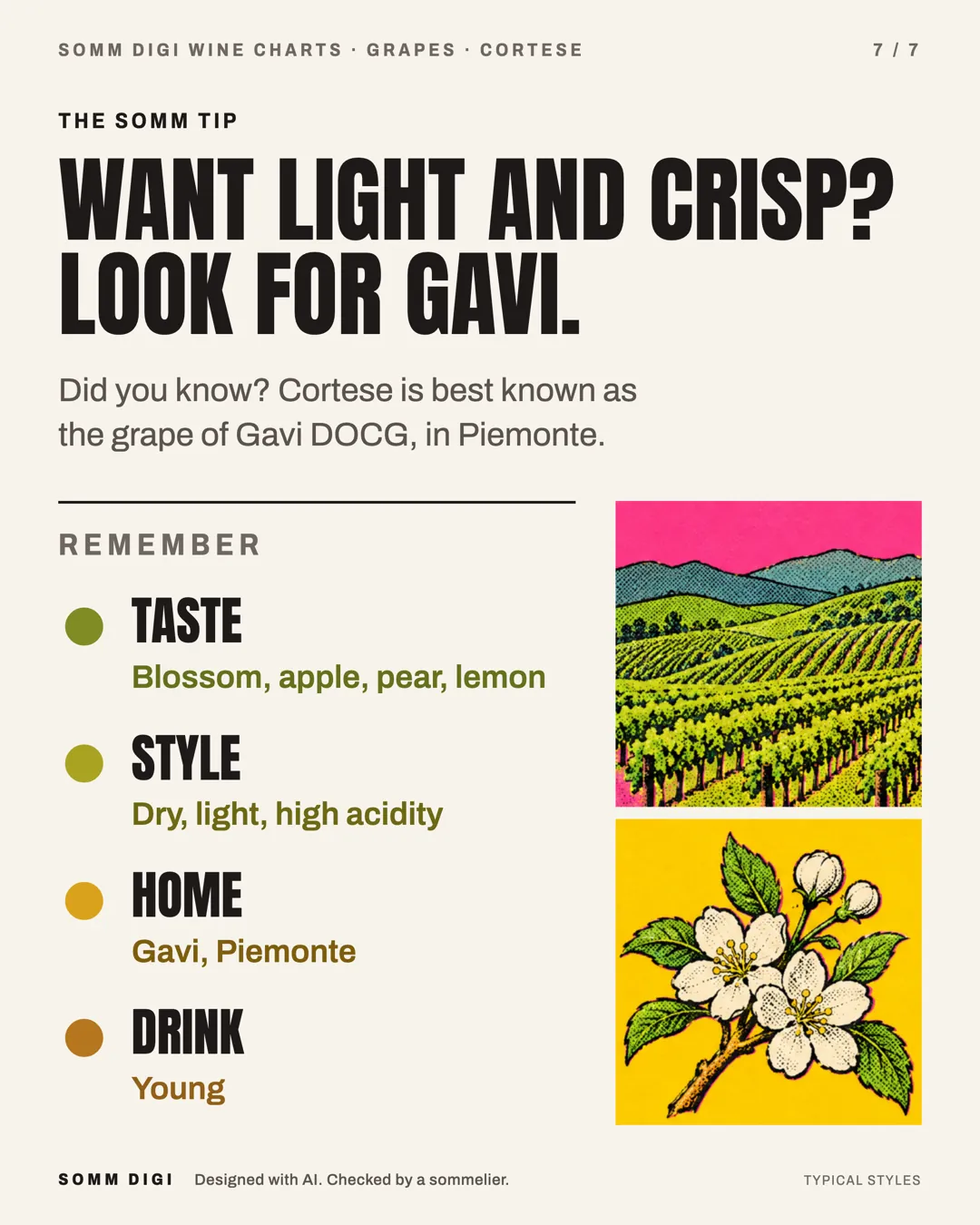
Gavi is a white wine from Gavi DOCG, in Piemonte, north-west Italy. It is made from Cortese, and it is light, dry and high in acidity.
Cortese is known above all as the grape of Gavi, and Gavi DOCG is its home. Its style is easy to remember: light flowers, crisp fruit, high acidity, and a wine to open young. On a label, look for Gavi, Gavi DOCG or Piemonte. The map shows where Gavi sits.
Cortese: the grape behind Gavi
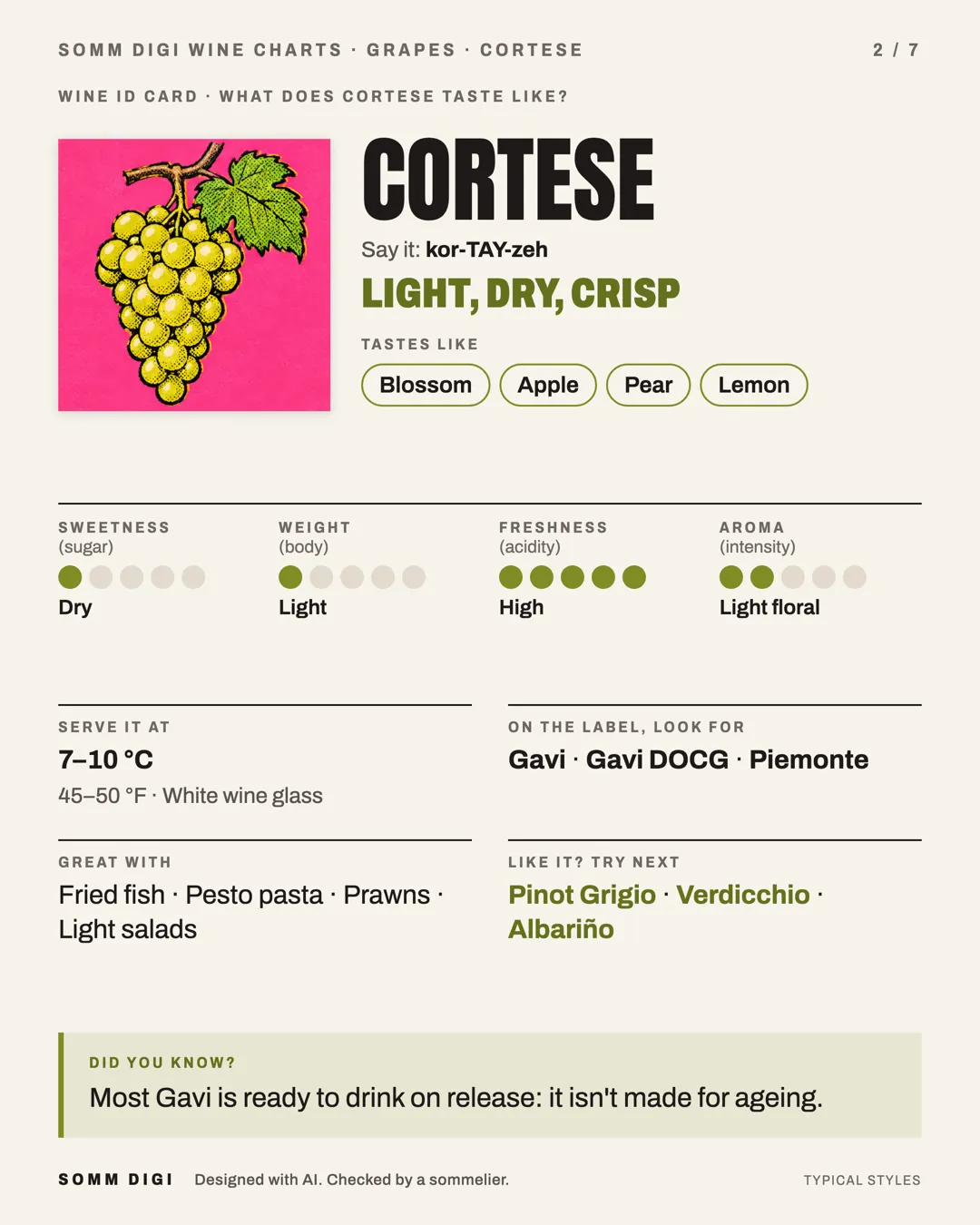
Cortese (say it kor-TAY-zeh) is a white grape that makes light, dry, crisp wine. Its acidity is high, and its aromas are light and floral.
It tastes of blossom, apple, pear and lemon. Nothing about it is loud: its aromas are subtle, and its charm is freshness. The profile card puts the essentials on one page.
What does Gavi taste like?
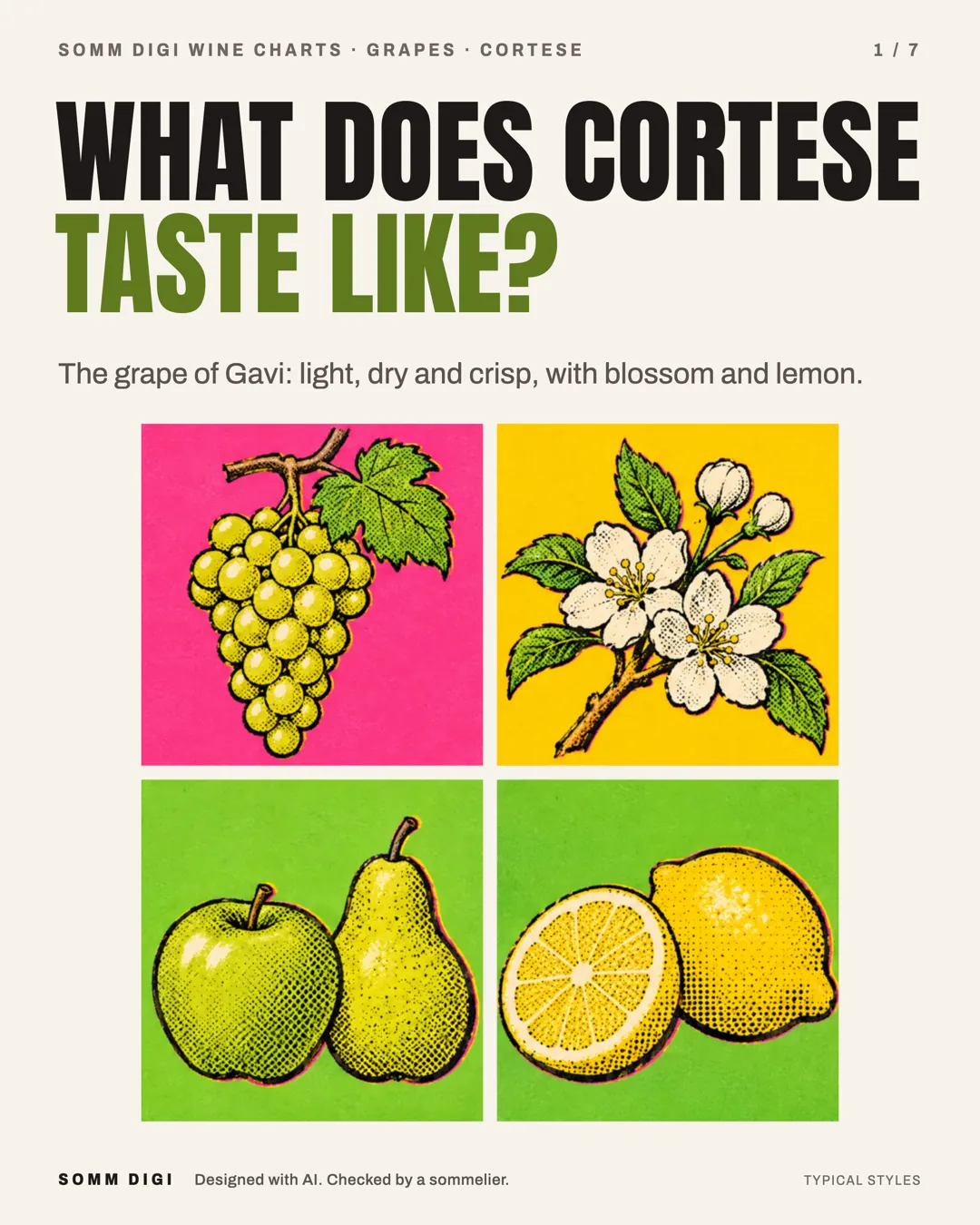
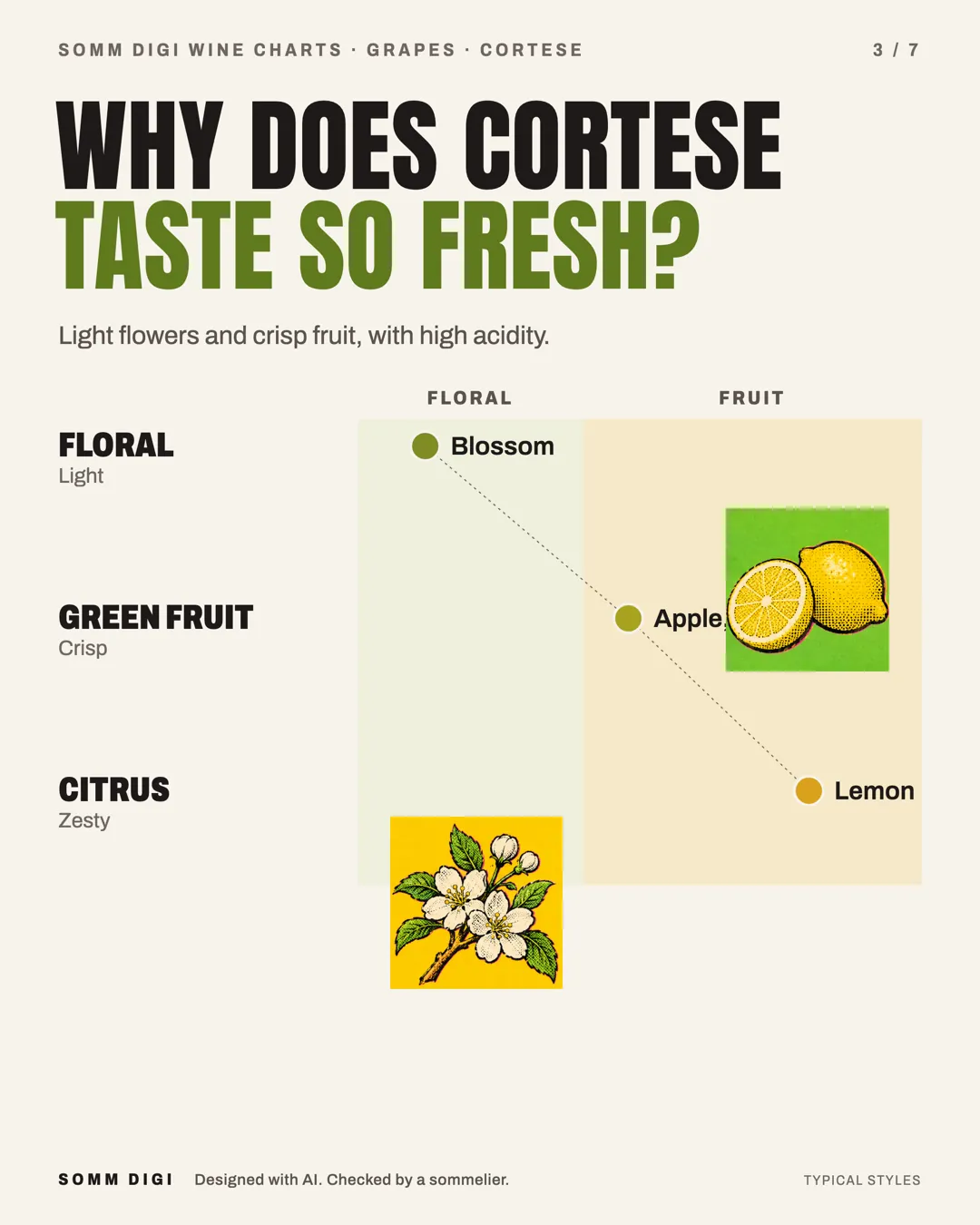
Light flowers and crisp fruit, with high acidity. That is the whole picture, and it is why Gavi tastes so fresh.
First comes a light floral note: blossom. Then green fruit, apple and pear, crisp. Then citrus: lemon, zesty. None of it is heavy: the body is light and the wine is dry. The taste chart lines up all three.
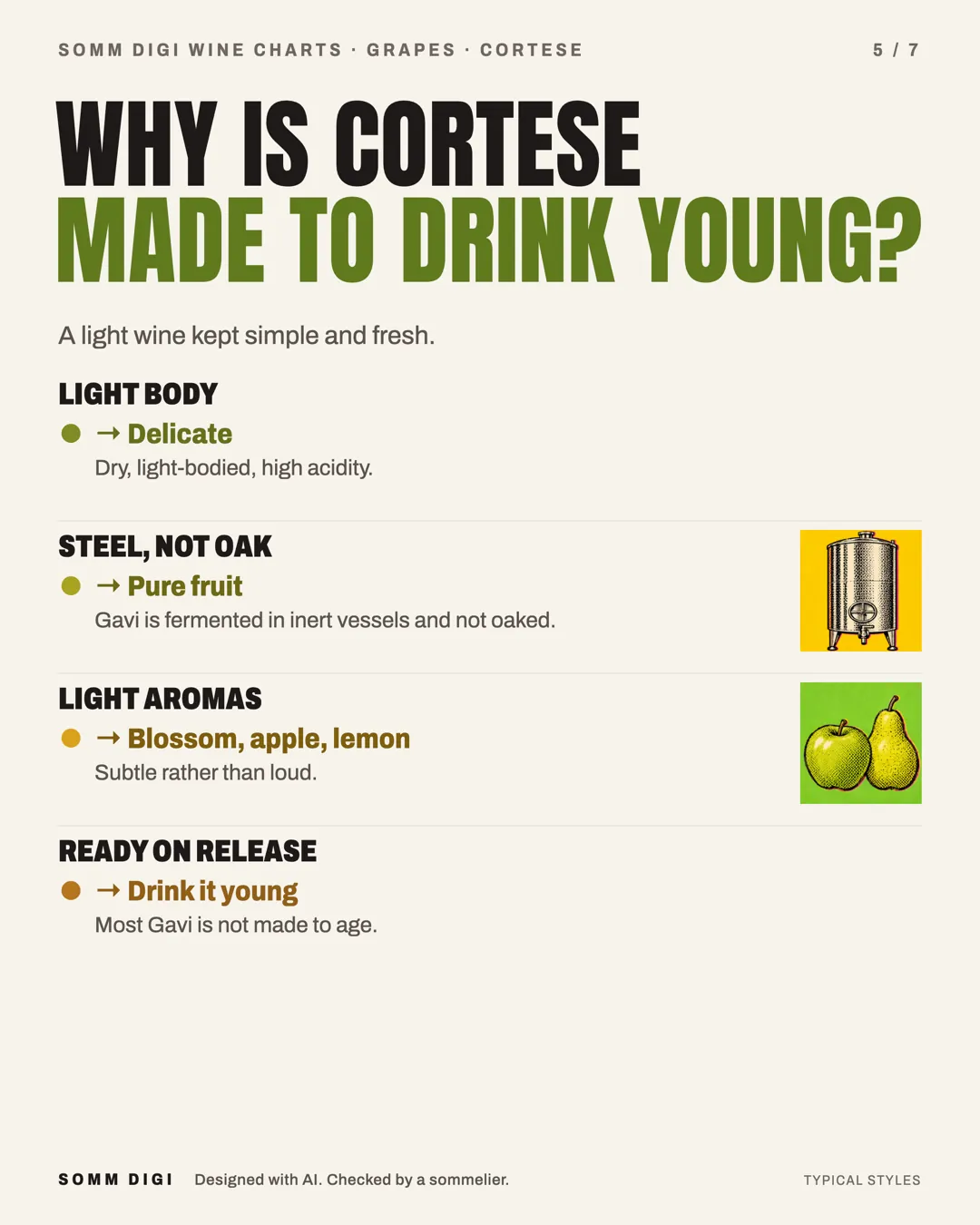
Why is Gavi made to drink young?
Gavi is a light wine, kept simple and fresh. Most of it is ready to drink on release: it isn't made for ageing.
It starts with a light body: delicate, dry, with high acidity. The wine is fermented in steel, not oak, which keeps the fruit pure. Its aromas are light, blossom, apple and lemon, subtle rather than loud.
Put those together and you have a wine that is ready on release. Drink it young. The chart shows all four reasons.
Gavi vs Pinot Grigio
Both are light, dry, crisp Italian whites, fermented in steel to keep the fruit pure. Pinot Grigio, picked early, tastes of apple and lemon and is for drinking young. Both are served cold, at 7–10 °C (45–50 °F).
Gavi adds a light floral note of blossom, with apple, pear and lemon. Pinot Grigio also has a riper, fuller style, Pinot Gris; Gavi stays light. If light and crisp is what you want, the somm tip says it all: look for Gavi.
How to serve Gavi
Serve Gavi cold, at 7–10 °C (45–50 °F), and drink it young.
Which glass?
A white wine glass is all it needs. To find one, see the glasses for crisp white wine on universalwineglasses.com, SOMM DIGI's glass site.
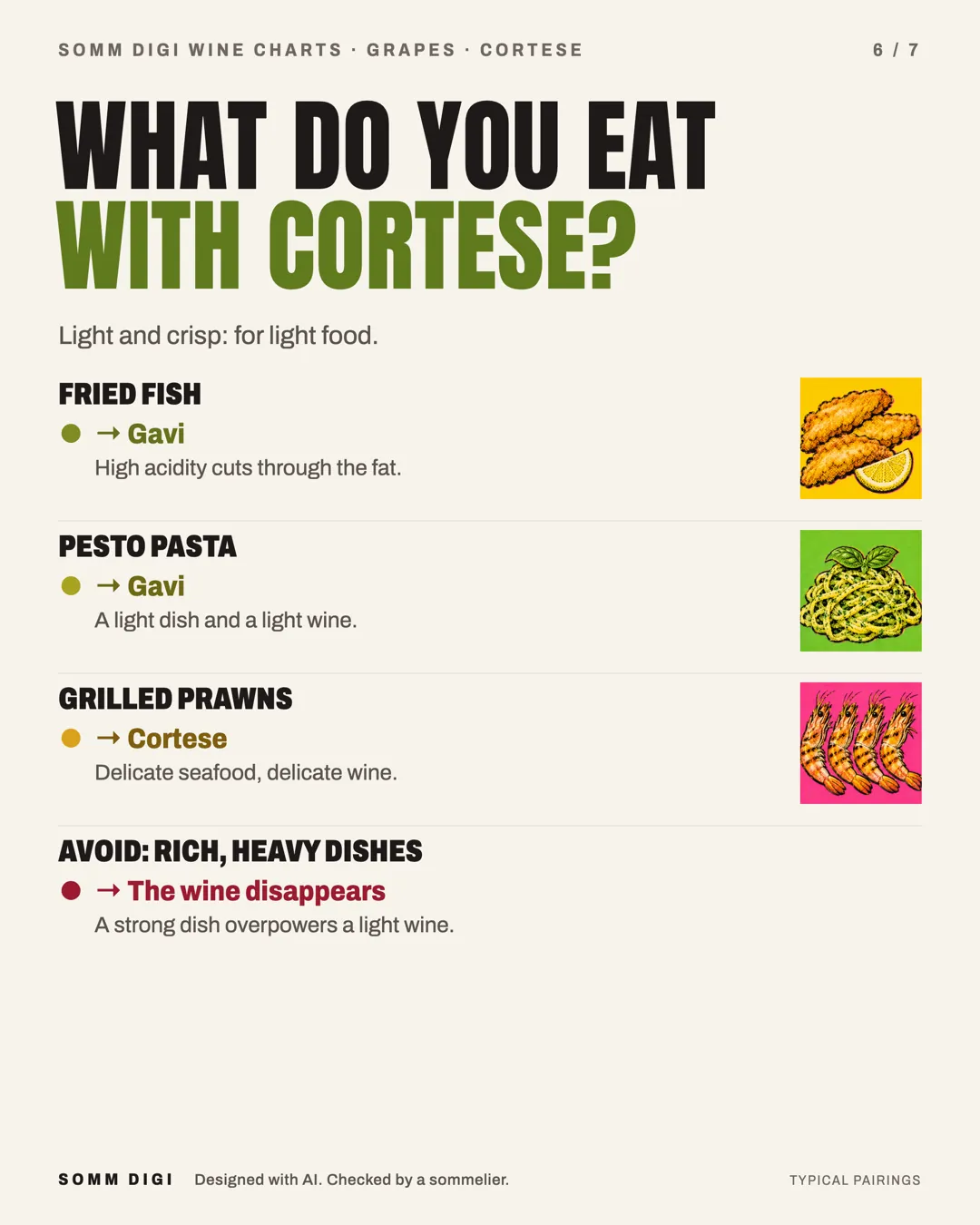
Gavi food pairing
Light and crisp: Gavi is for light food.
With fried fish, pour a Gavi: high acidity cuts through the fat. Pesto pasta works too, a light dish with a light wine. Grilled prawns are a natural match, delicate seafood with a delicate wine. Light salads suit it as well. Think of Gavi as the white for a light lunch: fish, pasta, prawns or salad.
Skip rich, heavy dishes. A strong dish overpowers a light wine, and the wine disappears. The pairing chart has all four.
Learn wine the easy way
Wine Easy
The wine book that talks to you like a human: grapes, tasting, pairing and countries A–Z, in 388 full-colour pages.
Gavi questions, answered
What grape is Gavi made from?
Cortese, the grape of Gavi DOCG, in Piemonte, north-west Italy.
How do you pronounce Cortese?
kor-TAY-zeh.
What does Gavi taste like?
Light and crisp: blossom, apple, pear and lemon, with high acidity and a light body.
Is Gavi dry?
Yes. Gavi is dry, light-bodied and high in acidity.
Should Gavi be aged?
No. Most Gavi is ready to drink on release: it isn't made for ageing.
Is Gavi oaked?
No. Gavi is fermented in steel and not oaked, to keep the fruit pure.
Try next
If you like Cortese
How this page was made. Charts designed with AI and checked by Alper Billik, Advanced Sommelier. Text written from the same chart facts and edited with AI.