
Verdicchio wine: what does it taste like?
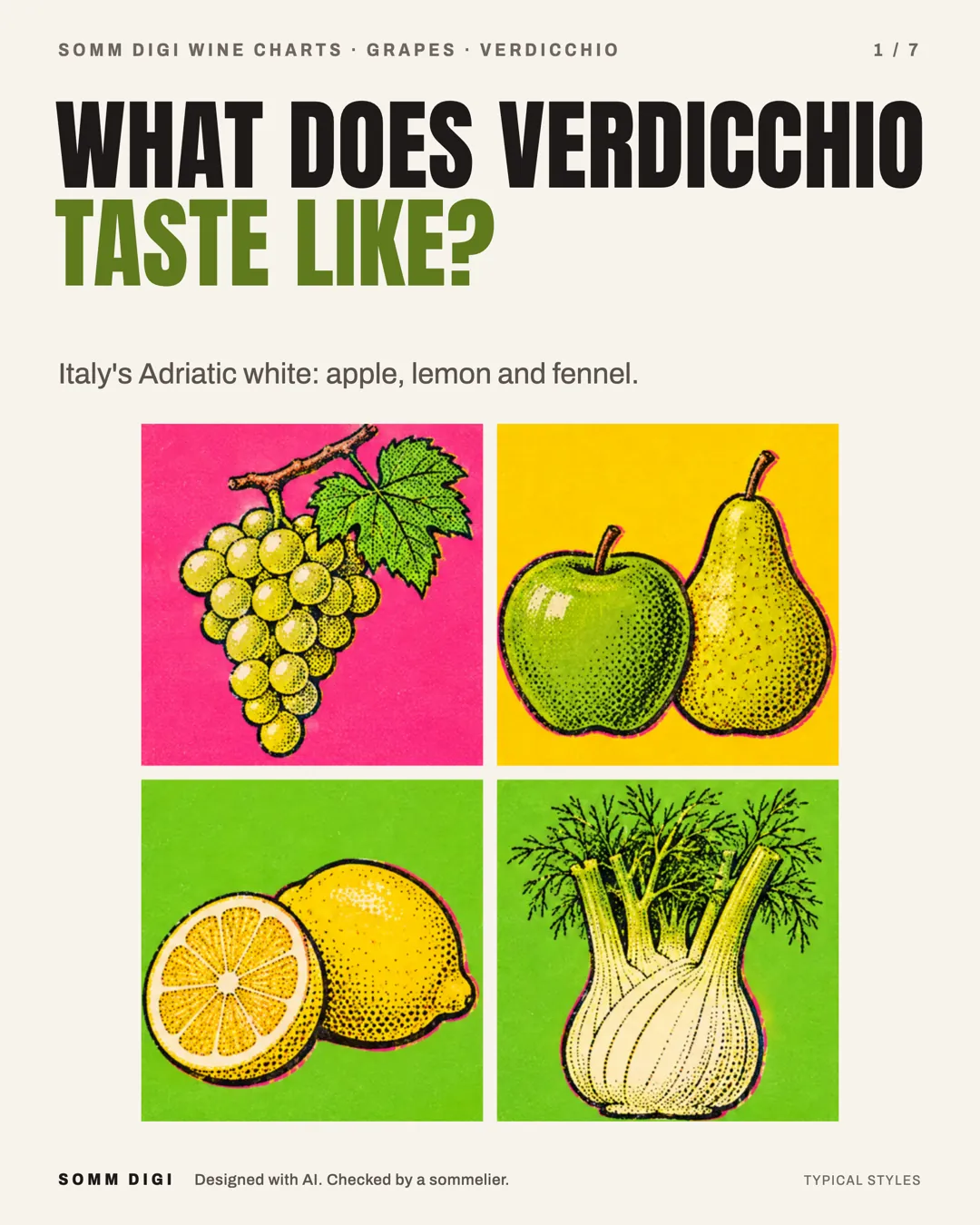
Verdicchio is Italy's Adriatic white: dry, fresh and made for seafood. Its signature is a herbal note of fennel, rare among white wines.
Quick answer
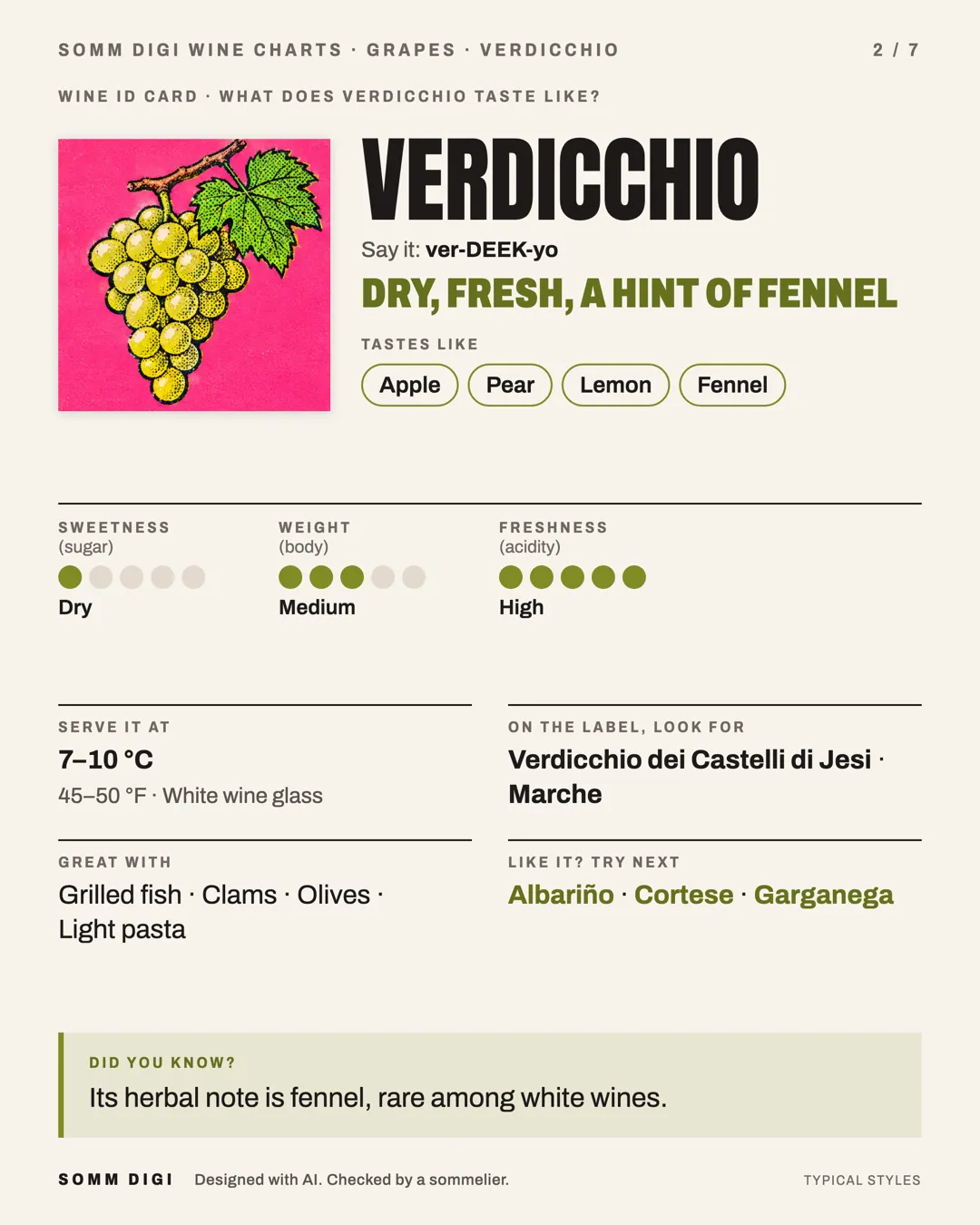
Verdicchio (say it ver-DEEK-yo) is a white grape from central Italy that makes dry, fresh wine with medium body and high acidity. It tastes of apple, pear and lemon, with a herbal note of fennel; the top wines gain honey and nuts with age. Look for Verdicchio dei Castelli di Jesi, from the Marche. Serve it at 7–10 °C (45–50 °F) in a white wine glass.

Alper Billik · Advanced Sommelier
Updated November 2026 · Edited with AI
This article may contain affiliate links.
On this page
What is Verdicchio wine?
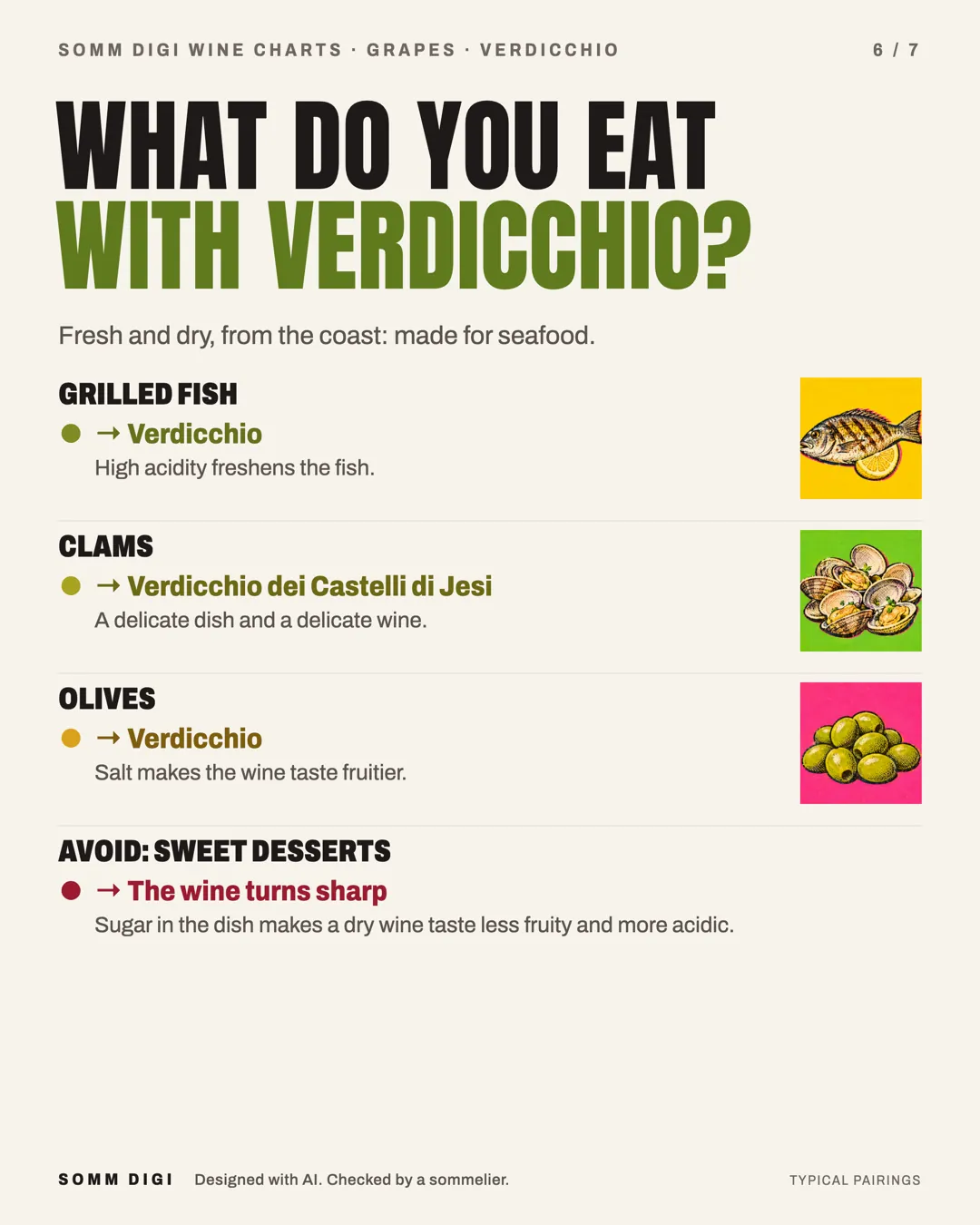
Verdicchio (say it ver-DEEK-yo) is Italy's Adriatic white. It is widely planted in central Italy, especially in the Marche, on the east coast.
The wine is dry and fresh, with medium body and high acidity. It tastes of apple, pear and lemon, with a hint of fennel. The profile card has the essentials on one page.
What does Verdicchio taste like?
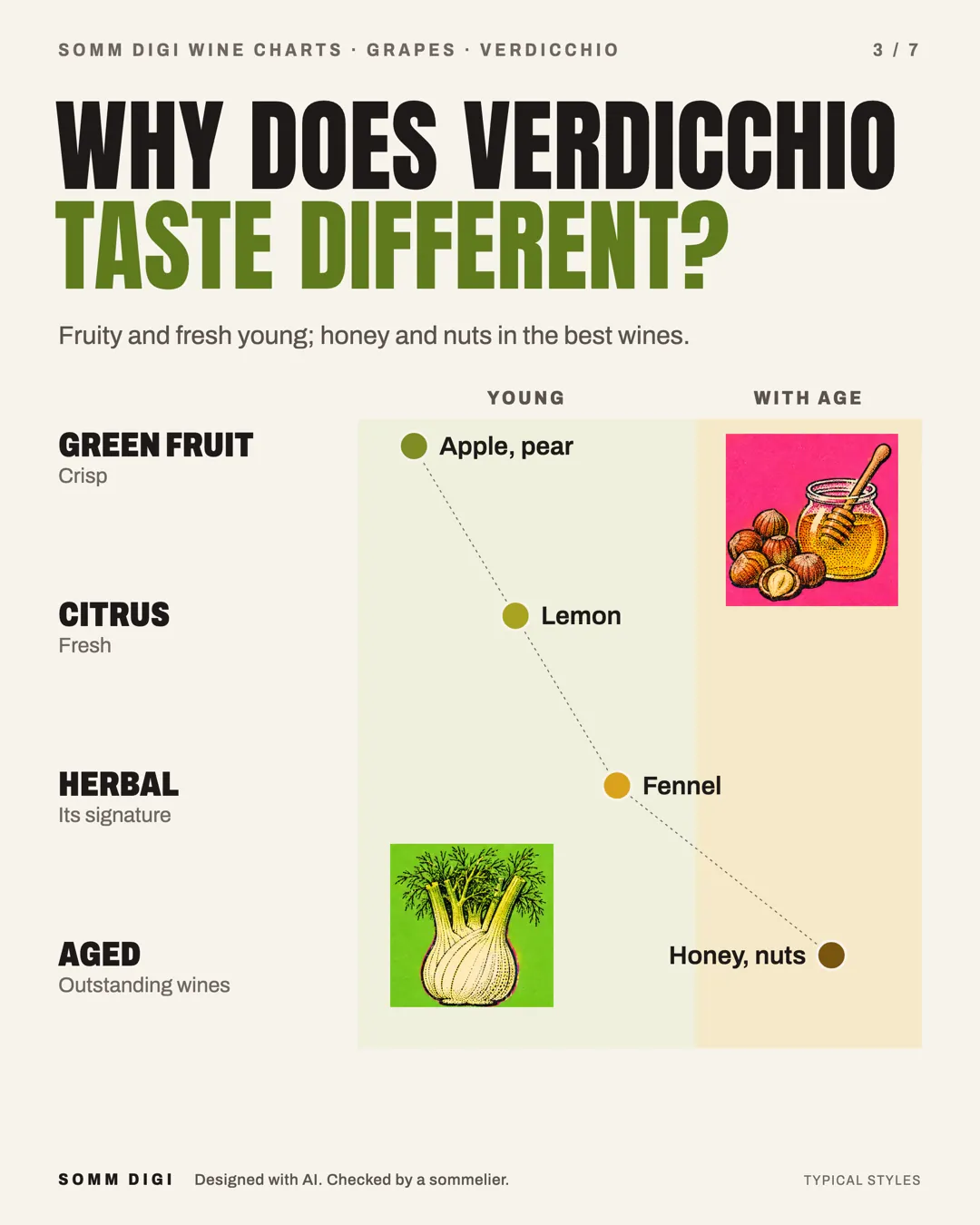
Verdicchio is fruity and fresh when young, with honey and nuts in the top wines.
Young Verdicchio gives crisp green fruit, apple and pear, and fresh lemon. Then comes its signature: fennel, a herbal note that is rare among white wines. Underneath, the shape stays the same: dry, medium-bodied, with high acidity. With age, outstanding wines move on to honey and nuts. The taste chart follows it from young to aged.
Verdicchio dei Castelli di Jesi
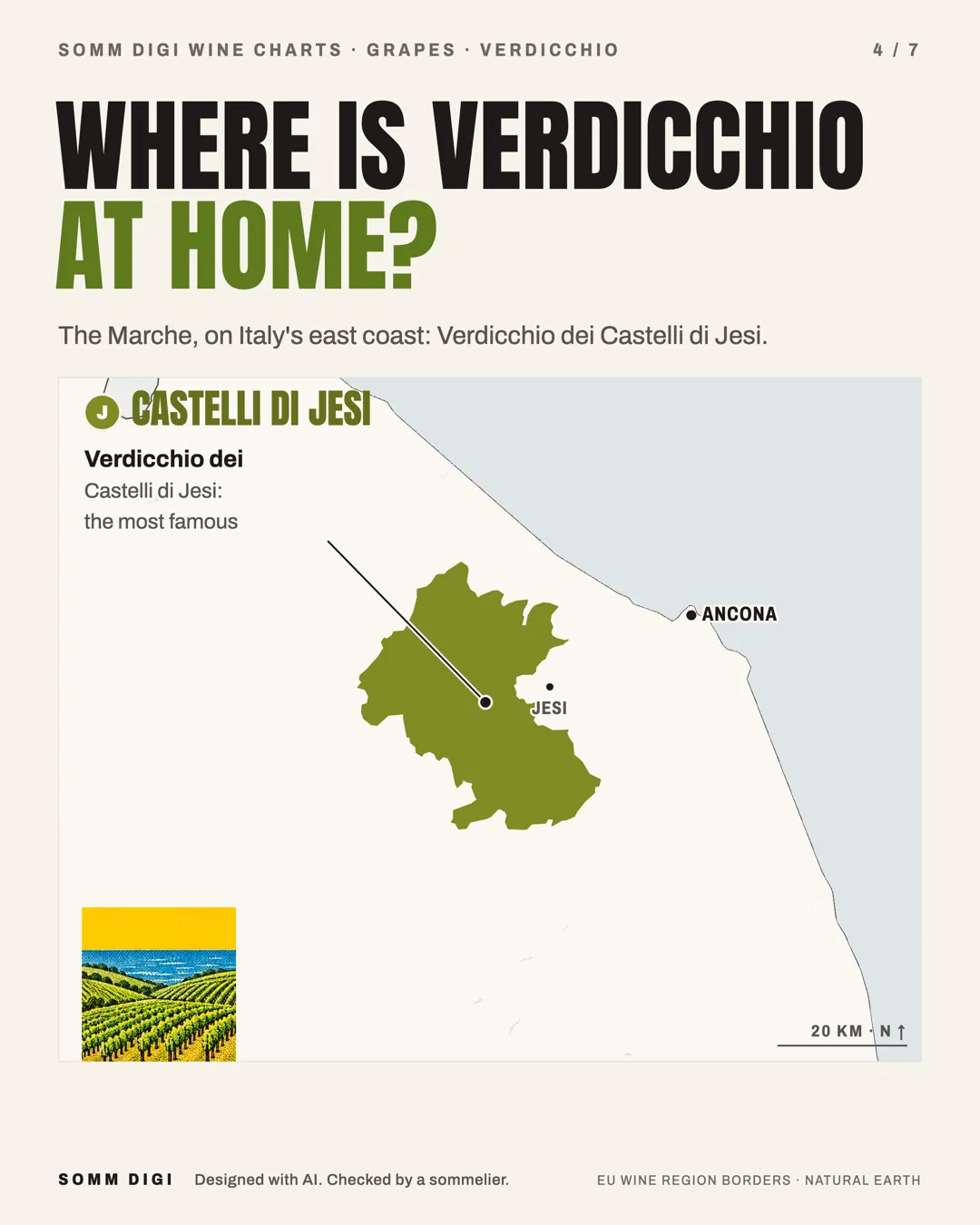
Verdicchio's home is the Marche, on Italy's east coast. Its most famous wine is Verdicchio dei Castelli di Jesi. The grape is widely planted across central Italy, and especially here, by the Adriatic.
On a label, look for Verdicchio dei Castelli di Jesi or the region's name, Marche. The map shows the Castelli di Jesi DOC.
Is Verdicchio a dry wine?
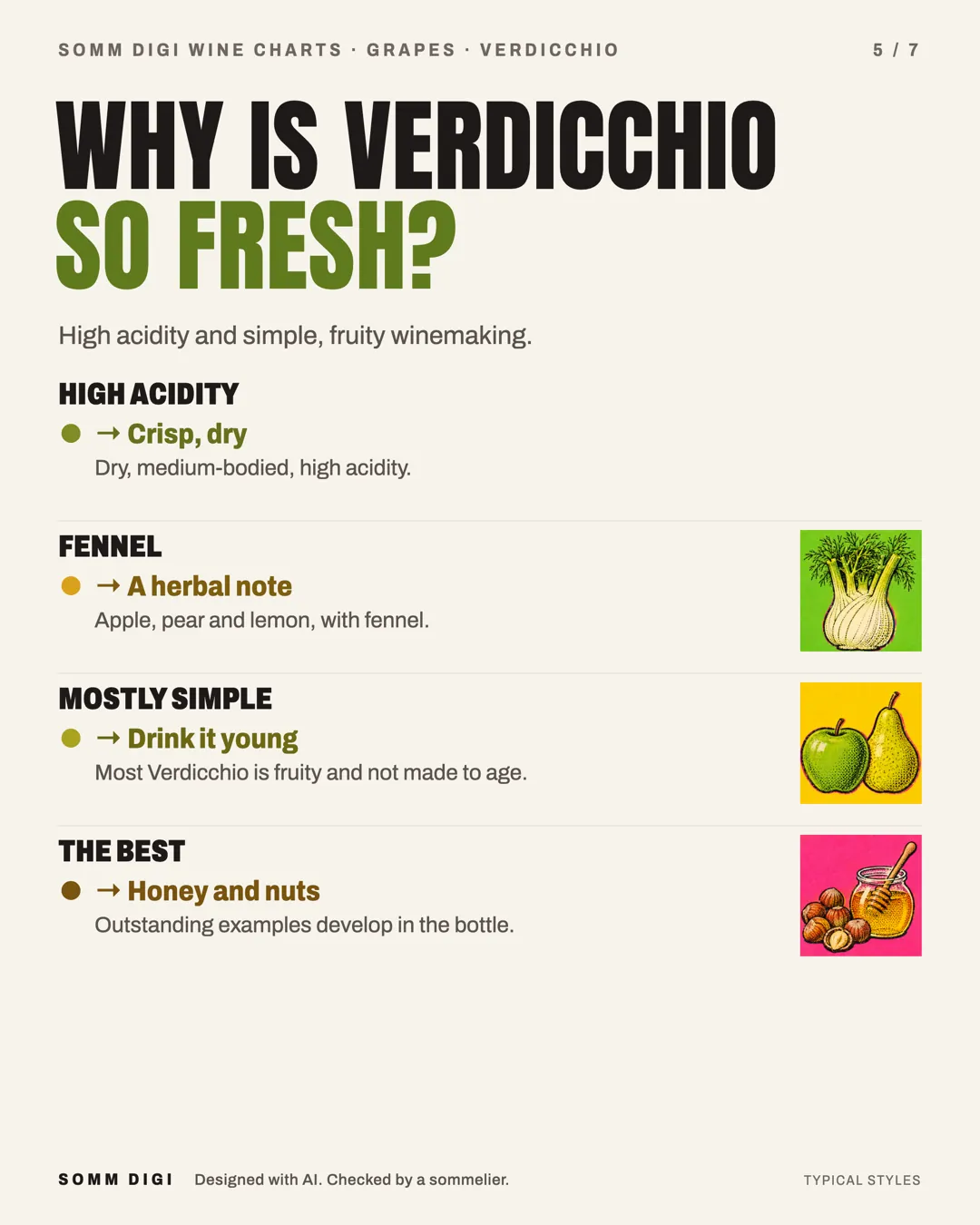
Yes. Verdicchio is dry, and high acidity makes it crisp. That freshness comes from the grape and from simple, fruity winemaking.
Most Verdicchio is fruity and not made to age, so drink it young. The exceptions are the outstanding wines, which develop honey and nuts in the bottle.
Four things explain the style: high acidity, for a crisp, dry wine; fennel, for a herbal note; mostly simple winemaking, so you drink it young; and, in the top wines, honey and nuts from time in the bottle. The chart shows all four.
Wines similar to Verdicchio
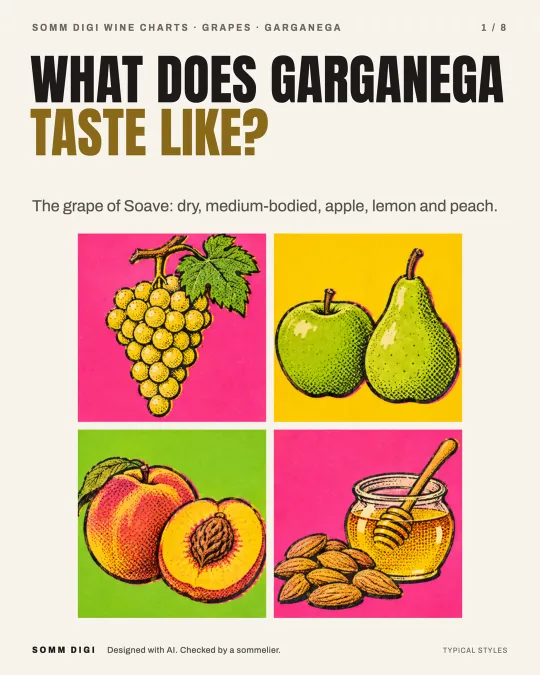
Garganega, the grape of Soave, is a close match on paper: dry, medium-bodied, high in acidity, with apple, pear and lemon. Where Garganega adds peach, Verdicchio adds fennel.
They age alike at the top too. The top Soave Classico gains honey and almonds; outstanding Verdicchio gains honey and nuts. Plain Soave and most Verdicchio are made to drink young.
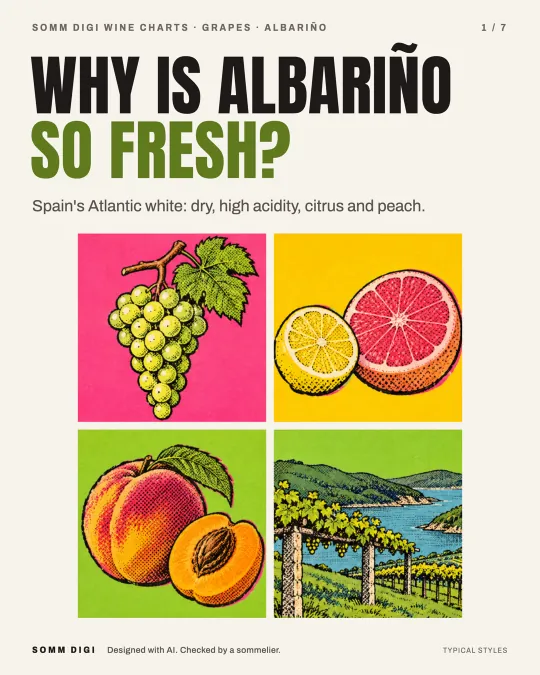
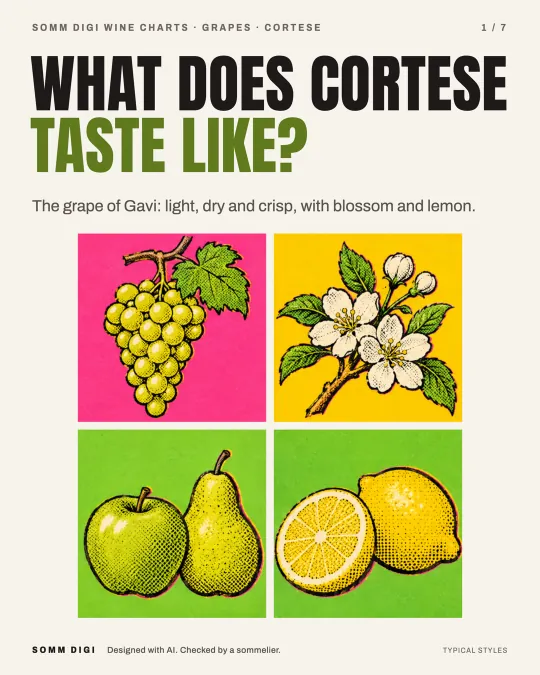
Albariño and Cortese are the other two grapes to try next if you like Verdicchio.
How to serve Verdicchio
Serve Verdicchio cold: 7–10 °C (45–50 °F). Drink most bottles young, while the fruit is fresh.
Which glass?
A white wine glass suits it. For shapes to pick from, see white wine glasses compared on universalwineglasses.com, SOMM DIGI's glass site.
Verdicchio food pairing
Fresh and dry, from the coast: Verdicchio is made for seafood. Grilled fish, clams, olives and light pasta all suit it. The somm tip puts it in one line.
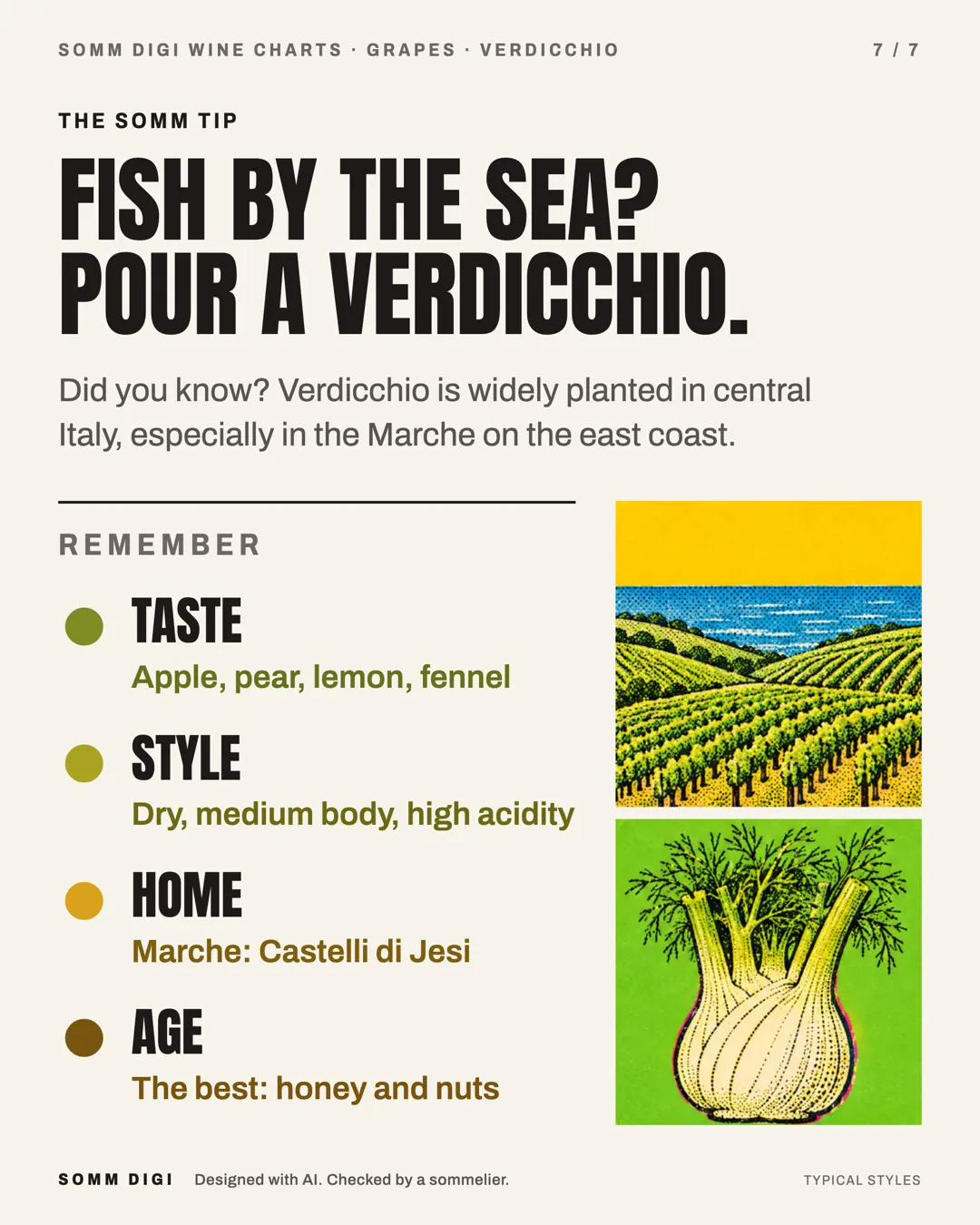
With grilled fish, pour a Verdicchio: high acidity freshens the fish. With clams, a Verdicchio dei Castelli di Jesi: a delicate dish and a delicate wine. With olives, any Verdicchio, as salt makes the wine taste fruitier. Light pasta is on its list too.
Skip sweet desserts. Sugar in the dish makes a dry wine taste less fruity and more acidic, so the wine turns sharp. The pairing chart has all four.

Learn wine the easy way
Wine Easy
The wine book that talks to you like a human: grapes, tasting, pairing and countries A–Z, in 388 full-colour pages.
Verdicchio questions, answered
How do you pronounce Verdicchio?
ver-DEEK-yo.
What does Verdicchio taste like?
Apple, pear and lemon, with a herbal note of fennel. The top wines gain honey and nuts with age.
Is Verdicchio dry?
Yes. It is a dry white with medium body and high acidity.
Where does Verdicchio come from?
Central Italy, especially the Marche on the east coast. Its most famous wine is Verdicchio dei Castelli di Jesi.
What do you eat with Verdicchio?
Grilled fish, clams, olives or light pasta. Avoid sweet desserts.
Try next
If you like Verdicchio
How this page was made. Charts designed with AI and checked by Alper Billik, Advanced Sommelier. Text written from the same chart facts and edited with AI.