
Barbera wine: what does it taste like?
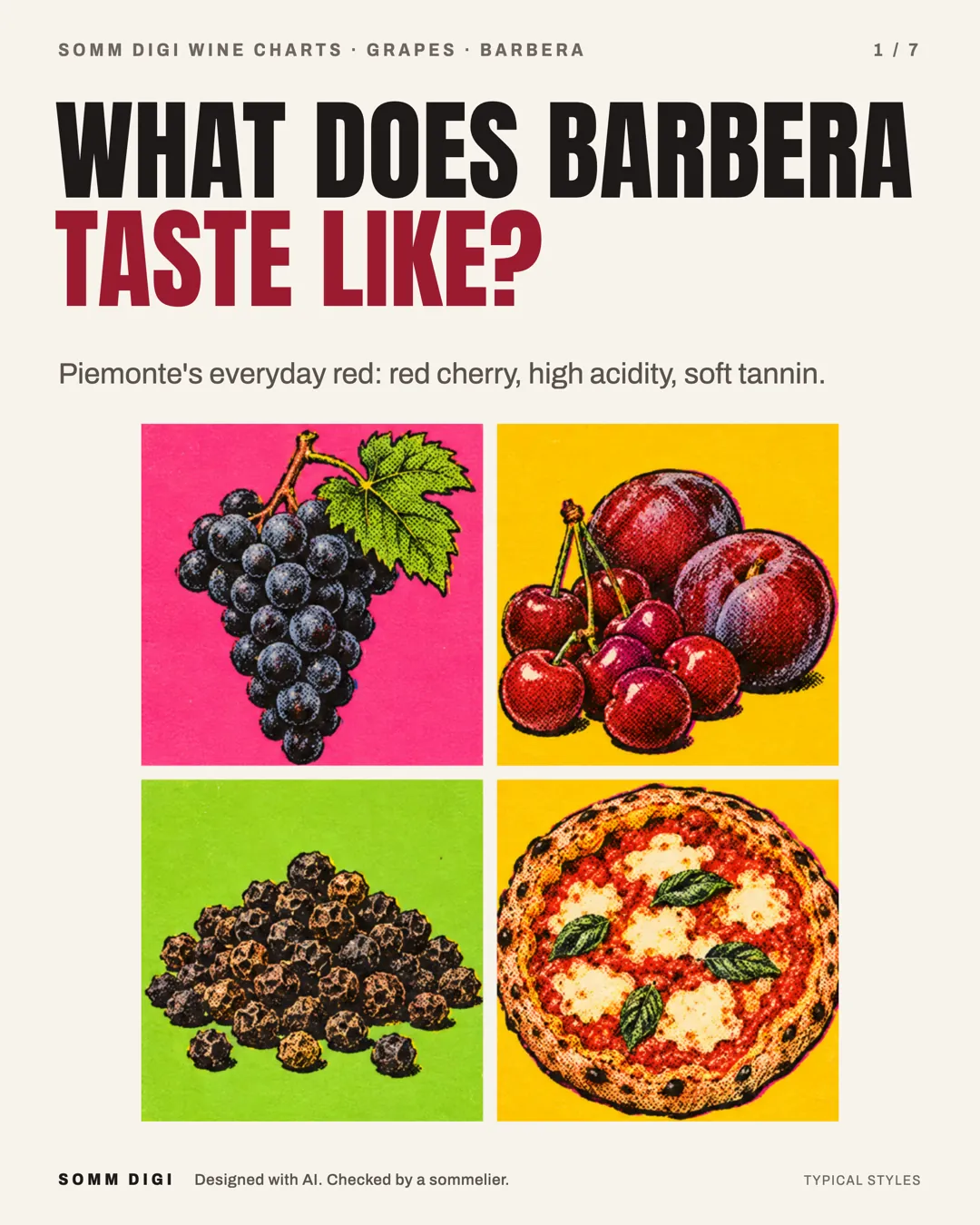
Barbera is the red Piemonte opens on a weeknight: red cherry, juicy acidity, soft tannin. No waiting needed, and it was made for tomato.
Quick answer
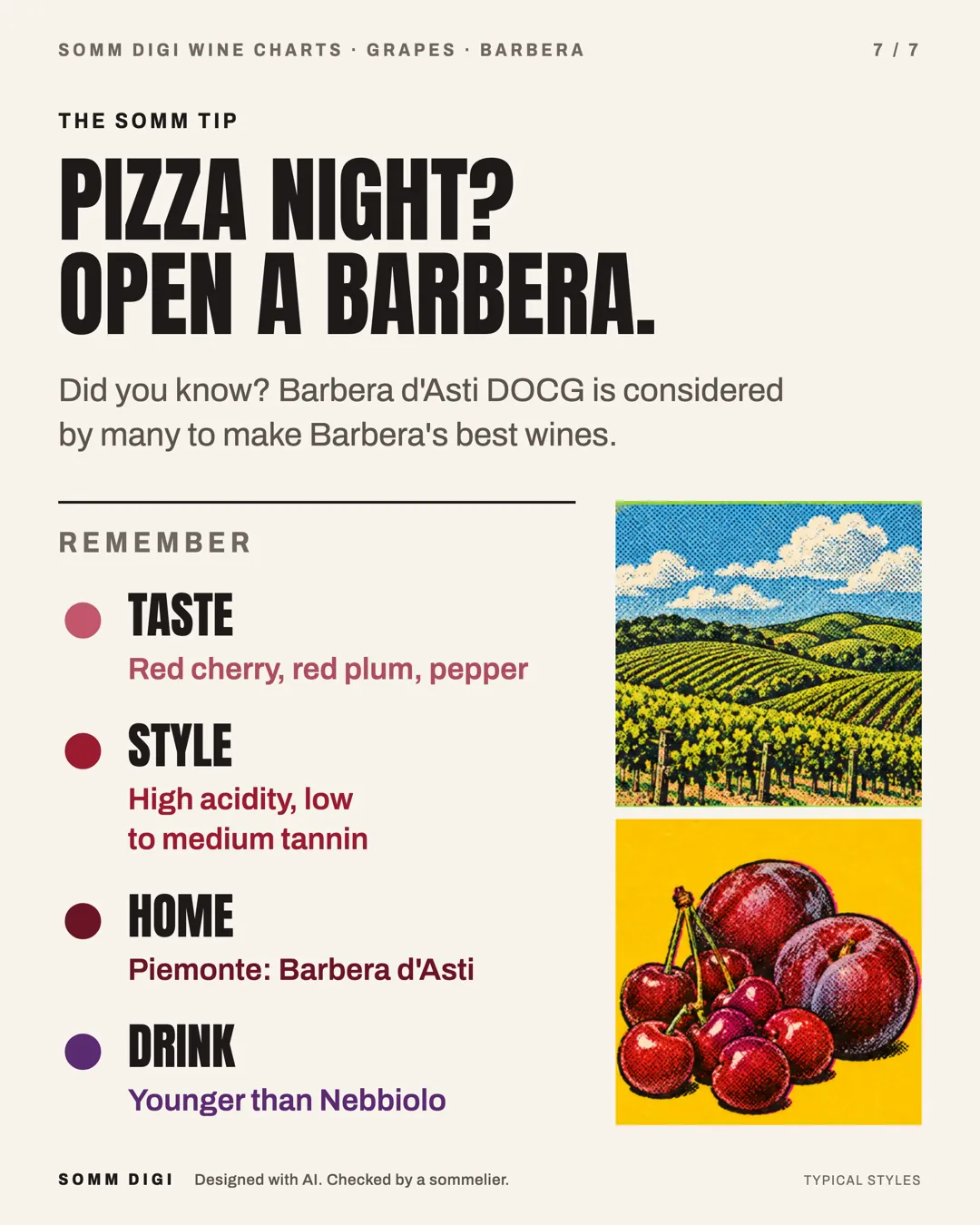
Barbera (say it bar-BEH-ra) is a red grape from Piemonte, north-west Italy. Its wines are dry, with high acidity and low to medium tannin, and taste of red cherry and red plum, sometimes with black pepper. It is ready to drink younger than Nebbiolo. Serve it at 15–18 °C (59–64 °F). For its top wines, look for Barbera d'Asti.

Alper Billik · Advanced Sommelier
Updated November 2026 · Edited with AI
This article may contain affiliate links.
On this page
What is Barbera wine?
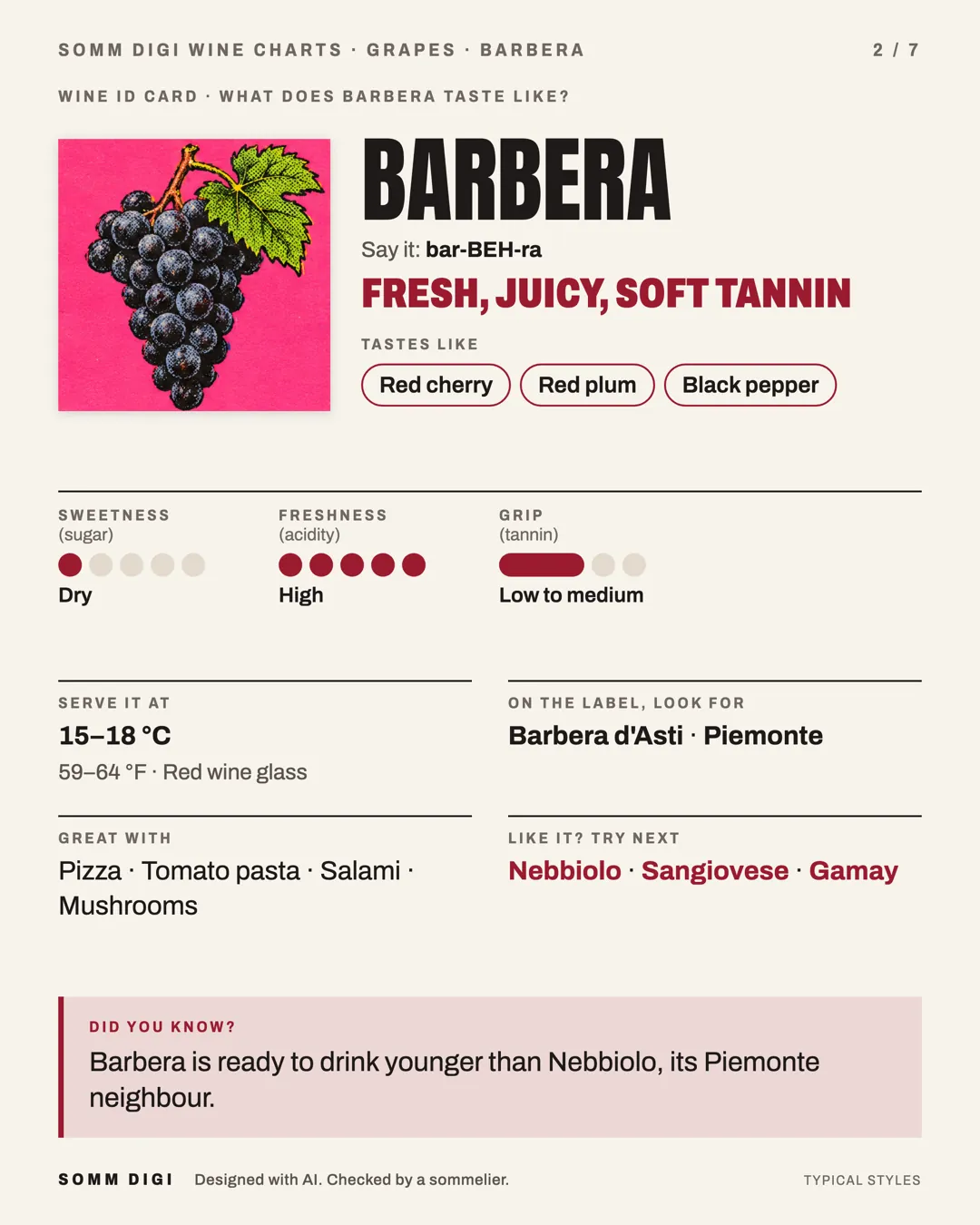
Barbera (say it bar-BEH-ra) is Piemonte's everyday red, from north-west Italy. It is fresh and juicy, with soft tannin: red cherry and red plum, and sometimes a touch of black pepper.
It is dry, with high acidity and low to medium tannin, and it is often made without oak, so the fruit comes first. On a bottle, look for Barbera d'Asti or the region's name, Piemonte. The profile card has the essentials on one page.
Barbera vs Nebbiolo
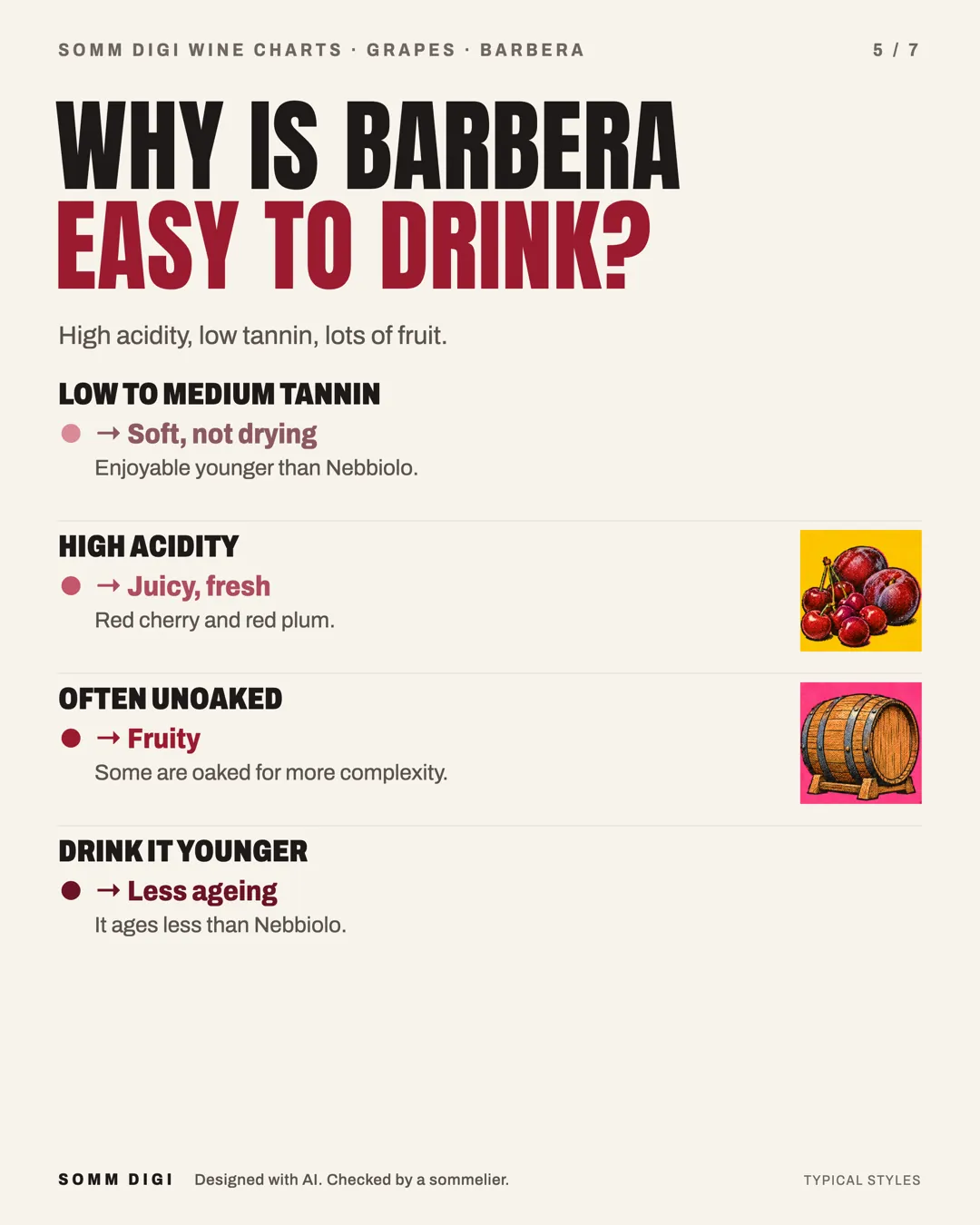
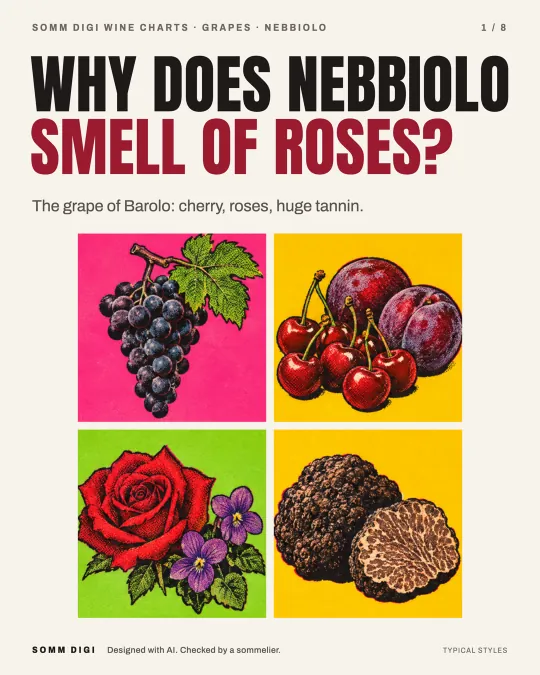
Both grow in Piemonte, but they are built differently. Nebbiolo, the grape of Barolo, has high tannin and needs time. Barbera has low to medium tannin: soft, not drying, and enjoyable younger than Nebbiolo.
Both have high acidity, which keeps Barbera juicy and fresh, with red cherry and red plum. Barbera is often unoaked, so it tastes fruity; some producers oak it for more complexity. And it ages less than Nebbiolo, so drink it younger.
Think of them as a pair: Nebbiolo for the bottle you wait for, Barbera for tonight. The chart sums up why Barbera is so easy to drink.
What does Barbera taste like?
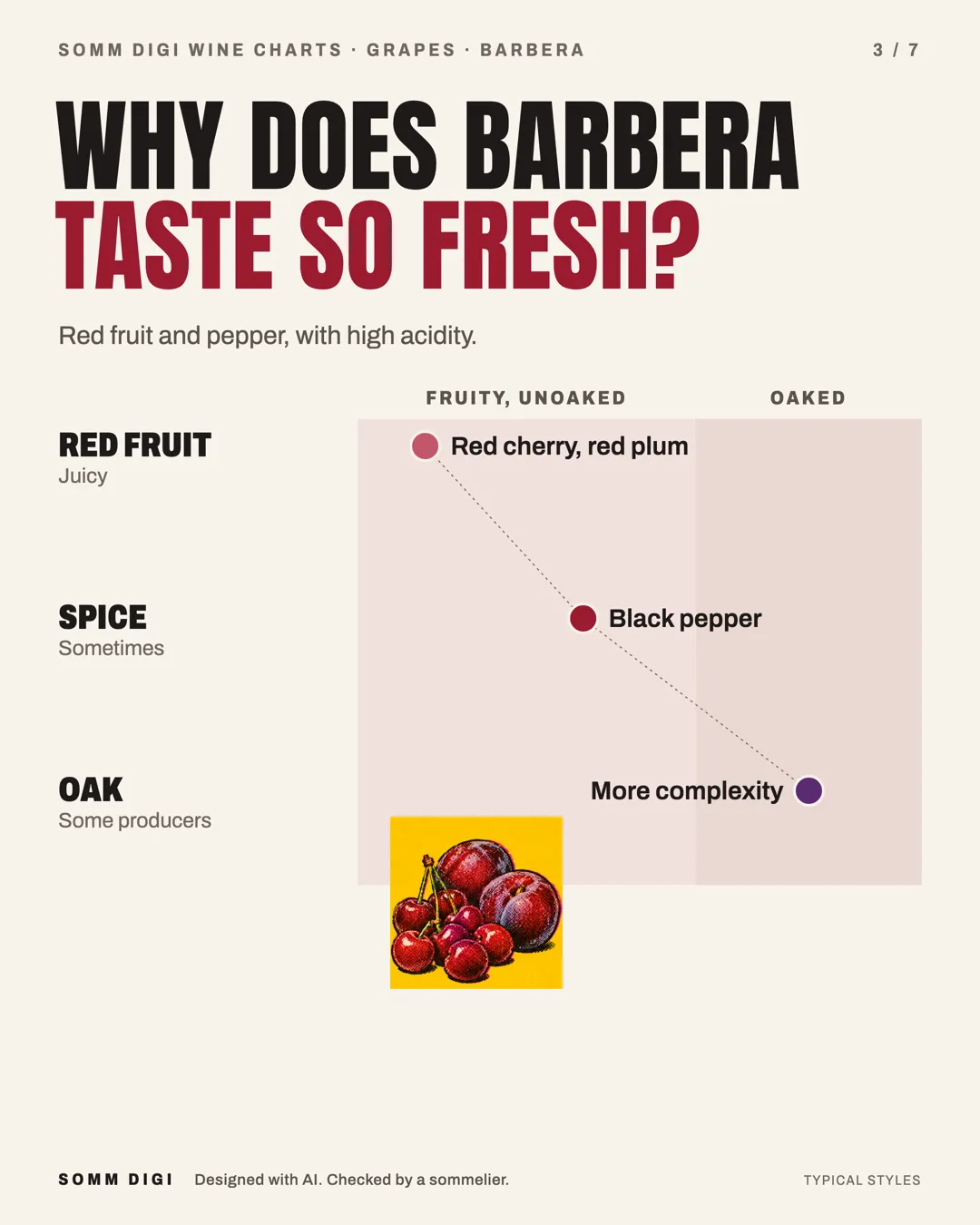
Red fruit first: red cherry and red plum, juicy and fresh. Sometimes there is spice, black pepper. That is fruity, unoaked Barbera. In the mouth, the high acidity makes it mouth-watering, and the soft tannin means no dry grip.
When a producer uses oak, the wine gains more complexity. The taste chart shows both: the fruity, unoaked style and the oaked one.
Is Barbera dry?
Yes. Barbera is a dry red. Its juicy feel comes from its high acidity, not from sugar.
Barbera d'Asti: where Barbera is at home
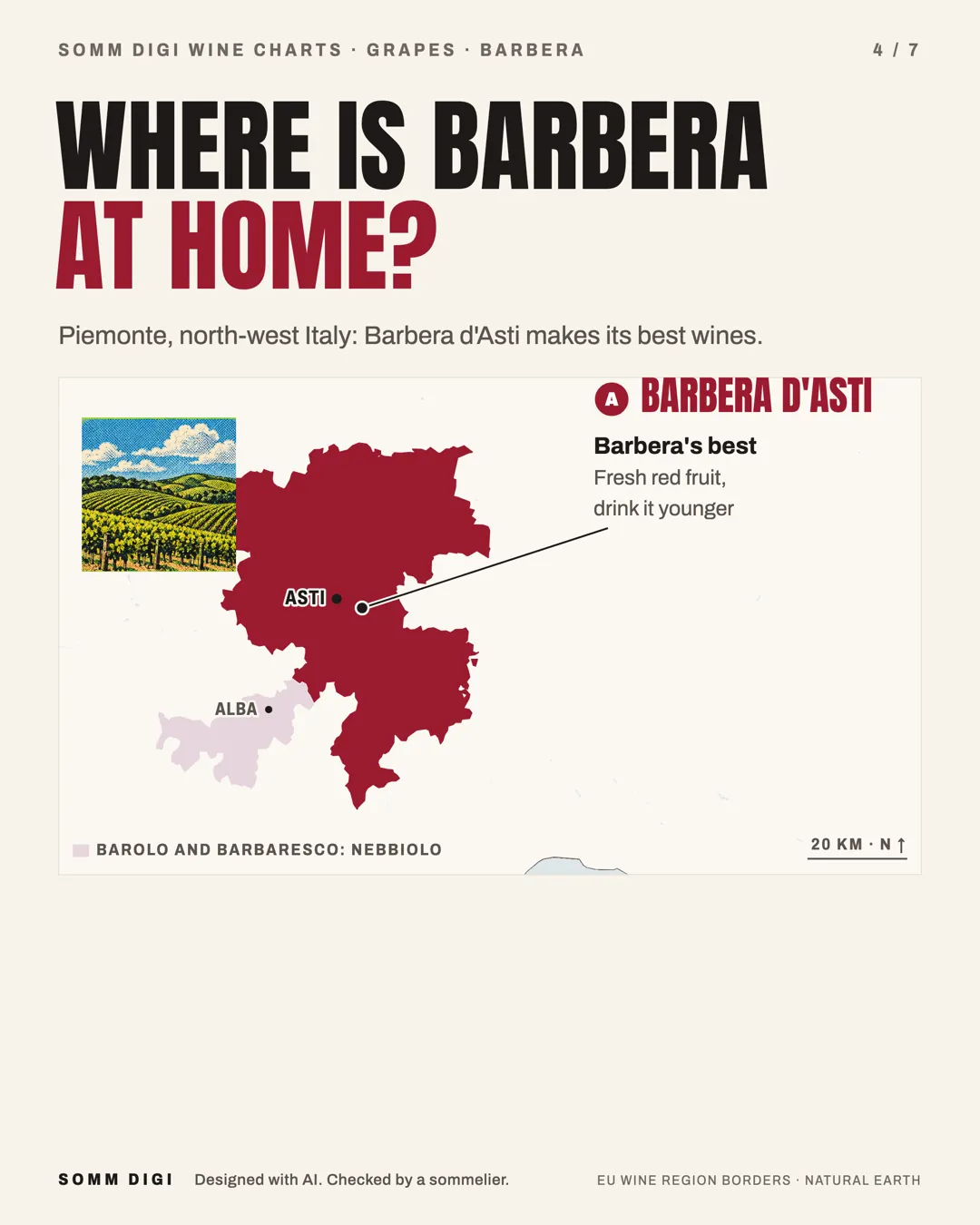
Barbera's home is Piemonte, in north-west Italy, and its top area is Barbera d'Asti DOCG: fresh red fruit, a wine to drink younger. Many consider it the place for Barbera's top wines, so when a shelf offers several Barberas, Barbera d'Asti is the name to reach for first.
Nearby, Barolo and Barbaresco belong to Nebbiolo. The map shows Barbera d'Asti next to them.
How to serve Barbera
Serve Barbera at 15–18 °C (59–64 °F), in a red wine glass, and open it young: Barbera ages less than Nebbiolo.
Which glass?
Any red wine glass will do; for a short list of good ones, see the red wine glass guide on universalwineglasses.com, SOMM DIGI's glass site.
Barbera food pairing
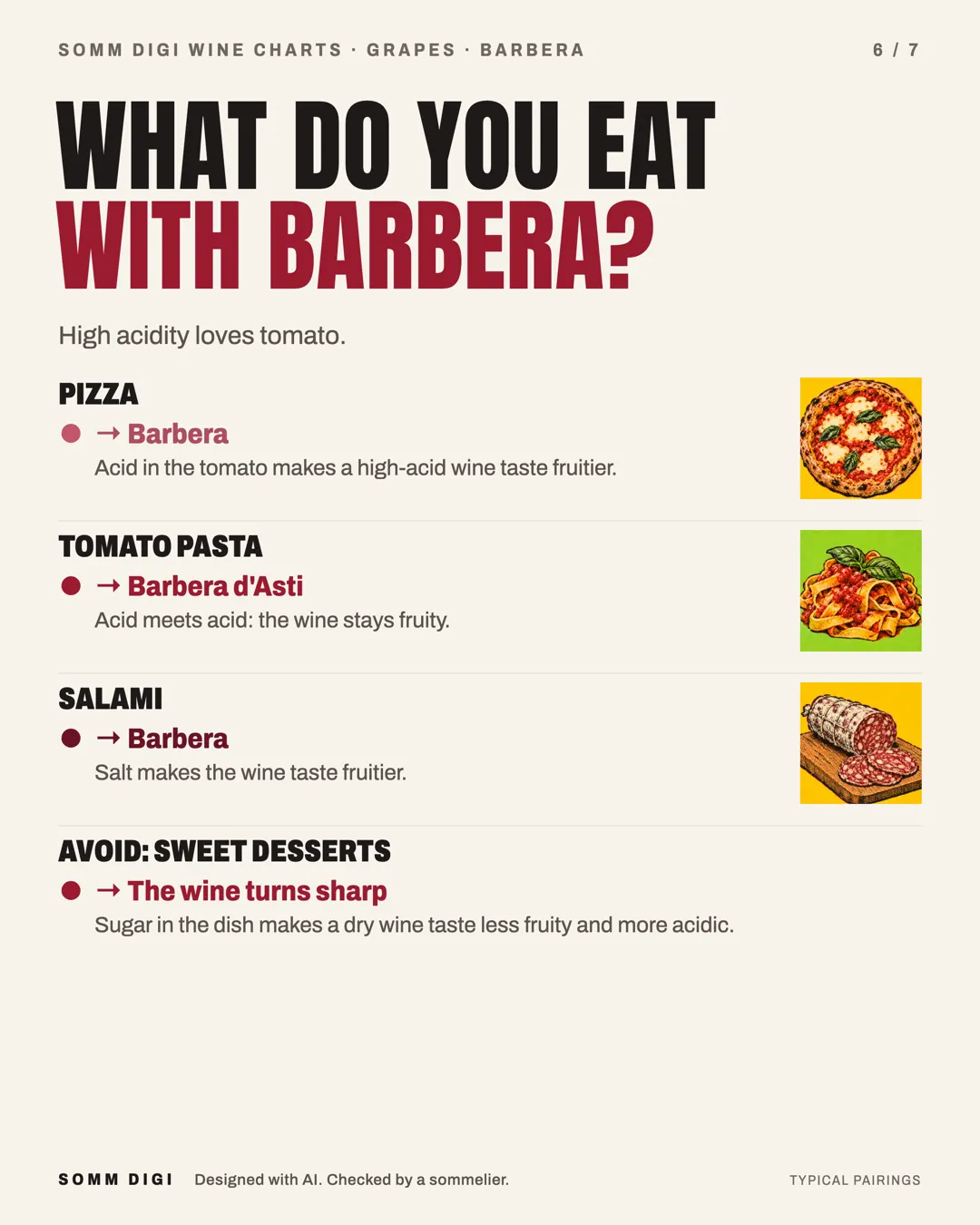
High acidity loves tomato. With pizza, open a Barbera: acid in the tomato makes a high-acid wine taste fruitier. With tomato pasta, a Barbera d'Asti: acid meets acid, and the wine stays fruity. Pizza, pasta, a board of salami: Barbera is at home with everyday Italian food.
Salami works too, because salt makes the wine taste fruitier, and so do mushroom dishes. Skip sweet desserts: sugar in the dish makes a dry wine taste less fruity and more acidic, so the wine turns sharp. The pairing chart has all four.
Easy to remember, as the somm tip puts it: pizza night? Open a Barbera.
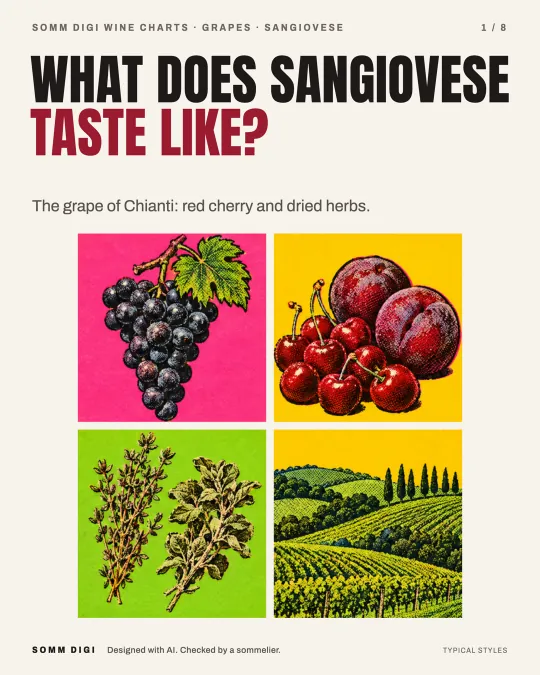
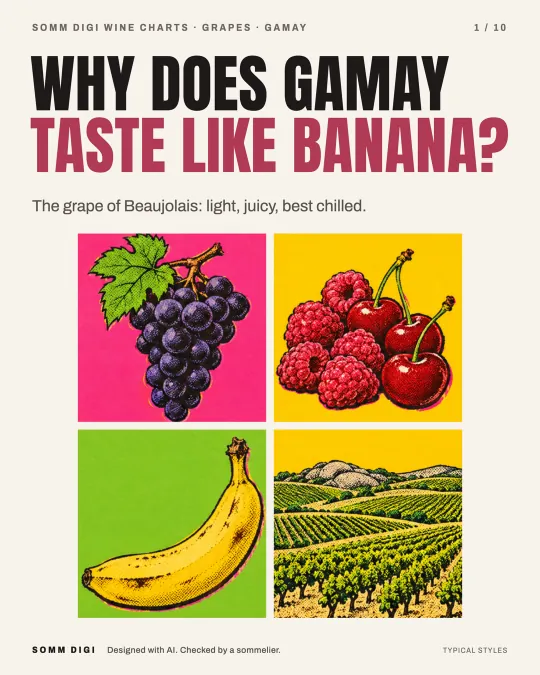
If you like Barbera, try Nebbiolo for more grip, Sangiovese for red cherry with firmer tannin, or Gamay, another light, juicy red with high acidity.
Learn wine the easy way
Wine Easy
The wine book that talks to you like a human: grapes, tasting, pairing and countries A–Z, in 388 full-colour pages.
Barbera questions, answered
How do you pronounce Barbera?
bar-BEH-ra.
Is Barbera sweet or dry?
Dry. It has high acidity and low to medium tannin.
What is the difference between Barbera and Nebbiolo?
Barbera has low to medium tannin and is ready to drink younger. Nebbiolo has high tannin and needs time.
What is Barbera d'Asti?
A DOCG in Piemonte, considered by many to make Barbera's top wines: fresh red fruit, drunk younger.
What food goes with Barbera?
Tomato: pizza and tomato pasta. Salami and mushroom dishes too.
Try next
If you like Barbera
How this page was made. Charts designed with AI and checked by Alper Billik, Advanced Sommelier. Text written from the same chart facts and edited with AI.