
What is noble rot?
Also called Botrytis
The short answer
Noble rot is the welcome form of botrytis, a fungus that pierces tiny holes in ripe grape skins so the water inside evaporates. This concentrates the grapes' sugars, acids and flavours. It needs damp, misty mornings followed by warm, dry afternoons, or it destroys the crop, and grapes it affects are nearly always made into sweet wine.

Alper Billik · Advanced Sommelier
Updated November 2026 · Edited with AI
What is noble rot?
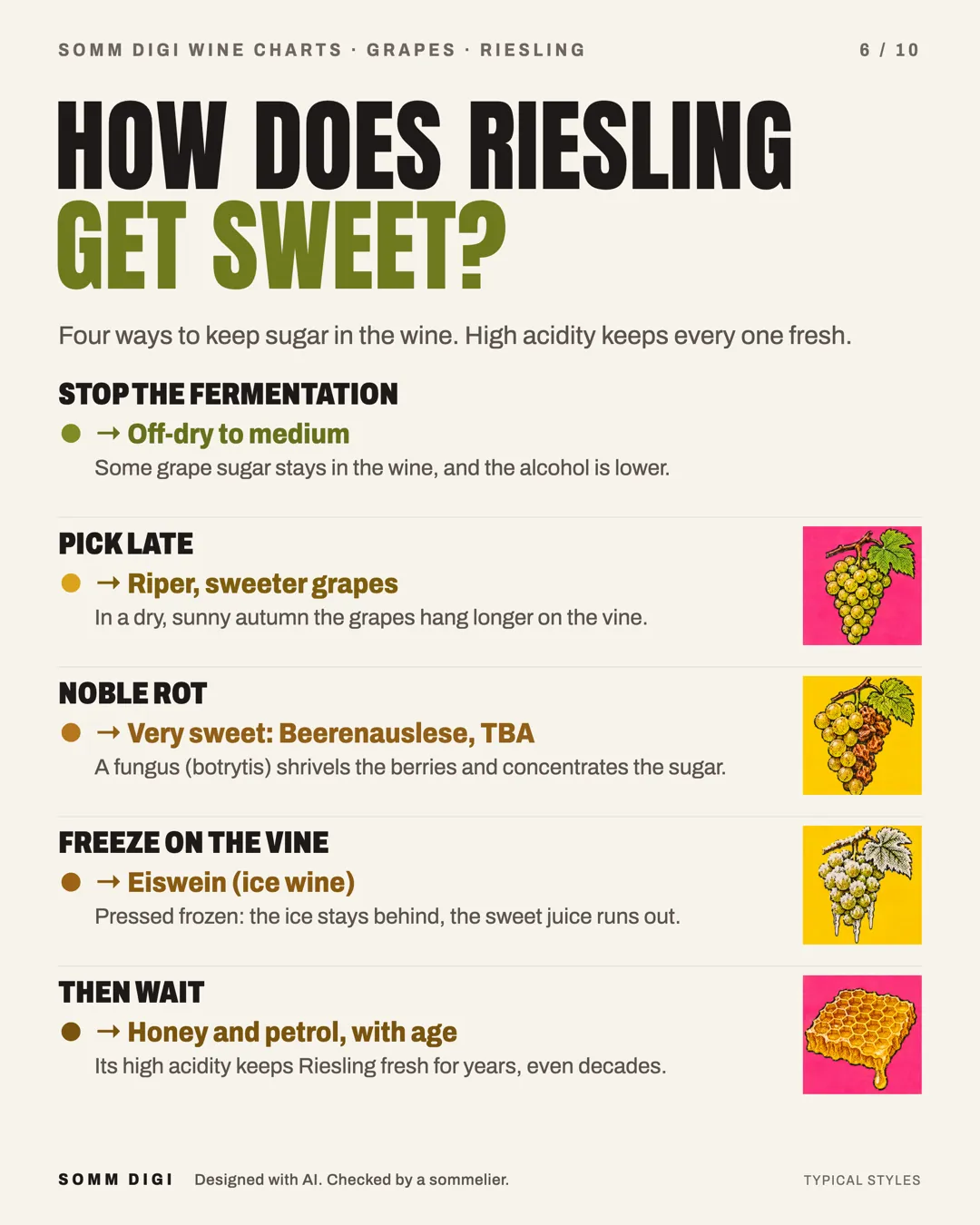
Noble rot is the helpful side of a grape fungus called botrytis, when it concentrates ripe grapes instead of spoiling them. The fungus makes tiny holes in the skin, water evaporates, and the acids, sugars and flavours inside become more intense. Grapes affected this way are nearly always made into sweet wines.
What is botrytis?
Botrytis is a fungus that can grow on grapes, and it can destroy a crop as easily as improve it. It only becomes noble rot when it grows on grapes that are already ripe. The ideal weather is damp, misty mornings that help it spread, then warm, dry afternoons that hold it back.
Mists that rise from rivers on autumn mornings are vital for it. Riesling and Sémillon are both prone to botrytis, which helps explain their great sweet wines.
Which wines are made with noble rot?
The most famous noble-rot wines are Sauternes from Bordeaux, Tokaji Aszú from Hungary, and German Beerenauslese and Trockenbeerenauslese. In each, the sugar is so concentrated that the yeast cannot ferment it all, so the wine stays sweet. Eiswein is different: its grapes are frozen, and botrytis plays no part.
What does a botrytised wine taste like?
A botrytised wine is sweet and intense, with apricot at its heart and acidity to keep it fresh. Sauternes is full-bodied, with pronounced apricot and notes from oak. Tokaji Aszú adds vanilla and caramel to fresh and dried apricot, while Beerenauslese Riesling shows apricot, mango, dried fruit and honey.
Keep exploring
Related terms
How this page was made. Written from sommelier study material in plain words, checked by Alper Billik, Advanced Sommelier, and edited with AI.