
What is ice wine?
Also called Icewine, Ice wine
The short answer
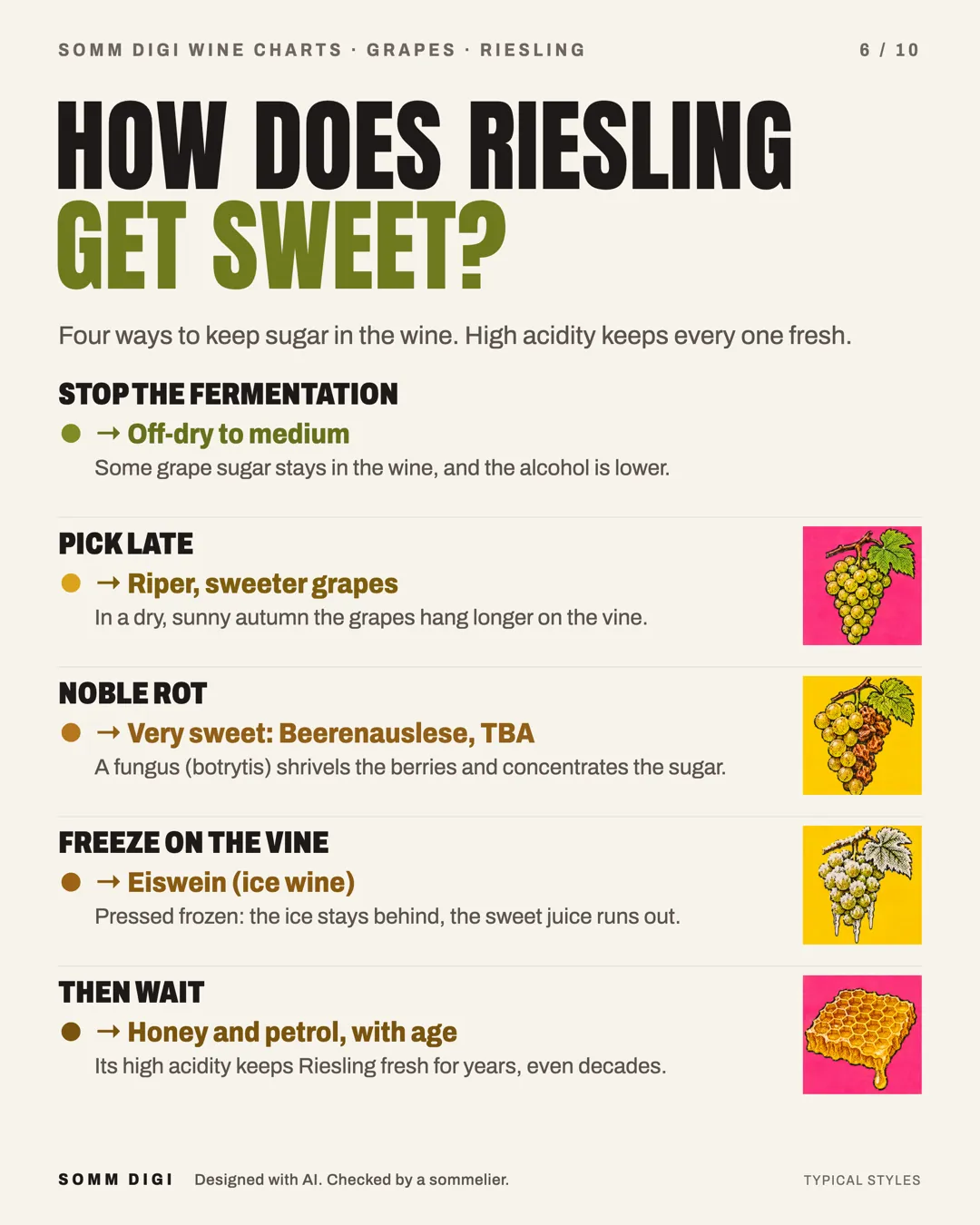
Eiswein (icewine) is a sweet wine made from grapes left to freeze on the vine and pressed while still frozen. The water stays behind as ice, so the juice is rich in sugar, acid and flavour. In Germany it is a Prädikat level, and Eiswein Riesling shows peach, apricot, mango and pineapple.

Alper Billik · Advanced Sommelier
Updated November 2026 · Edited with AI
What are the rules for Eiswein?
For Eiswein, the grapes must be frozen both when picked and when pressed.
Source: German Wine Act (Weingesetz), gesetze-im-internet.de ↗
Eiswein grapes must reach at least the minimum ripeness set for Beerenauslese in the same region.
Source: German Wine Act (Weingesetz), gesetze-im-internet.de ↗
Eiswein needs at least 5.5% actual alcohol.
Source: German Wine Act (Weingesetz), gesetze-im-internet.de ↗
What is ice wine?
Ice wine is a sweet wine made from healthy grapes that freeze on the vine before they are picked. In German it is called Eiswein, and in Germany it is one of the six Prädikat levels. Its sweetness comes from the ice left behind at pressing, not from noble rot, which plays no part.
How is ice wine made?
Grapes are left unpicked through autumn and into winter until the cold freezes the water inside them. They are harvested frozen and pressed before they thaw, so the ice crystals and skins stay behind. Only a little liquid runs out, packed with sugar, acid and flavour.
Yeast cannot ferment so much sugar, so the wine ends up sweet and naturally low in alcohol. Eiswein made from Riesling shows vibrant peach and apricot with mango and pineapple. Intense flavour and high acidity help these wines age for decades.
Why is ice wine so expensive?
Ice wine is expensive because it is hard and risky to make. The weather it needs does not come every year, the work is labour-intensive, and frozen grapes give very small yields. Top examples are outstanding in quality, and their prices are high.
How do you serve ice wine?
Serve ice wine well chilled, at about 6–8 °C (43–46 °F), like other sweet wines. A glass that narrows at the rim keeps its fruit aromas concentrated. Purity is the point of ice wine, so oak or age-derived flavours can take away from it rather than add.
Keep exploring
Related terms
How this page was made. Written from sommelier study material in plain words, with the exact rules taken from the official sources linked above, checked by Alper Billik, Advanced Sommelier, and edited with AI.