
What is Châteauneuf-du-Pape?
The short answer
Châteauneuf-du-Pape is an appellation in France's warm Southern Rhône, known for full-bodied, high-alcohol red wines based on Grenache. Many vineyards are covered in large, round stones that absorb heat by day and radiate it back to the vines at night, helping Grenache ripen fully. Very good examples develop dried fruit and caramel with bottle age.

Alper Billik · Advanced Sommelier
Updated November 2026 · Edited with AI
What are the rules for Châteauneuf-du-Pape?
The Châteauneuf-du-Pape appellation was first recognised by decree on 15 May 1936.
Source: Châteauneuf-du-Pape AOC cahier des charges (French Ministry of Agriculture official bulletin) ↗
Châteauneuf-du-Pape may only be a still red or still white wine; there is no rosé.
Source: Châteauneuf-du-Pape AOC cahier des charges (French Ministry of Agriculture official bulletin) ↗
Châteauneuf-du-Pape needs a minimum natural alcohol of 12.5%.
Source: Châteauneuf-du-Pape AOC cahier des charges (French Ministry of Agriculture official bulletin) ↗
What grapes are in Châteauneuf-du-Pape?
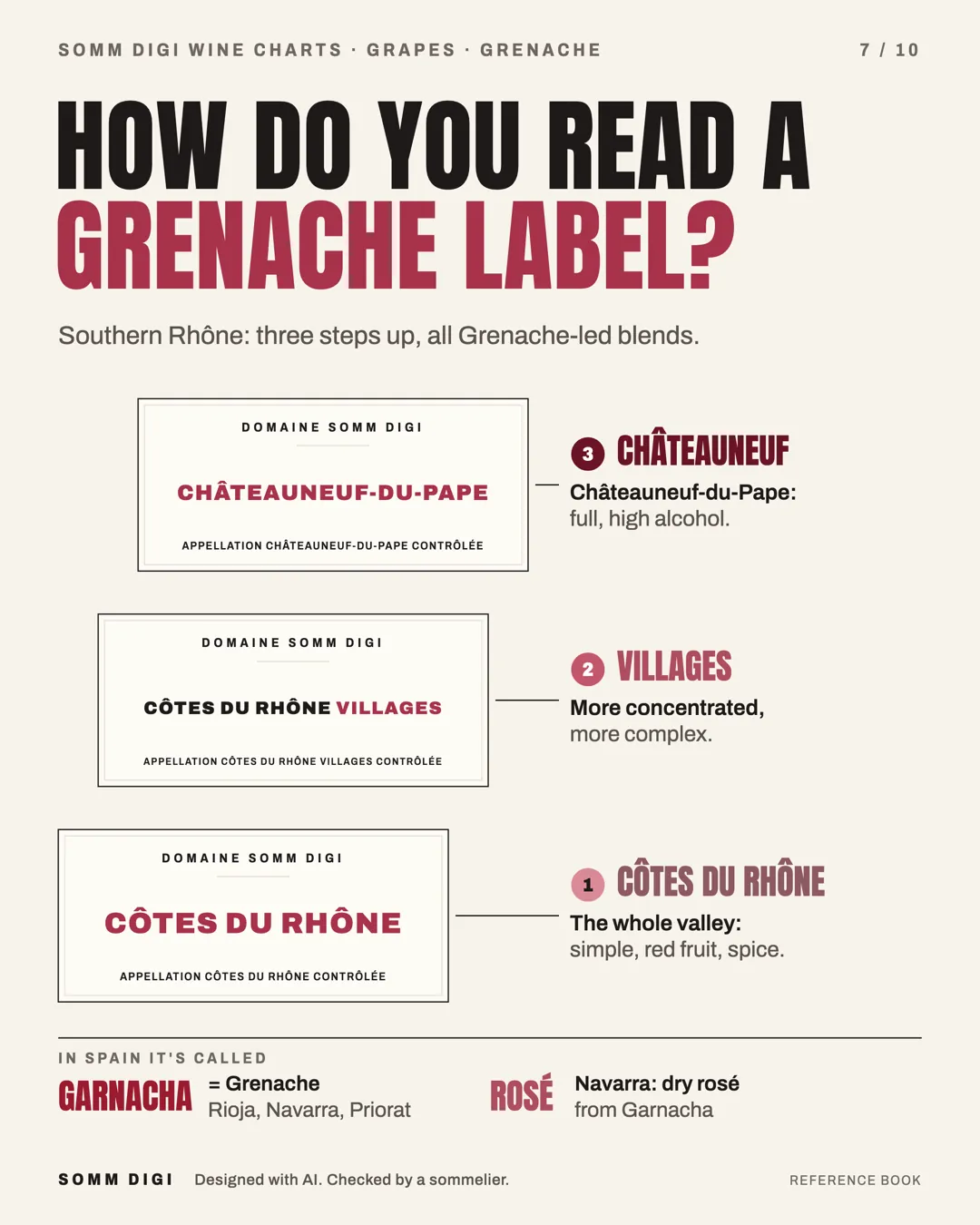
Châteauneuf-du-Pape is led by Grenache, which ripens fully in the warm southern Rhône. Like most red wines of the area, it is usually a blend of Grenache with several local grapes, including Syrah. Those partners add colour, acidity and tannin to Grenache's ripe red fruit.
It is one of the Rhône crus: a few prestigious areas with their own appellation, a step above Côtes du Rhône and Côtes du Rhône Villages.
What does Châteauneuf-du-Pape taste like?
Châteauneuf-du-Pape is full-bodied and high in alcohol, with ripe red fruit and spice. Grenache brings strawberry, red plum and red cherry, sometimes with white pepper or liquorice. Top examples age well, gaining dried fruit and caramel in the bottle.
Why are there stones in Châteauneuf-du-Pape vineyards?
Many Châteauneuf-du-Pape vineyards are covered with large, round stones because they help the grapes ripen. The stones soak up heat during the day and give it back to the vines at night. That helps Grenache reach full ripeness, with plenty of sugar for a full, strong wine.
What food goes with Châteauneuf-du-Pape?
A hearty stew suits Châteauneuf-du-Pape, because a full-bodied dish needs a full-bodied wine. Matching the weight and flavour intensity of food and wine stops one from overpowering the other. Go easy on chilli, since high alcohol makes chilli heat feel stronger, and on very sweet dishes, which make a dry red taste less fruity.
Keep exploring
Related terms
How this page was made. Written from sommelier study material in plain words, with the exact rules taken from the official sources linked above, checked by Alper Billik, Advanced Sommelier, and edited with AI.