
Syrah or Shiraz wine: what's the difference?
Syrah or Shiraz? Same grape, two names, and the name on the bottle often hints at the style inside. Here is how to tell peppery Syrah from ripe Shiraz.
Quick answer
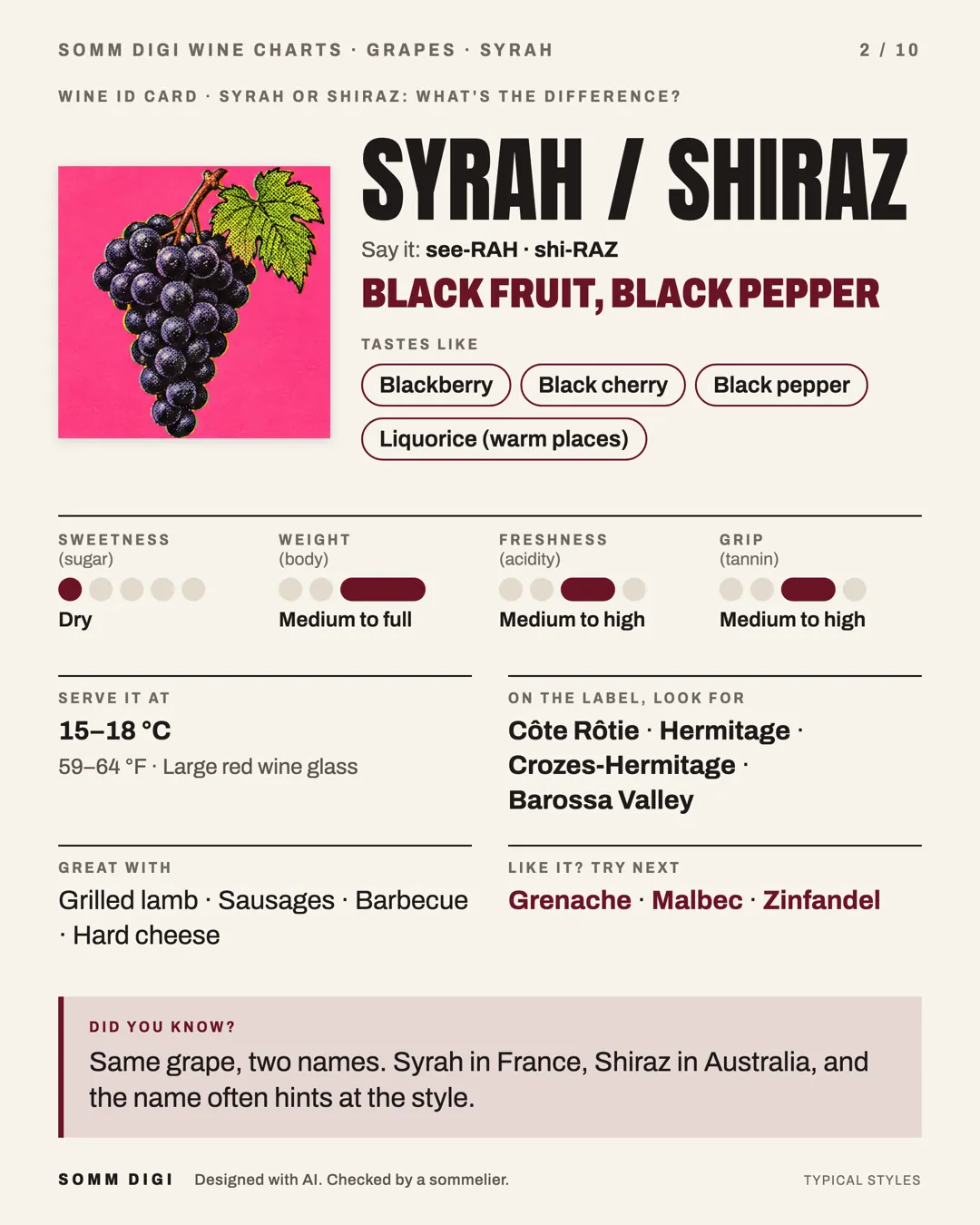
Syrah (say it see-RAH) and Shiraz (shi-RAZ) are one red grape with two names: Syrah in France, Shiraz in Australia. It makes dry wine with black fruit and black pepper, medium to full body and medium to high tannin. Moderate places give peppery Syrah; warm places give ripe Shiraz with liquorice. Serve it at 15–18 °C (59–64 °F) in a large red wine glass.

Alper Billik · Advanced Sommelier
Updated November 2026 · Edited with AI
This article may contain affiliate links.
On this page
- Syrah or Shiraz: what's the difference?
- Syrah vs Shiraz: how the style changes
- Syrah or Shiraz on the label
- What does Syrah taste like?
- Is Syrah sweet?
- Syrah vs Cabernet Sauvignon
- Where does Syrah grow?
- Northern Rhône Syrah: Côte Rôtie, Hermitage
- Which Syrah is for you?
- How to serve Syrah and Shiraz
- Syrah food pairing
- Syrah and Shiraz questions, answered
Syrah or Shiraz: what's the difference?
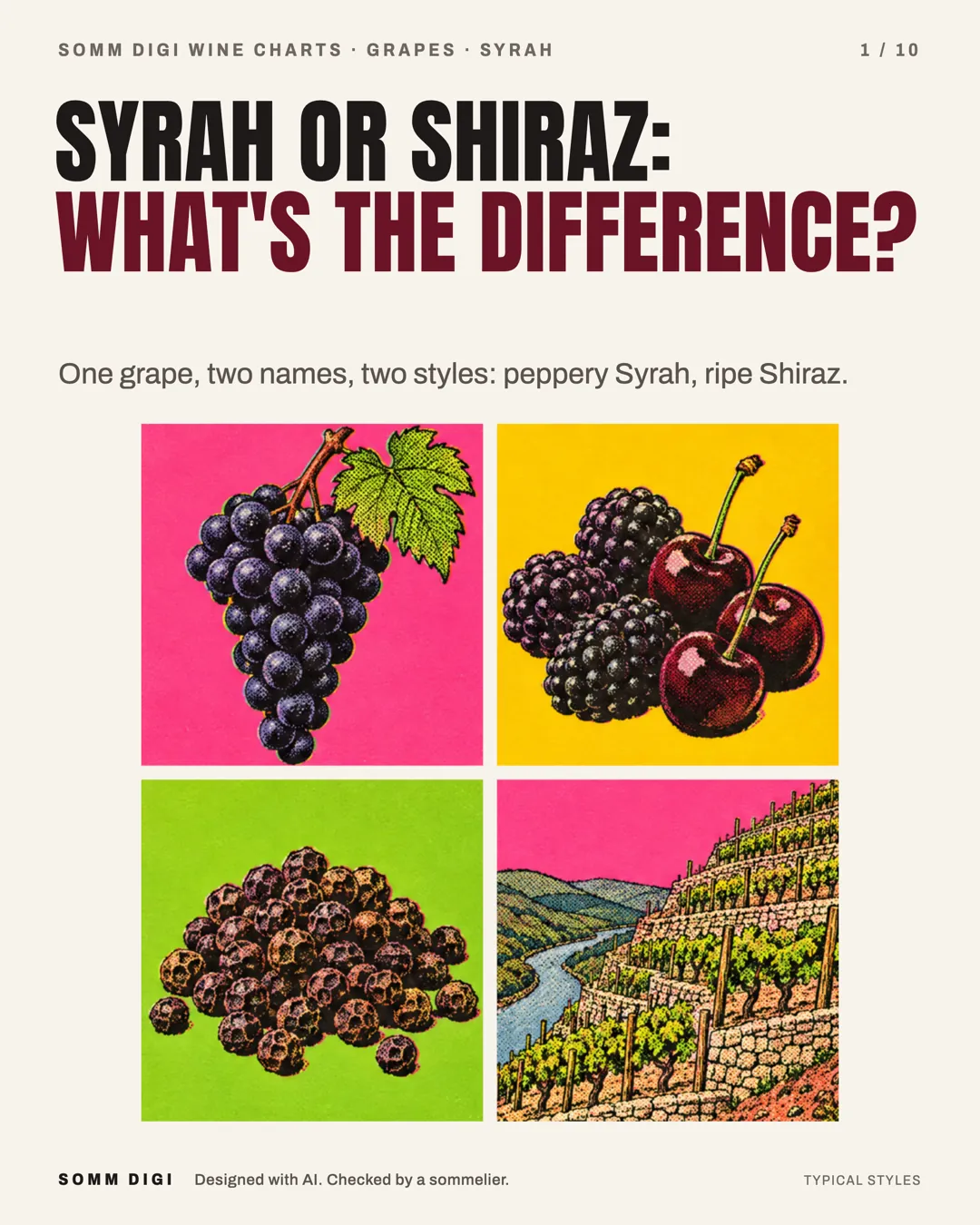
Syrah and Shiraz are the same grape. It is called Syrah in France (say it see-RAH) and Shiraz in Australia (shi-RAZ), and the name often hints at the style.
It is a red grape that makes dry wine with black fruit and black pepper: blackberry, black cherry, pepper, and liquorice in warm places. The body is medium to full, with medium to high acidity and tannin. The profile card puts it on one page.
Syrah vs Shiraz: how the style changes
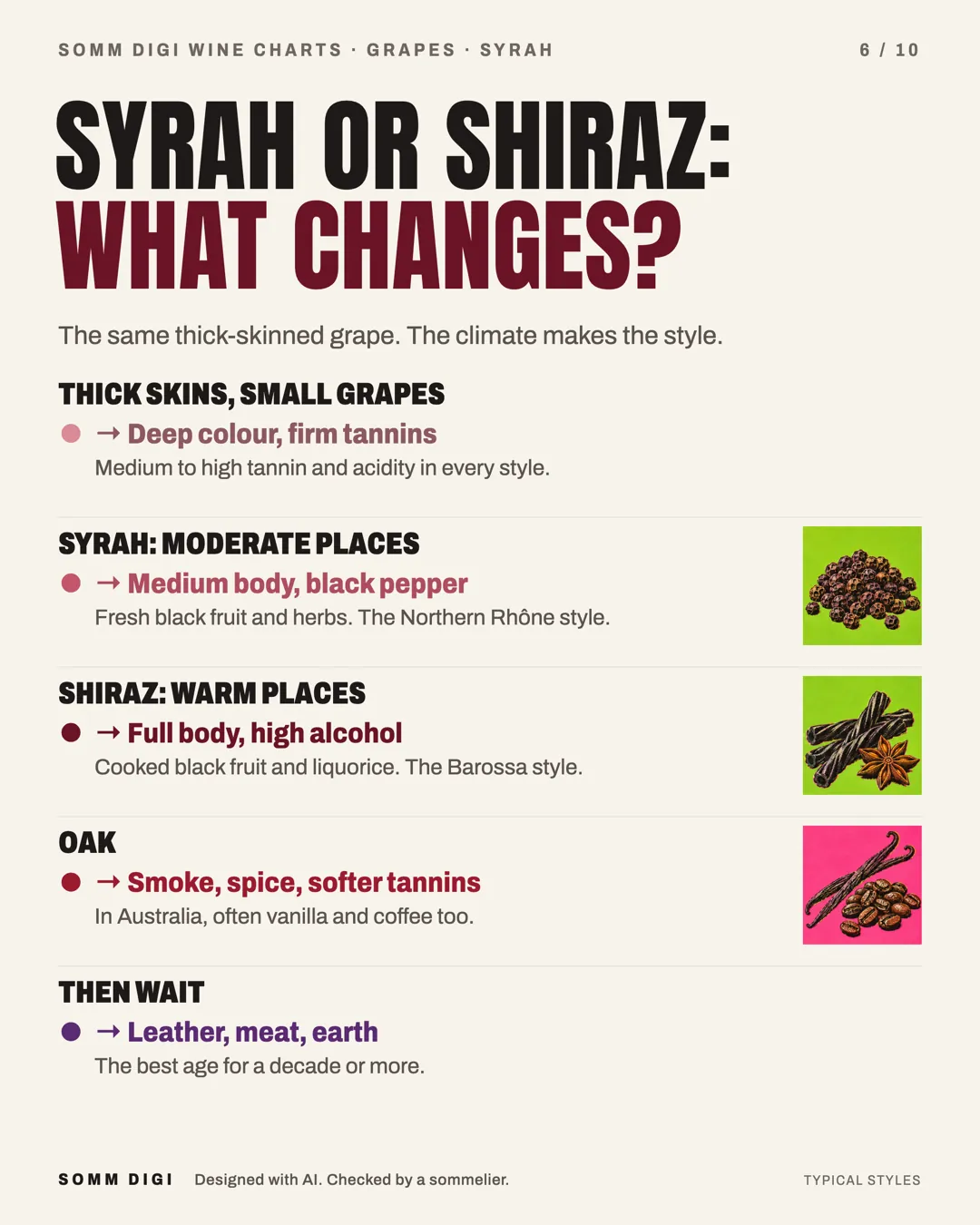
The grape stays the same; the climate makes the style. Its thick skins and small grapes always give deep colour and firm tannins, with medium to high tannin and acidity in every style.
In moderate places it is Syrah: medium body, black pepper, fresh black fruit and herbs. That is the Northern Rhône style. In warm places it is Shiraz: full body, high alcohol, cooked black fruit and liquorice. That is the Barossa style.
Oak adds smoke and spice and softens the tannins; in Australia it often brings vanilla and coffee too. Then wait: the top wines age for a decade or more, gaining leather, meat and earth. The chart shows all five steps.
Syrah or Shiraz on the label
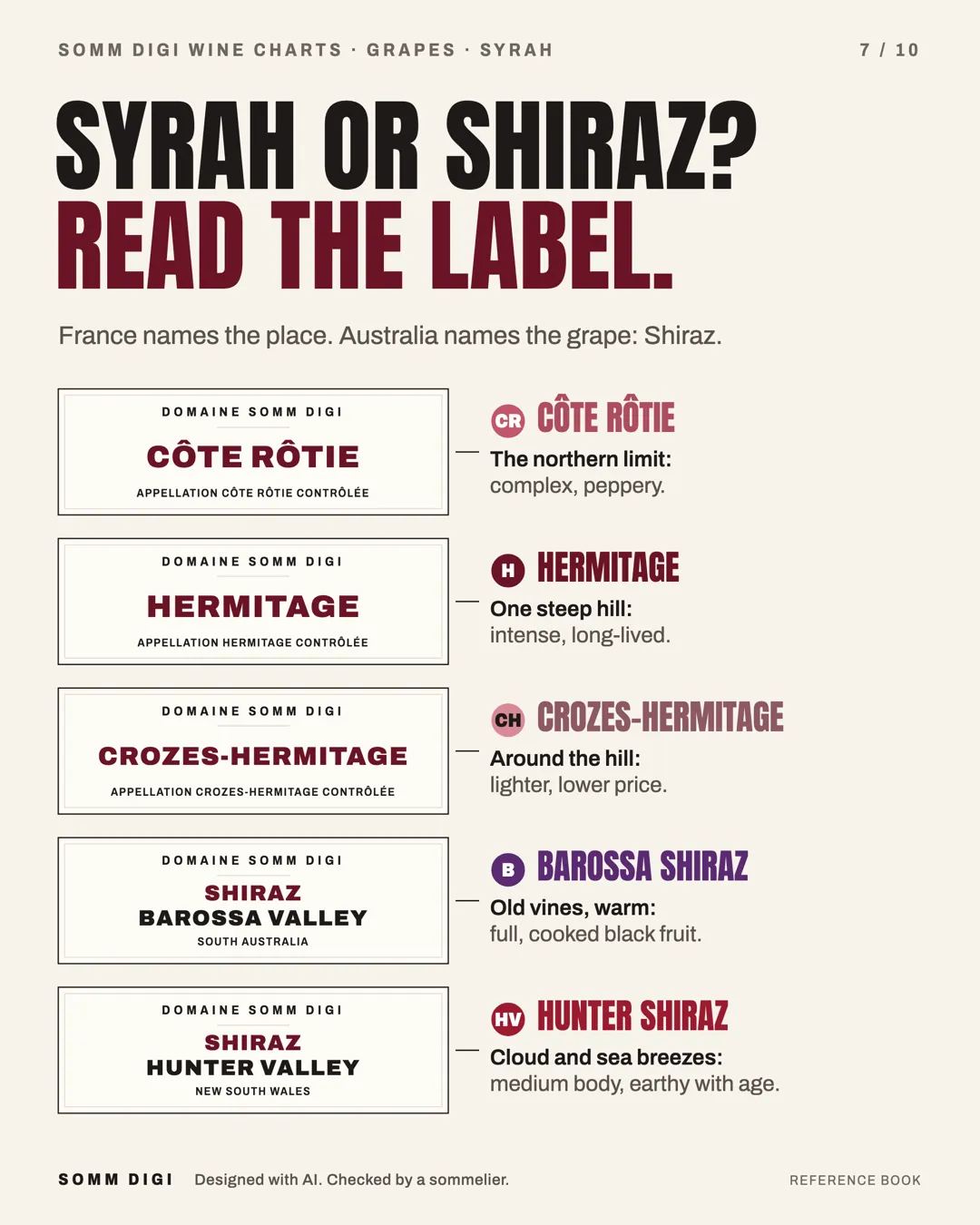
The label works like a clue. France names the place; Australia names the grape: Shiraz.
From France, Côte Rôtie is the northern limit: complex and peppery. Hermitage is one steep hill, intense and long-lived. Crozes-Hermitage grows around the hill: lighter, at a lower price. From Australia, Barossa Shiraz comes from old vines in a warm place: full, with cooked black fruit. Hunter Shiraz grows with cloud and sea breezes: medium body, earthy with age.
The label chart lines up all five.
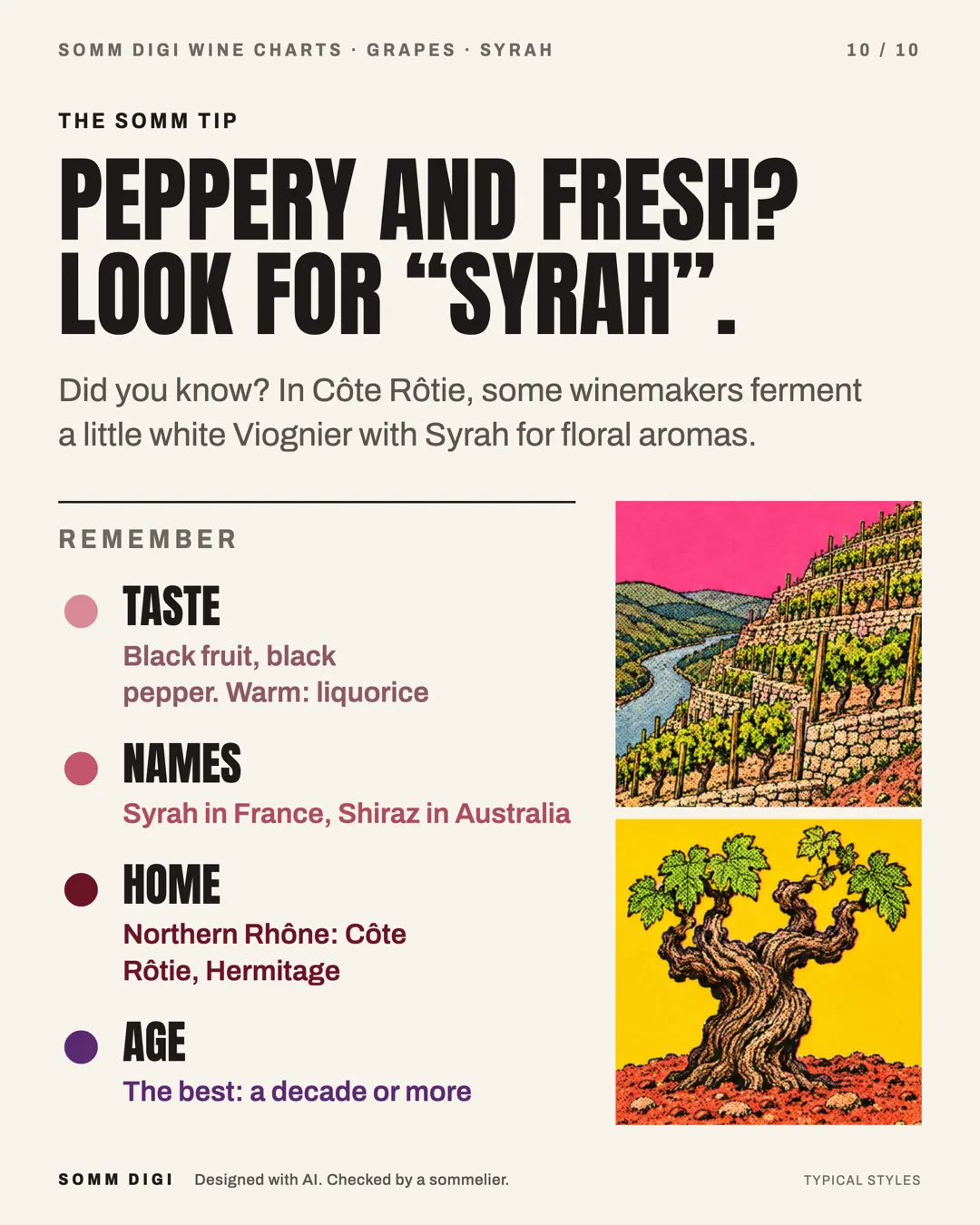
Want the fresher style? The somm tip makes it easy: peppery and fresh? Look for “Syrah”.
What does Syrah taste like?
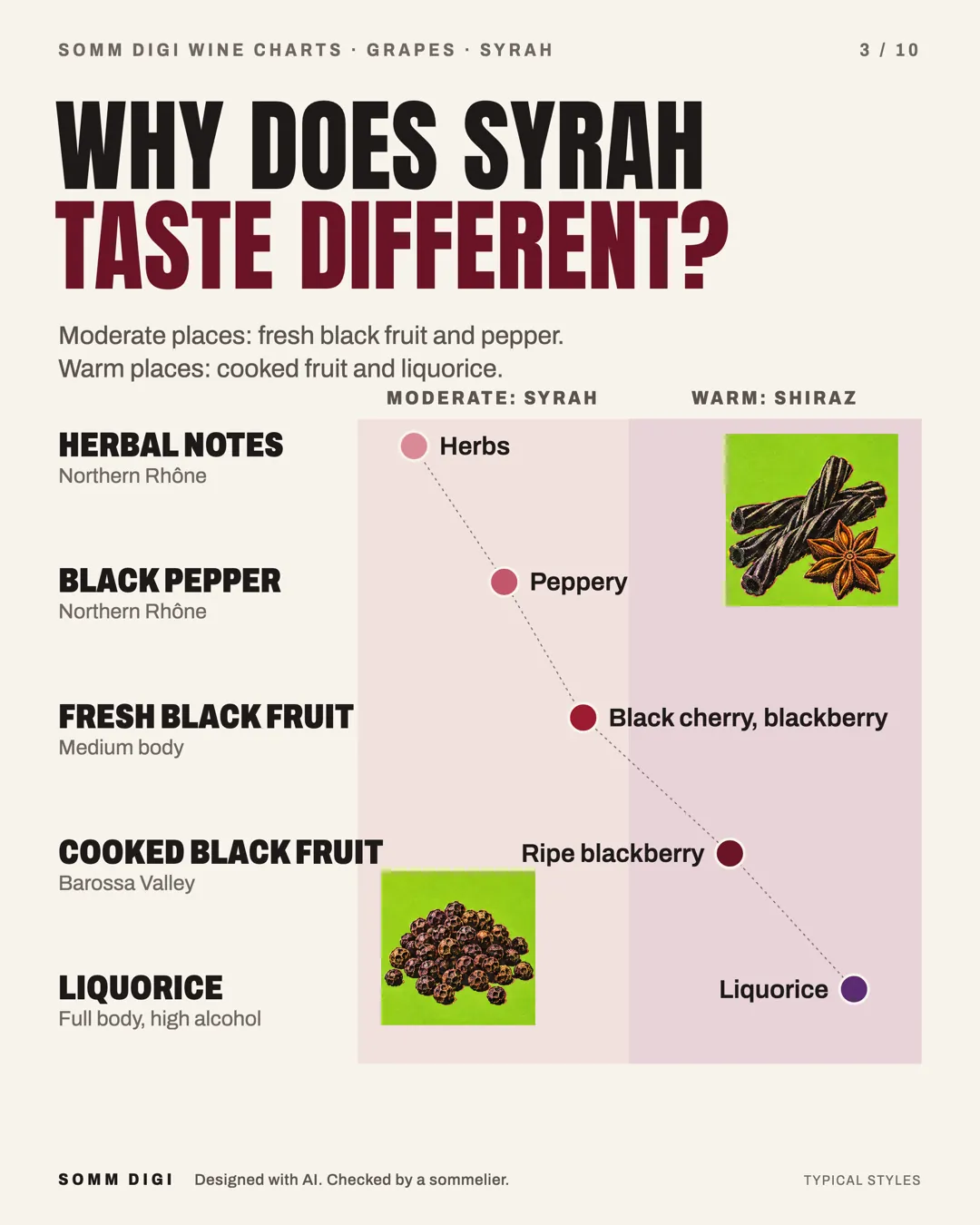
Syrah's taste follows the heat. Moderate places give fresh black fruit and pepper; warm places give cooked fruit and liquorice.
In the Northern Rhône, Syrah can show herbal notes and a peppery bite, with fresh black cherry and blackberry and medium body.
In warm places, as in the Barossa Valley, Shiraz turns to cooked black fruit, like ripe blackberry. The warmest end brings liquorice, with full body and high alcohol. The taste chart runs from herbs to liquorice.
Is Syrah sweet?
No. Syrah and Shiraz are dry. Ripe Shiraz can taste of cooked black fruit, but the richness comes from ripeness, full body and high alcohol, not sugar.
Keep that in mind with chilli. High alcohol makes chilli heat stronger, so a full Shiraz with hot chilli makes the heat burn more.
Syrah vs Cabernet Sauvignon
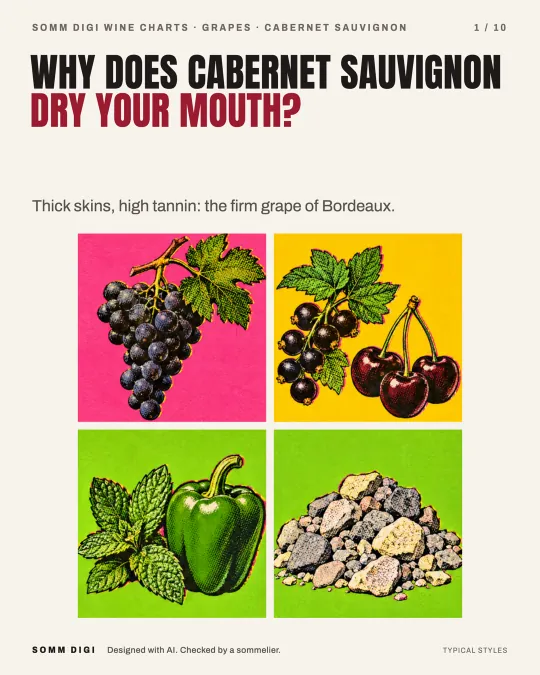
Both are dry reds with thick skins and medium to full body. Cabernet Sauvignon is firmer, with high tannin; Syrah's tannin is medium to high.
The flavours split clearly. Cabernet tastes of blackcurrant, with mint and green bell pepper. Syrah tastes of blackberry and black cherry, with black pepper, and liquorice in warm places. At the table they meet again: both suit lamb, barbecue and hard cheese.
Where does Syrah grow?
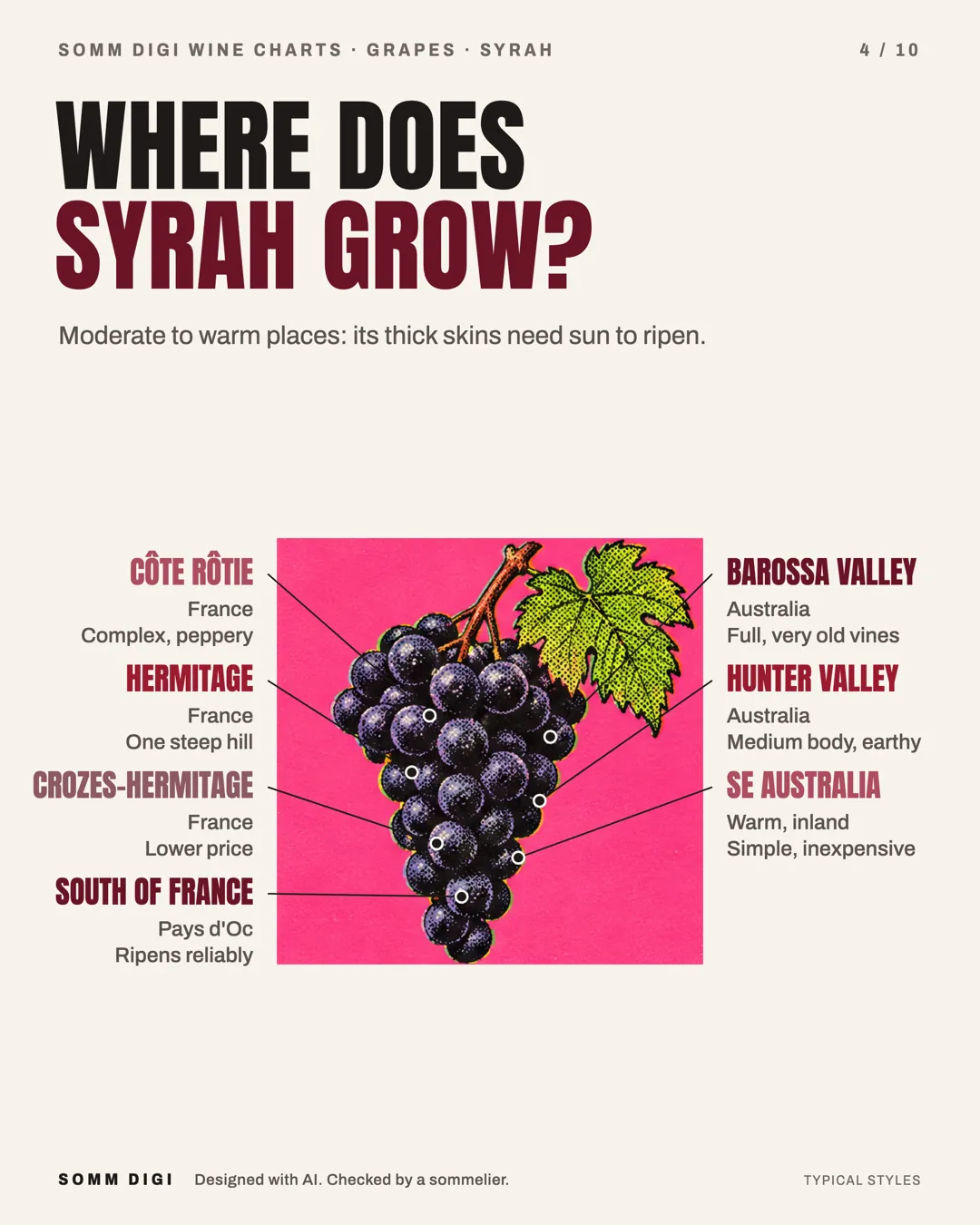
Syrah grows in moderate to warm places: its thick skins need sun to ripen.
In France, Côte Rôtie is complex and peppery, Hermitage is one steep hill, and Crozes-Hermitage comes at a lower price. In the south of France, as Pays d'Oc, it ripens reliably.
In Australia, the Barossa Valley gives full Shiraz from very old vines, the Hunter Valley medium body and earth, and warm, inland South East Australia simple, inexpensive wine. The regions chart shows all seven.
Northern Rhône Syrah: Côte Rôtie, Hermitage
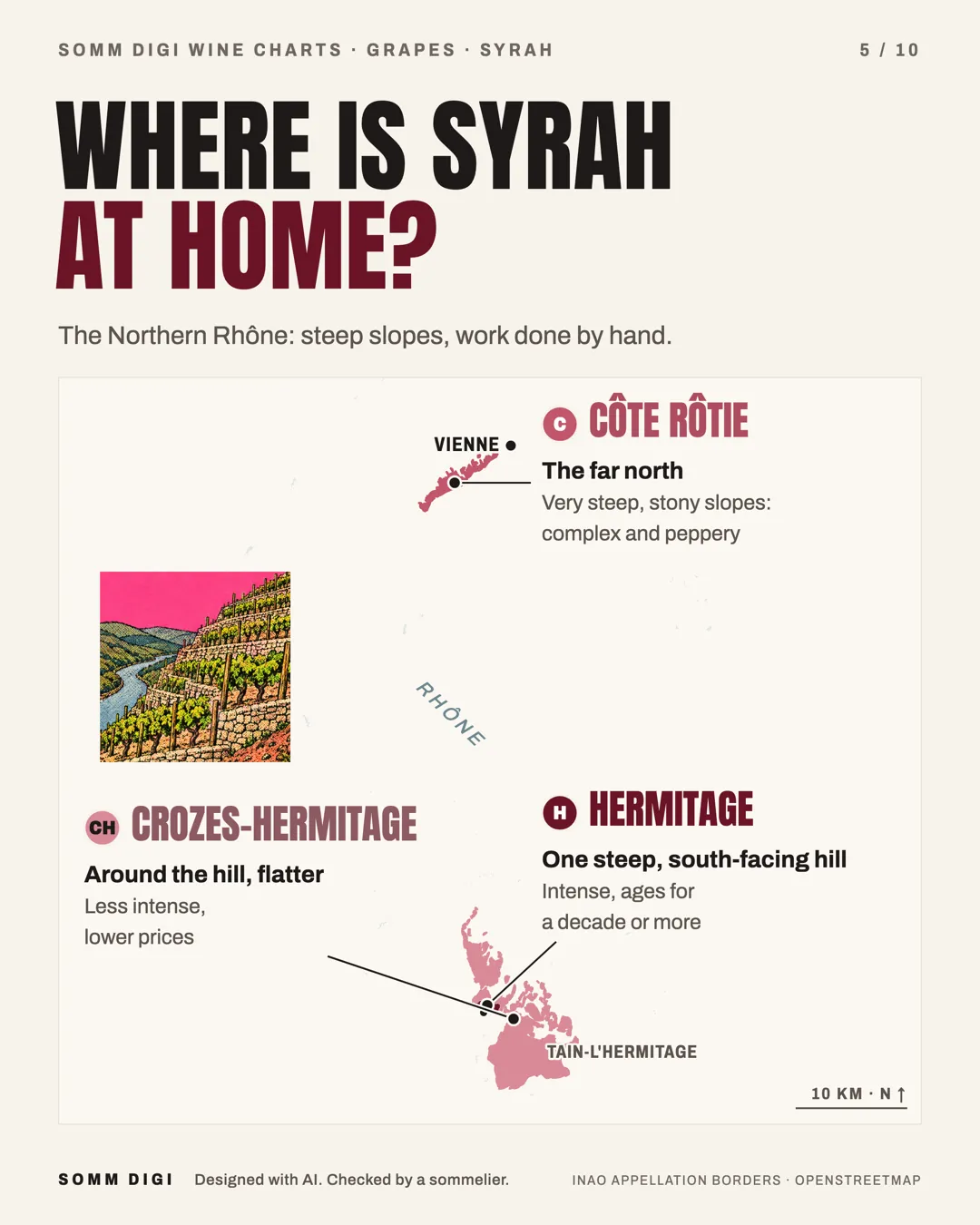
Syrah's home is the Northern Rhône: steep slopes, where the work is done by hand.
Côte Rôtie, in the far north, has very steep, stony slopes and makes complex, peppery Syrah. In Côte Rôtie, some winemakers ferment a little white Viognier with Syrah for floral aromas.
Hermitage is one steep, south-facing hill: intense wine that ages for a decade or more. Crozes-Hermitage lies around the hill, on flatter land: less intense, at lower prices. The map shows all three.
Which Syrah is for you?
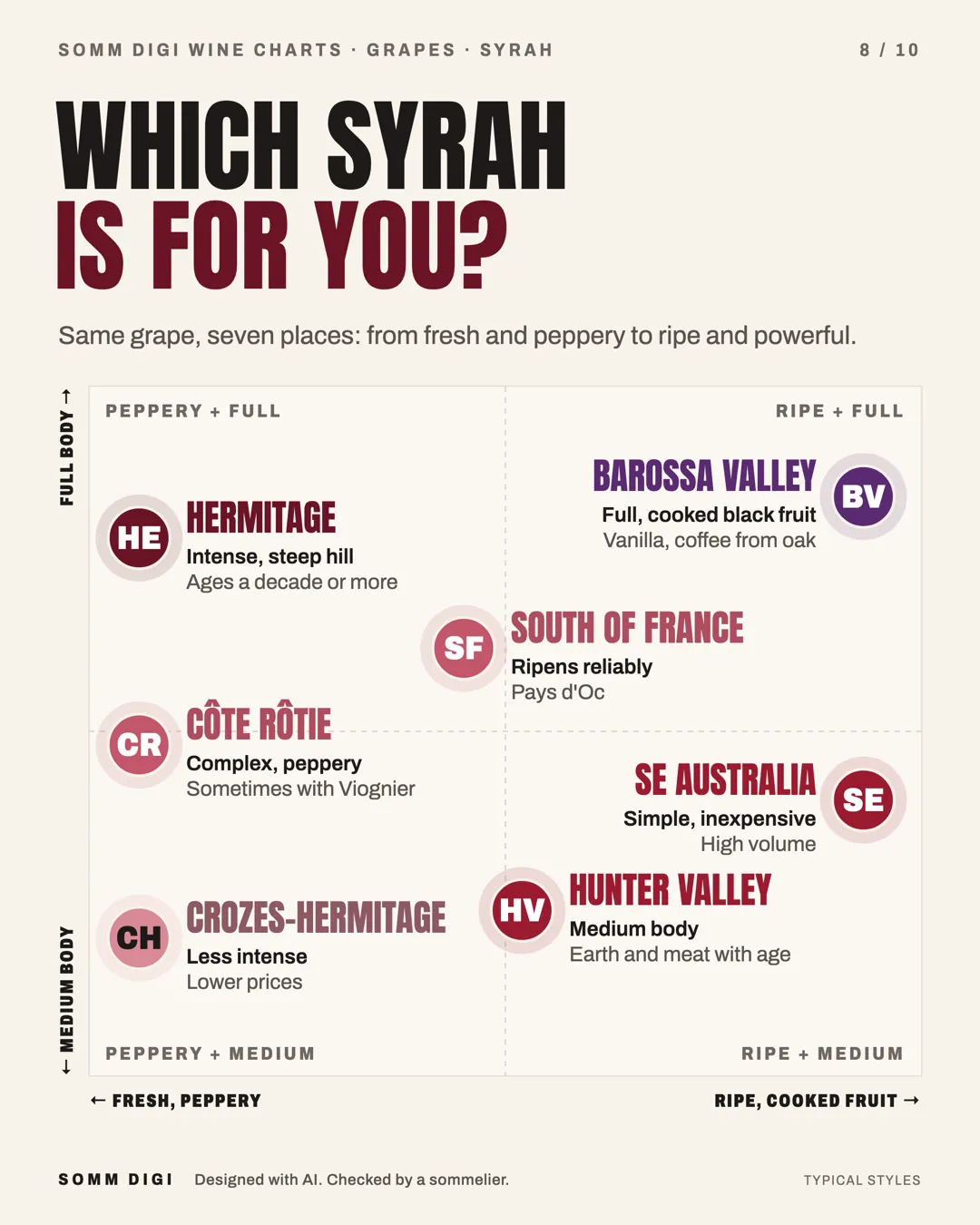
Same grape, seven places: from fresh and peppery to ripe and powerful. Choose by the style you like.
For fresh and peppery, start with Crozes-Hermitage, less intense and lower in price. Côte Rôtie is complex and peppery, sometimes with Viognier, and Hermitage is intense, ageing a decade or more. The Hunter Valley has medium body, with earth and meat as it ages.
For riper styles, the south of France ripens reliably, as Pays d'Oc. South East Australia is simple, inexpensive and made in high volume. Barossa Valley Shiraz is full, with cooked black fruit and vanilla and coffee from oak. The styles chart maps all seven.
How to serve Syrah and Shiraz
Serve Syrah and Shiraz at 15–18 °C (59–64 °F), the same range as Cabernet Sauvignon and Merlot. A white like Viognier goes much colder, at 7–10 °C (45–50 °F).
Which glass?
Pour it into a large red wine glass. For more red wine glass shapes, see the red wine glass guide on universalwineglasses.com, SOMM DIGI's glass site.
Syrah food pairing
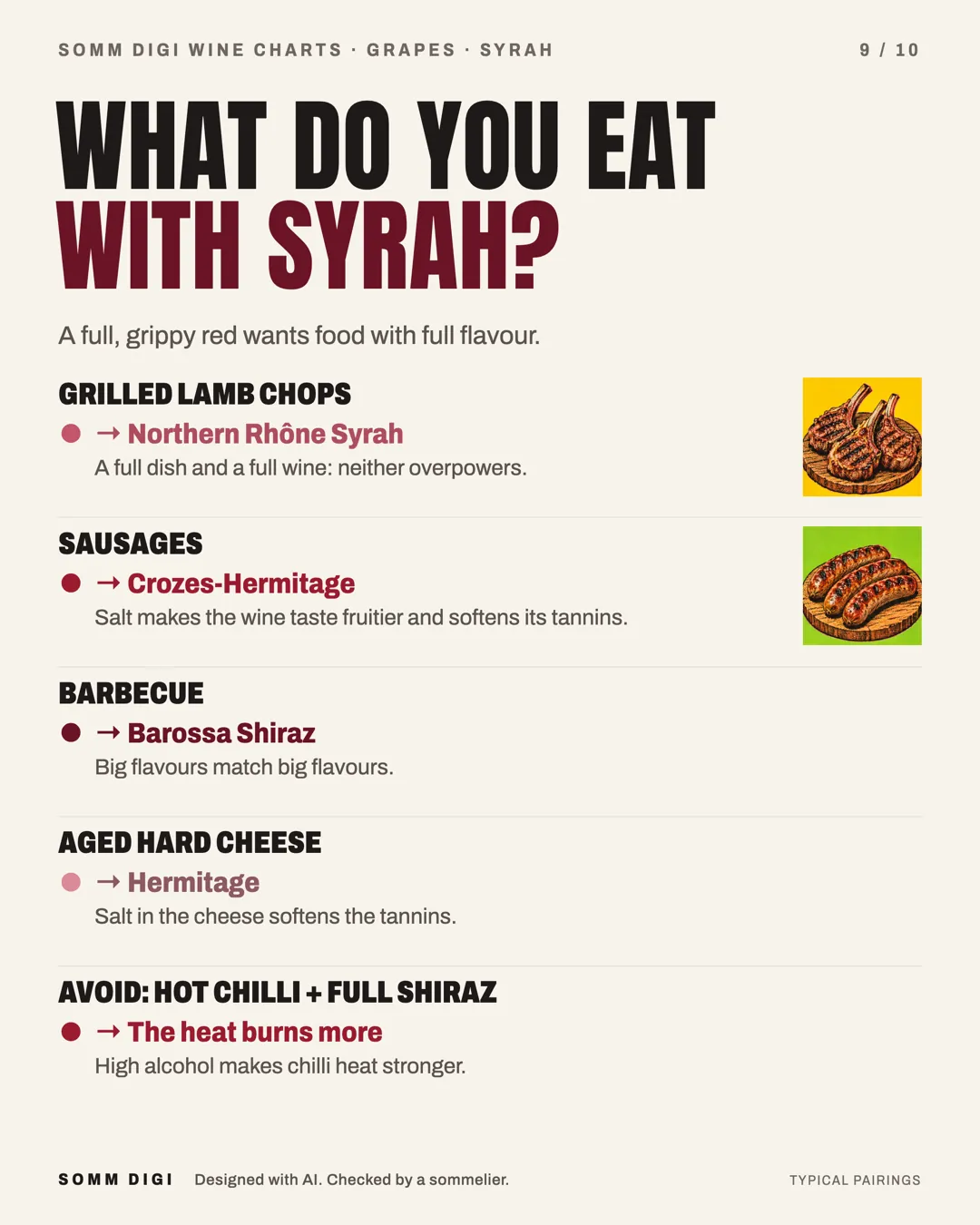
A full, grippy red wants food with full flavour. Think lamb, sausages, barbecue and hard cheese.
With grilled lamb chops, pour a Northern Rhône Syrah: a full dish and a full wine, so neither overpowers. With sausages, a Crozes-Hermitage, as salt makes the wine taste fruitier and softens its tannins. With barbecue, a Barossa Shiraz: big flavours match big flavours.
Aged hard cheese and Hermitage work well, because salt in the cheese softens the tannins. Avoid one match: hot chilli with a full Shiraz. High alcohol makes the chilli heat burn more. The pairing chart has all five.

Learn wine the easy way
Wine Easy
The wine book that talks to you like a human: grapes, tasting, pairing and countries A–Z, in 388 full-colour pages.
Syrah and Shiraz questions, answered
Are Syrah and Shiraz the same grape?
Yes. Same grape, two names: Syrah in France, Shiraz in Australia. The name often hints at the style.
How do you pronounce Syrah and Shiraz?
Syrah is see-RAH; Shiraz is shi-RAZ.
Is Syrah sweet or dry?
Dry. Ripe Shiraz tastes rich from cooked black fruit and high alcohol, not from sugar.
What does Syrah taste like?
Black fruit and black pepper: blackberry and black cherry. Warm-climate Shiraz adds liquorice.
Does Syrah age well?
The top wines age for a decade or more, gaining leather, meat and earth.
What do you eat with Syrah?
Grilled lamb, sausages, barbecue or aged hard cheese. Avoid hot chilli with a full Shiraz.
Try next
If you like Syrah / Shiraz
How this page was made. Charts designed with AI and checked by Alper Billik, Advanced Sommelier. Text written from the same chart facts and edited with AI.