
Study and careerSpirits, beer & saké
Spirits for the Level 1 sommelier exam
Distillation in plain words, then whisky, Cognac, Armagnac, Calvados, tequila, gin, vodka and rum: what each is made from, the rules and the terms, with an eight-question quiz.

Alper Billik · Advanced Sommelier
Updated October 2026 · 6 min read · Edited with AI
This article may contain affiliate links.
On this page
The short answer: the Court's Level 1 syllabus asks for the principles of distillation, then how the main spirits are made and what defines them: Scotch, Irish and US whiskey, Cognac, Armagnac, Calvados, tequila, gin, vodka and rum, plus the production terms. Learn each one by its raw material, its still and its ageing rule.
Before the still: a beer without hops
Every spirit starts as something fermented. Grain spirits begin almost like beer: malted barley is milled and mashed with hot water in a mash tun, its enzymes turn starch into sugar, and the sugary liquid (the wort) is fermented by yeast. For whisky there is no boil with hops. The result, a strong, rough beer of a few per cent alcohol, is called the wash. Grapes give wine, apples give cider, agave and sugar cane give their own fermented juice. Distillation then concentrates it. (The full brewing steps are in the beer and cider lesson.)
Distillation in plain words
Alcohol boils at a lower temperature than water. Heat the wash, and the vapour that rises is richer in alcohol; cool it, and it condenses into a stronger liquid. Two kinds of still:
- Pot still: one batch at a time, usually distilled twice (Scotch malt, Cognac) or three times (much Irish whiskey). Lower strength, more flavour and texture.
- Column (continuous) still: runs non-stop and can reach a much higher, purer strength. Used for grain whisky, most vodka, many rums and most Armagnac.
- Heads, hearts and tails: the first part of a run (heads) and the last (tails) are set aside; the distiller keeps the heart. Where the "cuts" are made shapes the spirit.
- Low wines: the weaker spirit from the first pot-still distillation, distilled again.
Then ageing in oak adds colour, vanilla, spice and softness; some evaporates through the wood each year (the angels' share). Unaged spirits (vodka, most gin, blanco tequila, white rum) stay clear.
Whisky
- Scotch: distilled in Scotland and aged at least 3 years in oak in Scotland. Single malt: 100% malted barley, pot stills, one distillery. Blended Scotch: malt and grain whiskies together. The other categories are single grain, blended malt and blended grain. Protected regions: Highland, Lowland, Speyside, Campbeltown, Islay. Islay is known for peat smoke, which comes from drying the malt over peat fires.
- Irish whiskey: aged at least 3 years on the island of Ireland, often triple distilled. Types: single malt, single pot still (malted and unmalted barley in pot stills, the Irish speciality), single grain and blended.
- Bourbon: made in the USA from at least 51% corn, aged in new charred oak containers. Straight bourbon has at least 2 years. Rye: at least 51% rye, spicier. Tennessee whiskey: filtered through maple charcoal before ageing.
Brandy: Cognac, Armagnac, Calvados
| Cognac | Armagnac | Calvados | |
|---|---|---|---|
| Made from | White grapes, mainly Ugni Blanc | White grapes: Ugni Blanc, Baco, Folle Blanche, Colombard | Cider apples and perry pears, Normandy |
| Still | Copper pot still, twice | Mostly a single run in a column still; pot stills allowed | Column or pot; Pays d'Auge is double distilled in pot stills |
| Areas | Six crus: Grande Champagne, Petite Champagne, Borderies, Fins Bois, Bons Bois, Bois Ordinaires | Bas-Armagnac, Ténarèze, Haut-Armagnac | Calvados, Calvados Pays d'Auge, Calvados Domfrontais |
| Ageing | VS 2 years, VSOP 4, XO 10 (minimum, in oak) | VS 1 year, VSOP 4, XO 10 | At least 2 years in oak |
| Style | Elegant, floral, fruity | Fuller, more rustic; vintage-dated bottles are common | Apple, pear, baked fruit |
- Made from
- CognacWhite grapes, mainly Ugni Blanc
- ArmagnacWhite grapes: Ugni Blanc, Baco, Folle Blanche, Colombard
- CalvadosCider apples and perry pears, Normandy
- Still
- CognacCopper pot still, twice
- ArmagnacMostly a single run in a column still; pot stills allowed
- CalvadosColumn or pot; Pays d'Auge is double distilled in pot stills
- Areas
- CognacSix crus: Grande Champagne, Petite Champagne, Borderies, Fins Bois, Bons Bois, Bois Ordinaires
- ArmagnacBas-Armagnac, Ténarèze, Haut-Armagnac
- CalvadosCalvados, Calvados Pays d'Auge, Calvados Domfrontais
- Ageing
- CognacVS 2 years, VSOP 4, XO 10 (minimum, in oak)
- ArmagnacVS 1 year, VSOP 4, XO 10
- CalvadosAt least 2 years in oak
- Style
- CognacElegant, floral, fruity
- ArmagnacFuller, more rustic; vintage-dated bottles are common
- CalvadosApple, pear, baked fruit
Blending matters for all three: the cellar master marries brandies of different ages and crus to make a house style. The age on the label is the age of the youngest brandy in the blend.
Tequila
- Made from Blue Weber agave, in Jalisco and parts of four other Mexican states. The agave hearts (piñas) are cooked, crushed, fermented and distilled, usually twice.
- 100% agave tequila uses only agave sugars; plain "tequila" (mixto) needs at least 51%.
- Blanco: unaged or rested briefly. Reposado: at least 2 months in oak. Añejo: at least 1 year. Extra añejo: at least 3 years.
- Mezcal (a Certified topic) can use many agave species and is traditionally roasted in earth pits, which gives smoke.
Gin, vodka, rum
- Gin: neutral spirit flavoured with botanicals; juniper must lead. London Dry (or London gin) is flavoured only by redistillation, with nothing added afterwards except water and a tiny amount of sugar; it is a method, not a place. Old Tom is a sweeter, older style. At least 37.5% alcohol in the EU.
- Vodka: neutral spirit from any agricultural raw material (grain, potato, others), distilled and filtered to be clean. At least 37.5% in the EU.
- Rum: from sugar cane, mostly molasses, or fresh cane juice (rhum agricole, as in Martinique). Light rums from column stills, fuller rums from pot stills; white, gold and dark styles; spiced rum is flavoured.
Terms to know
| Term | Meaning |
|---|---|
| Wash | The fermented, beer-like liquid that goes into a whisky still |
| Low wines | The weak spirit from the first pot-still distillation |
| Heads, hearts, tails | First, middle and last parts of a distillation; the heart is kept |
| Cask strength | Bottled without diluting to a standard strength |
| Angels' share | Spirit lost to evaporation through the cask |
| ABV and proof | Alcohol by volume; US proof is double the ABV |
| Botanicals | Herbs, spices, peels and seeds that flavour gin |
- Wash
- MeaningThe fermented, beer-like liquid that goes into a whisky still
- Low wines
- MeaningThe weak spirit from the first pot-still distillation
- Heads, hearts, tails
- MeaningFirst, middle and last parts of a distillation; the heart is kept
- Cask strength
- MeaningBottled without diluting to a standard strength
- Angels' share
- MeaningSpirit lost to evaporation through the cask
- ABV and proof
- MeaningAlcohol by volume; US proof is double the ABV
- Botanicals
- MeaningHerbs, spices, peels and seeds that flavour gin
For what comes at Certified and beyond (Islay, Fine Champagne, grappa, mezcal, eau de vie), read spirits for every sommelier level. Liqueurs are in the aperitifs, liqueurs and bitters lesson.
Quiz: spirits for Level 1
Level 1 practice test
Take it as a real test
8 questions, one at a time. The answer and why after each one, then your score and your weakest topics.
Question 1
Why does distillation make a liquid stronger?
- a)Alcohol boils at a lower temperature than water
- b)Water boils at a lower temperature than alcohol
- c)Yeast keeps fermenting in the still
- d)Sugar is added
Show answerAnswer
a) Alcohol boils at a lower temperature than water. Alcohol vaporises first, so the condensed vapour is richer in alcohol.
Question 2
What is the wash?
- a)The spirit after ageing
- b)The fermented, beer-like liquid that is distilled
- c)Water used to dilute whisky
- d)Spent grain
Show answerAnswer
b) The fermented, beer-like liquid that is distilled. For whisky, the mash is fermented into a wash, which goes into the still.
Question 3
Scotch whisky must be aged in oak in Scotland for at least:
- a)1 year
- b)2 years
- c)3 years
- d)5 years
Show answerAnswer
c) 3 years. Three years, the same minimum as Irish whiskey.
Question 4
Bourbon must be made from at least what share of corn?
- a)40%
- b)51%
- c)75%
- d)100%
Show answerAnswer
b) 51%. At least 51% corn, aged in new charred oak containers.
Question 5
Which is the most famous Cognac cru?
- a)Bons Bois
- b)Grande Champagne
- c)Ténarèze
- d)Pays d'Auge
Show answerAnswer
b) Grande Champagne. Grande Champagne heads the six crus; Ténarèze is in Armagnac and Pays d'Auge in Calvados.
Question 6
A reposado tequila has spent at least how long in oak?
- a)2 months
- b)1 year
- c)3 years
- d)None
Show answerAnswer
a) 2 months. Reposado: 2 months; añejo: 1 year; extra añejo: 3 years.
Question 7
London Dry gin means:
- a)It was made in London
- b)It is flavoured only by redistillation, with almost nothing added after
- c)It is aged in oak
- d)It is sweetened
Show answerAnswer
b) It is flavoured only by redistillation, with almost nothing added after. London Dry is a method; it can be made anywhere.
Question 8
Calvados is made from:
- a)Grapes
- b)Apples and pears
- c)Sugar cane
- d)Grain
Show answerAnswer
b) Apples and pears. Calvados is Normandy brandy from cider apples and perry pears.
Questions people ask
Which spirits are on the Level 1 sommelier exam?
The Court's Introductory syllabus lists distillation, Scotch, Irish and US whiskey, Cognac, Armagnac, Calvados, tequila, gin, vodka and rum, and the production terms for each.
What is the difference between Cognac and Armagnac?
Both are French grape brandies. Cognac is double distilled in copper pot stills; most Armagnac is distilled once in a column still, which gives a fuller, more rustic spirit.
Is whisky made from beer?
Its first stage is close: malted grain is mashed and fermented into a wash, like a beer without hops. That wash is then distilled and aged in oak.
Whisky or whiskey?
Scotland, Canada and Japan usually write whisky; Ireland and most US producers write whiskey. The spelling follows the country, not a different drink.
Your exam kit
Where to study for your exam
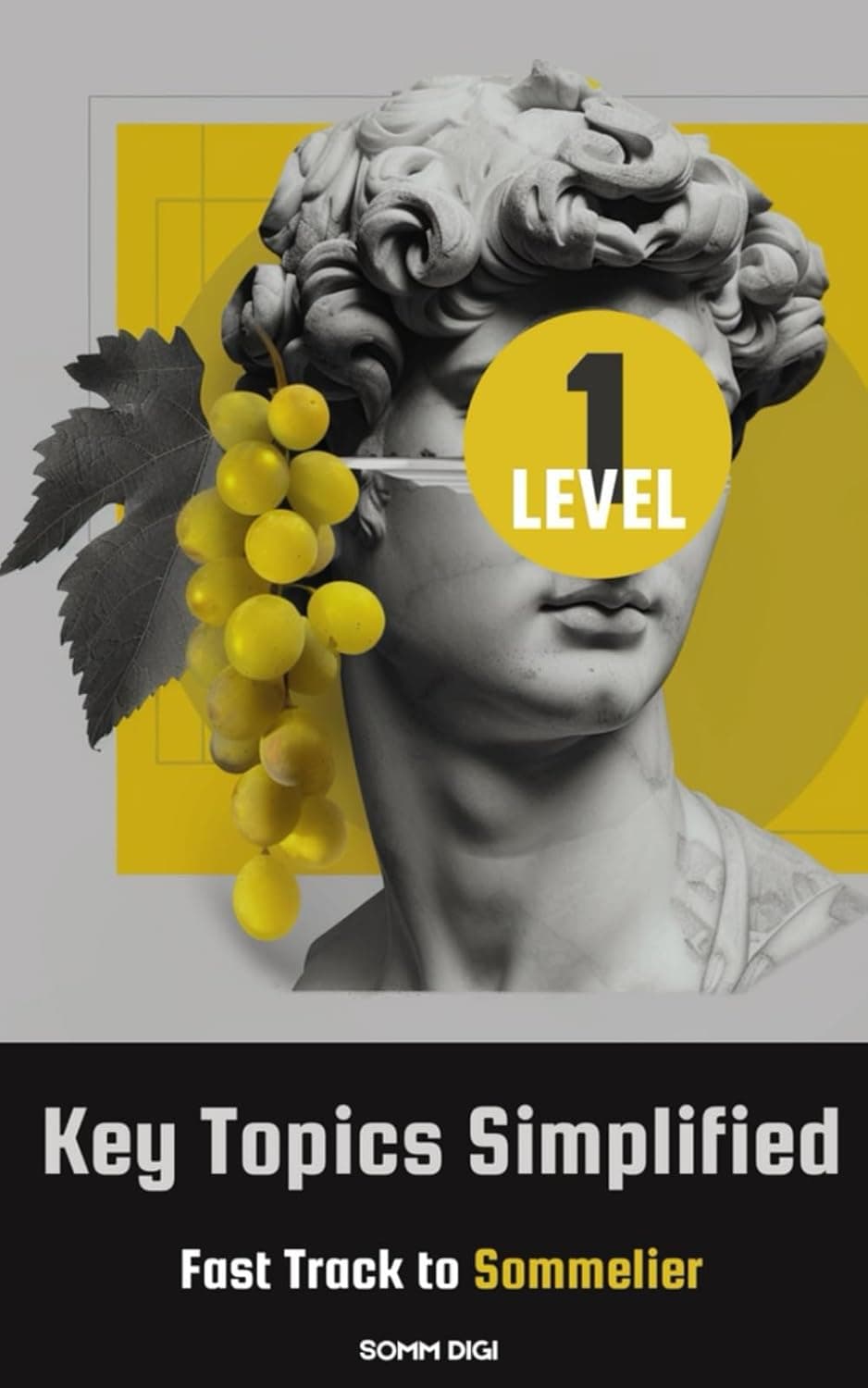 My book · AmazonSommelier Level 1 Prep BookLevel 1's key topics in one small book you can carry anywhere.Order on Amazon
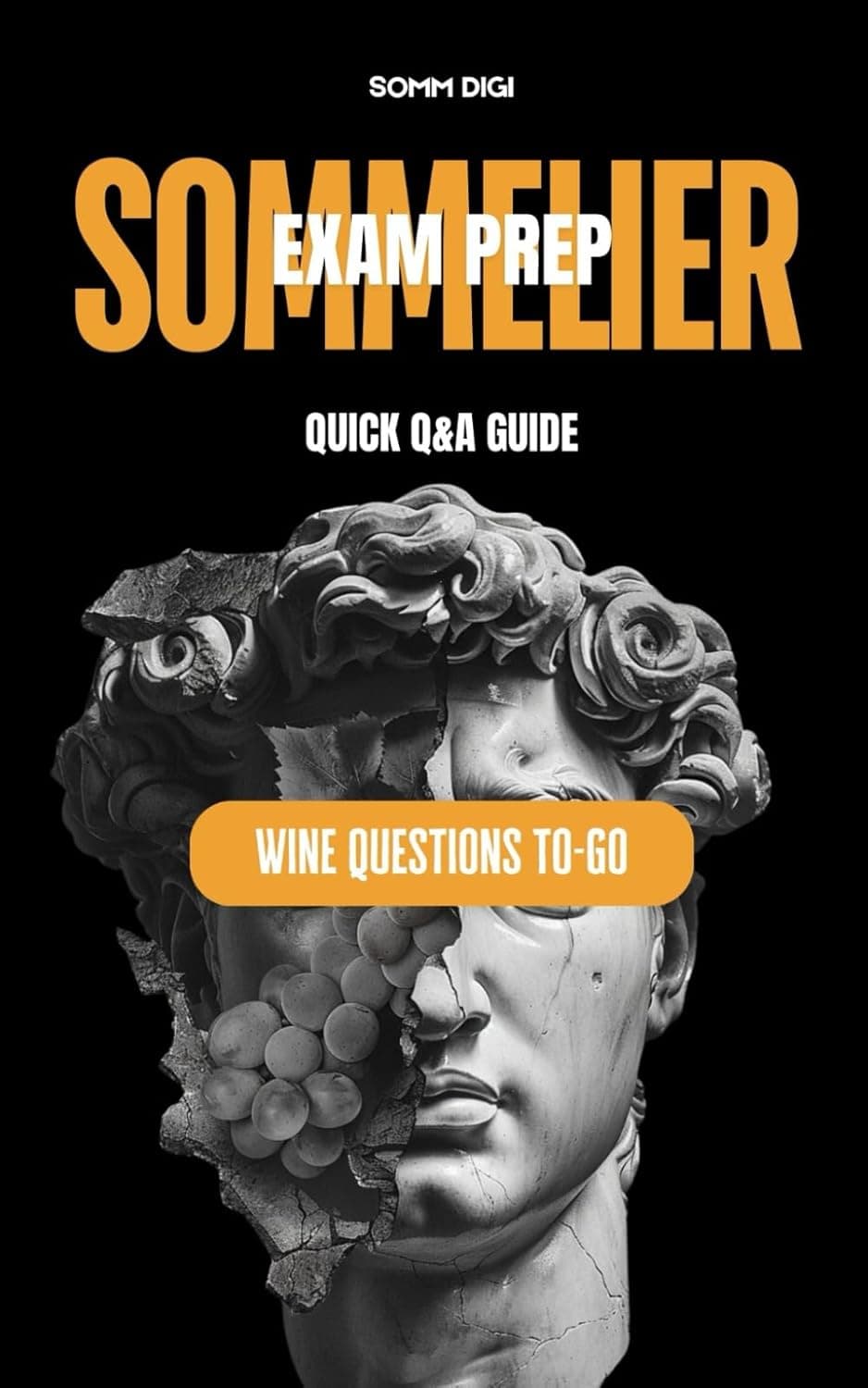 My book · AmazonSommelier Prep BookQuick questions and answers for a break at work.Order on Amazon
SOMM DIGI built the Court of Master Sommeliers Europe’s Learning Portal, and SOMM DIGI AI. Who is behind this
For sommeliers · next steps