
Study and careerSouth Africa
South Africa for the Level 1 sommelier exam
Oceans, mountains, the Wine of Origin system, the six regions the Court names and the grapes of each, with a short history and an eight-question quiz.

Alper Billik · Advanced Sommelier
Updated October 2026 · 6 min read · Edited with AI
This article may contain affiliate links.
On this page
- A short history
- 1. Climatic influences: oceans and mountains
- 2. Climate and soils
- 3. Wine law and labelling: Wine of Origin
- 4. Geographical units, regions, districts, wards
- 5. The principal regions and their grapes
- 6. The grapes
- 7. Structure of wine production and label terms
- How to study South Africa
- Quick quiz: South Africa for Level 1
- Questions people ask
The short answer: for Level 1, South Africa means the Western Cape, cooled by two oceans and shaped by mountains; the Wine of Origin (WO) system with its units, regions, districts and wards; Chenin Blanc and Pinotage; and six places the Court names: Stellenbosch, Franschhoek, Paarl, Constantia, Walker Bay and Elgin. This sheet follows the Court of Master Sommeliers' Introductory syllabus.
A short history
- 1659: the first Cape wine is recorded by Jan van Riebeeck, commander of the Dutch East India Company's station at the Cape.
- Late 1600s: French Huguenots settle at the Cape; Franschhoek ("French corner") is named after them.
- Constantia: its sweet wine became famous in Europe in the 18th and 19th centuries. Today Vin de Constance (Klein Constantia), from Muscat de Frontignan, revives that style.
- 1918: the growers' co-operative KWV is founded and goes on to control much of the industry for most of the 20th century. It became a private company in the late 1990s.
- 1973: the Wine of Origin scheme begins.
- After 1994: with the end of apartheid, exports grow and a new generation of producers reshapes the industry.
1. Climatic influences: oceans and mountains
- Mediterranean climate in most of the Western Cape: warm, dry summers and cool, wet winters.
- The Atlantic's cold Benguela Current runs up the west coast and cools coastal vineyards.
- The Indian Ocean lies to the south and east; the warmer Agulhas Current runs along that coast.
- The Cape Doctor: a strong south-easterly summer wind. It cools the vines and dries them, which keeps disease down.
- Mountains: ranges such as the Simonsberg, Helderberg and the Hottentots Holland create slopes, altitude and many different exposures. Inland, beyond the mountains, rainfall drops and the climate gets hotter and drier, so irrigation is common there.
2. Climate and soils
- Coastal areas: cooler, with sea breezes and mist; more rain near the coast than inland.
- Inland valleys (Breede River Valley, Klein Karoo): hot and dry.
- Soils: ancient, weathered rocks: granite (Stellenbosch, Paarl, parts of Swartland), sandstone (Table Mountain sandstone on the slopes) and shale (Swartland). Inland valleys have alluvial and lime-rich soils.
3. Wine law and labelling: Wine of Origin
- Wine of Origin (WO) guarantees origin, grape (cultivar) and vintage. Certified wines carry an official seal on the neck with a number you can trace.
- Origin: 100% of the grapes must come from the area, estate or vineyard named.
- Vintage: at least 85% from the stated year.
- Variety: at least 85% of the stated grape.
- Estate wine: grown, made and bottled on one registered unit.
- Single vineyard: from one registered vineyard.
4. Geographical units, regions, districts, wards
| Level | Size | Examples |
|---|---|---|
| Geographical unit | Largest | Western Cape, Northern Cape |
| Region | Large | Coastal Region, Cape South Coast, Breede River Valley |
| District | Medium | Stellenbosch, Paarl, Franschhoek, Swartland, Cape Town, Walker Bay, Elgin, Robertson |
| Ward | Smallest | Constantia, Durbanville, Simonsberg-Stellenbosch, Hemel-en-Aarde Valley |
| Estate, single vineyard | One property or vineyard | On the label as Estate Wine or Single Vineyard |
- Geographical unit
- SizeLargest
- ExamplesWestern Cape, Northern Cape
- Region
- SizeLarge
- ExamplesCoastal Region, Cape South Coast, Breede River Valley
- District
- SizeMedium
- ExamplesStellenbosch, Paarl, Franschhoek, Swartland, Cape Town, Walker Bay, Elgin, Robertson
- Ward
- SizeSmallest
- ExamplesConstantia, Durbanville, Simonsberg-Stellenbosch, Hemel-en-Aarde Valley
- Estate, single vineyard
- SizeOne property or vineyard
- ExamplesOn the label as Estate Wine or Single Vineyard
5. The principal regions and their grapes
| Place | Where it sits | Grapes to know |
|---|---|---|
| Stellenbosch | District, Coastal Region | Cabernet Sauvignon, Bordeaux-style blends, Pinotage, Chenin Blanc, Syrah |
| Paarl | District, Coastal Region | Chenin Blanc, Syrah, Pinotage, Cabernet Sauvignon |
| Franschhoek | District, Coastal Region | Chenin Blanc, Sémillon, Cap Classique sparkling |
| Constantia | Ward of the Cape Town district, Coastal Region | Sauvignon Blanc; the sweet Vin de Constance |
| Walker Bay | District, Cape South Coast | Pinot Noir and Chardonnay, above all in the Hemel-en-Aarde wards |
| Elgin | District, Cape South Coast | Cool-climate Sauvignon Blanc, Chardonnay, Pinot Noir |
| Swartland | District, Coastal Region | Old-vine Chenin Blanc, Syrah and Rhône-style blends |
| Robertson | District, Breede River Valley | Chardonnay, Cap Classique |
- Stellenbosch
- Where it sitsDistrict, Coastal Region
- Grapes to knowCabernet Sauvignon, Bordeaux-style blends, Pinotage, Chenin Blanc, Syrah
- Paarl
- Where it sitsDistrict, Coastal Region
- Grapes to knowChenin Blanc, Syrah, Pinotage, Cabernet Sauvignon
- Franschhoek
- Where it sitsDistrict, Coastal Region
- Grapes to knowChenin Blanc, Sémillon, Cap Classique sparkling
- Constantia
- Where it sitsWard of the Cape Town district, Coastal Region
- Grapes to knowSauvignon Blanc; the sweet Vin de Constance
- Walker Bay
- Where it sitsDistrict, Cape South Coast
- Grapes to knowPinot Noir and Chardonnay, above all in the Hemel-en-Aarde wards
- Elgin
- Where it sitsDistrict, Cape South Coast
- Grapes to knowCool-climate Sauvignon Blanc, Chardonnay, Pinot Noir
- Swartland
- Where it sitsDistrict, Coastal Region
- Grapes to knowOld-vine Chenin Blanc, Syrah and Rhône-style blends
- Robertson
- Where it sitsDistrict, Breede River Valley
- Grapes to knowChardonnay, Cap Classique
6. The grapes
- Chenin Blanc, once called Steen: South Africa's signature white, from fresh and crisp to rich, oaked and old-vine.
- Pinotage: a South African crossing of Pinot Noir and Cinsaut (then called Hermitage locally), bred by Professor Abraham Perold in the 1920s. Red and black fruit, often smoky or earthy.
- Cabernet Sauvignon and Merlot: for Bordeaux-style blends, above all in Stellenbosch.
- Syrah/Shiraz: both names are used; spicy, from Swartland to Stellenbosch.
- Sauvignon Blanc and Chardonnay: in the cooler coastal and southern areas.
7. Structure of wine production and label terms
- Who makes the wine: growers who sell grapes, co-operative cellars, private cellars and estates, and large producing wholesalers who buy grapes and wine. The co-operative tradition is a legacy of the KWV years.
- Cap Classique (Méthode Cap Classique, MCC): traditional-method sparkling wine, second fermentation in the bottle.
- Cape Blend: a term with no fixed legal definition; it is most often used for a red blend that includes Pinotage.
- IPW (Integrated Production of Wine): the industry's sustainability scheme for farms and cellars.
How to study South Africa
- Draw the Cape: Atlantic on the left, Indian Ocean below. Put Constantia near Cape Town, Stellenbosch, Paarl and Franschhoek inland of it, Elgin and Walker Bay to the south-east.
- Two grapes first: Chenin Blanc (Steen) and Pinotage (Pinot Noir x Cinsaut).
- WO in numbers: 100% origin, 85% vintage, 85% variety.
- Taste three: a Chenin Blanc, a Pinotage and a Walker Bay Pinot Noir. Then the quiz below and my Level 1 practice test.
Quick quiz: South Africa for Level 1
Level 1 practice test
Take it as a real test
8 questions, one at a time. The answer and why after each one, then your score and your weakest topics.
Question 1
Pinotage is a crossing of which two grapes?
- a)Pinot Noir and Syrah
- b)Pinot Noir and Cinsaut
- c)Pinot Gris and Grenache
- d)Cabernet Sauvignon and Merlot
Show answerAnswer
b) Pinot Noir and Cinsaut. Abraham Perold crossed Pinot Noir with Cinsaut, then called Hermitage in South Africa.
Question 2
What is Steen?
- a)A local name for Chenin Blanc
- b)A sweet wine from Constantia
- c)A wind
- d)A soil type
Show answerAnswer
a) A local name for Chenin Blanc. Steen is the old South African name for Chenin Blanc.
Question 3
Which cold current cools South Africa's west coast?
- a)Humboldt
- b)Gulf Stream
- c)Benguela
- d)Agulhas
Show answerAnswer
c) Benguela. The Benguela runs up the Atlantic coast; the Agulhas is the warmer Indian Ocean current.
Question 4
What is the Cape Doctor?
- a)A sparkling wine
- b)A south-easterly wind that dries and cools the vines
- c)The wine-law authority
- d)A grape disease
Show answerAnswer
b) A south-easterly wind that dries and cools the vines. It blows in summer and keeps fungal disease down.
Question 5
Under Wine of Origin, how much of a wine must come from a stated vintage?
- a)75%
- b)85%
- c)95%
- d)100%
Show answerAnswer
b) 85%. 85% for vintage and for variety; 100% for a named origin.
Question 6
Which is the smallest unit of the WO system's geography?
- a)Region
- b)District
- c)Ward
- d)Geographical unit
Show answerAnswer
c) Ward. Unit, region, district, ward, from largest to smallest; estates and single vineyards sit inside them.
Question 7
Walker Bay is best known for:
- a)Fortified Muscat
- b)Pinot Noir and Chardonnay
- c)Pinotage only
- d)Brandy
Show answerAnswer
b) Pinot Noir and Chardonnay. Its Hemel-en-Aarde wards are cool and maritime.
Question 8
Vin de Constance is made from:
- a)Chenin Blanc
- b)Muscat de Frontignan
- c)Sauvignon Blanc
- d)Pinotage
Show answerAnswer
b) Muscat de Frontignan. Klein Constantia's sweet wine revives the historic Constantia style.
Go further with Chenin Blanc, the grape that leads South Africa's whites. For daily questions on every region, SOMM DIGI AI has 3,000+ exam-prep questions.
Questions people ask
What do I need to know about South Africa for the Level 1 sommelier exam?
The effect of the two oceans and the mountains, the Wine of Origin rules and its geography (units, regions, districts, wards, estates), the six regions the Court names, and the grapes of each, above all Chenin Blanc and Pinotage.
What is South Africa's signature grape?
Pinotage is its own red crossing; Chenin Blanc is its most famous white.
What does WO mean on a South African label?
Wine of Origin: the wine's origin, and any stated grape or vintage, have been certified.
Is Constantia a region or a ward?
A ward, in the Cape Town district of the Coastal Region.
Your exam kit
Where to study for your exam
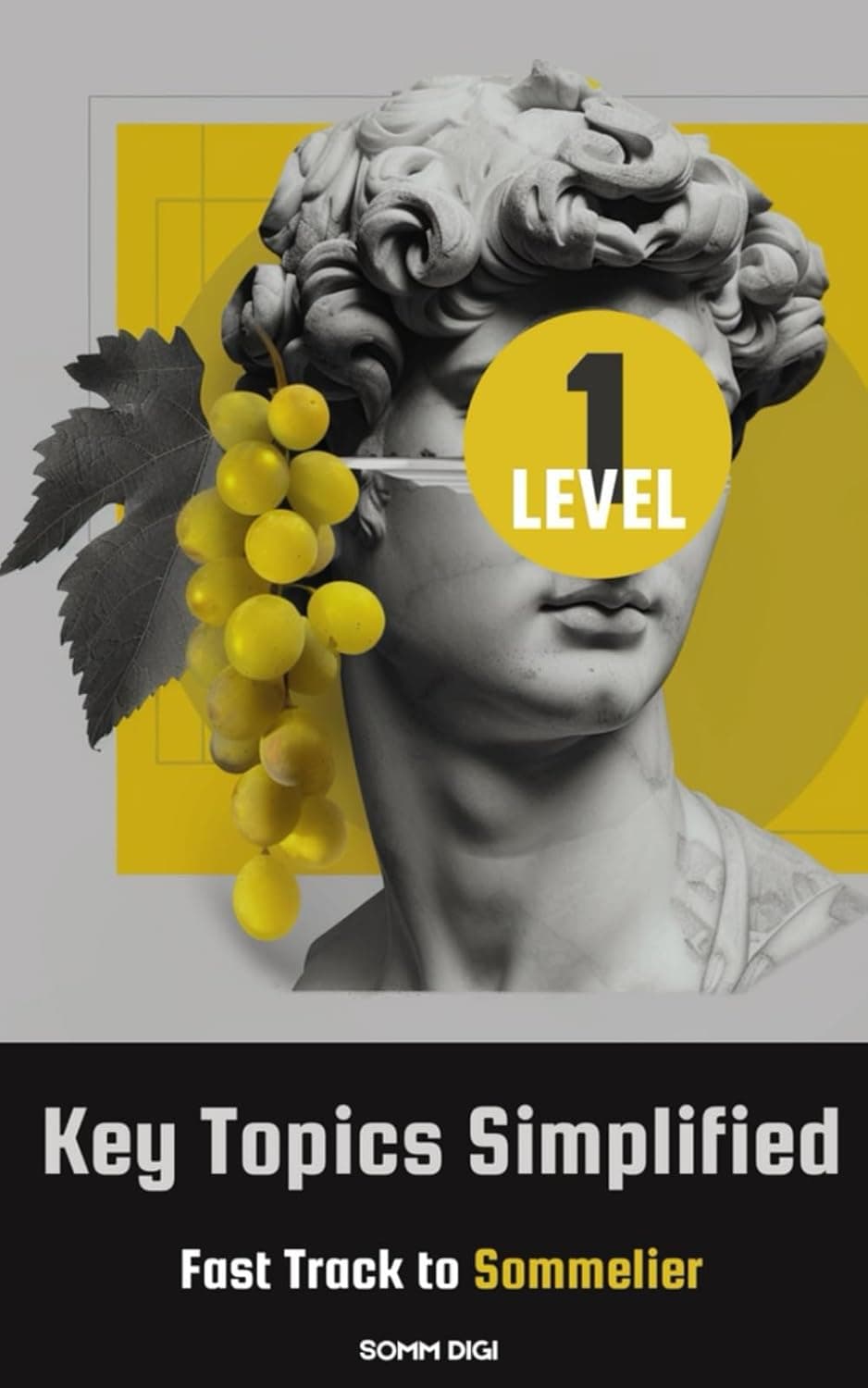 My book · AmazonSommelier Level 1 Prep BookLevel 1's key topics in one small book you can carry anywhere.Order on Amazon
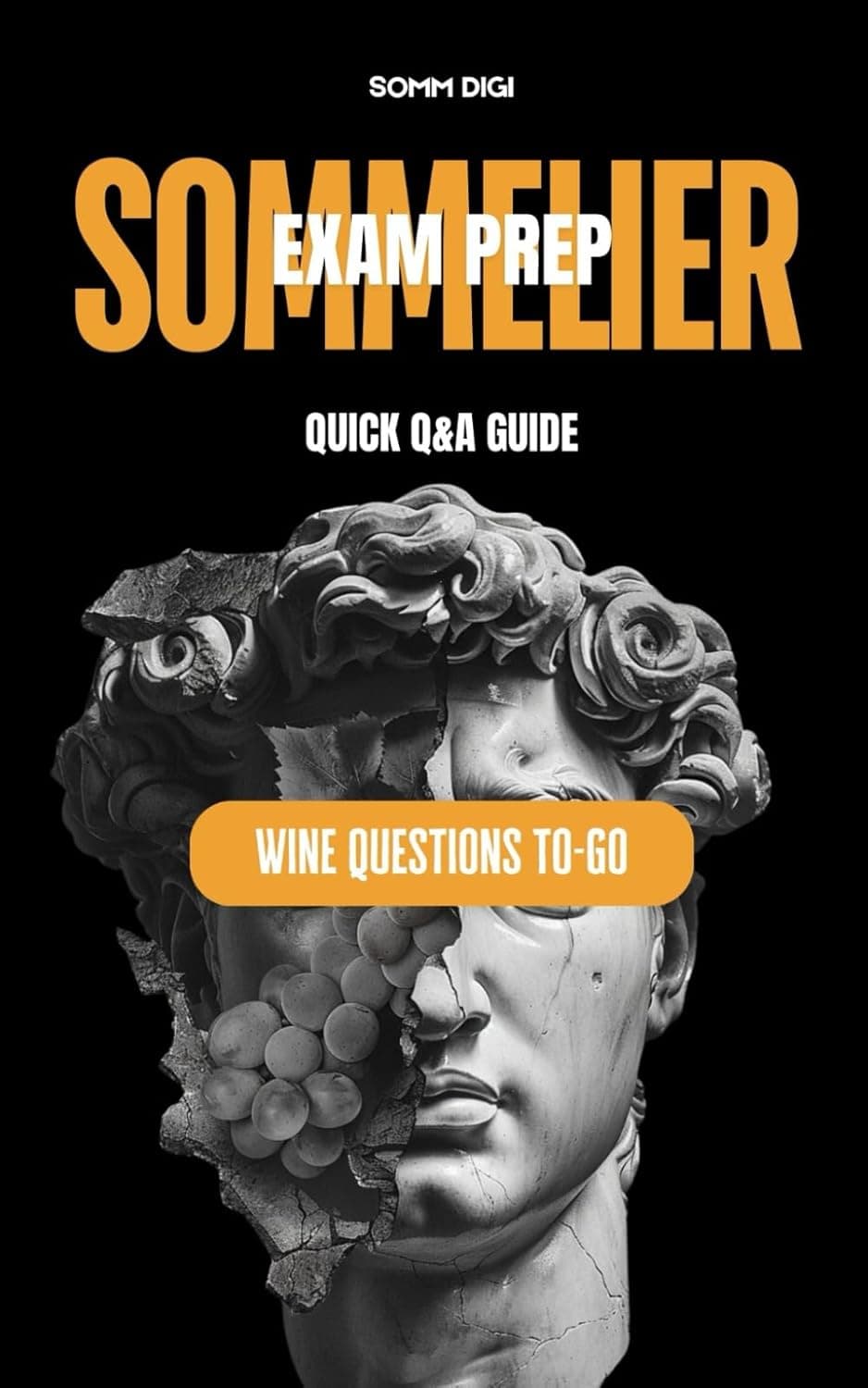 My book · AmazonSommelier Prep BookQuick questions and answers for a break at work.Order on Amazon
SOMM DIGI built the Court of Master Sommeliers Europe’s Learning Portal, and SOMM DIGI AI. Who is behind this
For sommeliers · next steps