
Study and careerInterviews
How Konstantinos Kosmopoulos passed the Advanced
A Greek sommelier in London, a blunt head sommelier and a first-time pass. His study routine, his books and his advice, in his own words.

Alper Billik · Advanced Sommelier
Updated October 2026 · 5 min read · Edited with AI
This article may contain affiliate links.
On this page
The short answer: Konstantinos Kosmopoulos, a sommelier from Greece, passed the Court of Master Sommeliers' Advanced Sommelier exam on his first attempt. His method: 1.5 to 2 hours of study a day, six days a week, a syllabus split into mixed blocks, flashcards with a colour code, few but strong books, and competitions to tame his nerves. This is what he told SOMM DIGI in 2024.
The moment that started it
In November 2018 Konstantinos moved to London to work at Hakkasan Hanway. His head sommelier asked whether he had attended a sommelier school. He said he had studied at Genius in Gastronomy, which he considered the best in Greece. The head sommelier answered that he did not know the school and could not vouch for his knowledge, and suggested the WSET Diploma or the Court of Master Sommeliers.
Konstantinos calls that honesty the thing that "lit a fire" in him. He passed the Certified Sommelier the following April and decided to sit the Advanced as soon as he was invited.
His study routine
- One year out: he stepped up his theory study a year before the exam.
- Mixed blocks: he divided the Court's syllabus by country, region and sub-region, and studied unrelated places together, such as the Loire, Argentina and South Africa, so the appellations would not blur.
- Flashcards: he made his own from the GuildSomm study guides.
- Colour code: a five-colour highlighting system to sort the information.
- Daily habit: 1.5 to 2 hours a day, six days a week, with a day off as the reward for keeping to it.
For how the syllabus is built and how to split it the same way, read using the Court's syllabus.
The books he used
He kept his sources few on purpose, "to avoid getting lost in too much information":
| Resource | What he used it for |
|---|---|
| GuildSomm printed study guides | The core of his theory and his flashcards |
| The World Atlas of Wine | Maps and context |
| The Oxford Companion to Wine | New terminology |
| Wine & Food, by Ronan Sayburn MS | Pairing combinations and ideas |
| Vintages, by Benjamin Lewin MW | Vintage descriptions |
- GuildSomm printed study guides
- What he used it forThe core of his theory and his flashcards
- The World Atlas of Wine
- What he used it forMaps and context
- The Oxford Companion to Wine
- What he used it forNew terminology
- Wine & Food, by Ronan Sayburn MS
- What he used it forPairing combinations and ideas
- Vintages, by Benjamin Lewin MW
- What he used it forVintage descriptions
He added specialist sources only for specific regions. More reading ideas: books for sommeliers.
Part by part: his exam advice
In Europe the Advanced has three parts, each needing 60%: theory, six wines blind in 25 minutes, and a 45-minute service test. The full format is in the Advanced Sommelier guide. Here is how Konstantinos approached each.
- Theory: go through every question once and answer the ones that come instantly. In a second round, take the harder ones. Leave the toughest for last. If you are well prepared, you can anticipate what the instructors will ask.
- Tasting: know the grid by heart, and stay focused while tasting with the Master Sommeliers during the course: their guidance can recalibrate your sense of acidity or tannin.
- Service: if you have real floor experience, your job is to manage the stress. He found the time limits generous and the etiquette like a Michelin-starred restaurant. Aim to be smooth, elegant and efficient.
The hardest part, and how he fixed it
For Konstantinos it was nerves in the service. His hands shook during the Champagne task, his first. His answer was to enter sommelier competitions, putting himself under similar pressure on purpose until the anxiety became something he could use.
Blind tasting: his three rules
- Define your tell-tale signs for each grape variety.
- Trust your instinct.
- Practise as much as possible before the exam.
He links theory and tasting all the time: understand the grape, where it grew and how it was made. His example: a golden white with baking spice, barely ripe fruit and minerality can lead you to Chablis, likely a Grand Cru, because of the oak and the fresh, cool-climate vintage. More on the method: sommelier blind tasting.
What to focus on
"Always focus on the classics: France, Italy, and Spain." In his experience these often make up more than half the questions, and with 60% needed to pass, he calls the maths simple. His most common mistake to avoid: drowning in information that is irrelevant to the Advanced level. Stick to the syllabus.
Mindset
- Think like an athlete: he describes the Advanced as a lighter version of the Master Sommelier exam, performed under pressure in formal attire. Discipline matters.
- Confidence from results: his calm came from getting flashcards right and nailing tastings, again and again.
- Make peace with failure: he was ready to learn from failing if it happened. Aim for the best result, but don't let a fail break your confidence.
- Make sacrifices, with support: he worked 12 to 14 hours a day and still studied at least an hour daily, and says a partner's support helps.
Looking back
Asked what he would change, he answered: "Not a single thing." He passed on his first attempt, after a hard season in Mykonos, and has declared his interest in the Master Sommelier exam.
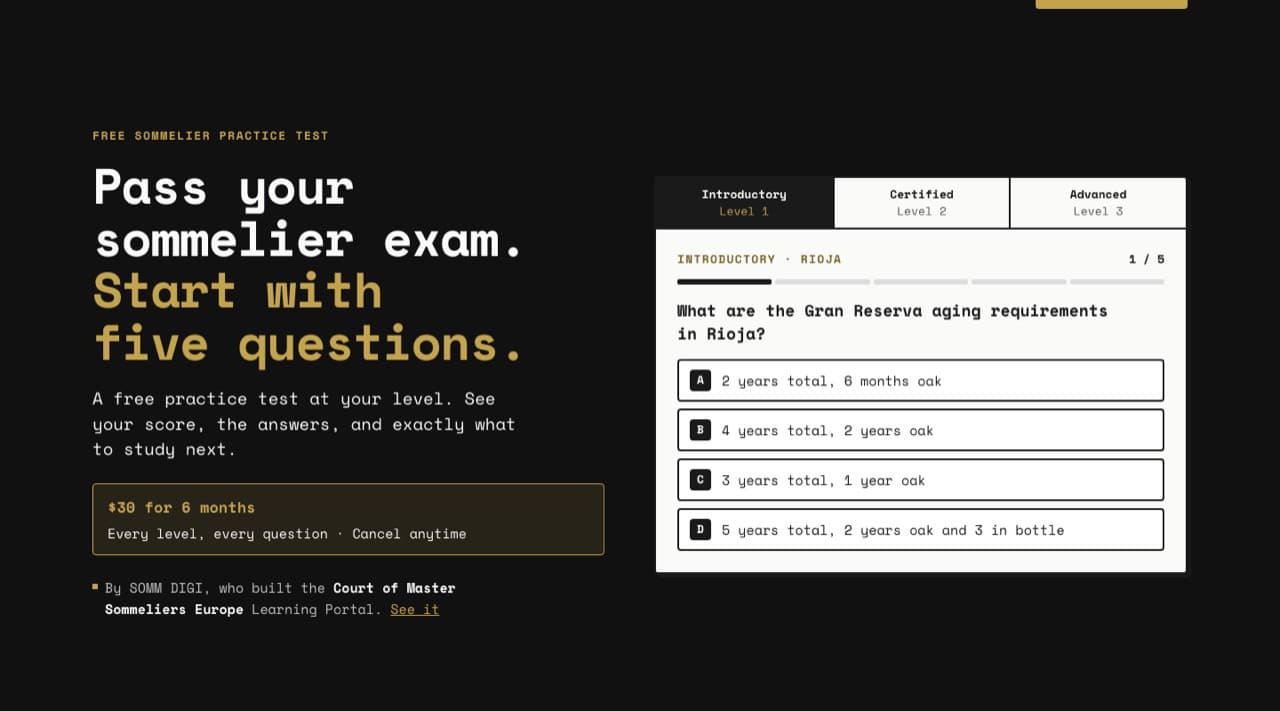
Want to practise theory the way he did, a little every day? SOMM DIGI AI turns the syllabus into questions you can answer anywhere.
Questions people ask
How long did Konstantinos Kosmopoulos study for the Advanced?
He intensified his theory study a year before the exam and advises 1.5 to 2 hours a day, six days a week.
Which books did he use?
GuildSomm's printed study guides, The World Atlas of Wine, The Oxford Companion to Wine, Wine & Food by Ronan Sayburn MS and Vintages by Benjamin Lewin MW.
What did he find hardest?
Nerves in the service exam. He entered sommelier competitions to get used to performing under pressure.
Did he pass the first time?
Yes, he passed the Advanced Sommelier on his first attempt.
Your exam kit
Where to study for your exam
 My book · AmazonSommelier Prep BookQuick questions and answers for a break at work.Order on Amazon
 My book · AmazonSommelier Level 1 Prep BookLevel 1's key topics in one small book you can carry anywhere.Order on Amazon
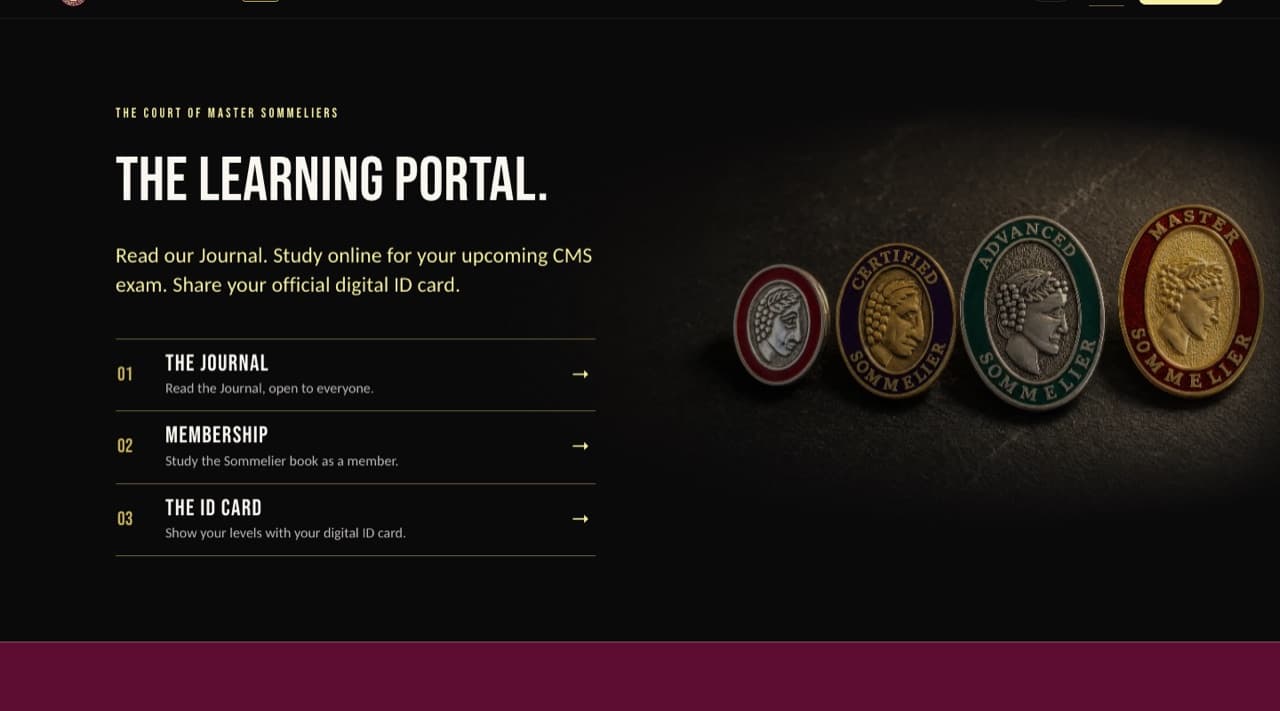
SOMM DIGI built the Court of Master Sommeliers Europe’s Learning Portal, and SOMM DIGI AI. Who is behind this
For sommeliers · next steps