
Study and careerQuizzes
Barolo quiz: 12 sommelier questions
Twelve questions on Barolo at Certified level: Nebbiolo, the communes, the two soils, the ageing rules, the crus and Barolo Chinato. Each comes with the answer.

Alper Billik · Advanced Sommelier
Updated October 2026 · 4 min read · Edited with AI
This article may contain affiliate links.
Barolo is one of the few wines every sommelier exam returns to. The grape is simple, Nebbiolo, so the questions go to the places, the soils and the rules. These 12 sit at Certified depth. They are practice questions, not real exam questions.
- Answer all 12 first. Then open the answers.
- 10 or more: exam-ready on Barolo. 7–9: close. Under 7: learn the ageing rules and the communes first.
Grape and place
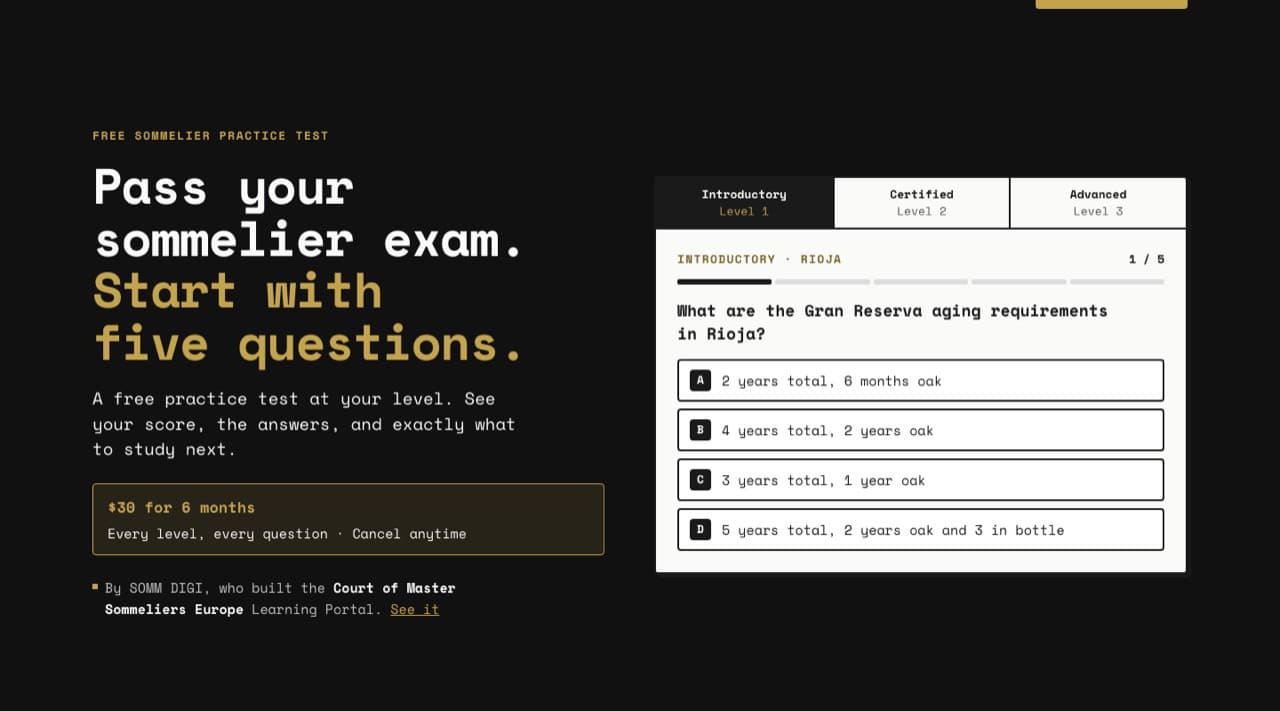
Certified practice test
Take it as a real test
12 questions, one at a time. The answer and why after each one, then your score and your weakest topics.
Question 1
Which grape makes Barolo?
- a)Barbera
- b)Dolcetto
- c)Nebbiolo
- d)Sangiovese
Show answerAnswer
c) Nebbiolo. Barolo is 100% Nebbiolo: pale in colour, high in tannin and acidity, with roses, cherries and tar.
Question 2
Barolo is made in which hills of Piedmont?
- a)The Langhe
- b)The Roero
- c)The Monferrato
- d)The Colli Tortonesi
Show answerAnswer
a) The Langhe. The Langhe hills lie south of the Tanaro river, near the town of Alba. Roero is across the river, to the north.
Question 3
Which three communes lie wholly inside the Barolo zone?
- a)Barolo, Castiglione Falletto and Serralunga d'Alba
- b)La Morra, Verduno and Novello
- c)Monforte d'Alba, Grinzane Cavour and Roddi
- d)Barbaresco, Neive and Treiso
Show answerAnswer
a) Barolo, Castiglione Falletto and Serralunga d'Alba. Eleven communes share the zone; the other eight, including La Morra and Monforte, are only partly inside it. Barbaresco, Neive and Treiso are Barbaresco.
Question 4
When did Barolo gain DOCG status?
- a)1966
- b)1980
- c)1995
- d)2010
Show answerAnswer
b) 1980. Barolo was among Italy's first DOCGs, together with Barbaresco and Brunello di Montalcino.
Soils
Question 5
The western communes, La Morra and Barolo, sit mostly on which soil?
- a)Tortonian marl
- b)Serravallian (Helvetian) sandstone and marl
- c)Volcanic tuff
- d)Granite
Show answerAnswer
a) Tortonian marl. The Tortonian side is often said to give more perfumed, approachable wines.
Question 6
Serralunga d'Alba, Monforte d'Alba and Castiglione Falletto sit mostly on which older soil?
- a)Tortonian marl
- b)Serravallian (Helvetian) soils, with more sandstone
- c)Alluvial gravel
- d)Schist
Show answerAnswer
b) Serravallian (Helvetian) soils, with more sandstone. These communes are known for firmer, more structured Barolo that needs more time.
The rules
Question 7
What is the minimum ageing for Barolo before release?
- a)24 months, 12 in wood
- b)38 months, 18 in wood
- c)48 months, 24 in wood
- d)60 months, 36 in wood
Show answerAnswer
b) 38 months, 18 in wood. The clock starts on 1 November of the harvest year.
Question 8
How long must Barolo Riserva age?
- a)38 months
- b)50 months
- c)62 months
- d)72 months
Show answerAnswer
c) 62 months. 62 months, with the same 18 months in wood as normal Barolo.
Question 9
How does Barolo's ageing compare with its neighbour Barbaresco?
- a)They are the same
- b)Barbaresco is shorter: at least 26 months, 9 in wood
- c)Barbaresco is longer: at least 50 months
- d)Barbaresco has no ageing rule
Show answerAnswer
b) Barbaresco is shorter: at least 26 months, 9 in wood. Same grape, shorter rule. Barbaresco Riserva needs 50 months.
Question 10
What are the named crus on Barolo labels, such as Cannubi or Brunate, officially called?
- a)Grand Crus
- b)Menzioni Geografiche Aggiuntive (MGA)
- c)Vigneti Classificati
- d)Pagos
Show answerAnswer
b) Menzioni Geografiche Aggiuntive (MGA). Additional geographical mentions: officially mapped vineyard areas a producer may name on the label.
Crus and Chinato
Question 11
Vignarionda, one of Barolo's most famous crus, is in which commune?
- a)La Morra
- b)Barolo
- c)Serralunga d'Alba
- d)Verduno
Show answerAnswer
c) Serralunga d'Alba. It is known for powerful, long-lived wines, typical of Serralunga.
Question 12
What is Barolo Chinato?
- a)A Barolo aged in chestnut barrels
- b)An aromatised wine: Barolo flavoured with cinchona (quinine) bark and spices
- c)A rosé made from Nebbiolo
- d)A late-harvest Barolo
Show answerAnswer
b) An aromatised wine: Barolo flavoured with cinchona (quinine) bark and spices. Sweet, bitter and spicy, it is a traditional digestif of the Langhe.
What to study next
Learn three things cold: 38/18 for Barolo, 62 for Riserva, 26/9 for Barbaresco. Then the two soils and which communes sit on each. For more of Piedmont, read the Gavi guide, and test yourself across all regions with the Certified practice test.
SOMM DIGI AI has 3,000+ exam-prep questions and 35 Certified flashcard decks, free to start.
Questions people ask
Why is Barolo called the king of wines?
The phrase “the king of wines, the wine of kings” is an old nickname, linked to the House of Savoy's taste for it. It is a nickname, not a rule.
What is the difference between Barolo and Barbaresco?
Both are 100% Nebbiolo from the Langhe. Barolo comes from its own communes south-west of Alba and ages longer; Barbaresco comes from Barbaresco, Neive, Treiso and part of Alba, north-east of the town.
How long does Barolo last?
Good Barolo is built to age, often for decades. Young Barolo can feel very tannic; decanting helps.
What does Barolo taste like?
Roses, red cherry, tar and liquorice, with high tannin and acidity. With age come leather, dried flowers and truffle.
Your exam kit
Where to study for your exam
 My book · AmazonSommelier Prep BookQuick questions and answers for a break at work.Order on Amazon
 My book · AmazonSommelier Level 1 Prep BookLevel 1's key topics in one small book you can carry anywhere.Order on Amazon
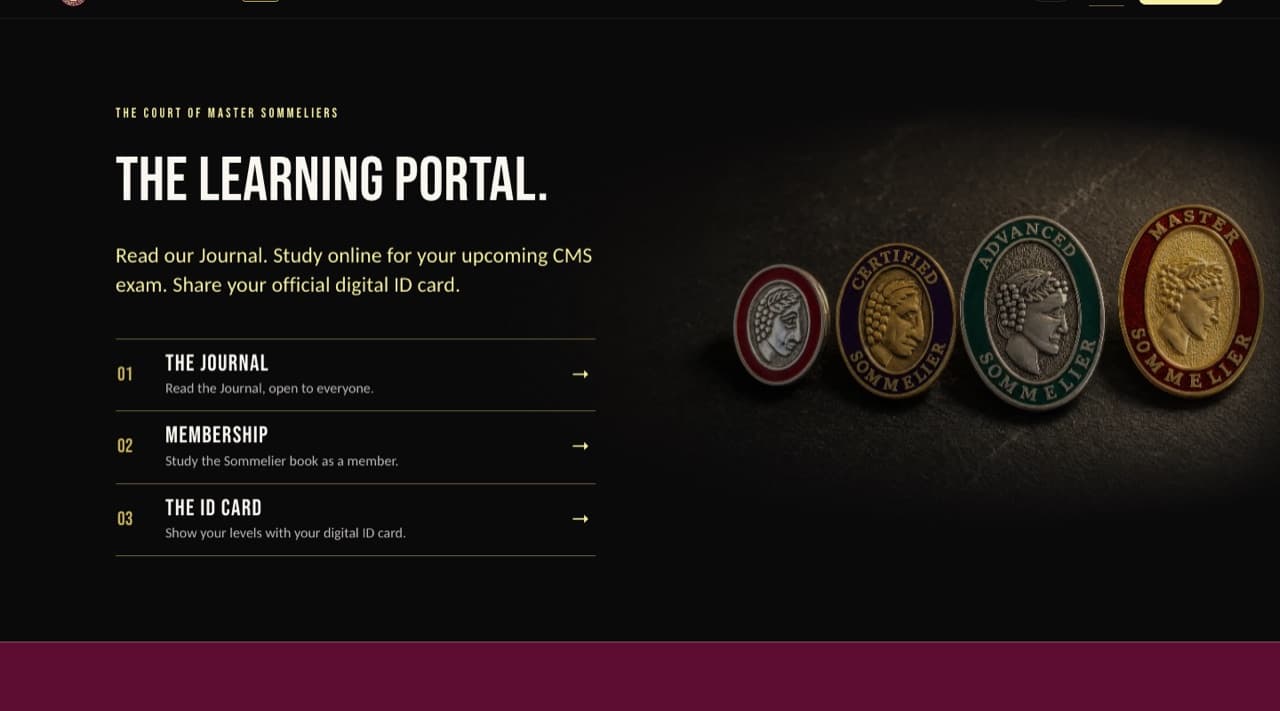
SOMM DIGI built the Court of Master Sommeliers Europe’s Learning Portal, and SOMM DIGI AI. Who is behind this
For sommeliers · next steps