
Carmenère wine: why does it taste of green pepper?
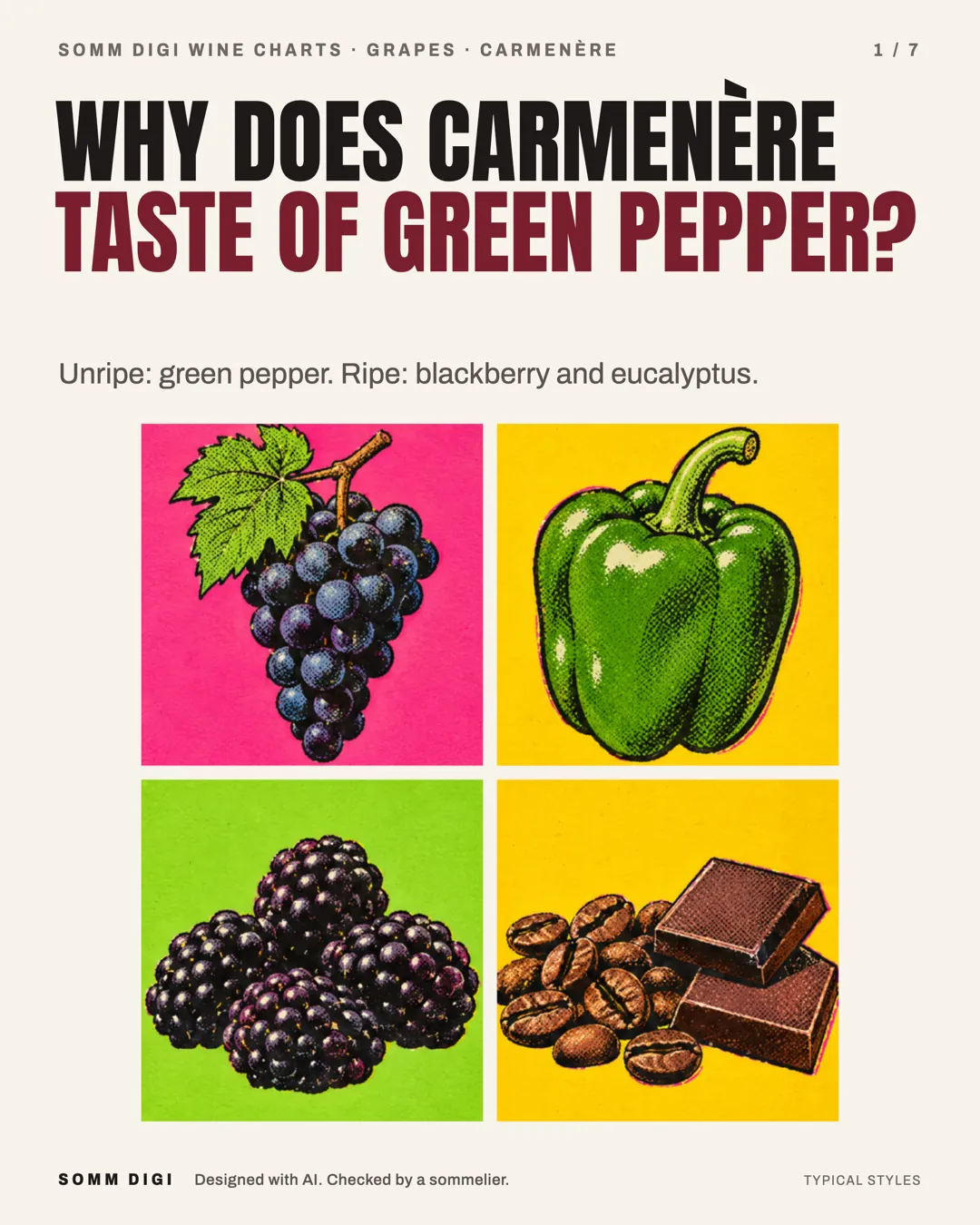
Some Carmenère tastes of green pepper, some of ripe blackberry. The difference is sunshine, and here is how to choose the one you will like.
Quick answer
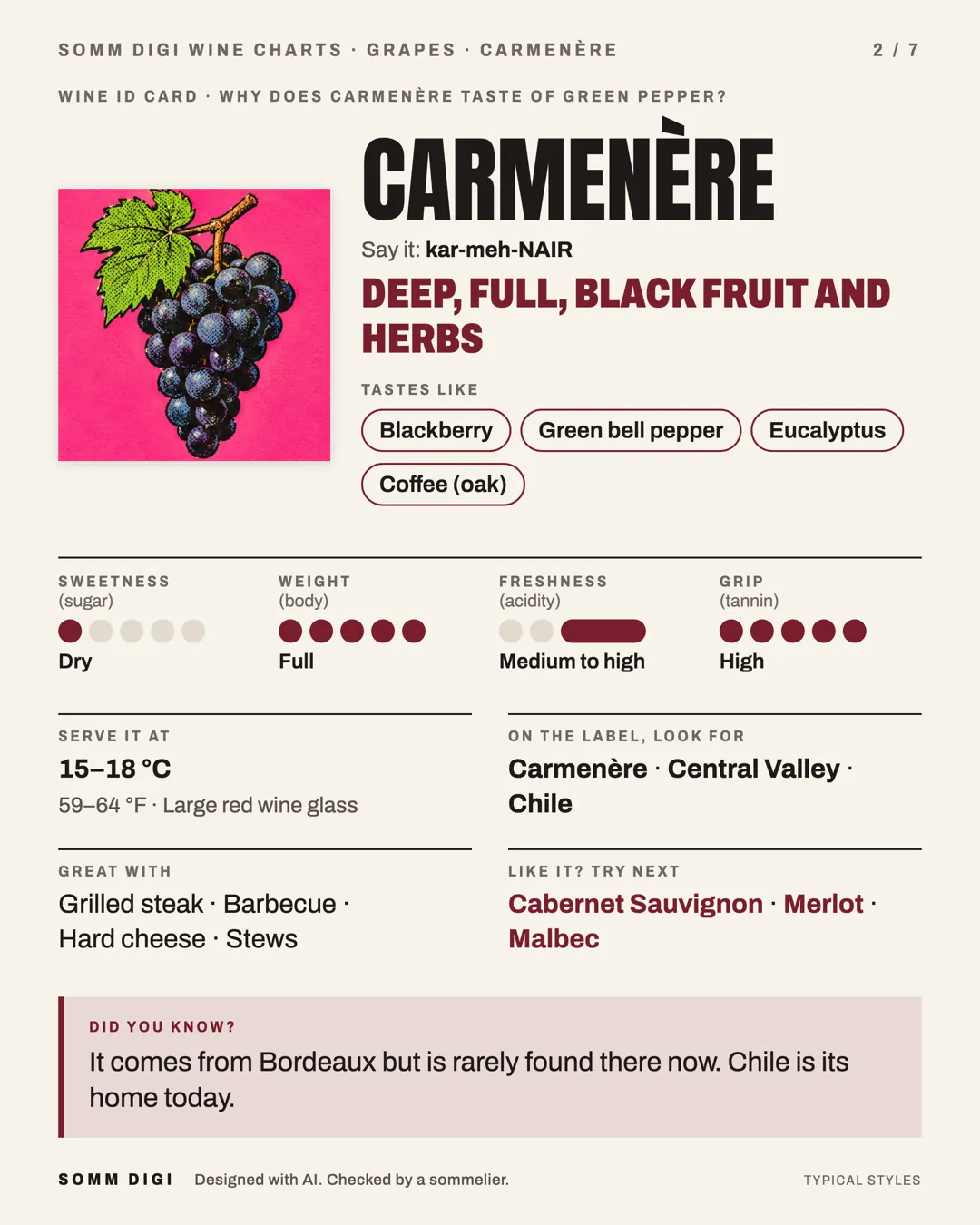
Carmenère (say it kar-meh-NAIR) is a red grape that makes deep, full, dry wine with high tannin and medium to high acidity. Ripe, it tastes of blackberry and eucalyptus; not fully ripe, of green bell pepper and tomato leaf. Oak adds coffee and chocolate. Serve it at 15–18 °C (59–64 °F) in a large red wine glass. Tastes too green? Choose a riper one.

Alper Billik · Advanced Sommelier
Updated November 2026 · Edited with AI
This article may contain affiliate links.
On this page
What is Carmenère wine?
Carmenère (say it kar-meh-NAIR) is a red grape that makes deep, full, dry wine with black fruit and herbs. It has high tannin, medium to high acidity and full body.
It comes from Bordeaux but is rarely found there now. Chile is its home today. In the glass, expect blackberry, green bell pepper and eucalyptus, with coffee from oak. The profile card has the essentials.
What does Carmenère taste like?
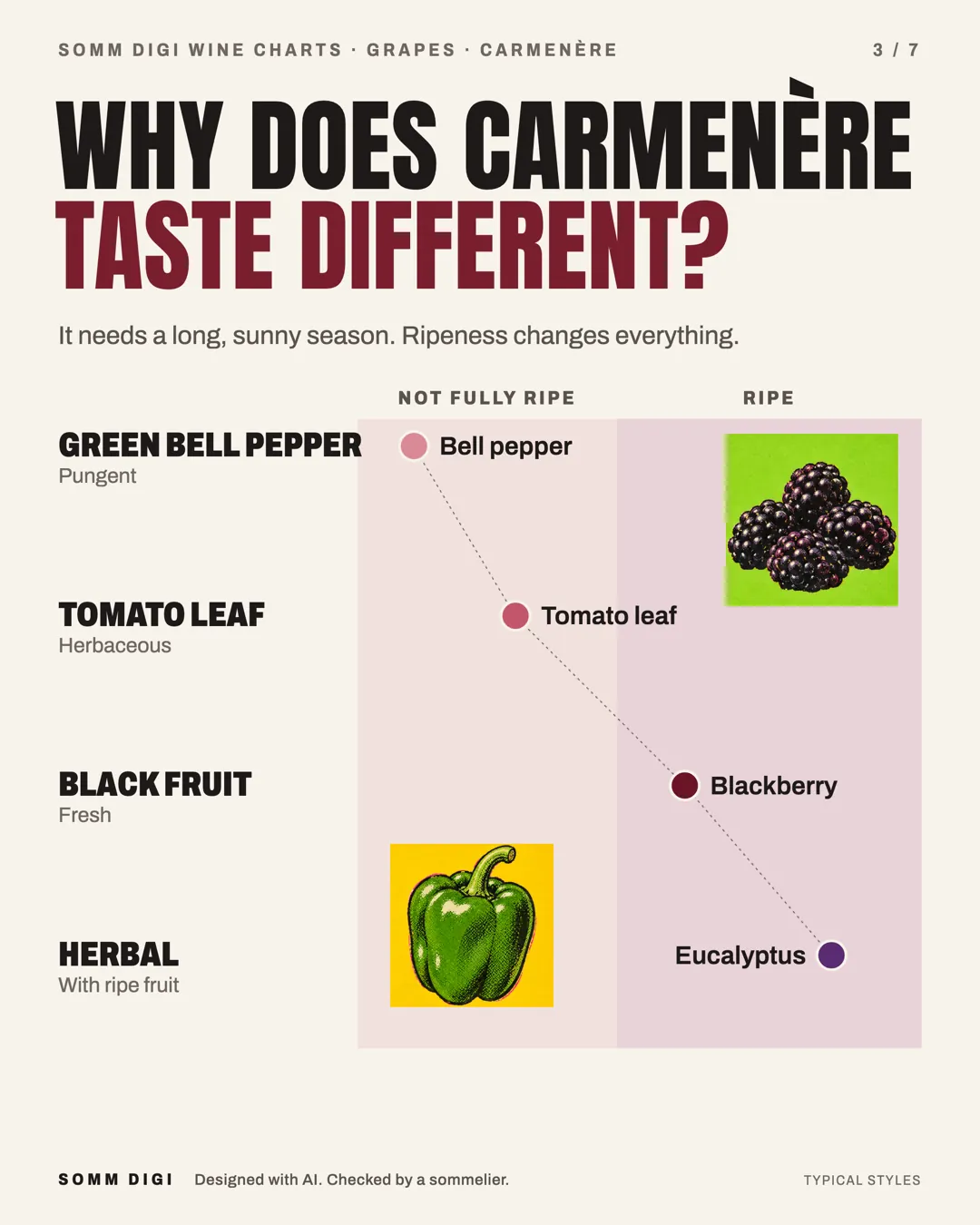
Carmenère needs a long, sunny season, and ripeness changes everything. That is why one bottle tastes green and another tastes of ripe fruit.
Grapes that are not fully ripe give pungent green bell pepper and a herbaceous note of tomato leaf. Ripe grapes give fresh blackberry, with a herbal note of eucalyptus alongside the ripe fruit. The taste chart shows both sides.
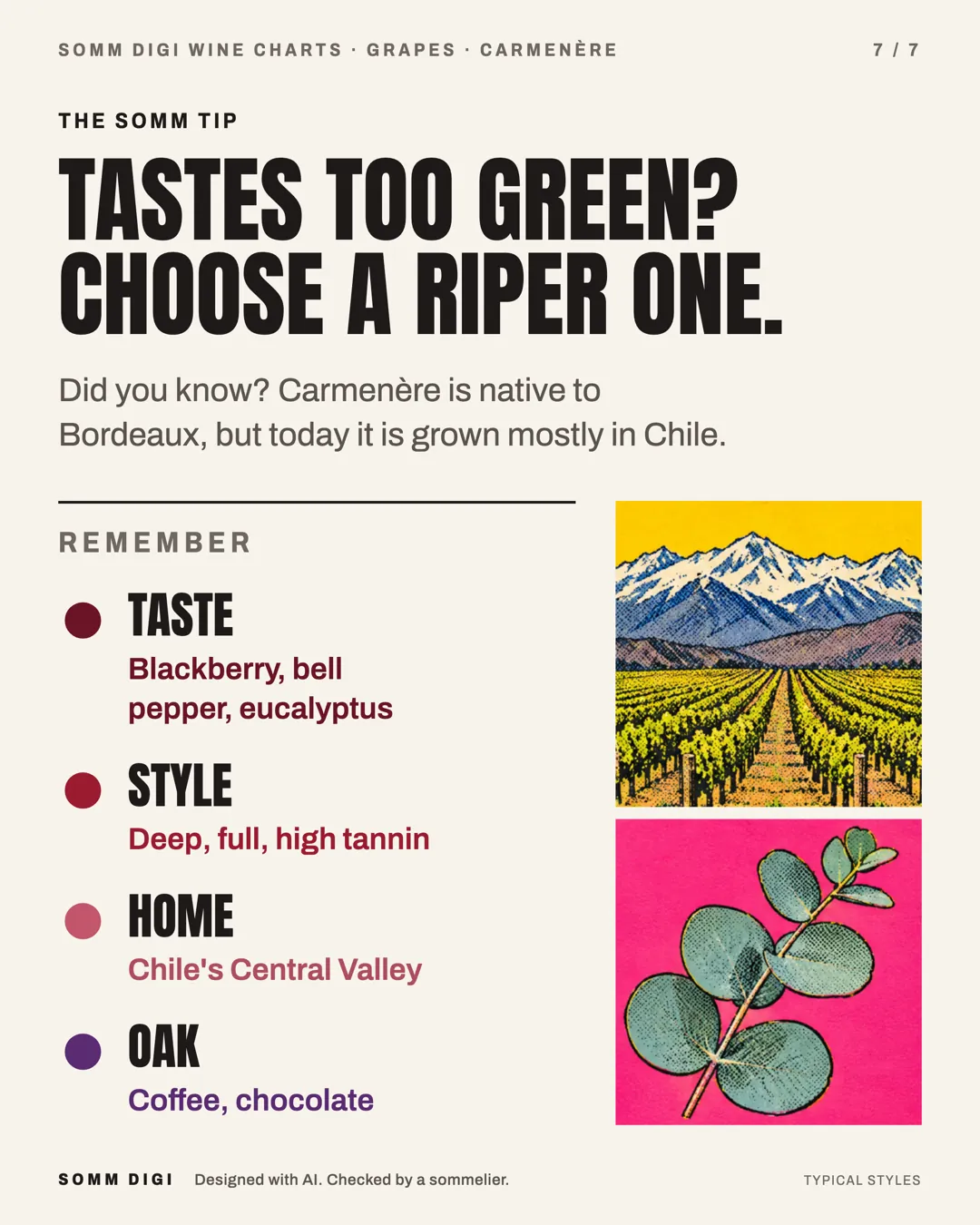
So if a bottle tastes too green, the somm tip is simple: choose a riper one.
Chilean Carmenère: the Central Valley
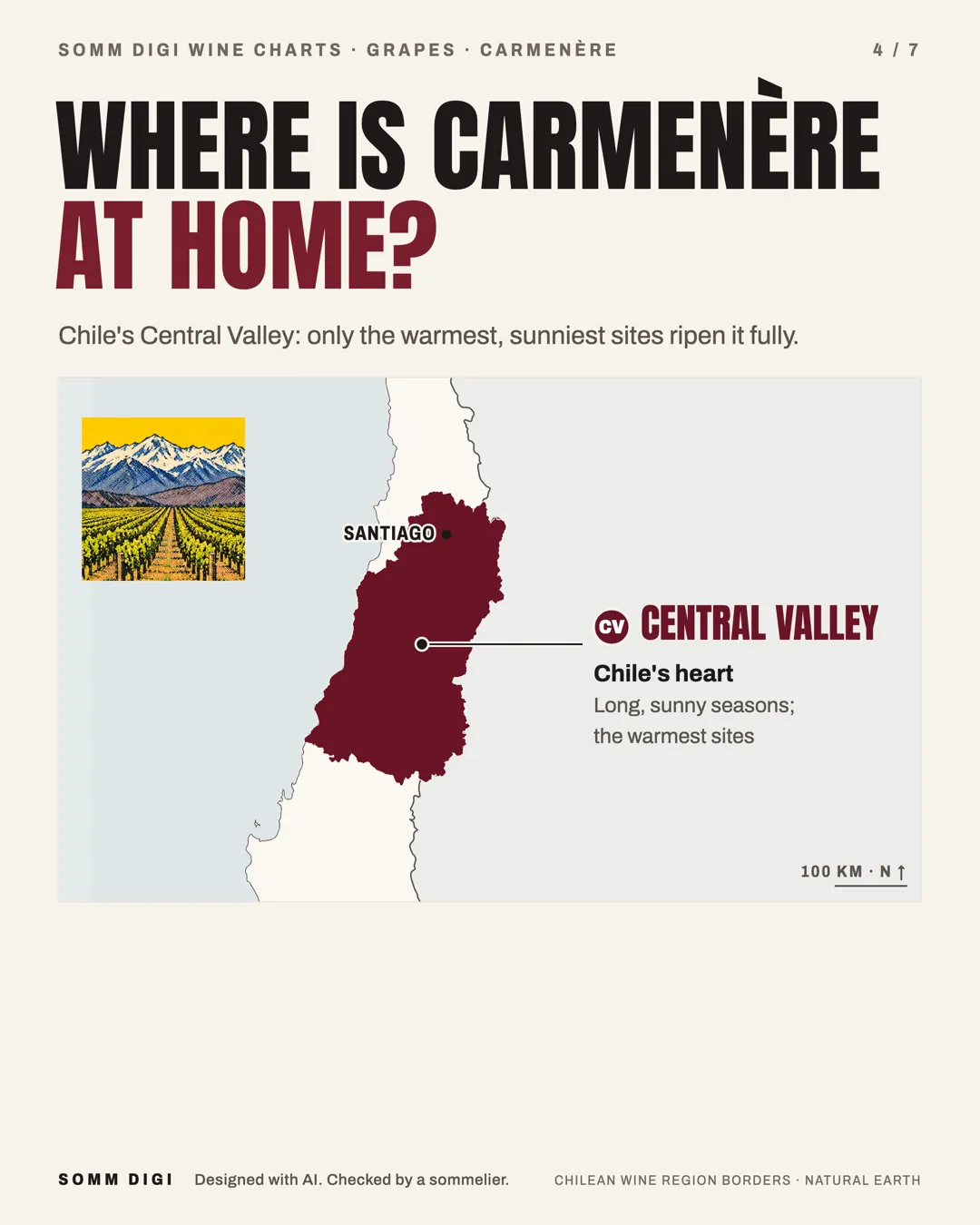
Carmenère's home is Chile's Central Valley: the heart of Chile, with long, sunny seasons.
Even there, only the warmest, sunniest sites ripen it fully. Long sun is what turns its green notes into ripe blackberry. The map shows the Central Valley, its home today.
Why is Carmenère hard to ripen?
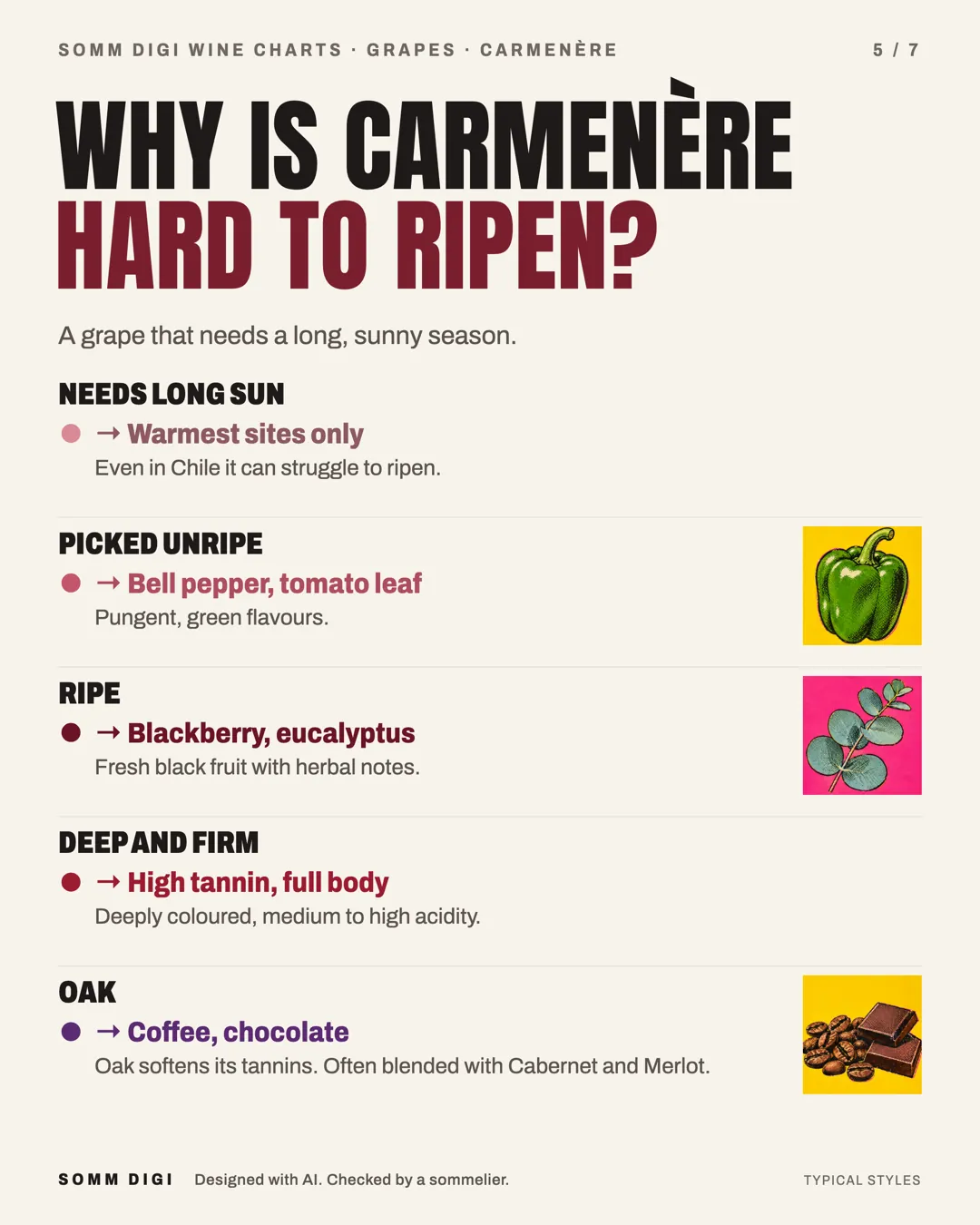
Carmenère is a grape that needs a long, sunny season, and it only ripens fully in the warmest sites. Even in Chile, it can struggle to ripen.
Picked unripe, it gives pungent, green flavours: bell pepper and tomato leaf. Ripe, it gives fresh black fruit, blackberry, with eucalyptus. Either way it is deep and firm: deeply coloured, full-bodied, with high tannin and medium to high acidity.
Oak brings coffee and chocolate and softens its tannins. Carmenère is often blended with Cabernet Sauvignon and Merlot. The chart lists all five steps.
Carmenère vs Cabernet, Merlot and Malbec
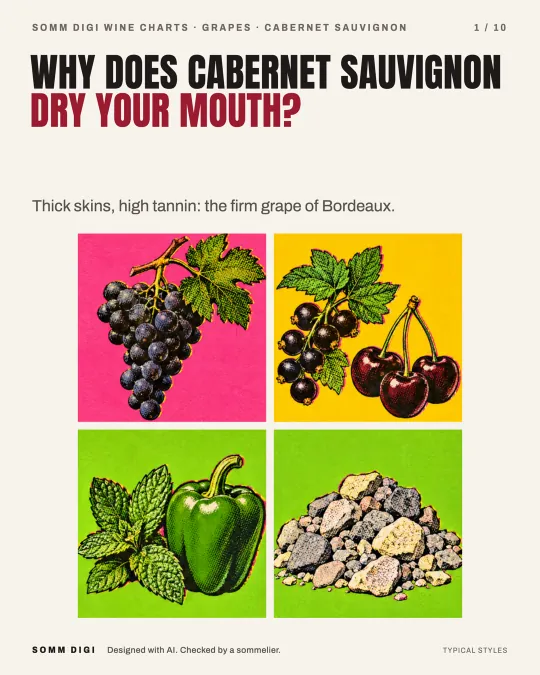
Carmenère is native to Bordeaux, the home of Cabernet Sauvignon and Merlot, and it is often blended with both. Cabernet Sauvignon shares its firmness: deep colour and high tannin, with blackcurrant, mint and bell pepper.
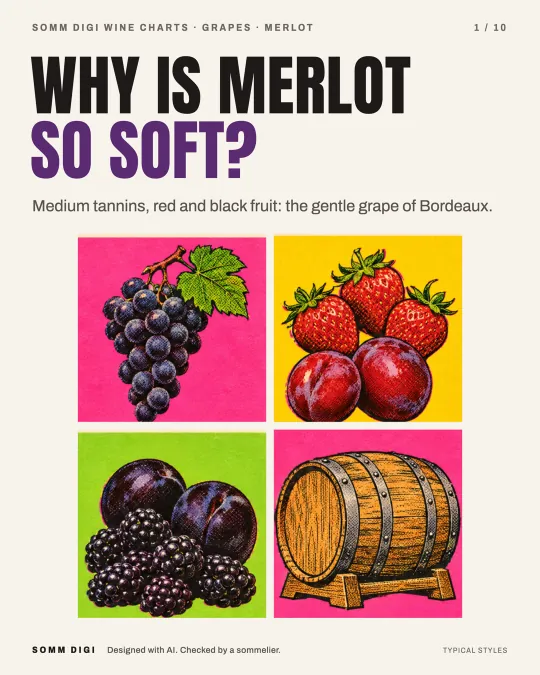
Merlot is the soft one, with medium tannins and red plum, strawberry and blackberry. Carmenère stands apart with full body, high tannin and its own notes of eucalyptus and green pepper.
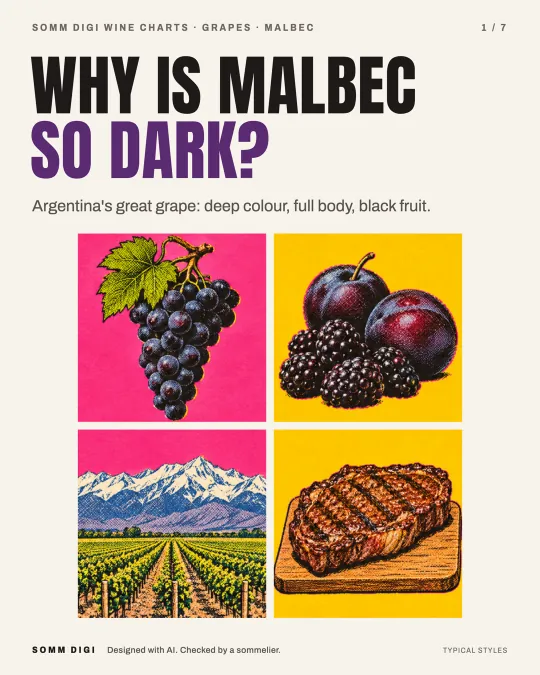
Malbec shares its story. Like Carmenère, it is native to France and found its home in South America, in Mendoza, Argentina. It is deep and full too, with blackberry and black plum.
Is Carmenère dry? Serving it
Yes, Carmenère is a dry red. Serve it at 15–18 °C (59–64 °F), well above the 7–10 °C (45–50 °F) for a white like Sauvignon Blanc.
Which glass?
A large red wine glass suits it. For one shape to consider, see a Bordeaux-shaped glass on universalwineglasses.com, SOMM DIGI's glass site.
Carmenère food pairing
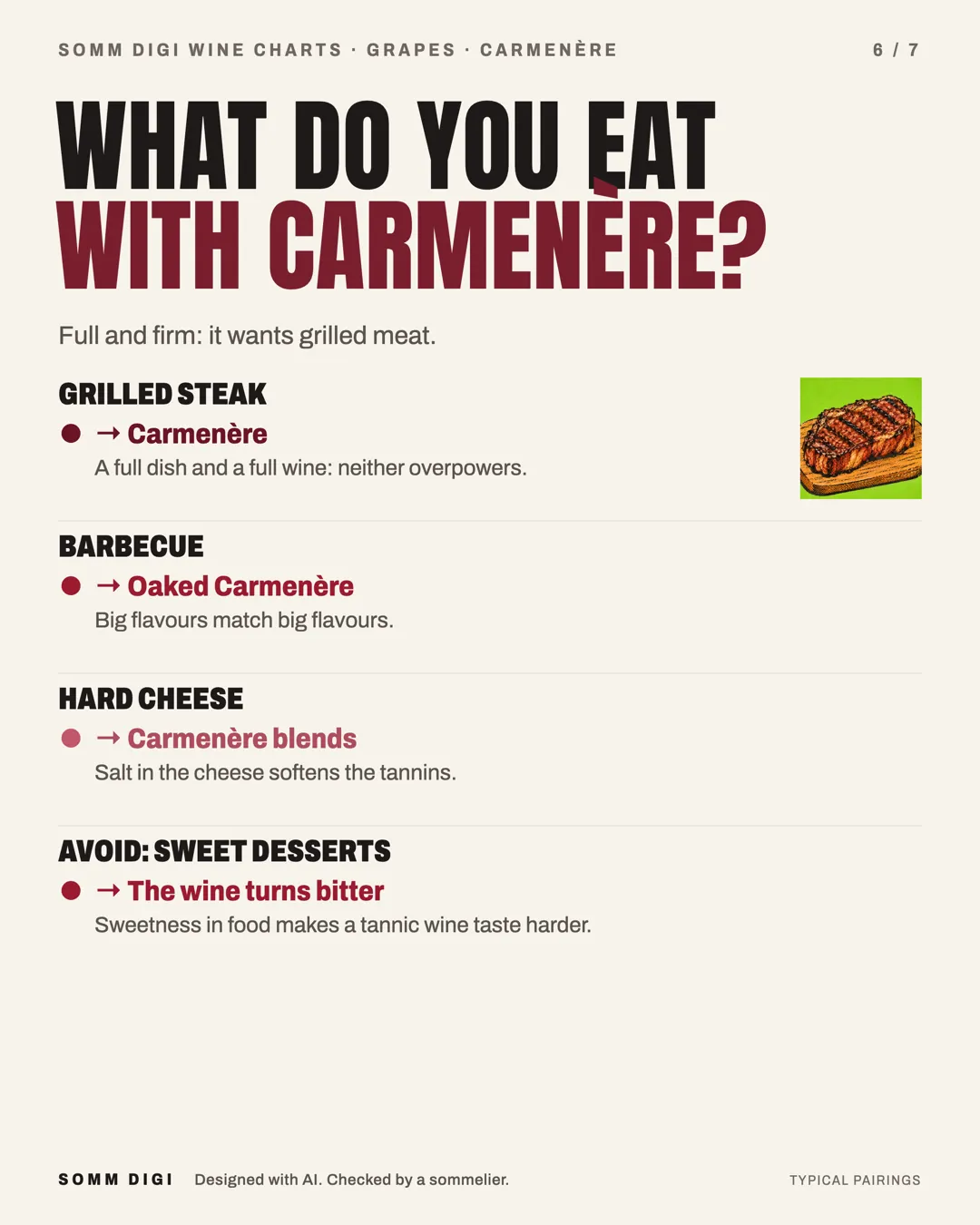
Full and firm, Carmenère wants grilled meat. Steak, barbecue, hard cheese and stews all suit it.
With grilled steak, pour a Carmenère: a full dish and a full wine, so neither overpowers. With barbecue, choose an oaked Carmenère, as big flavours match big flavours. With hard cheese, a Carmenère blend, because salt in the cheese softens the tannins.
Skip sweet desserts. Sweetness in food makes a tannic wine taste harder, so the wine turns bitter. The pairing chart has all four.

Learn wine the easy way
Wine Easy
The wine book that talks to you like a human: grapes, tasting, pairing and countries A–Z, in 388 full-colour pages.
Carmenère questions, answered
How do you pronounce Carmenère?
kar-meh-NAIR.
Why does Carmenère taste of green pepper?
The grapes were not fully ripe. Ripe Carmenère tastes of blackberry and eucalyptus instead.
Where does Carmenère come from?
Bordeaux, but it is rarely found there now. Today it grows mostly in Chile, in the Central Valley.
Is Carmenère sweet?
No. It is a dry, full red with high tannin.
What do you eat with Carmenère?
Grilled steak, barbecue, hard cheese or stews. Avoid sweet desserts.
Try next
If you like Carmenère
How this page was made. Charts designed with AI and checked by Alper Billik, Advanced Sommelier. Text written from the same chart facts and edited with AI.