
What are tannins in wine?
The short answer
Tannin is a compound found in grape skins, seeds and stems that makes your mouth feel dry and rough. Red wines draw most of their tannin from black grape skins during fermentation, and it gives them structure. Tannins must be ripe at harvest, because unripe tannins taste bitter, while plenty of ripe tannin makes a wine feel fuller-bodied.

Alper Billik · Advanced Sommelier
Updated November 2026 · Edited with AI
What are tannins in wine?
Tannins are compounds in grape skins, seeds and stems that give red wine much of its structure. Black grapes hold far more in their skins than white grapes, and red wine ferments with the skins to draw them out. Warm fermentation, punching down and pumping over all help to extract them.
Ripeness matters: tannins develop in black grapes as they ripen, and unripe tannins can taste bitter. Over time, the small amount of oxygen that reaches wine in oak barrels softens tannins, and bottle age makes them softer and smoother still.
What does tannin taste like?
Tannin is felt more than tasted: it binds to your saliva, so your mouth dries up and feels rough. Some tannins also leave a bitter taste at the back of the mouth. High levels of ripe tannin make a wine feel fuller-bodied, while low levels of unripe tannin can make it seem harsh and thin.
Which red wines are low in tannin?
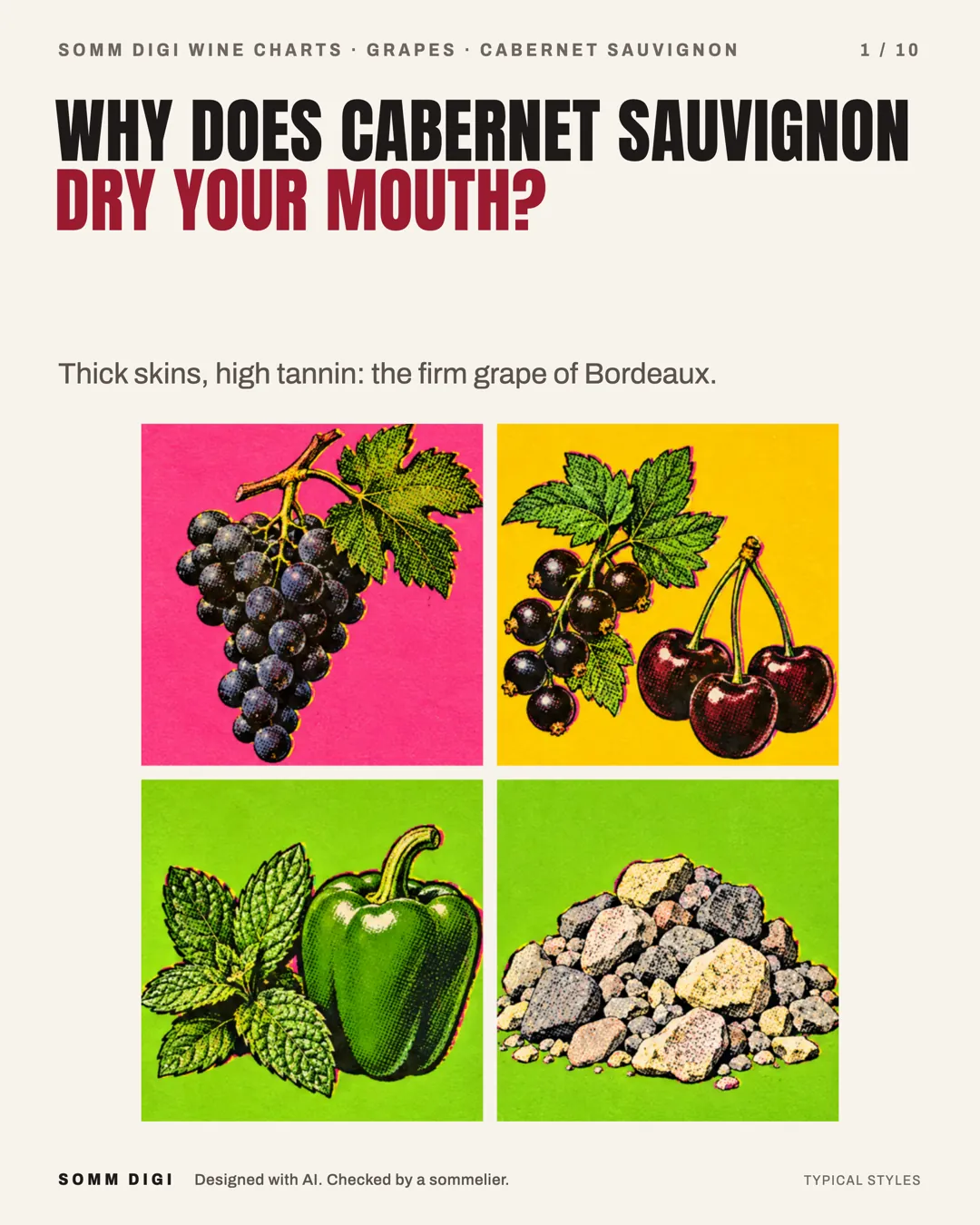
Red wines from Pinot Noir, Gamay, Grenache, Barbera and Corvina are usually low to medium in tannin. A typical Beaujolais, made from Gamay, is light-bodied with low to medium tannins. At the other end, Cabernet Sauvignon, Nebbiolo and Sangiovese make wines high in tannin.
Tannin vs acidity: how do you tell them apart?
The quickest test is what your mouth does: acidity makes it water, while tannin dries it out. Acid is felt as a tingle on the tongue, and the higher it is, the longer your mouth keeps watering. Tannin leaves the mouth rough and dry instead, sometimes with a bitter edge.
Keep exploring
Related terms
How this page was made. Written from sommelier study material in plain words, checked by Alper Billik, Advanced Sommelier, and edited with AI.