
What does DOCG mean?
Also called Denominazione di Origine Controllata e Garantita
The short answer
DOCG (Denominazione di Origine Controllata e Garantita) is one of Italy's two traditional label terms for a PDO wine, alongside DOC. Famous examples include Barolo, Barbaresco, Chianti Classico and Brunello di Montalcino. The full phrase is printed on the label, and a DOCG wine aged for a set number of months before release can also say Riserva.

Alper Billik · Advanced Sommelier
Updated November 2026 · Edited with AI
What are the rules for DOCG?
A wine can only become DOCG after it has been a DOC for at least seven years.
Source: Italian wine law, Legge 12 dicembre 2016 n. 238 (Testo unico del vino), art. 33 ↗
A DOCG must have stricter vineyard and winemaking rules than the DOC it came from.
Source: Italian wine law, Legge 12 dicembre 2016 n. 238 (Testo unico del vino), art. 33 ↗
Every DOCG bottle (up to 6 litres, unless its rules say otherwise) must carry a numbered state seal printed by the Italian State Mint and Printing Office or an authorised printer.
Source: Italian wine law, Legge 12 dicembre 2016 n. 238 (Testo unico del vino), art. 48 ↗
What does DOCG mean?
DOCG stands for Denominazione di Origine Controllata e Garantita, a traditional Italian label term for a wine with a protected designation of origin. The full phrase is printed on the label. It tells you the grapes come from a legally defined area whose rules can set which grapes are grown and how the wine is made.
DOC vs DOCG: what is the difference?
DOC and DOCG are both Italian terms for a PDO wine, so both mark a protected place with its own rules. Valpolicella and Montepulciano d'Abruzzo are DOC wines, while Barolo, Barbaresco and Chianti Classico are DOCG. Either term can be joined by Riserva when the wine has aged for a set number of months before release.
DOCG vs IGT: which is better?
A DOCG wine follows tighter rules than an IGT wine, but an IGT can still be outstanding. IGT is Italy's term for a PGI wine, which usually covers a much wider area and gives producers more freedom over grapes and winemaking. IGT bottles range from simple, high-volume wines to rare ones sold at premium prices.
Which Italian wines are DOCG?
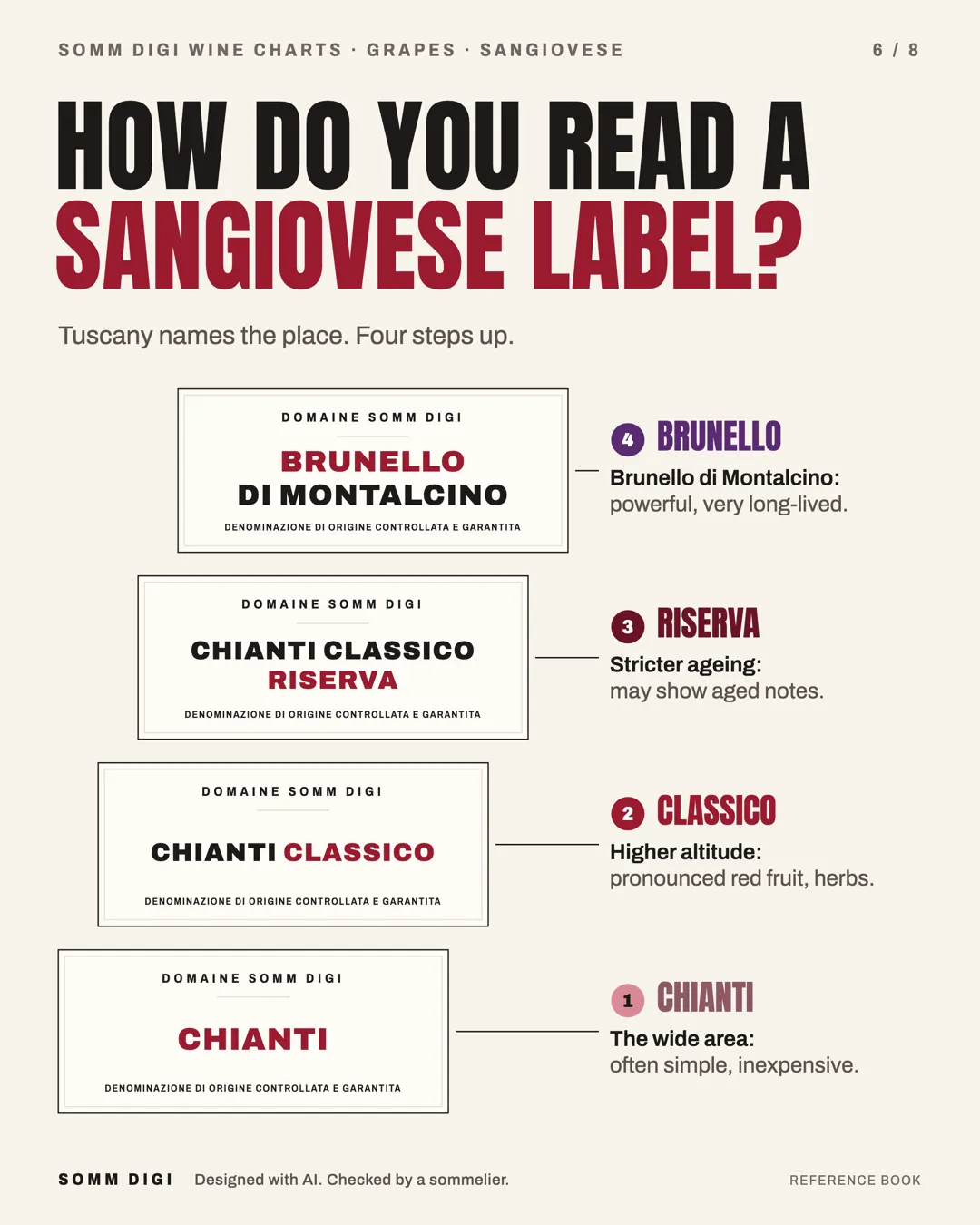
Some of Italy's most famous reds are DOCG, including Barolo, Barbaresco and Barbera d'Asti in Piemonte. In Tuscany, Chianti, Chianti Classico and Brunello di Montalcino all carry the term. Some are named after their region alone, like Barolo, while Barbera d'Asti joins a grape and a place: Barbera from Asti.
Keep exploring
Related terms
How this page was made. Written from sommelier study material in plain words, with the exact rules taken from the official sources linked above, checked by Alper Billik, Advanced Sommelier, and edited with AI.