
What is Barolo wine?
The short answer
Barolo is a red wine (DOCG) from Piemonte, in north-west Italy, made only from Nebbiolo. Its vineyards sit on steep south-facing slopes in a horseshoe-shaped valley. The wines are full-bodied with pronounced flavours, high tannin and high acidity, from red cherry and dried herbs to rose, and with age they gain mushroom, tobacco and leather.

Alper Billik · Advanced Sommelier
Updated November 2026 · Edited with AI
What are the rules for Barolo?
Barolo must be made only from Nebbiolo grapes.
Barolo must be aged for at least 38 months, of which at least 18 months in wood; Barolo Riserva needs at least 62 months, counted from 1 November of the harvest year.
Source: Barolo DOCG production rules (disciplinare), art. 5 ↗
Barolo became a DOC in 1966 and a DOCG in 1980.
Source: Barolo DOCG production rules (disciplinare), approval history ↗
What grape is Barolo?
Barolo is made only from Nebbiolo: no other grape is allowed in Barolo DOCG. The region lies in Piemonte, north-west Italy, in a horseshoe-shaped valley with steep, south-facing vineyards. Nebbiolo gives high acidity, high tannin, red cherry and red plum, with dried herbs and sometimes rose and violet.
The wines are typically full-bodied with pronounced flavours. Nebbiolo is often matured in oak for a long time to soften its tannin; some producers use old barrels, while others choose new oak for its aromas.
Barolo vs Barbaresco: what is the difference?
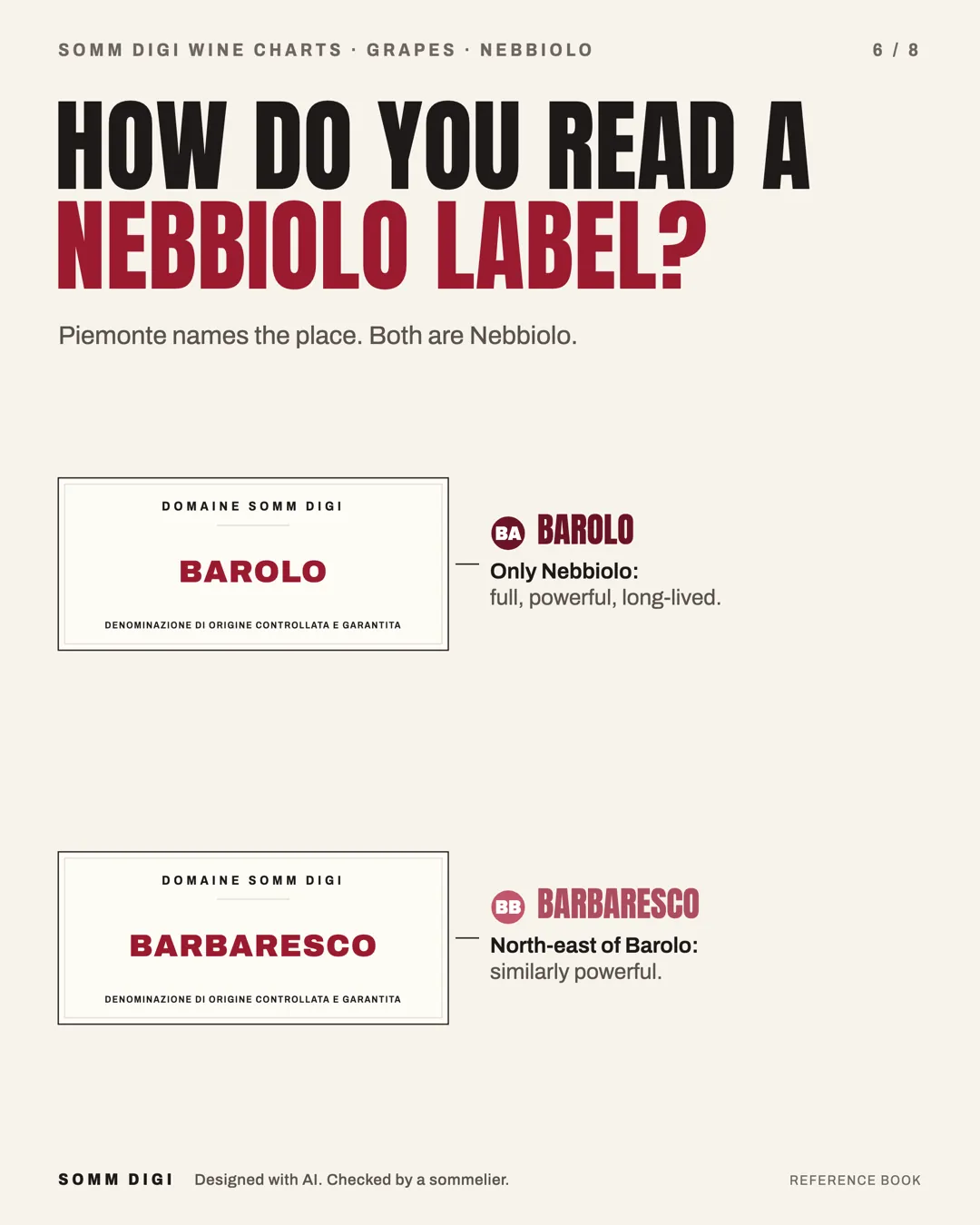
The difference is place, not grape: Barbaresco is a smaller region north-east of Barolo, and it too makes its wine from Nebbiolo. Both are DOCG wines named after their region. Barbaresco makes similarly powerful, long-lived wines.
Does Barolo age well?
Yes, Barolo has long ageing potential, and its high acidity and tannin mean it often improves with bottle age. Over time top examples gain complex notes of mushroom, tobacco and leather. A young Barolo can feel very firm, so patience pays.
What food goes with Barolo?
Barolo suits rich, savoury food such as braised beef, because a full-bodied wine needs a full-bodied dish. Aged Barolo meets its match in earthy dishes such as truffles, and salt in aged cheese helps soften its tannin. Avoid sweet desserts, which make a tannic wine taste more drying and bitter.
Keep exploring
Related terms
How this page was made. Written from sommelier study material in plain words, with the exact rules taken from the official sources linked above, checked by Alper Billik, Advanced Sommelier, and edited with AI.