
Study and careerWhite grapes
Is Chardonnay sweet or dry? Styles, aromas, regions
Almost every Chardonnay is dry. Here is why some taste sweet anyway, the styles from Chablis to Napa, how to tell oaked from unoaked on a label, and where the grape came from.

Alper Billik · Advanced Sommelier
Updated October 2026 · 4 min read · Edited with AI
This article may contain affiliate links.
On this page
The short answer: Chardonnay is almost always dry. Nearly all the sugar in the grapes is fermented into alcohol. When a Chardonnay tastes "sweet", what you are usually tasting is ripe fruit, vanilla from oak and a creamy, buttery texture. Those feel sweet, but they are not sugar.
Why a dry Chardonnay can taste sweet
- Ripe fruit. Chardonnay from a sunny place smells of pineapple, mango and peach. Your brain links those smells with sweetness.
- Oak. New oak barrels add vanilla, toast and coconut, flavours we know from desserts.
- Malolactic conversion. Bacteria turn sharp malic acid into softer lactic acid and make diacetyl, the compound that smells of butter. More here: malolactic fermentation in Chardonnay.
- Alcohol. A riper wine has more alcohol, and alcohol itself tastes slightly sweet and gives body.
In the EU, a still wine may call itself dry with up to 4 grams of sugar per litre, or up to 9 if its acidity is high enough to balance it. Almost all Chardonnay sits inside that. Truly sweet Chardonnay exists, as a late-harvest or ice wine, but it is rare. For the whole scale, see wine sweetness levels.
The four styles of Chardonnay
| Style | Tastes of | Where to find it |
|---|---|---|
| Unoaked, cool climate | Lemon, green apple, wet stone; lean and fresh | Chablis, Mâcon, cool New Zealand and Oregon sites |
| Oaked, cool to moderate | Citrus, hazelnut, toast; fresh but layered | Meursault, Puligny-Montrachet, Chassagne-Montrachet |
| Oaked, warm climate | Peach, pineapple, vanilla, butter; full-bodied | Napa, Sonoma, parts of Australia |
| Sparkling | Lemon, brioche, chalk | Blanc de Blancs Champagne, Crémant de Bourgogne |
- Unoaked, cool climate
- Tastes ofLemon, green apple, wet stone; lean and fresh
- Where to find itChablis, Mâcon, cool New Zealand and Oregon sites
- Oaked, cool to moderate
- Tastes ofCitrus, hazelnut, toast; fresh but layered
- Where to find itMeursault, Puligny-Montrachet, Chassagne-Montrachet
- Oaked, warm climate
- Tastes ofPeach, pineapple, vanilla, butter; full-bodied
- Where to find itNapa, Sonoma, parts of Australia
- Sparkling
- Tastes ofLemon, brioche, chalk
- Where to find itBlanc de Blancs Champagne, Crémant de Bourgogne
In Champagne the sweetness is set by the dosage added after the second fermentation, so check the label: Brut Nature and Extra Brut are the driest, Brut is dry, Demi-Sec is sweet.
How to read a label for the style you like
- For crisp and clean: Chablis, Petit Chablis, Mâcon-Villages, or anything labelled "unoaked" or "unwooded".
- For rich and creamy: "barrel-fermented", "reserve", Meursault, or Chardonnay from Napa and Sonoma.
- In between: a Côte de Beaune village wine, or Chardonnay from Margaret River, Adelaide Hills or the Yarra Valley.
- Still unsure: the producer's website usually says whether the wine saw oak and how much was new.
Where Chardonnay comes from
Chardonnay is a grape of Burgundy. DNA work at UC Davis, published in 1999, showed it is a cross of Pinot and an old, humble variety called Gouais Blanc. There is even a village called Chardonnay in the Mâconnais, in southern Burgundy. From Burgundy it spread to Champagne and then around the world.
The regions to know
- Burgundy, France: Chablis in the north; the Côte de Beaune for the great oaked whites; the Mâconnais for value. Study guides: Burgundy for Level 1 and five Chablis producers.
- Champagne, France: the white grape of the blend, and alone in Blanc de Blancs.
- California, USA: Napa and Sonoma for rich styles; cooler Russian River Valley, Carneros and Sonoma Coast for fresher ones.
- Australia: Margaret River, Adelaide Hills, Yarra Valley and Tasmania.
- Also: New Zealand, Oregon, Chile, South Africa and northern Italy.
Chardonnay with food
- Chablis and other unoaked styles: oysters, white fish, goat's cheese, sushi.
- Oaked Burgundy: roast chicken, lobster, scallops, mushroom dishes.
- Rich New World styles: creamy pasta, roast pork, grilled corn, buttery sauces.
Serve unoaked Chardonnay well chilled and oaked Chardonnay a little warmer, so the layers can open. Comparing grapes? Start with seven white grapes to know.
Questions people ask
Is Chardonnay sweet or dry?
Almost always dry. Ripe fruit, oak and a buttery texture can make it taste sweet, but very little sugar is left.
Is Chardonnay sweeter than Sauvignon Blanc?
Both are usually dry. Oaked Chardonnay feels rounder and riper, so many people find it seems sweeter; Sauvignon Blanc has sharper acidity and greener flavours.
Why does Chardonnay taste like butter?
Malolactic conversion makes a compound called diacetyl, which smells of butter. Ageing on the lees and in oak adds creaminess too.
Is Chablis Chardonnay?
Yes. Chablis is made from 100% Chardonnay, usually in a crisp style with little or no new oak.
How do you pronounce Chardonnay?
“Shar-doh-NAY”.
Your exam kit
Where to study for your exam
 My book · AmazonSommelier Prep BookQuick questions and answers for a break at work.Order on Amazon
 My book · AmazonSommelier Level 1 Prep BookLevel 1's key topics in one small book you can carry anywhere.Order on Amazon
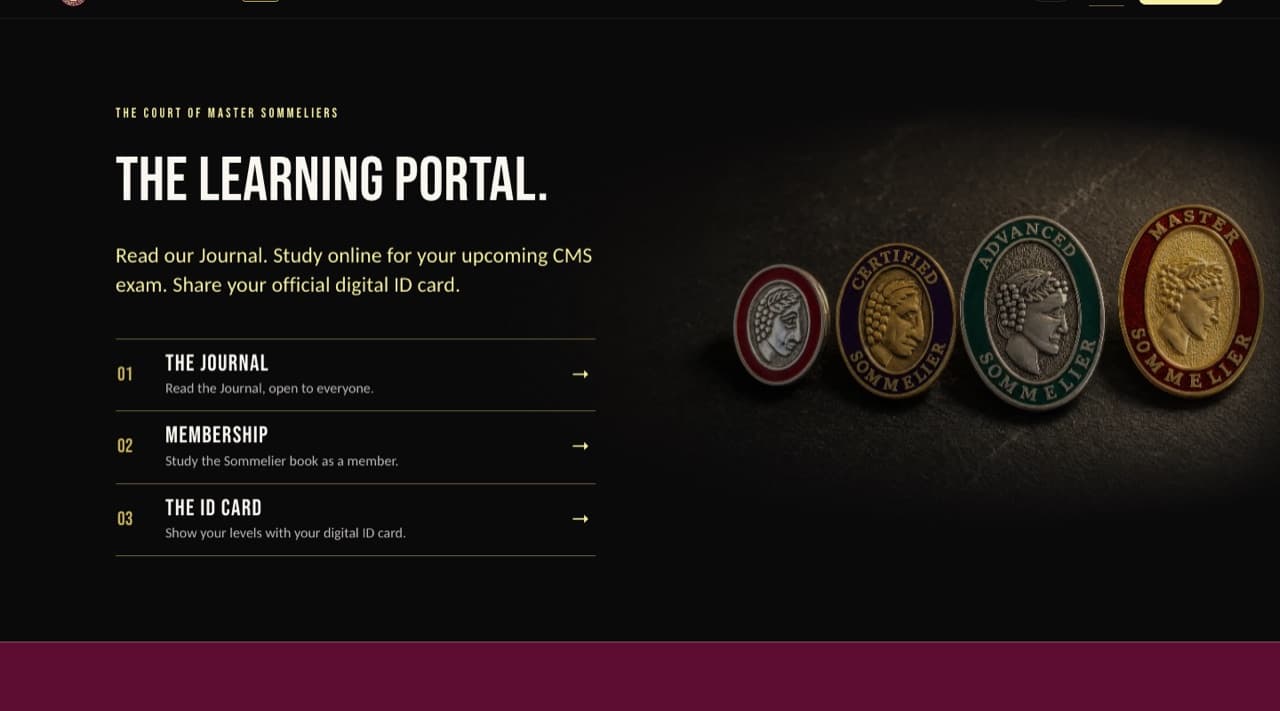
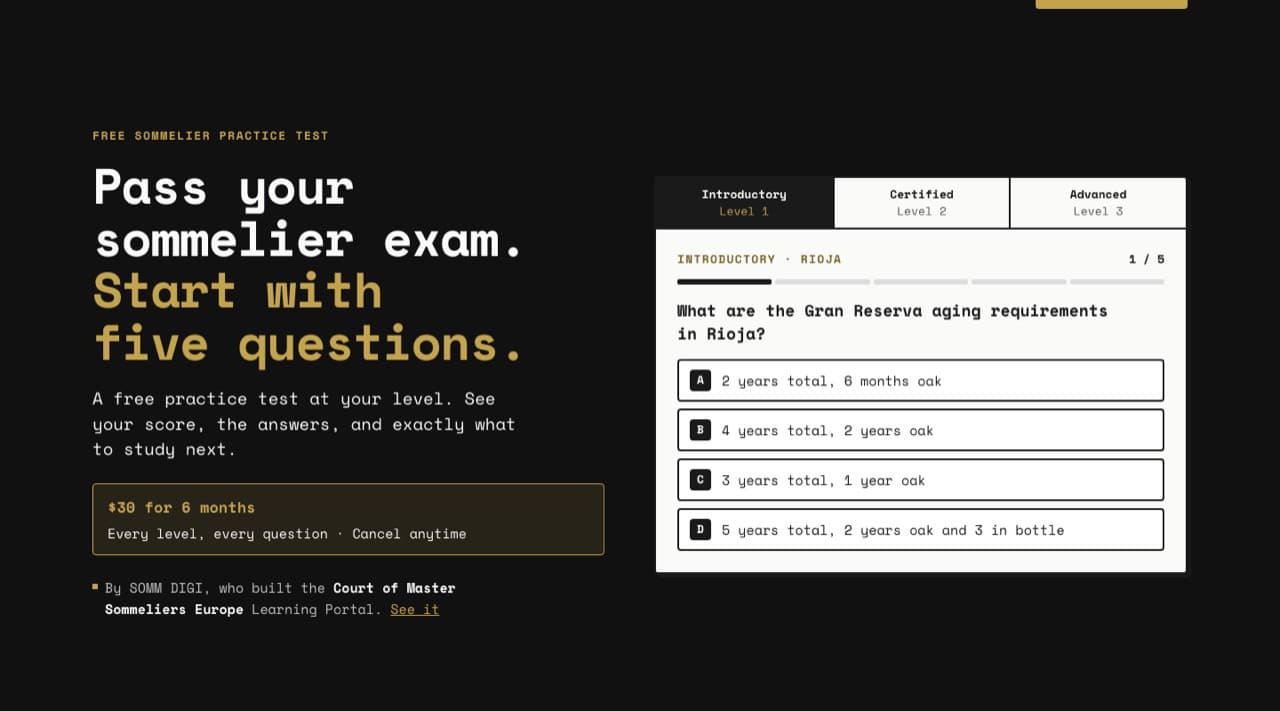
SOMM DIGI built the Court of Master Sommeliers Europe’s Learning Portal, and SOMM DIGI AI. Who is behind this
For sommeliers · next steps