Study and careerSwitzerland
Swiss wine: the regions, grapes and styles
Six regions, Chasselas and Pinot Noir, Petite Arvine and Cornalin in the Valais, Lavaux's terraces, Ticino Merlot and the German-speaking east, with a short quiz.
Alper Billik · Advanced Sommelier
Updated October 2026 · 5 min read · Edited with AI
This article may contain affiliate links.
On this page
The short answer: Switzerland makes small amounts of very particular wine, and drinks most of it at home. There are six wine regions: Valais, Vaud, Geneva, Ticino, the Three Lakes and German-speaking Switzerland. The most planted grapes are Pinot Noir, Chasselas, Gamay and Merlot. Learn which language each region speaks, because that tells you its grapes.
The six regions at a glance
| Region | Where | Main grapes | Style |
|---|---|---|---|
| Valais | The upper Rhône valley, French and German-speaking | Pinot Noir, Chasselas (Fendant), Gamay, Petite Arvine, Cornalin, Humagne Rouge | Sunny, dry, steep; the biggest region |
| Vaud | Lake Geneva to Lake Neuchâtel | Chasselas, Pinot Noir, Gamay | Lake-side terraces; place-named Chasselas |
| Geneva | Around the city, west of the lake | Chasselas (Perlan), Gamay, Pinot Noir, Gamaret | Gentle slopes; third-largest area |
| Three Lakes | Neuchâtel, Lake Biel, Vully | Chasselas, Pinot Noir | Œil-de-Perdrix rosé, fresh whites |
| Ticino | Italian-speaking south | Merlot | Merlot in every style |
| German-speaking Switzerland | Sixteen cantons of the north and east | Pinot Noir (Blauburgunder), Müller-Thurgau (Riesling-Sylvaner), Räuschling | Cool, fresh, Burgundian reds |
- Valais
- WhereThe upper Rhône valley, French and German-speaking
- Main grapesPinot Noir, Chasselas (Fendant), Gamay, Petite Arvine, Cornalin, Humagne Rouge
- StyleSunny, dry, steep; the biggest region
- Vaud
- WhereLake Geneva to Lake Neuchâtel
- Main grapesChasselas, Pinot Noir, Gamay
- StyleLake-side terraces; place-named Chasselas
- Geneva
- WhereAround the city, west of the lake
- Main grapesChasselas (Perlan), Gamay, Pinot Noir, Gamaret
- StyleGentle slopes; third-largest area
- Three Lakes
- WhereNeuchâtel, Lake Biel, Vully
- Main grapesChasselas, Pinot Noir
- StyleŒil-de-Perdrix rosé, fresh whites
- Ticino
- WhereItalian-speaking south
- Main grapesMerlot
- StyleMerlot in every style
- German-speaking Switzerland
- WhereSixteen cantons of the north and east
- Main grapesPinot Noir (Blauburgunder), Müller-Thurgau (Riesling-Sylvaner), Räuschling
- StyleCool, fresh, Burgundian reds
Valais: the sunny Rhône
About a third of Swiss vines grow here, on steep, often terraced slopes along the upper Rhône, one of the driest and sunniest corners of the country, with a warm foehn wind that helps late grapes ripen. Valais has its own AOC Valais and Grand Cru communes.
- Fendant: the Valais name for Chasselas.
- Petite Arvine: the great native white: citrus, rhubarb, a salty finish; dry or sweet.
- Amigne and Humagne Blanche: rare native whites; Amigne is a speciality of Vétroz.
- Cornalin and Humagne Rouge: native reds, dark and spicy.
- Dôle: a red blend of Pinot Noir and Gamay.
- Sweet wines from late-picked, shrivelled grapes.
Vaud and Lavaux
Vaud is Chasselas country, from the north shore of Lake Geneva to Lake Neuchâtel. The wines are often labelled by place rather than grape: Yvorne, Féchy, Dézaley. The terraced vineyards of Lavaux, between Lausanne and Montreux, have been a UNESCO World Heritage Site since 2007, and hold the Grand Crus Dézaley and Calamin. More in Vaud wine region.
Geneva and the Three Lakes
- Geneva: Switzerland's third production area; Chasselas (locally Perlan), Gamay, Pinot Noir and the Swiss crossings Gamaret and Garanoir.
- Three Lakes: Neuchâtel, Lake Biel and Vully. Neuchâtel is known for Œil-de-Perdrix, a pale Pinot Noir rosé, and for unfiltered Chasselas.
Ticino: Merlot in Italian
In the Italian-speaking south, with a milder, more southern climate between the Alps and the lakes of Lugano and Maggiore, Merlot covers more than 80% of the vines. It arrived in the early twentieth century, after phylloxera (1906 is the date usually given). Styles run from light and fruity to oak-aged and serious, and there is even white Merlot (*Merlot bianco*). The appellation is Ticino DOC; Monte Ceneri divides the canton into the Sopraceneri (north) and the Sottoceneri (south).
German-speaking Switzerland
Sixteen cantons in the north and east, cool and close to Germany. Pinot Noir, called Blauburgunder, is the main red; Müller-Thurgau, still called Riesling-Sylvaner here, is the main white. It was bred by Hermann Müller, a scientist from the canton of Thurgau, at Geisenheim in Germany. Local specialities include Räuschling and Completer.
- Zurich: the largest area of the east, with vineyards around Lake Zurich (the AOC Zürichsee) and the Rhine; Pinot Noir, Müller-Thurgau and Räuschling.
- Schaffhausen: on the Rhine by the German border, next to Germany's Baden; above all Blauburgunder, around villages such as Hallau.
- Graubünden and the Bündner Herrschaft: in the far east, around Maienfeld, Malans, Jenins and Fläsch; some of Switzerland's finest Pinot Noir, helped by the warm foehn.
- Thurgau, Aargau, St Gallen and Basel: smaller areas, mostly Pinot Noir and Müller-Thurgau.
How Swiss wine tastes
- Chasselas: low in aroma, gentle in acid; lime blossom, pear, a mineral, sometimes smoky finish. Many go through malolactic fermentation, which softens them further. It shows its place more than its grape.
- Pinot Noir: fresh and light in the west, fuller and more Burgundian in the Bündner Herrschaft.
- Merlot del Ticino: supple, plummy, from easy to cellar-worthy.
- Natives: Petite Arvine and Cornalin are the ones to taste first.
With food, think of the mountains: Chasselas with fondue and raclette, perch from the lake, or air-dried meat; Pinot Noir with veal and game; Merlot with risotto and polenta. Producers often named for quality include Marie-Thérèse Chappaz and Michel Boven in the Valais, and Christian Dugon in Vaud.
Quick quiz: Switzerland
Question 1
What is Chasselas called in the Valais?
- a)Perlan
- b)Fendant
- c)Dorin
- d)Räuschling
Show answerAnswer
b) Fendant. Fendant in the Valais; Perlan in Geneva; Dorin is an old Vaud name.
Question 2
Which grape dominates Ticino?
- a)Pinot Noir
- b)Nebbiolo
- c)Merlot
- d)Gamay
Show answerAnswer
c) Merlot. More than 80% of Ticino's vines are Merlot.
Question 3
Dôle is a blend of...
- a)Pinot Noir and Gamay
- b)Merlot and Cabernet
- c)Cornalin and Humagne Rouge
- d)Chasselas and Sylvaner
Show answerAnswer
a) Pinot Noir and Gamay. Valais's classic red blend.
Question 4
Which region's terraces are a UNESCO World Heritage Site?
- a)Lavaux
- b)Hallau
- c)Sopraceneri
- d)Vully
Show answerAnswer
a) Lavaux. Lavaux, in Vaud, since 2007.
Question 5
What is Müller-Thurgau called in Switzerland?
- a)Blauburgunder
- b)Riesling-Sylvaner
- c)Completer
- d)Petite Arvine
Show answerAnswer
b) Riesling-Sylvaner. The old name, still used on Swiss labels.
Question 6
Maienfeld, Malans, Jenins and Fläsch are in...
- a)The Valais
- b)The Bündner Herrschaft
- c)Ticino
- d)Geneva
Show answerAnswer
b) The Bündner Herrschaft. Graubünden's best Pinot Noir villages.
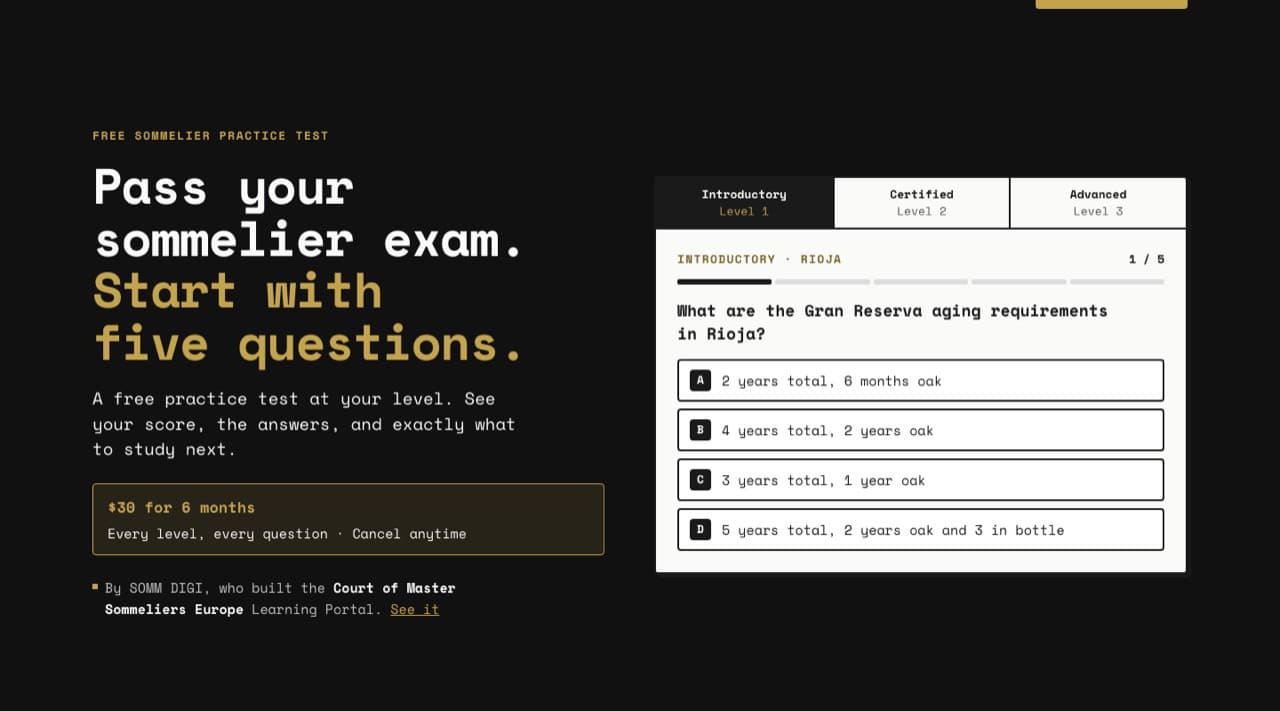
Next door, read Austria for Level 1 and Germany for Level 1. For daily questions on every region, SOMM DIGI AI has 3,000+ exam-prep questions, free to start.
Questions people ask
What are the wine regions of Switzerland?
Six: Valais, Vaud, Geneva, Ticino, the Three Lakes (Neuchâtel, Lake Biel, Vully) and German-speaking Switzerland.
What is the most planted grape in Switzerland?
Pinot Noir, then Chasselas, Gamay and Merlot, according to Swiss Wine.
Why is Swiss wine hard to find abroad?
Switzerland makes little wine and drinks most of it at home, so few bottles are exported.
What does Chasselas taste like?
Delicate and low in acid, with pear, lime blossom and a mineral finish. It shows where it grew more than the grape itself.
Your exam kit
Where to study for your exam
 My book · AmazonSommelier Prep BookQuick questions and answers for a break at work.Order on Amazon
 My book · AmazonSommelier Level 1 Prep BookLevel 1's key topics in one small book you can carry anywhere.Order on Amazon
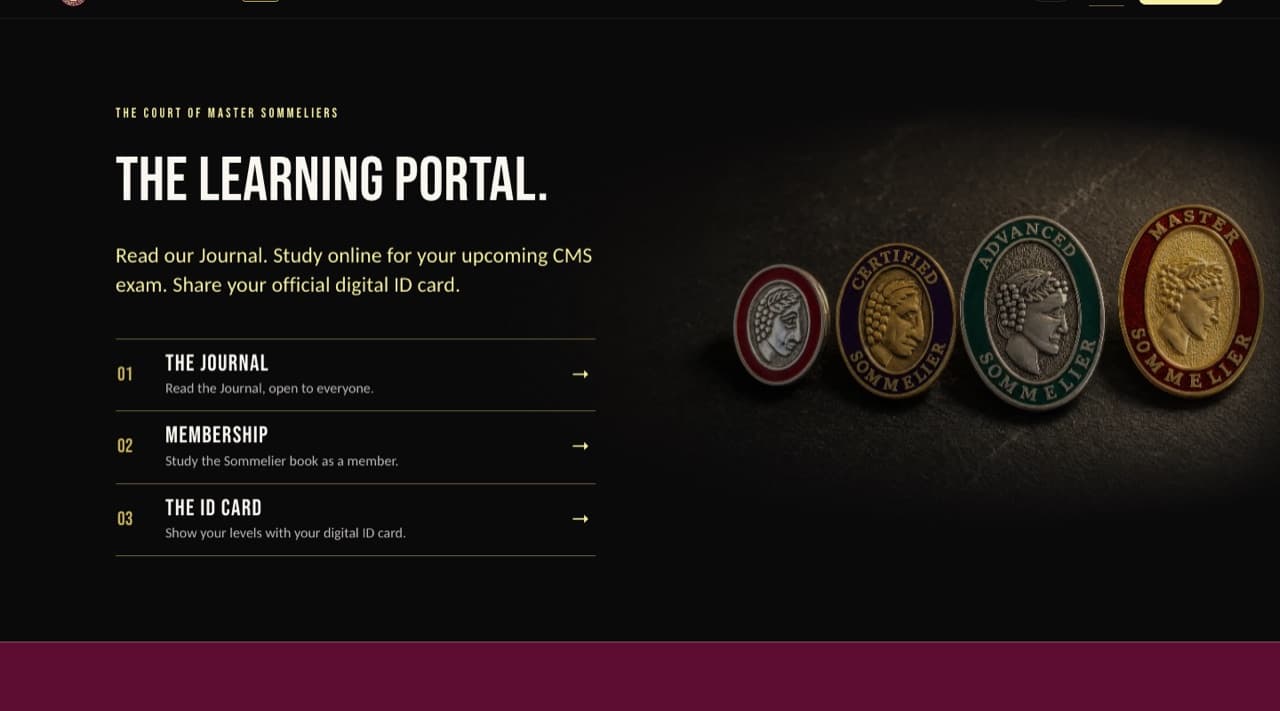
SOMM DIGI built the Court of Master Sommeliers Europe’s Learning Portal, and SOMM DIGI AI. Who is behind this
For sommeliers · next steps