
What does food do to your wine? How to pair wine with food, taste by taste
Every bite changes the next sip. Food has more effect on wine than wine has on food, and usually not for the better, so a good pairing starts with the plate.
Quick answer
Sweet and umami food make wine taste harsher: more bitter, drying and acidic, less fruity. Salty and acidic food make it softer and fruitier. The rules: a wine sweeter than a sweet dish, a little salt with umami, a high-acid wine with acidic food, an acidic wine with fat, and lower alcohol with chilli.

Alper Billik · Advanced Sommelier
Updated November 2026 · Edited with AI
This article may contain affiliate links.
On this page
How do you pair wine with food?
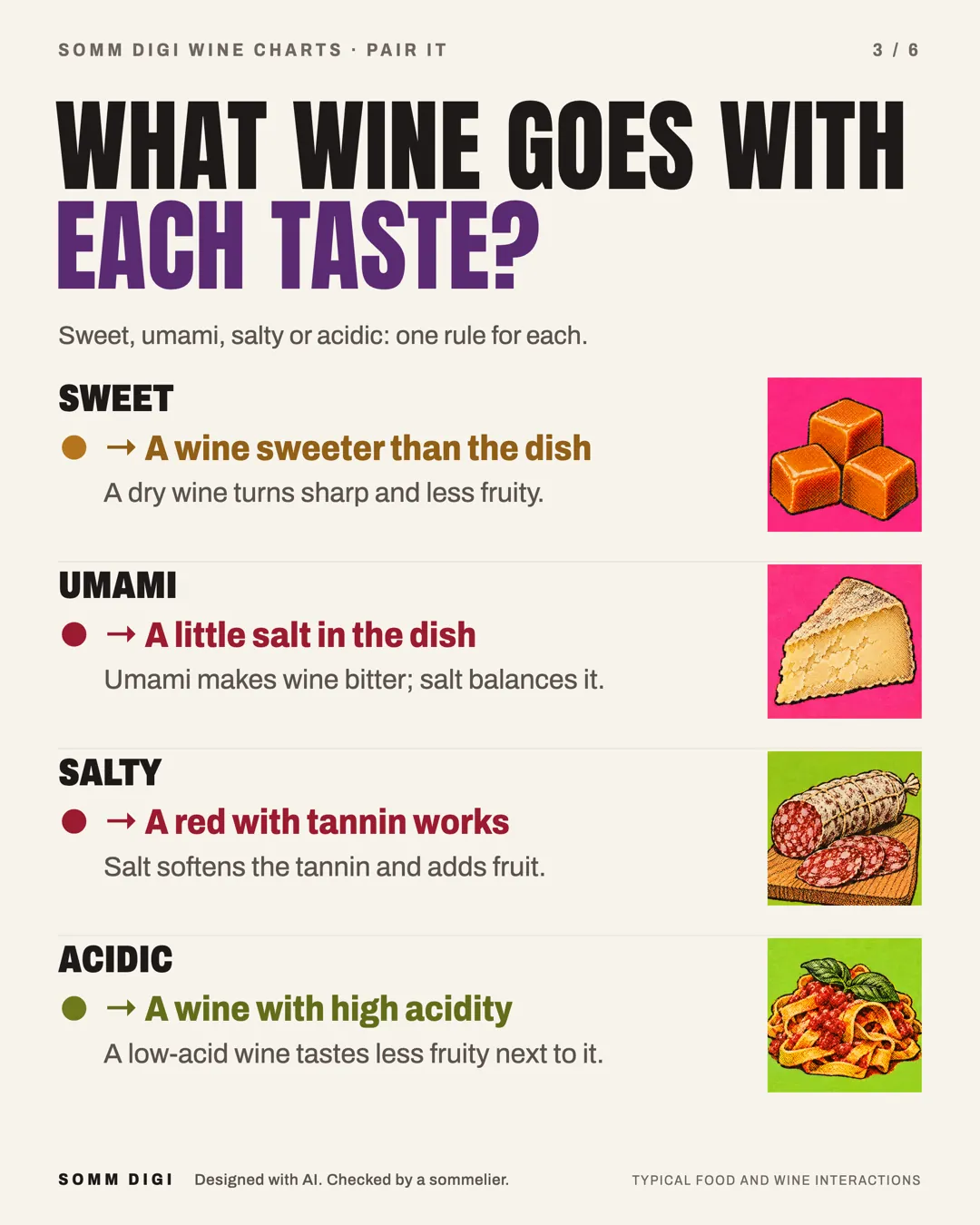
Look at the strongest taste on the plate, then follow its rule. With sweet food, choose a wine sweeter than the dish, or the wine tastes sharp and loses its fruit. With umami food, a little salt in the dish balances what umami does to the wine.
With salty food, a red wine with tannin works, because salt softens the tannin and adds fruit. With acidic food, choose a wine with high acidity: a low-acid wine tastes less fruity next to a sharp dish. Each rule has its own article: wine with dessert and foods that make wine taste better.
The chart in words
- Sweet
- A wine sweeter than the dish. A dry wine turns sharp and less fruity.
- Umami
- A little salt in the dish. Umami makes wine bitter; salt balances it.
- Salty
- A red with tannin works. Salt softens the tannin and adds fruit.
- Acidic
- A wine with high acidity. A low-acid wine tastes less fruity next to it.
Does food make wine taste harsher or softer?
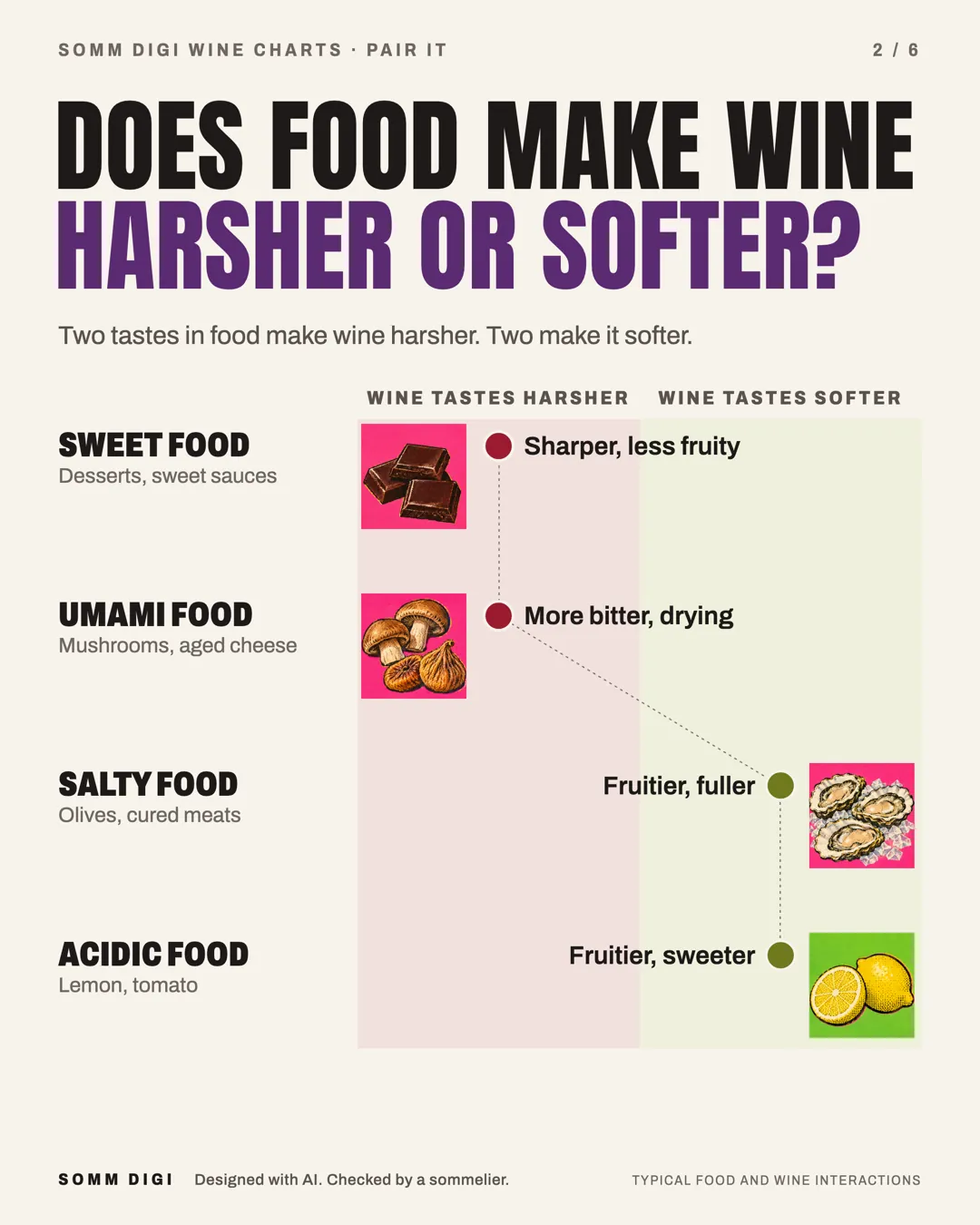
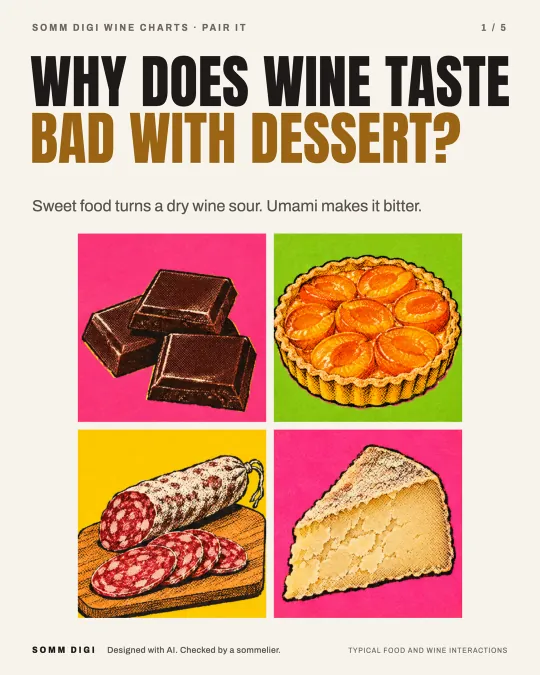
Both, depending on the taste. Sweet food makes a wine taste less sweet and less fruity, and more acidic, bitter and drying. Umami food does the same: more bitterness and drying, less fruit. Cooked or dried mushrooms, air-dried meats, aged cheese and miso are typical umami foods.
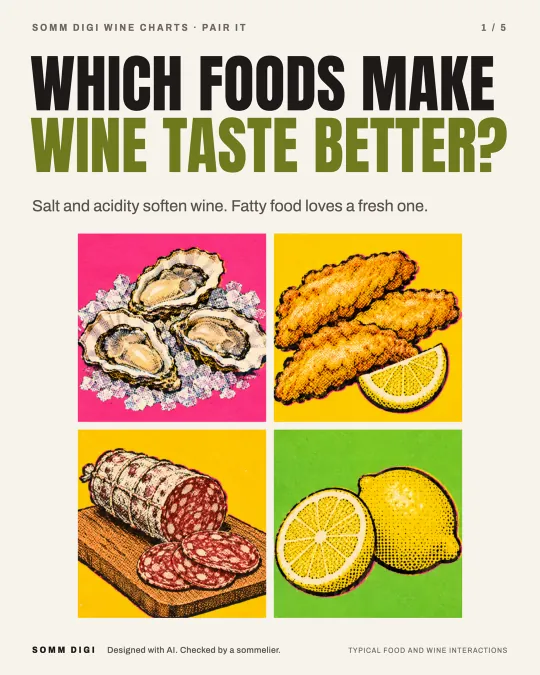
Salty food works the other way: the wine tastes fruitier, with more body, less bitter and less acidic. Acidic food makes a wine taste sweeter and fruitier, as long as the wine has acidity of its own. Overall, food changes the wine more than the wine changes the food, and the change is more often for the worse.
The chart in words
- Sweet food
- Sharper, less fruity. Desserts, sweet sauces.
- Umami food
- More bitter, drying. Mushrooms, aged cheese.
- Salty food
- Fruitier, fuller. Olives, cured meats.
- Acidic food
- Fruitier, sweeter. Lemon, tomato.
What wine goes with fatty, spicy or rich food?
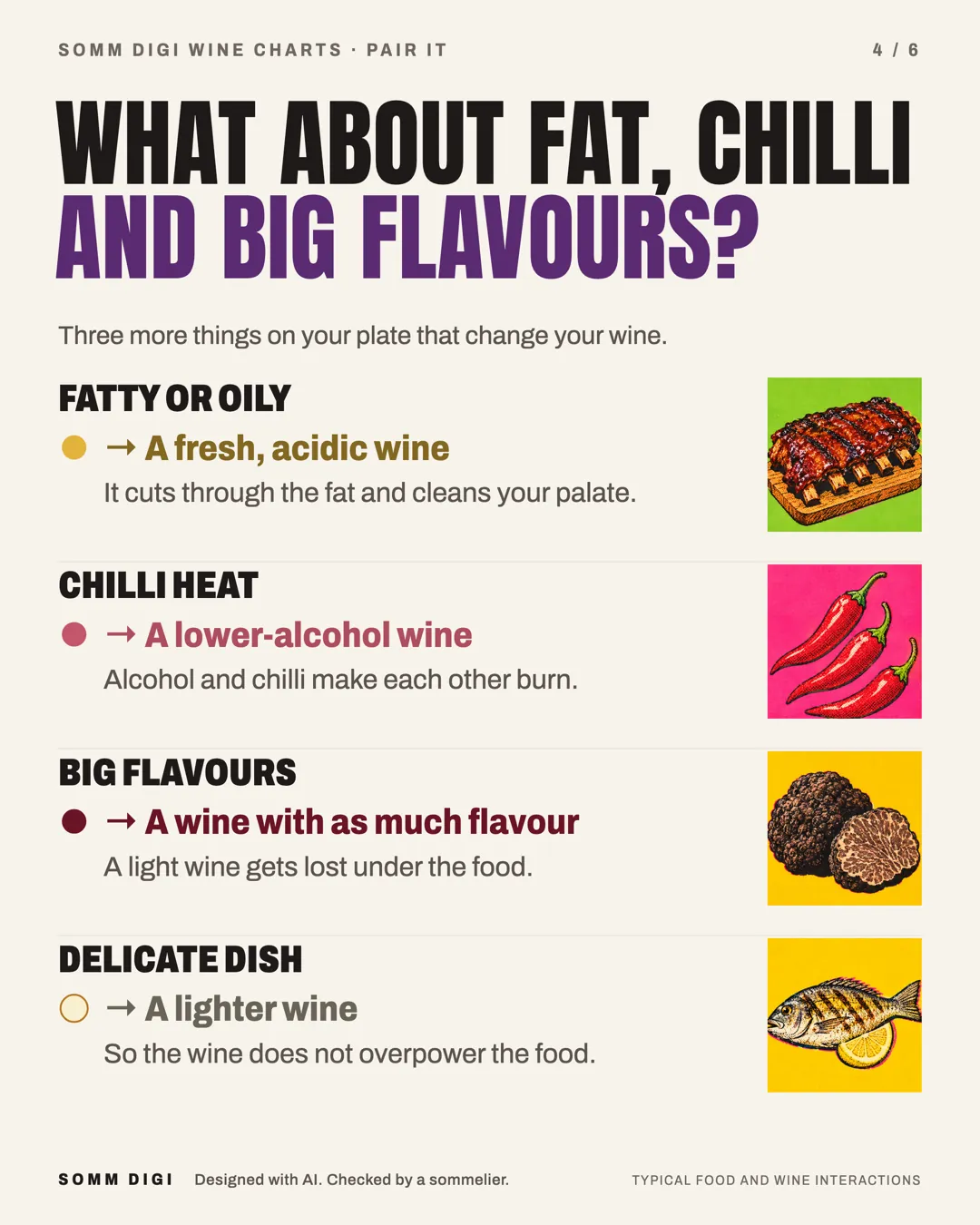
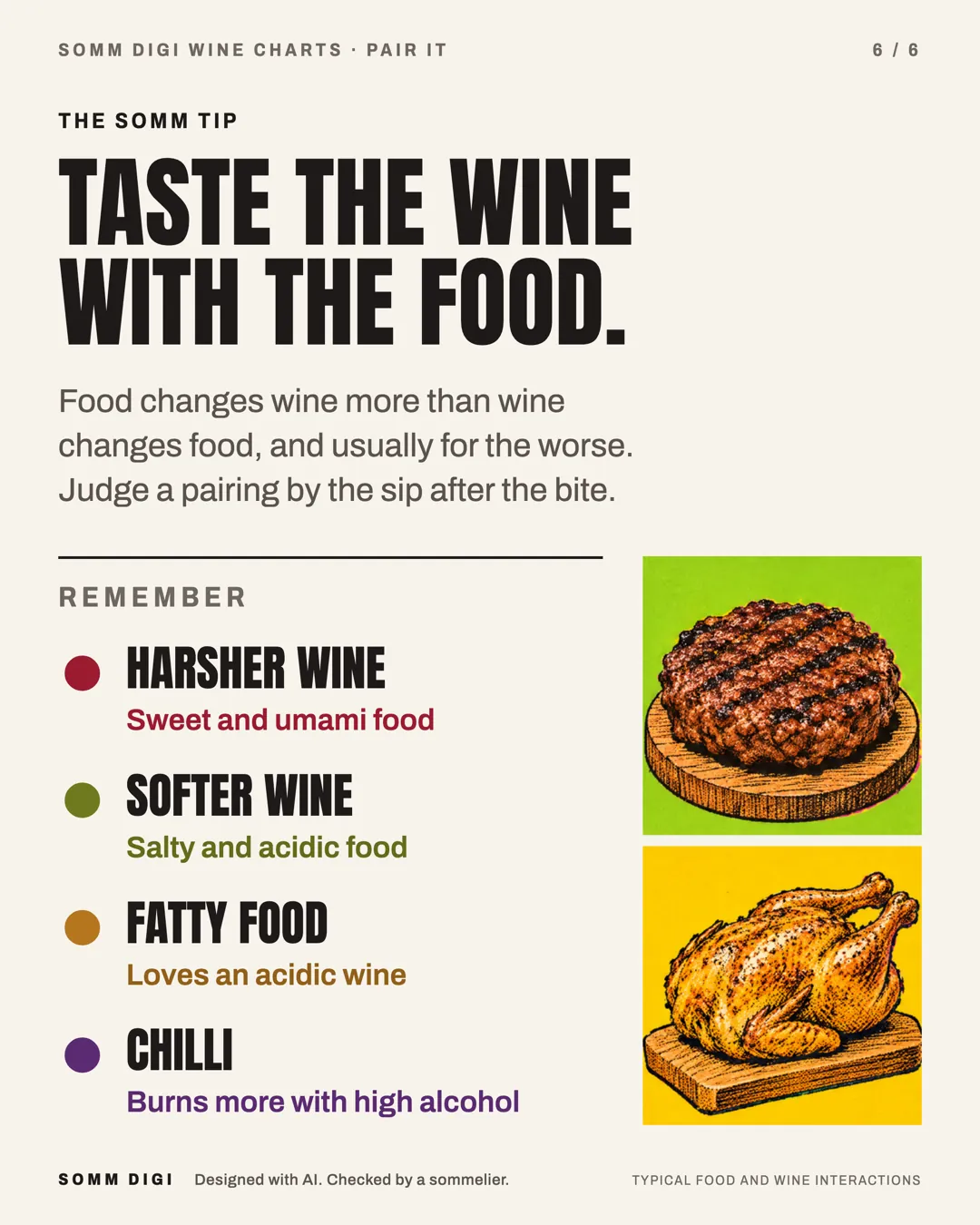
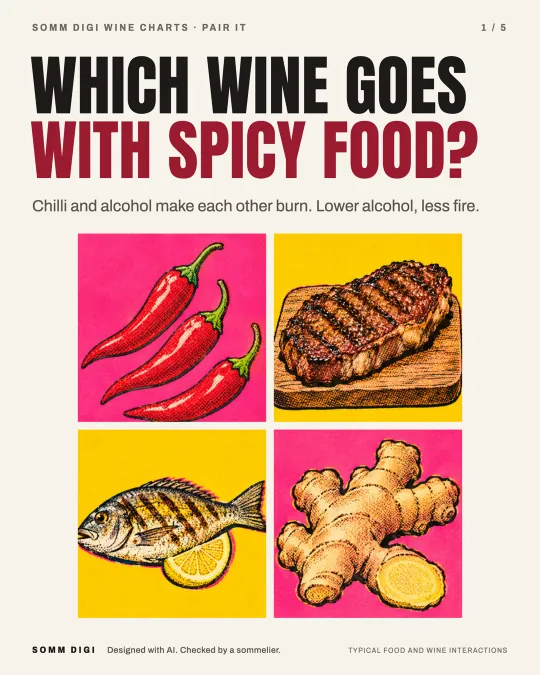
Fatty or oily food makes a wine taste less acidic, so a fresh, acidic wine is welcome: it cuts through the fat and cleans your palate. Chilli heat makes the alcohol in a wine feel hotter, and alcohol makes the chilli burn more, so a lower-alcohol wine is the calmer choice. The chilli chart is in which wine goes with spicy food.
Then match the intensity. Strongly flavoured food overwhelms a light wine, so pour a wine with as much flavour. A delicate dish wants a lighter wine, so the wine does not overpower the food.
The chart in words
- Fatty or oily
- A fresh, acidic wine. It cuts through the fat and cleans your palate.
- Chilli heat
- A lower-alcohol wine. Alcohol and chilli make each other burn.
- Big flavours
- A wine with as much flavour. A light wine gets lost under the food.
- Delicate dish
- A lighter wine. So the wine does not overpower the food.
Why does wine taste different with food?
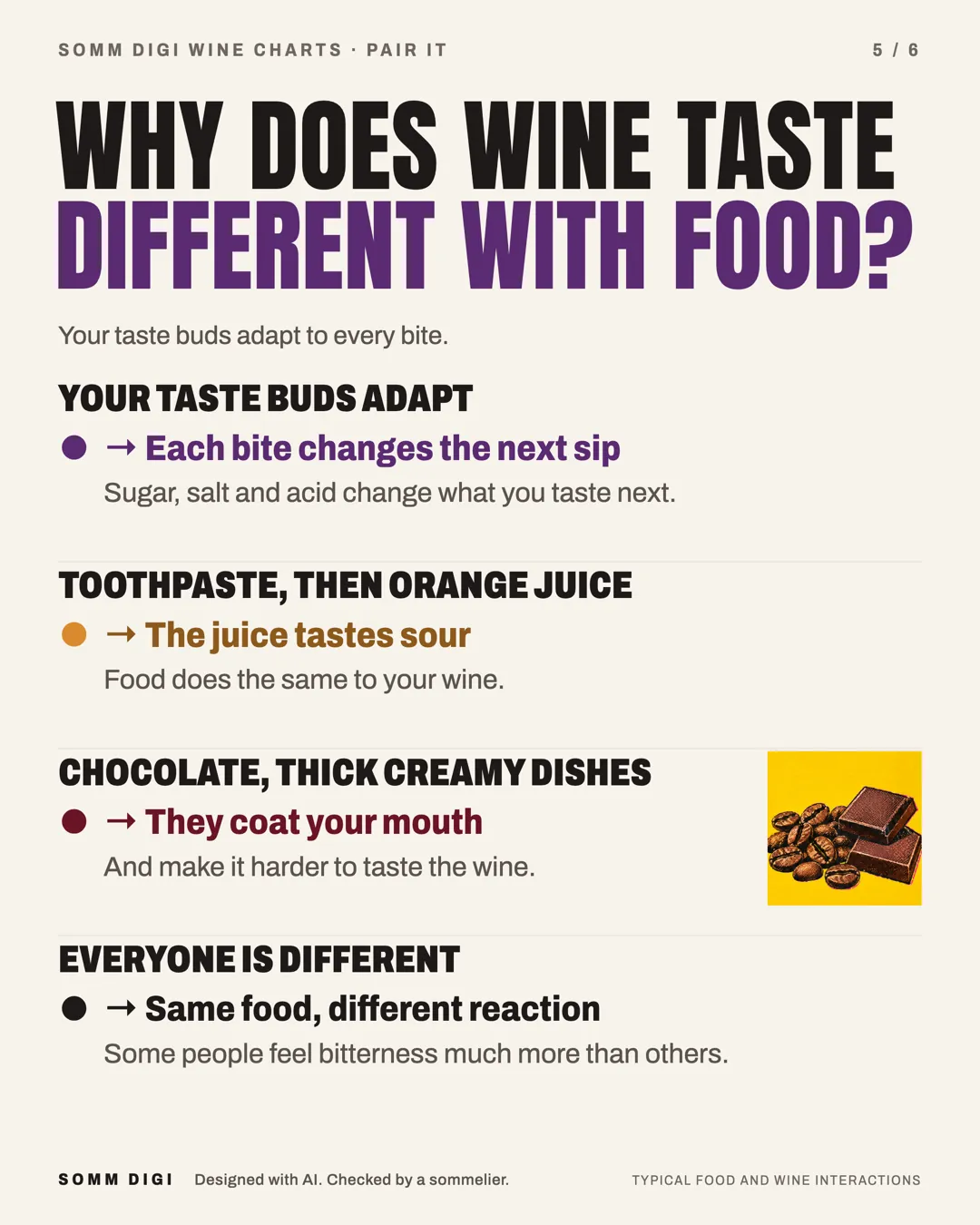
For the same reason orange juice tastes sour after toothpaste: your taste buds adapt. Each bite changes how much sugar, salt and acid you notice in the next sip. Some foods, like chocolate or thick creamy dishes, also coat the mouth and make it harder to taste the wine at all.
The chart in words
- Your taste buds adapt
- Each bite changes the next sip. Sugar, salt and acid change what you taste next.
- Toothpaste, then orange juice
- The juice tastes sour. Food does the same to your wine.
- Chocolate, thick creamy dishes
- They coat your mouth. And make it harder to taste the wine.
- Everyone is different
- Same food, different reaction. Some people feel bitterness much more than others.
Does everyone taste food and wine the same way?
No. The same level of bitterness can affect one person much more strongly than another, and some people enjoy strong sensations that others find unpleasant. So a perfect pairing for one guest can feel ordinary to the next. Pair for the person as well as the plate.
How should you judge a pairing?
Taste the wine with the food. Because food changes wine more than wine changes food, judge a pairing by the sip after the bite, never by the wine alone.
Learn wine the easy way
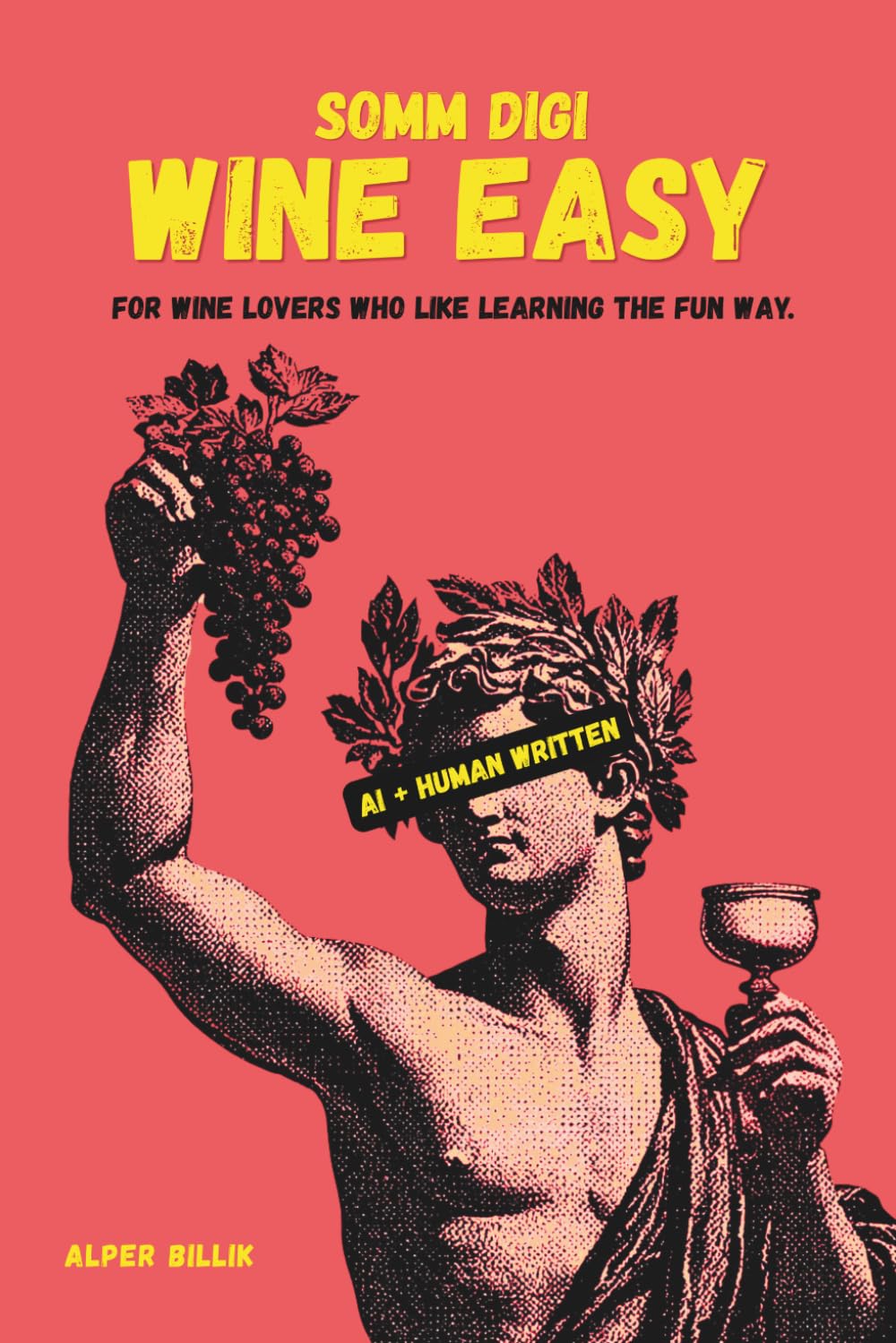
Wine Easy
Wine Easy explains grapes, tasting and food pairing in plain words, the same way these charts do.
Food and wine pairing questions, answered
Does food change the taste of wine?
Yes. Sweet and umami food make a wine taste harsher, more bitter and less fruity; salty and acidic food make it softer and fruitier.
Why does orange juice taste sour after toothpaste, and what has that to do with wine?
Your taste buds adapt to what you just had in your mouth. Food does the same thing to the next sip of wine.
What wine goes with salty food?
A red with tannin works: salt softens the tannin and adds fruit.
What wine goes with fatty food?
A fresh, acidic wine. It cuts through the fat and cleans the palate.
Why does chocolate make wine hard to taste?
Chocolate coats the mouth, like thick creamy dishes, and that makes it harder to taste the wine.
Food and wine pairing
More pairing, in charts
How this page was made. Charts designed with AI and checked by Alper Billik, Advanced Sommelier. Text written from the same chart facts and edited with AI.